Curtains as Focal Point in Interior Design: Ideas Worth Watching
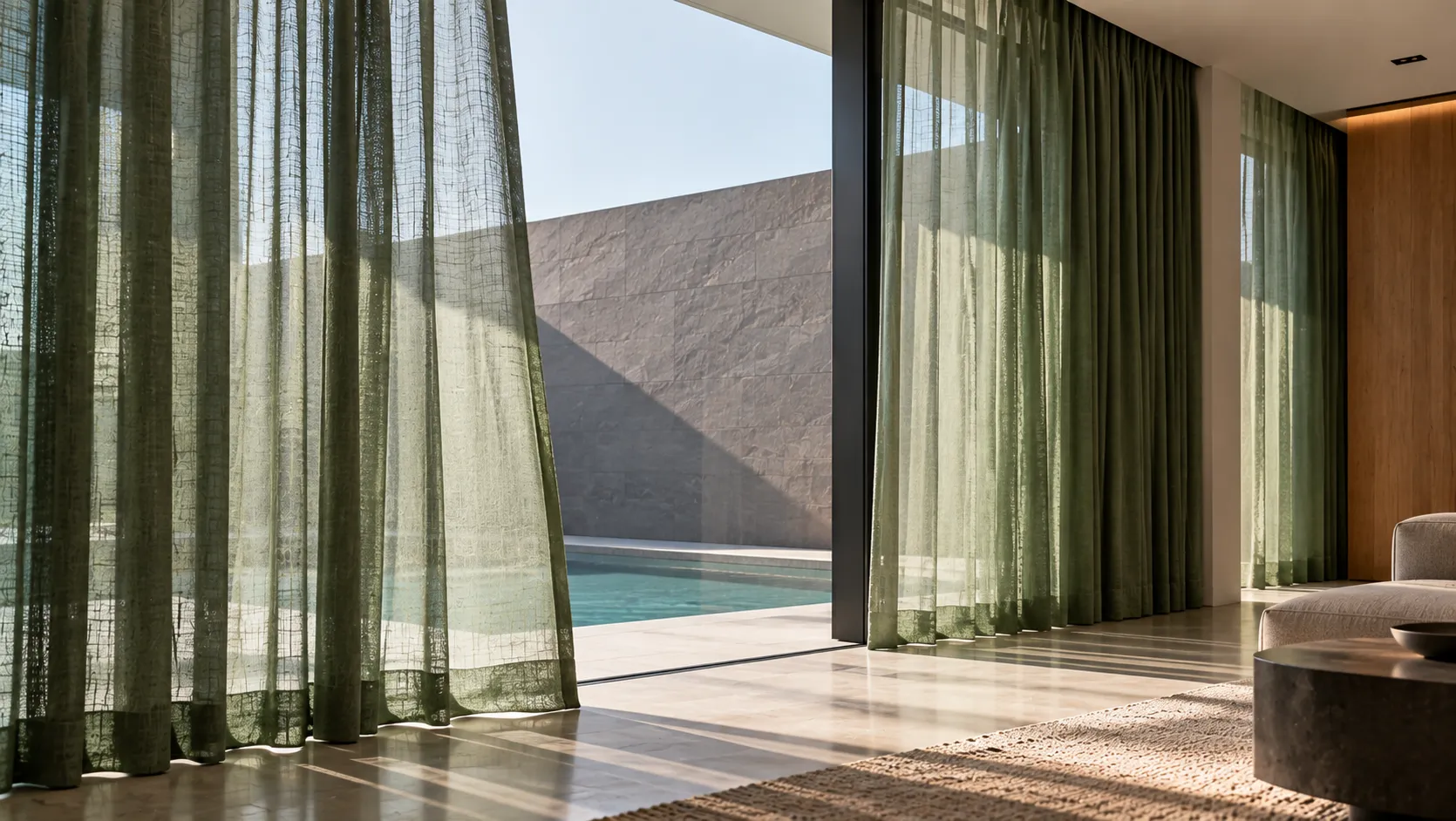
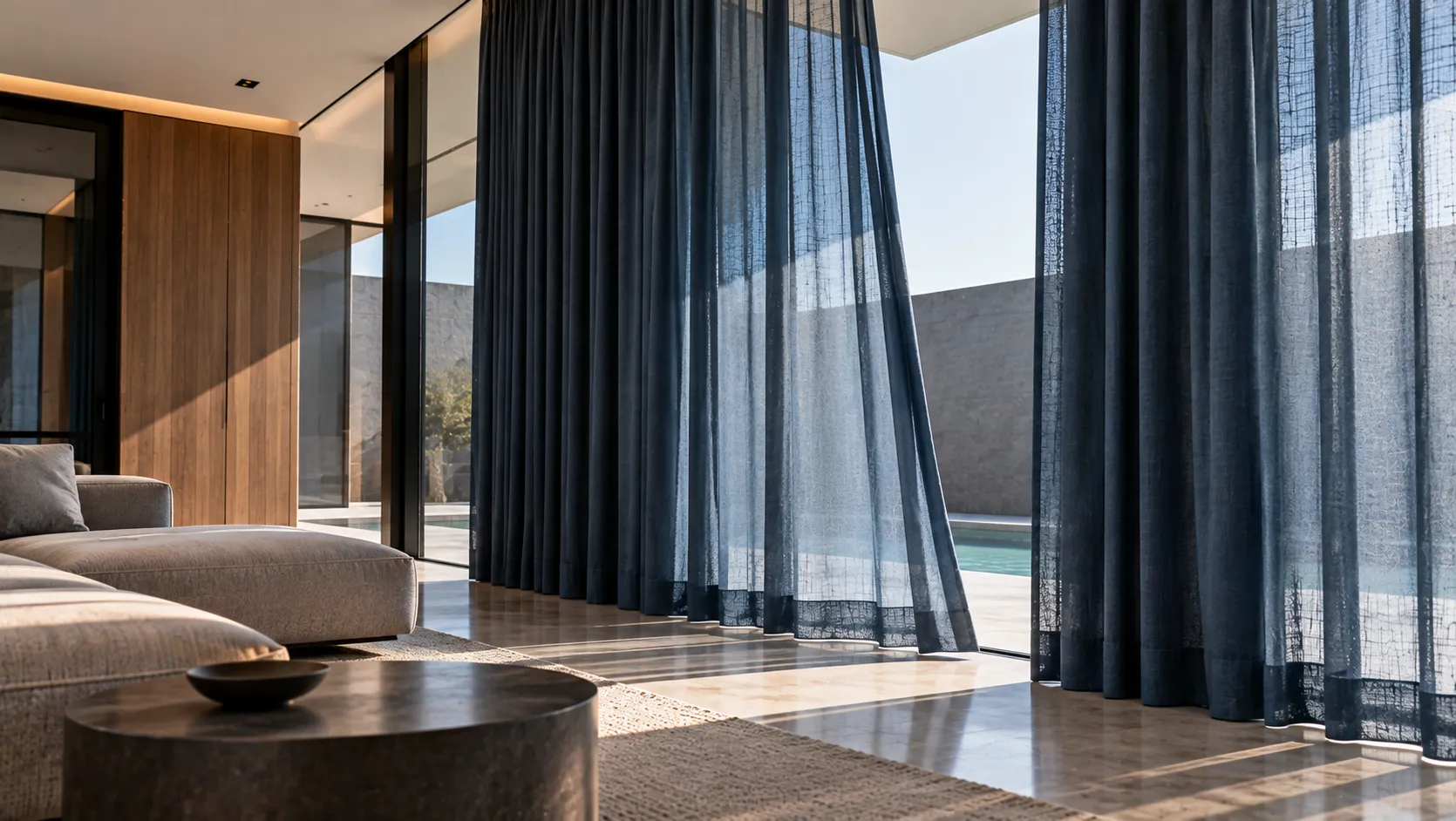
Curtains can become a focal point when their scale, colour, texture or pattern is deliberately stronger than the surrounding finishes. The effect works best when the curtain has a clear relationship with the architecture rather than simply being the loudest object in the room.
Choose why the curtain should stand out
A curtain can create focus through colour, texture, scale, pattern or architectural framing. Choose one primary reason. A deep neutral with a strong weave may be enough without adding a print.
Use the window's scale
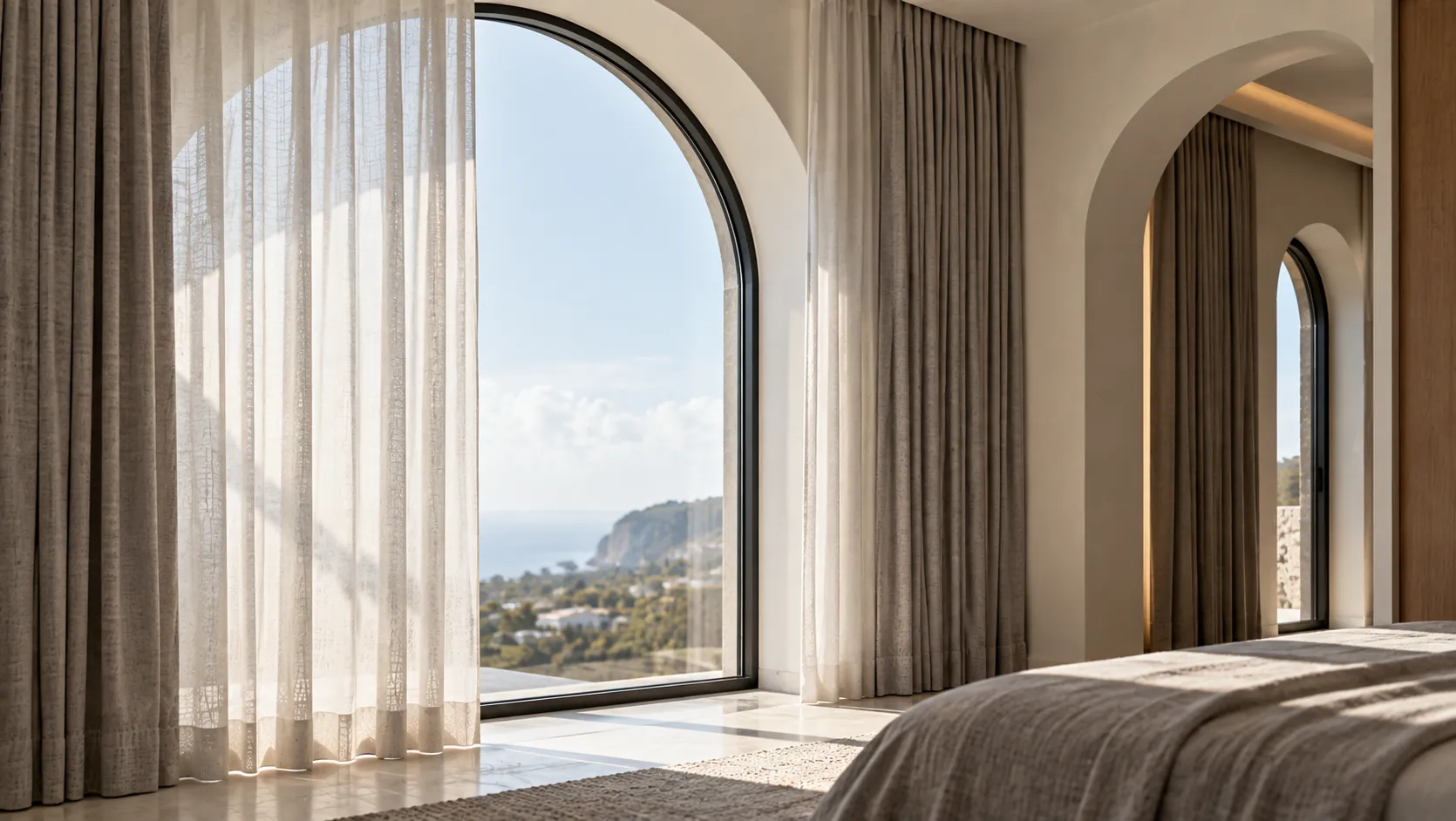
Large glazing gives fabric a large visual surface. Full-height curtains can emphasise vertical architecture and create movement. On small windows, an oversized pattern or excessive fullness can overwhelm the opening.
Let folds contribute
Heading style, fullness and fabric weight change how the focal point behaves. A visible weave produces subtle movement, while patterned fabric requires attention to repeat and alignment.
Coordinate the stack-back
A focal curtain should look intentional when open and closed. Allow enough stack space so the treatment does not hide the most important part of the glazing.
Balance the room
- Use quieter walls when the curtain has a strong pattern.
- Repeat the curtain colour subtly rather than everywhere.
- Keep hardware controlled unless it is intentionally decorative.
- Check the fabric at different times of day.
Bali villa application
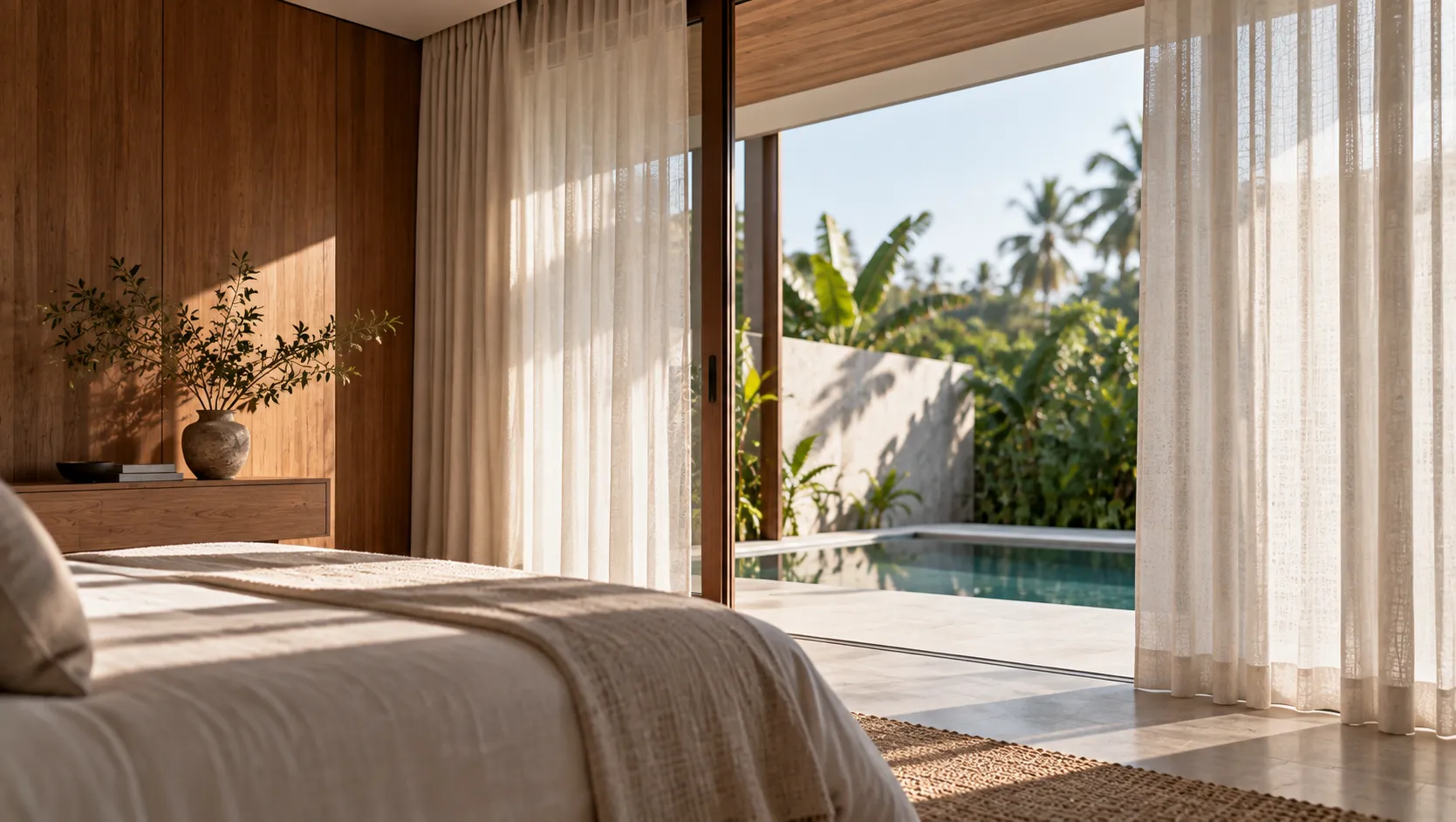
In tropical villas, curtains can connect indoor materials with timber, stone and the landscape. Linen textures and earthy tones can create a strong focal layer while retaining a relaxed architectural character.
Related guides
See our colour and pattern checklist, large-window guide and track vs rod guide.