Biophilic Window Design: Framing Views and Managing Daylight
Biophilic window design focuses on the relationship between people, daylight and the outdoor environment. Rather than choosing a curtain simply because it looks natural, start by asking what occupants should see, when direct sun becomes uncomfortable and how privacy changes between day and night. The window treatment should support the connection to the outdoors instead of unnecessarily hiding it.
Map the view before selecting the treatment
Stand at the places where people spend time: the sofa, dining table, bed and work area. Identify the views worth preserving and the angles where neighbouring buildings, paths or pool areas create privacy concerns. A treatment that looks attractive when closed may cover a garden view when open, so plan the stack-back position and operating direction early.
Observe daylight at different times
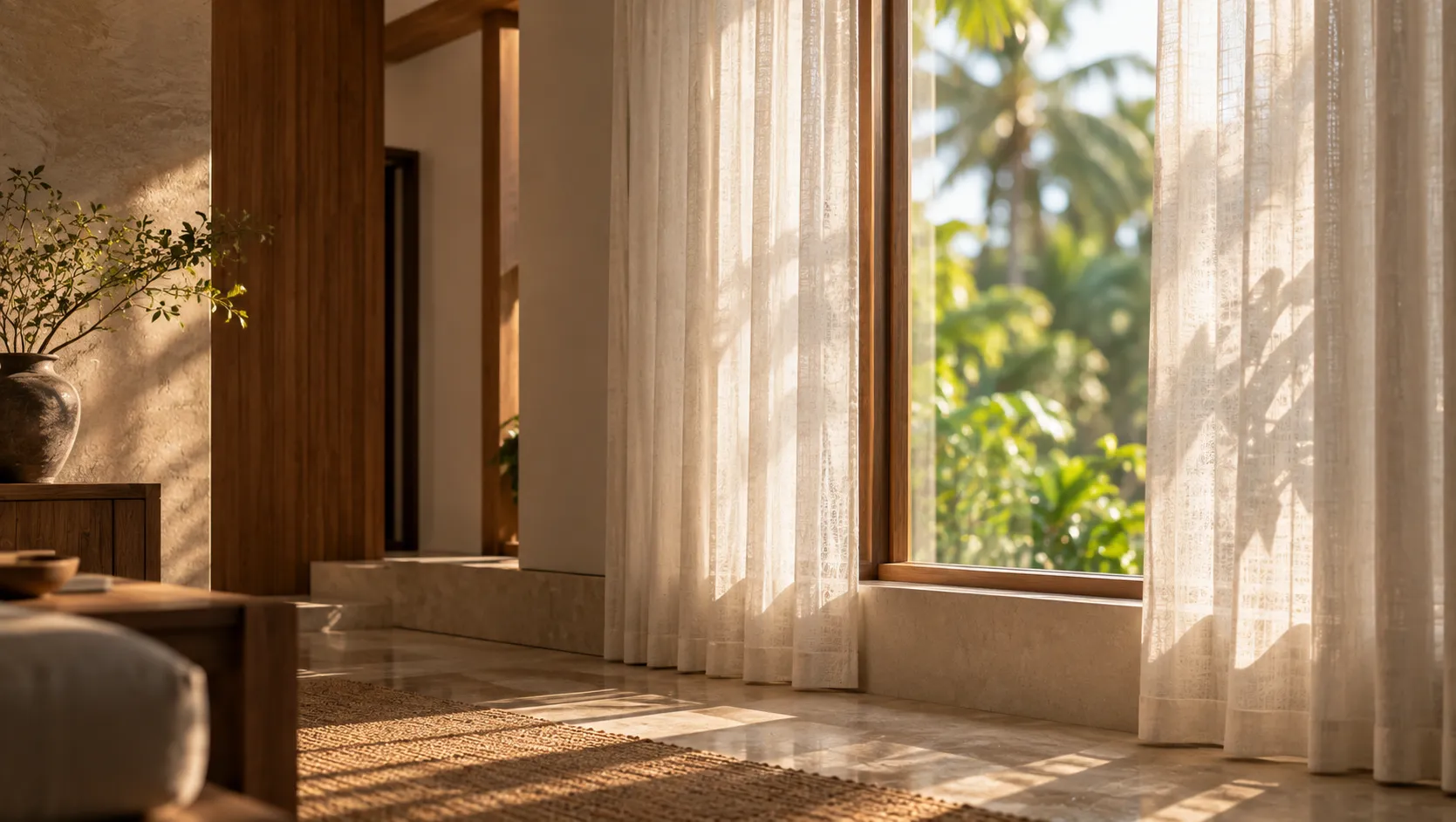
Check each window in the morning, around midday and in the late afternoon. Record when direct sunlight reaches seating, screens or artwork. A sheer can soften the contrast between bright outdoors and the interior while retaining a view, but its effect depends on fabric openness, colour and the relative brightness indoors and outdoors. It should not be assumed to provide night-time privacy.
Where direct sun is intense, a screen blind or another adjustable layer may be more useful than a sheer alone. Define the actual goal—glare reduction, privacy, darkness or view preservation—before selecting a product.
Design for the open position
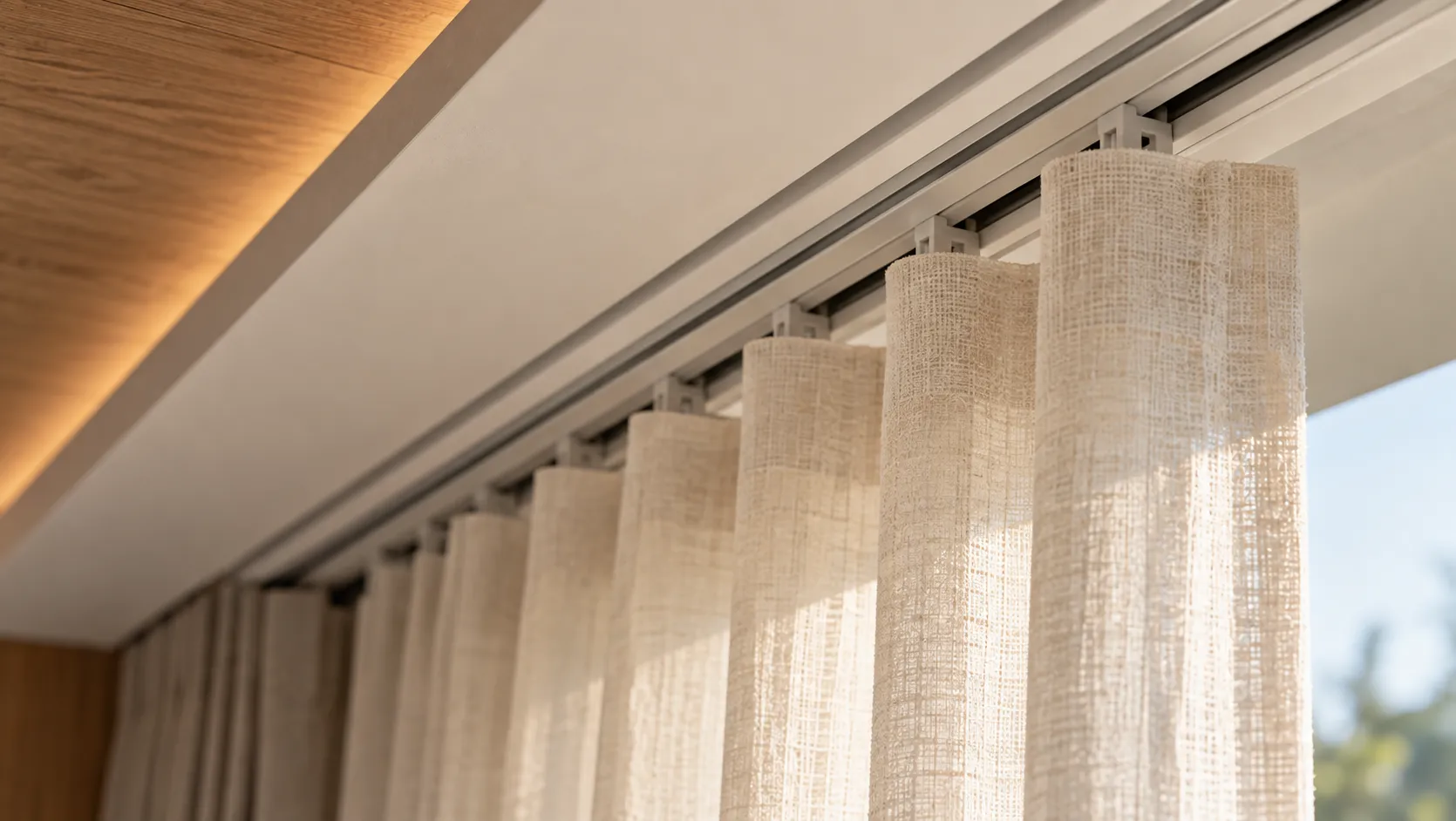
For large glass doors, allow enough wall or ceiling space for curtains to stack clear of the opening. Check door handles, access routes, air-conditioning units and ceiling details. A treatment that obstructs a frequently used terrace door can undermine the indoor-outdoor connection it was meant to support.
Choose materials for the room, not the label
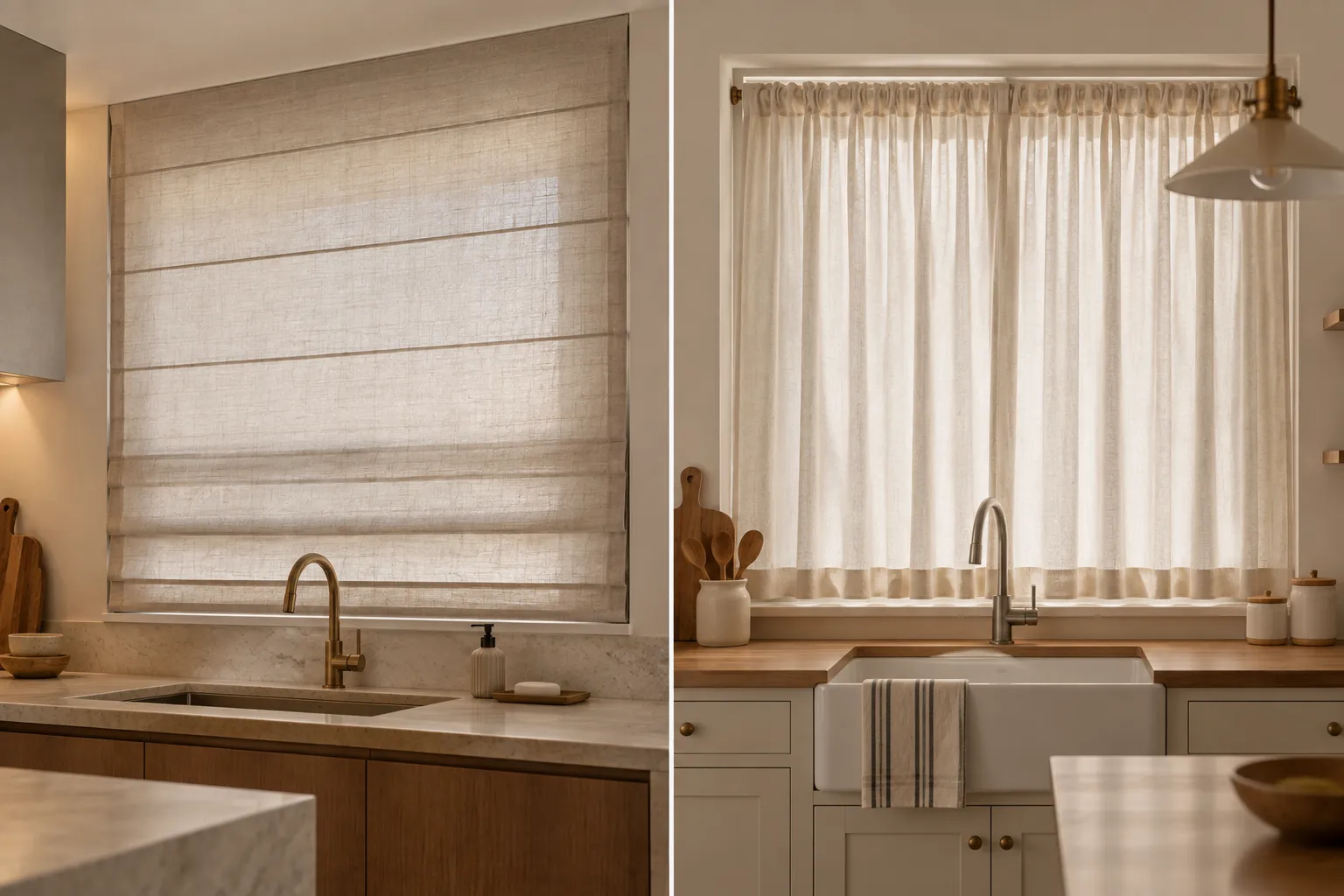
Linen, linen blends and textured fabrics can add tactile depth, but fibre names alone do not establish durability, colourfastness or suitability for humid rooms. Compare the actual weave, lining, care instructions and exposure conditions. Woven shades can introduce an organic pattern, yet some constructions allow light and views through their gaps. Add a separate privacy layer when the site requires it.
Room-by-room decisions
- Living areas: Preserve important views and make glare control adjustable.
- Bedrooms: Balance the view with the required darkness and night privacy.
- Dining spaces: Keep doors and circulation routes clear when curtains are open.
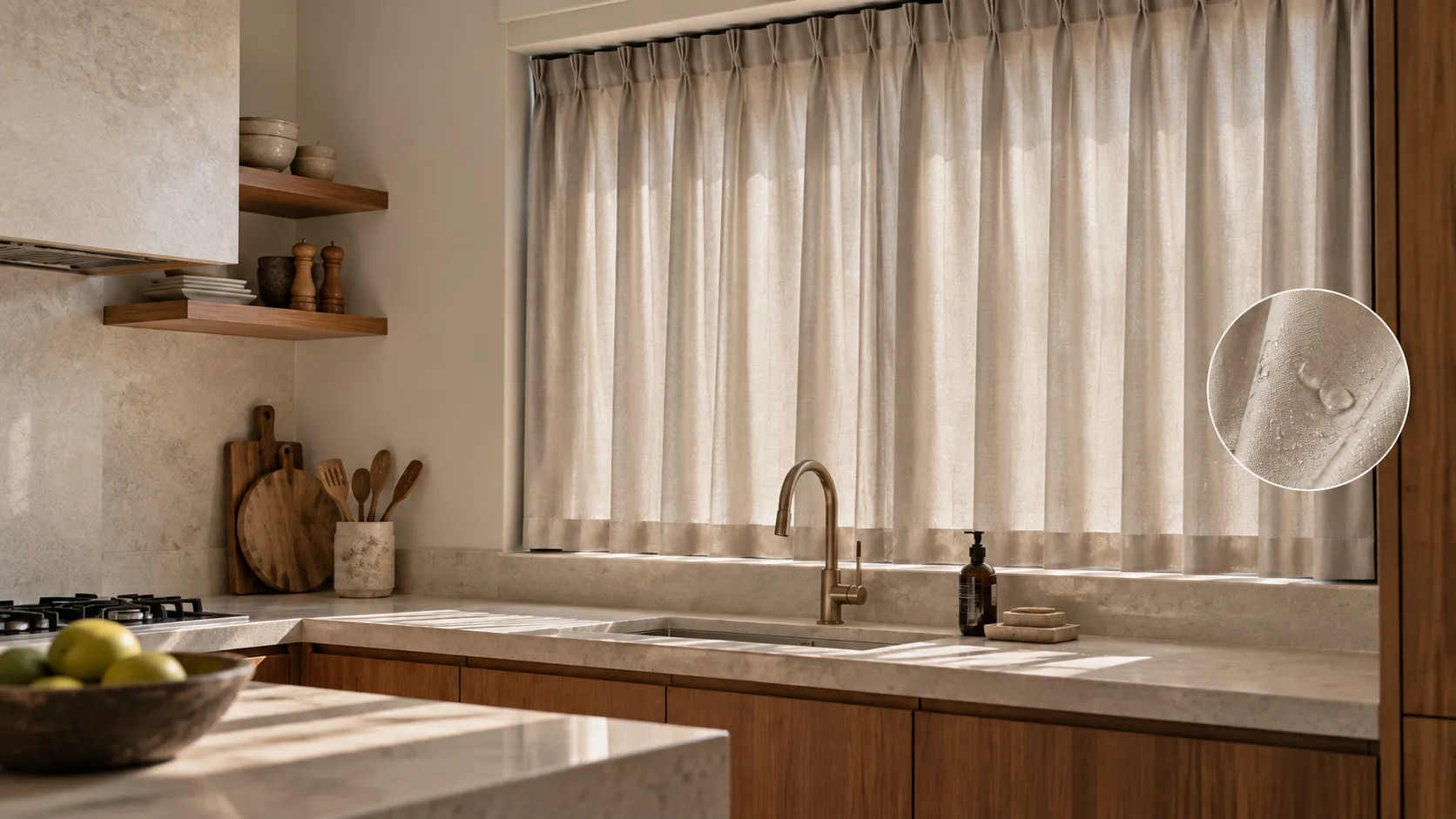
- High-moisture areas: Verify the product's stated suitability and maintenance requirements.
Common planning mistakes
- Choosing from a small screen image without testing a sample in the room.
- Assuming a sheer offers privacy after dark.
- Ignoring how the treatment stacks beside a sliding door.
- Choosing a natural-looking material without checking cleaning and exposure requirements.
Related guides
For fabric construction, read our curtain fabric types guide. For combining products, see the layered window treatments guide and window treatment buying guide.
Specify the view as carefully as the fabric
A considered biophilic window supports daylight, useful views and realistic privacy needs. Almeers Living can help assess samples, operating positions and measurements for your property. Request a consultation or site survey before confirming the specification.