Concealed Curtain Tracks and Clean Sightlines: 2026–2027 Design Direction
A clean window-treatment design is often created by the details that are least noticeable: the track position, the curtain stack and the transition between ceiling and fabric. Concealed and ceiling-mounted tracks are useful options in contemporary interiors, but they are not automatically suitable for every room. The ceiling construction, access for maintenance and curtain weight all affect the result.
What concealed tracks change
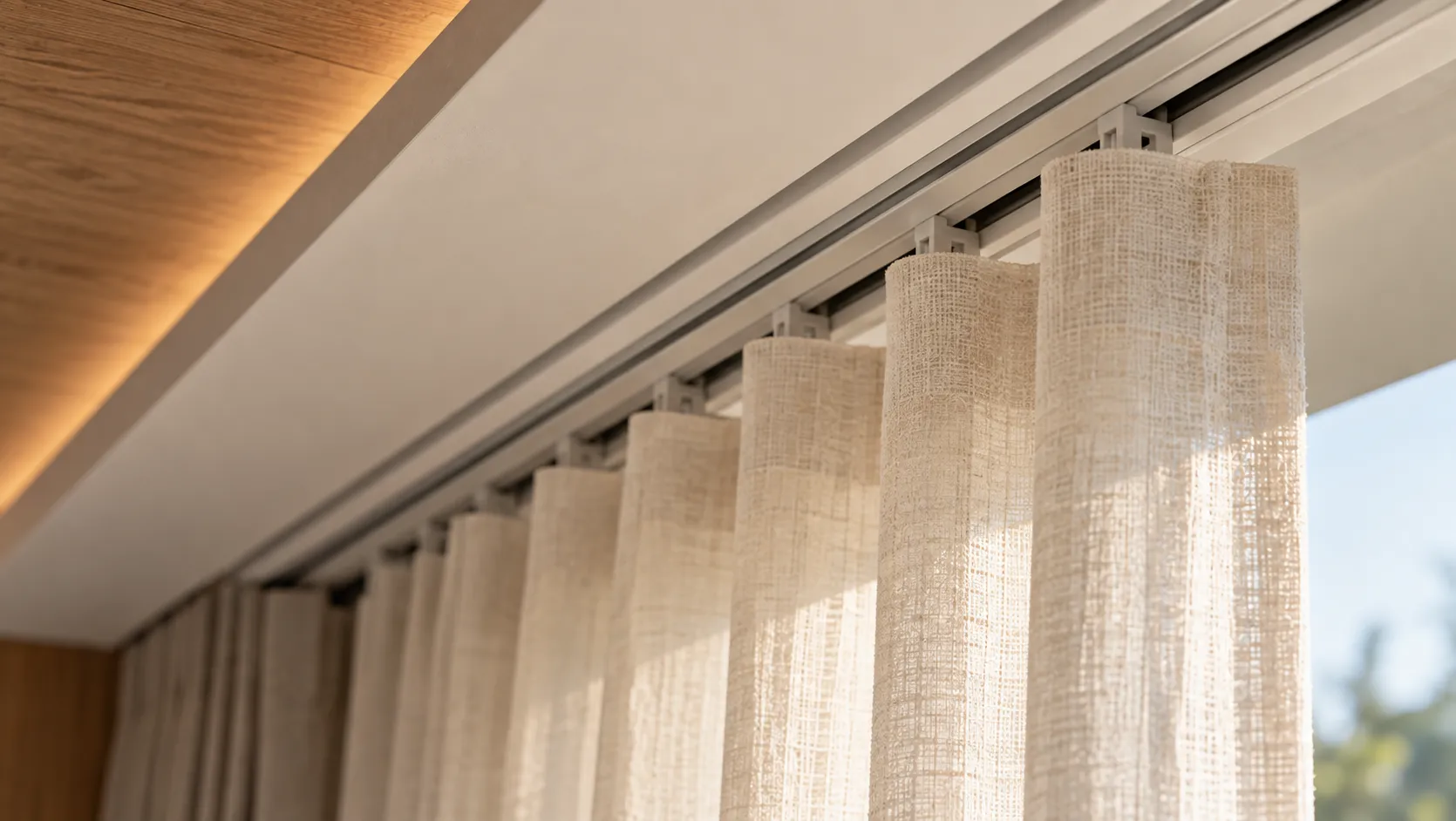
A recessed or concealed track reduces the visual presence of hardware and can make a full-height curtain read as part of the architecture. A surface-mounted ceiling track can create a similar vertical effect where a recess is not possible. Decorative rods remain relevant where the hardware is intended to be a visible design feature.
Coordinate with the ceiling early
If a track is to be recessed into a ceiling detail or pelmet, coordinate its dimensions and fixing method with the ceiling installer before construction is finished. Confirm the required recess, track access, end stops and the way the curtain will be removed for cleaning. Late changes can lead to visible gaps, restricted movement or difficult maintenance.
Plan the curtain's open position
When open, the fabric forms a stack at one or both ends. That stack can cover glazing, block a door or interfere with nearby cabinetry if the track is too short or the stack space was not considered. Measure the full opening and surrounding wall, then agree on the stacking direction and usable clear width.
Match hardware to the fabric
Track capacity, runners and brackets must suit the curtain's weight and intended operation. A heavy lined curtain may require a different system from a lightweight sheer. For wide or high windows, discuss whether manual operation is practical and whether motorization should be planned before electrical work is complete.
Details to confirm on site
- Ceiling type and suitable fixing points.
- Track length, recess depth and access for future maintenance.
- Finished curtain drop and clearance above the floor.
- Stack-back space, door handles and circulation paths.
- Fabric weight, heading style and required track capacity.
- Power access and controls if motorization is planned.
Where visible hardware may be preferable
A decorative rod can complement a traditional interior or become an intentional visual accent. Concealing the track is a design choice rather than a universal quality marker. The right approach is the one that suits the architecture, can be installed safely and remains serviceable.
Related guides
Read our curtain track versus rod guide, layered window treatments guide and window treatment buying guide.
Design the hardware before finishing the ceiling
Concealed tracks look simple when the technical details are planned early. Almeers Living can help coordinate track type, fabric weight, measurements and operating requirements before installation.