Natural Woven Wood Shades (Rattan/Bamboo): What to Expect Next
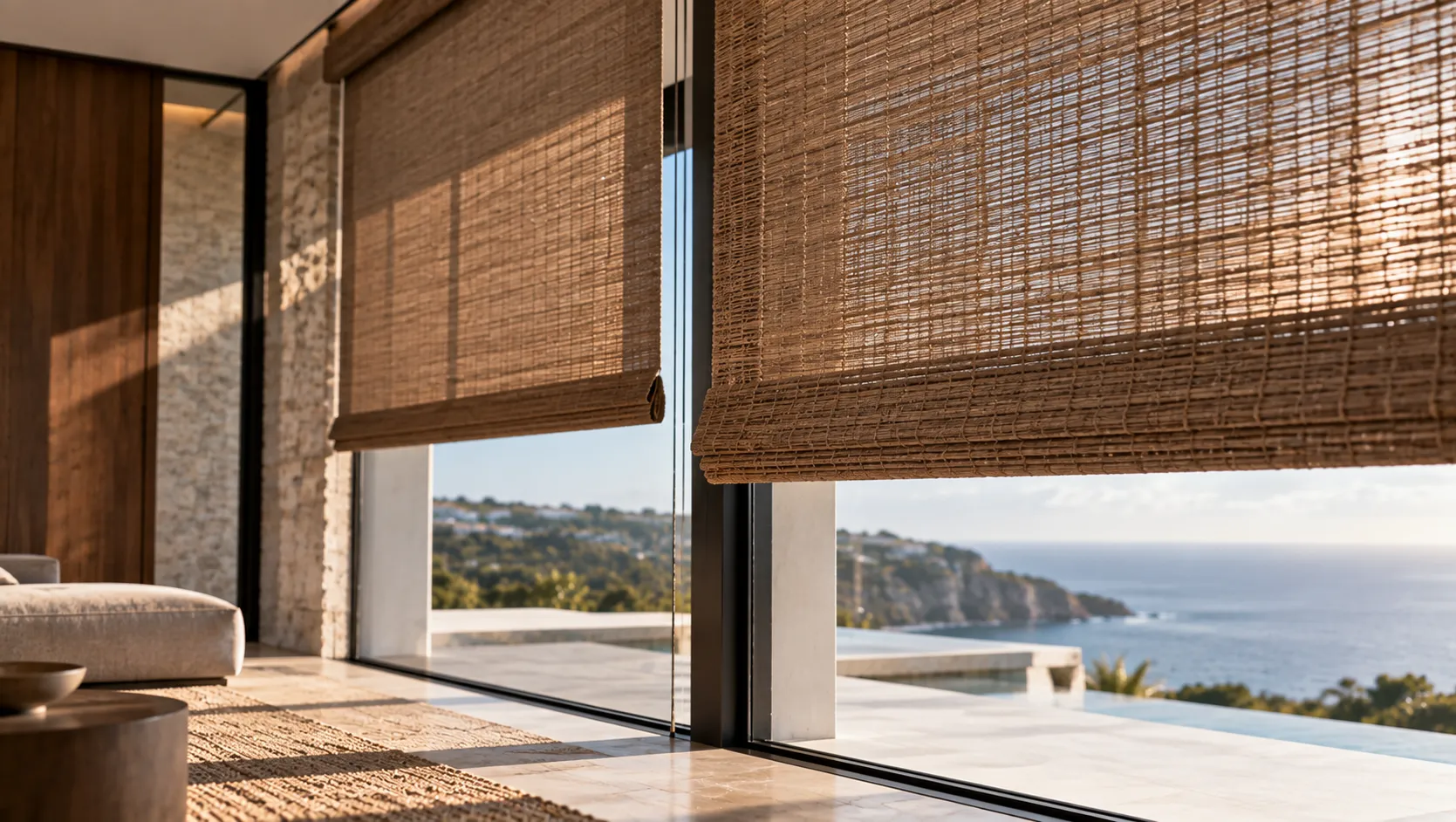
Natural woven shades made from bamboo, rattan, reeds and similar materials bring texture and filtered light to interiors. Their strongest advantage is visual character, but the weave also determines light transmission, privacy and maintenance.
What woven shades do well
The open structure can filter daylight and create subtle shadow patterns. It can also add warmth to rooms using timber, stone and natural finishes. Because the material becomes a design feature, evaluate a real sample rather than relying only on a small colour swatch.
Understand privacy
Many woven constructions allow some light and visibility through the weave. That may be ideal for a living room but insufficient for a bedroom. If stronger privacy is required, consider a lining or second layer where the system permits it.
Natural does not mean maintenance-free
Dust can settle into woven surfaces, while moisture and direct sun can affect some materials. Ask for care guidance and intended-use conditions. Ventilation and regular cleaning matter in humid environments.
Pair with curtains
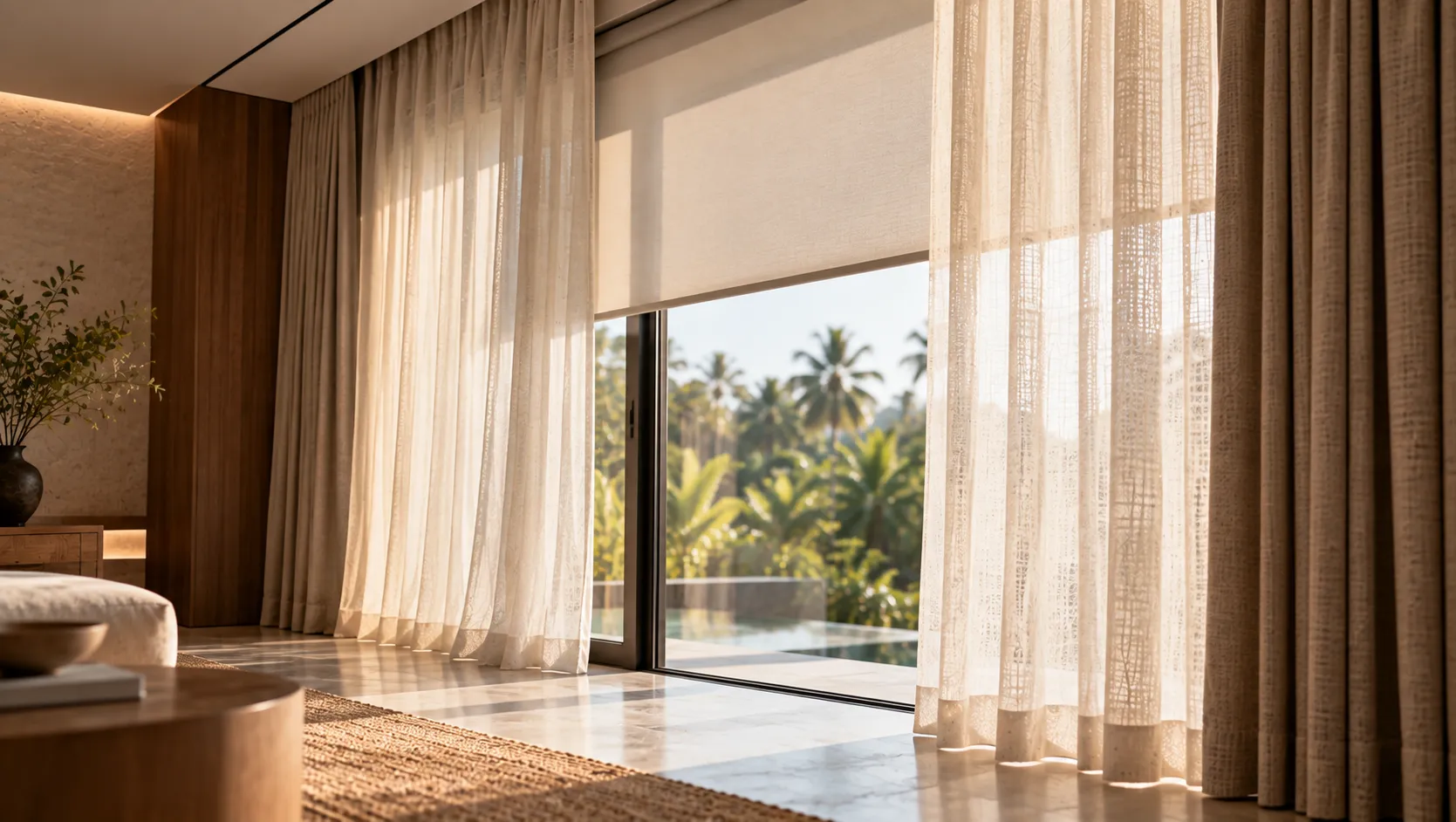
A woven shade can provide texture close to the glass while a curtain adds privacy and softness. The two layers should have distinct jobs and enough space for independent operation.
Where they work well
- Living rooms with garden views.
- Dining areas needing filtered daylight.
- Bedrooms when paired with suitable privacy or blackout.
- Villas with timber, stone and natural finishes.
Check before ordering
- Weave density and light transmission.
- Day and night privacy.
- Cleaning method.
- Moisture and sun exposure.
- Mounting depth and operating clearance.
Related guides
See our natural woven shades guide, fabric guide and layering guide.