Transitional Style Window Treatments: A Practical Designer Guide
Transitional interior design sits between traditional and contemporary styles. For window treatments, this balance can introduce softness, texture and proportion without making the architecture feel dated.
What Are Transitional Window Treatments?
They combine classic cues—full folds, refined fabrics and balanced proportions—with contemporary details such as simple tracks, neutral palettes and clean installation lines.
Start With Architecture
Before selecting fabric, assess window shape, ceiling height, wall width, door movement and architectural trim. Large openings may benefit from floor-to-ceiling installation, while an outside mount can visually increase a smaller opening.
Choose a Controlled Colour Palette
Warm whites, beige, stone, taupe, greige and muted earth tones often work well. Evaluate the exact colour against walls, flooring and natural daylight. Use our expert colour and pattern checklist as a reference.
Fabric and Texture
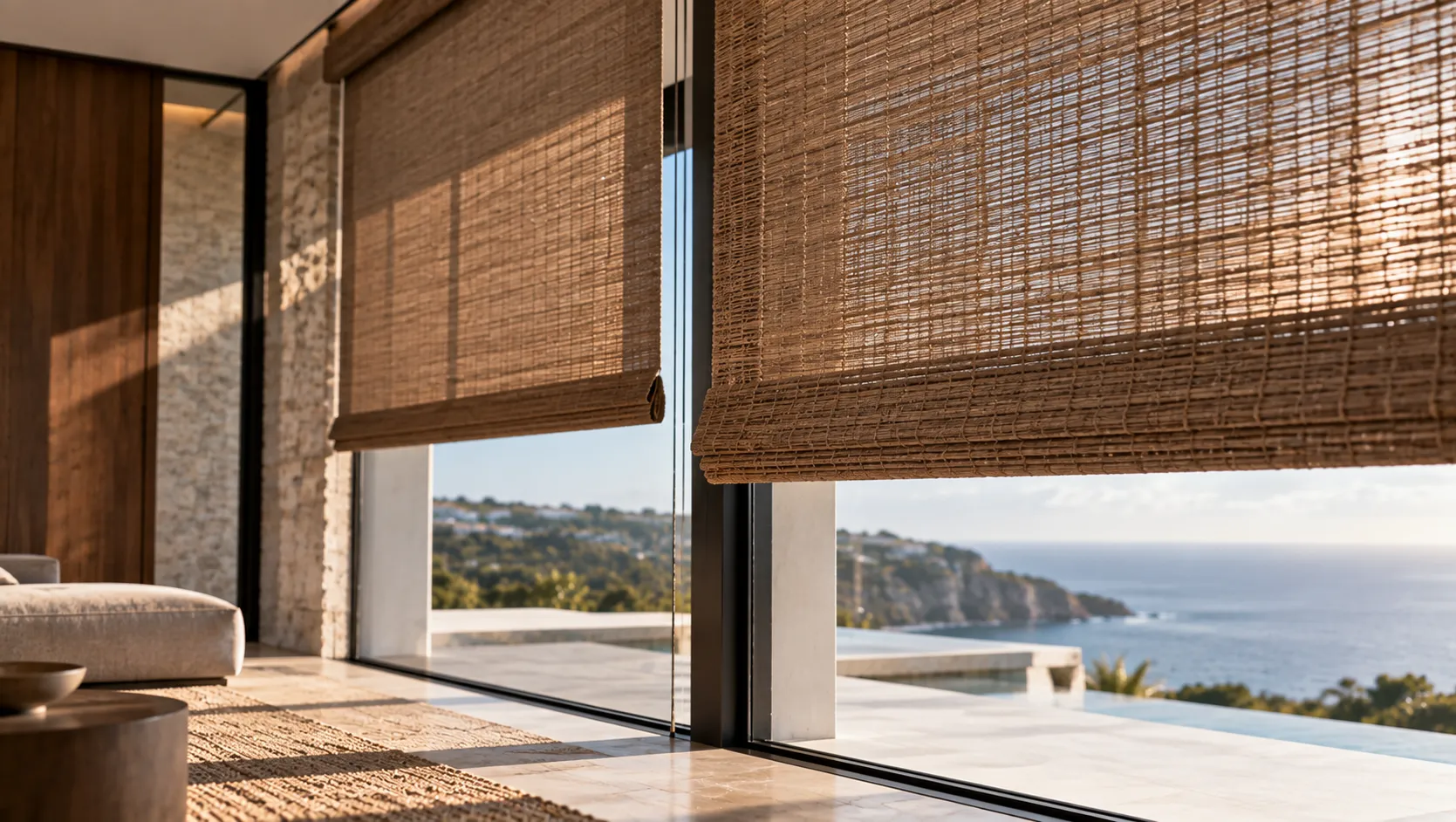
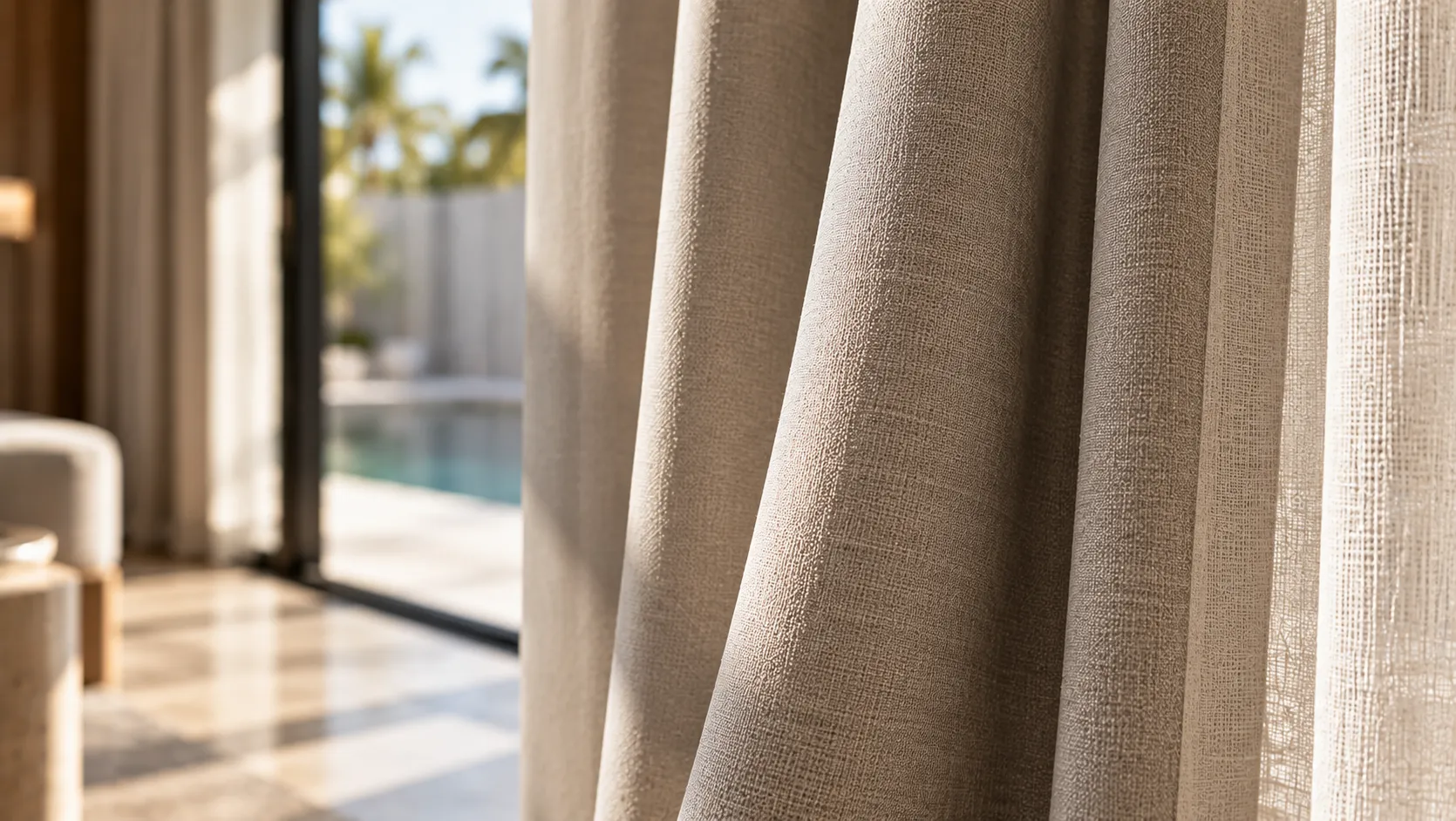
Linen textures, subtle weaves and dimensional surfaces can provide visual depth without strong patterns. If furniture or stone already contains pattern, a textured solid curtain may produce a more controlled result.
Layering for Flexibility
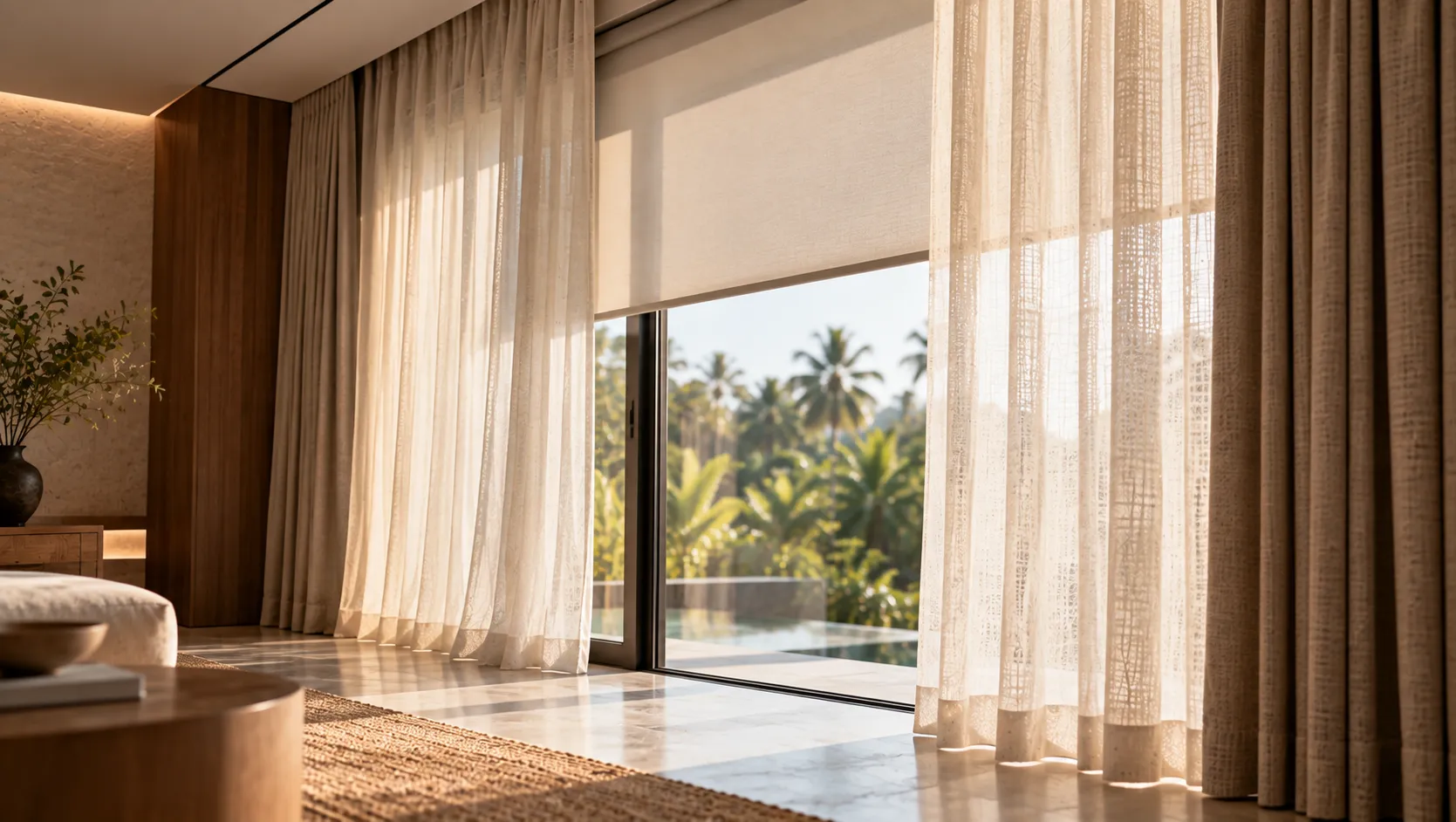
A sheer plus dimout or blackout layer allows the room to change throughout the day. The sheer maintains softness and daylight while the second layer provides privacy and stronger light control.
Hardware Should Support the Design
Concealed tracks are useful when the curtain should read as an architectural layer. Decorative rods can be appropriate when hardware is part of the design language. Always check curtain weight, span and stacking requirements.
Common Mistakes
- Using ornate headings in an otherwise contemporary room.
- Choosing a cold grey against warm architectural materials.
- Ignoring stack-back space beside sliding doors.
- Using one fabric throughout despite different room requirements.
- Choosing hardware only for appearance.
Designer Checklist
- Define the architectural style.
- Identify privacy and light-control requirements.
- Choose the colour family.
- Compare real fabric samples.
- Decide whether hardware should disappear or become a feature.
- Confirm measurements and installation clearances.
Final Takeaway
Transitional window treatments succeed when fabric, colour, proportion and hardware feel balanced. The result should be refined but practical and compatible with the architecture.