2026 Window Treatment Trends: A Practical Designer Guide
Window-treatment design in 2026 is less about following one look and more about balancing texture, flexible light control, considered detailing and everyday usability. Trends are most useful when they solve a real design or performance need rather than dictate a product choice.
Designer takeaway: consider layered treatments, tactile fabrics, restrained colours, integrated hardware and automation where it improves access or comfort. Adapt each idea to the room, glazing, climate and maintenance requirements.
1. Layering for Flexible Light
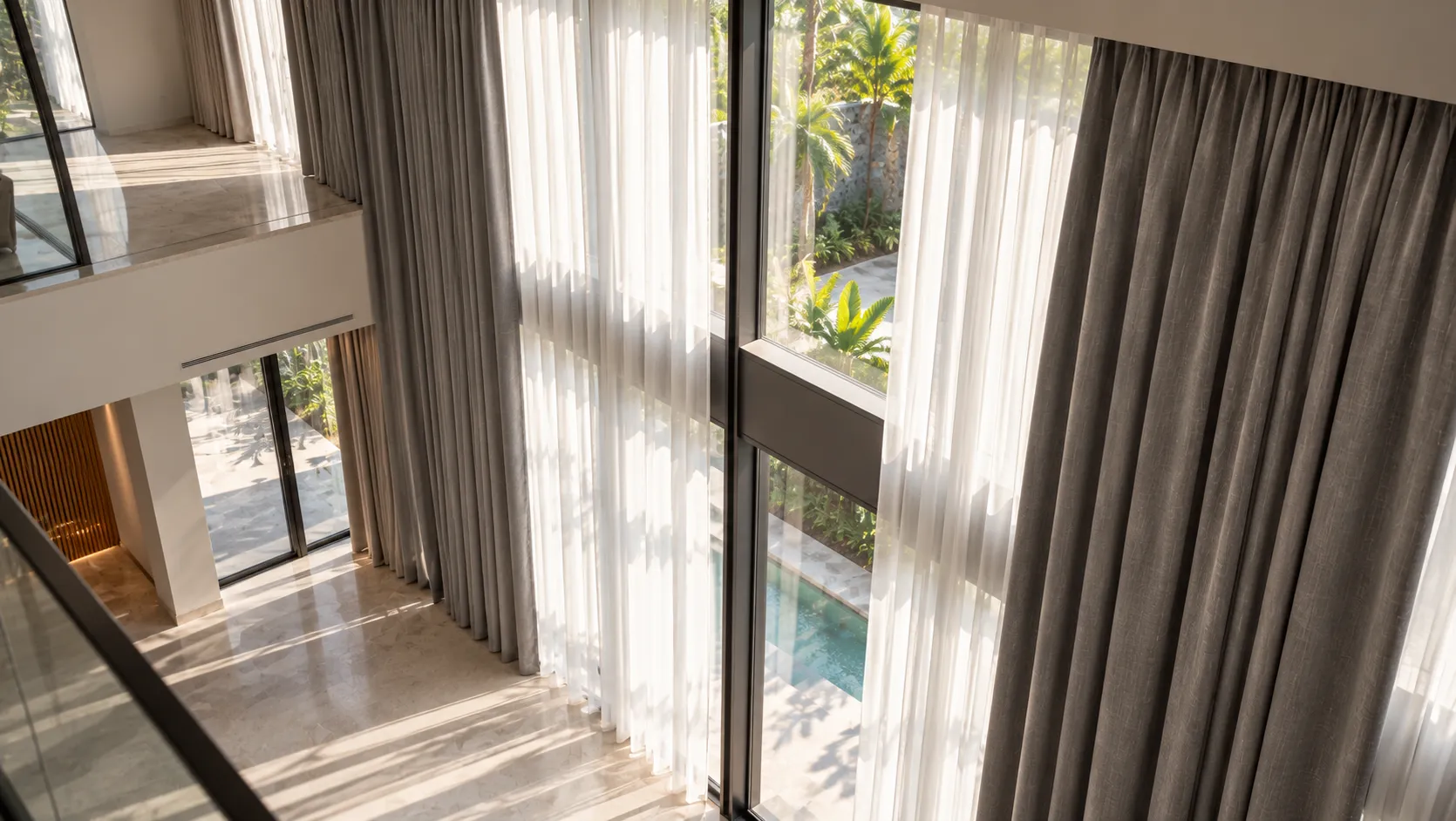
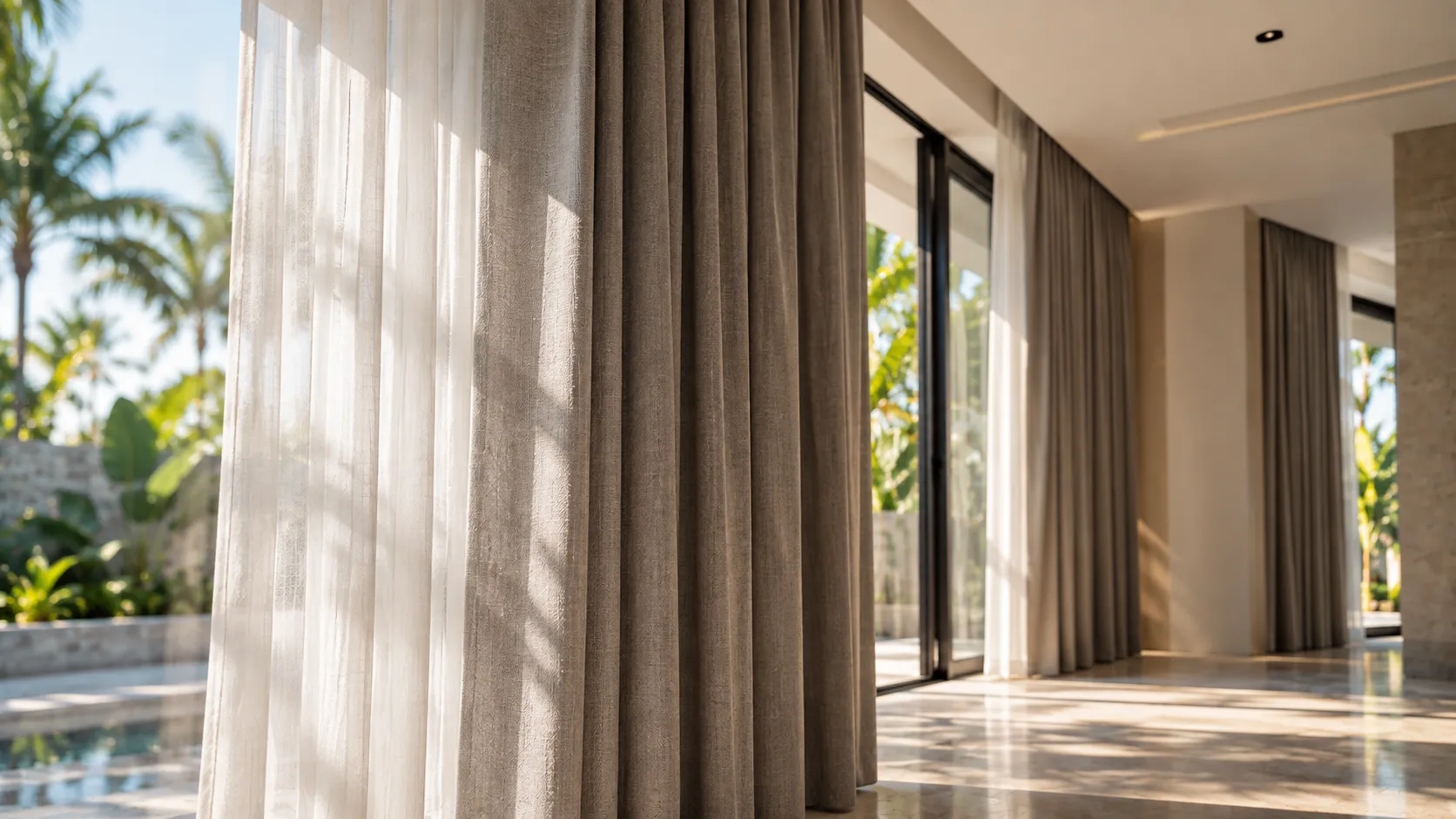
Sheer and heavier curtains can shift a room between filtered daylight, privacy and stronger light control. A blind paired with curtains offers another route. Plan both layers together and check track depth, handles, stack-back and remaining light gaps.
2. Tactile and Natural-Looking Fabrics
Linen, linen-look blends and woven surfaces add depth without relying on strong patterns. Their drape and care requirements vary by construction. Request a physical sample and observe it at the window because texture and colour can change with light direction.
3. Warm Neutrals With Selective Contrast
Warm whites, sand, taupe and muted earth tones can create a flexible foundation, while deeper colours or patterns may work as accents. No palette suits every interior: wall undertones, flooring, daylight and the exterior view all affect the result.
4. Discreet Hardware
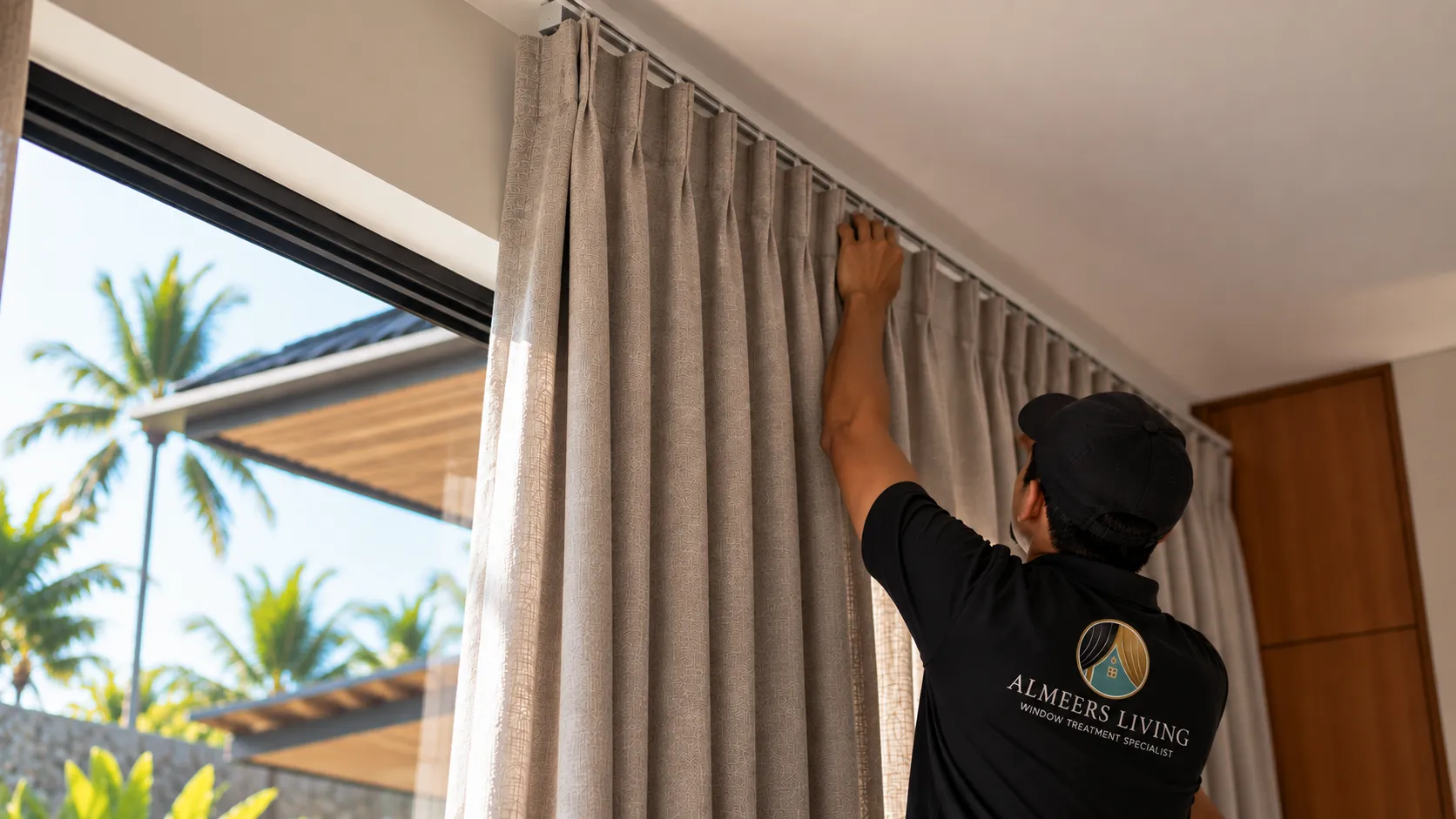
Ceiling tracks and carefully positioned rods can keep attention on fabric and architecture. Minimal hardware still needs correct fixing, clearance and service access. Plan it alongside ceiling details, pelmets and joinery rather than treating it as a last-minute accessory.
5. Motorization With a Purpose
Motorized curtains and blinds can help with high ceilings, wide spans and hard-to-reach windows. Before specifying a system, confirm finished curtain weight, power, track capacity, controls and maintenance access. Verify smart-home compatibility for the exact model.
6. Performance-Led Materials
| Goal | Question to answer |
|---|---|
| Soft daylight | Will a sheer give the desired view and privacy? |
| Sleep comfort | Is blackout or dimout appropriate, and how will gaps be handled? |
| Screen comfort | Would a blind give more precise glare control? |
| Easy care | How should the material be cleaned and dried? |
| Large openings | Can the hardware carry the finished weight? |
7. Ask Specific Sustainability Questions
“Eco-friendly” and “sustainable” can refer to different attributes. Ask about fibre content, documented recycled content, durability, cleaning needs, service life and replacement availability. Do not infer environmental benefits from a label alone.
8. Design for Indoor-Outdoor Living
Large openings need treatments that preserve the view when open and provide privacy when closed. Full-height curtains can frame the architecture; blinds can provide compact control. The open stack and door path must be part of the design.
9. Tailor the Solution to Each Window
A bedroom, kitchen, high clerestory and sliding door do not necessarily need the same system. Keep the colour language coordinated while adapting opacity, hardware and operation to each opening.
What May Not Work Everywhere
- Heavy layers can overwhelm a small opening.
- Delicate fabrics may be impractical in high-turnover rentals.
- Motorization adds cost and maintenance requirements.
- Minimal tracks still need secure fixing.
- Trend-led colours may be harder to coordinate with fixed finishes later.
How to Apply Trends Well
- Identify the problem the treatment should solve.
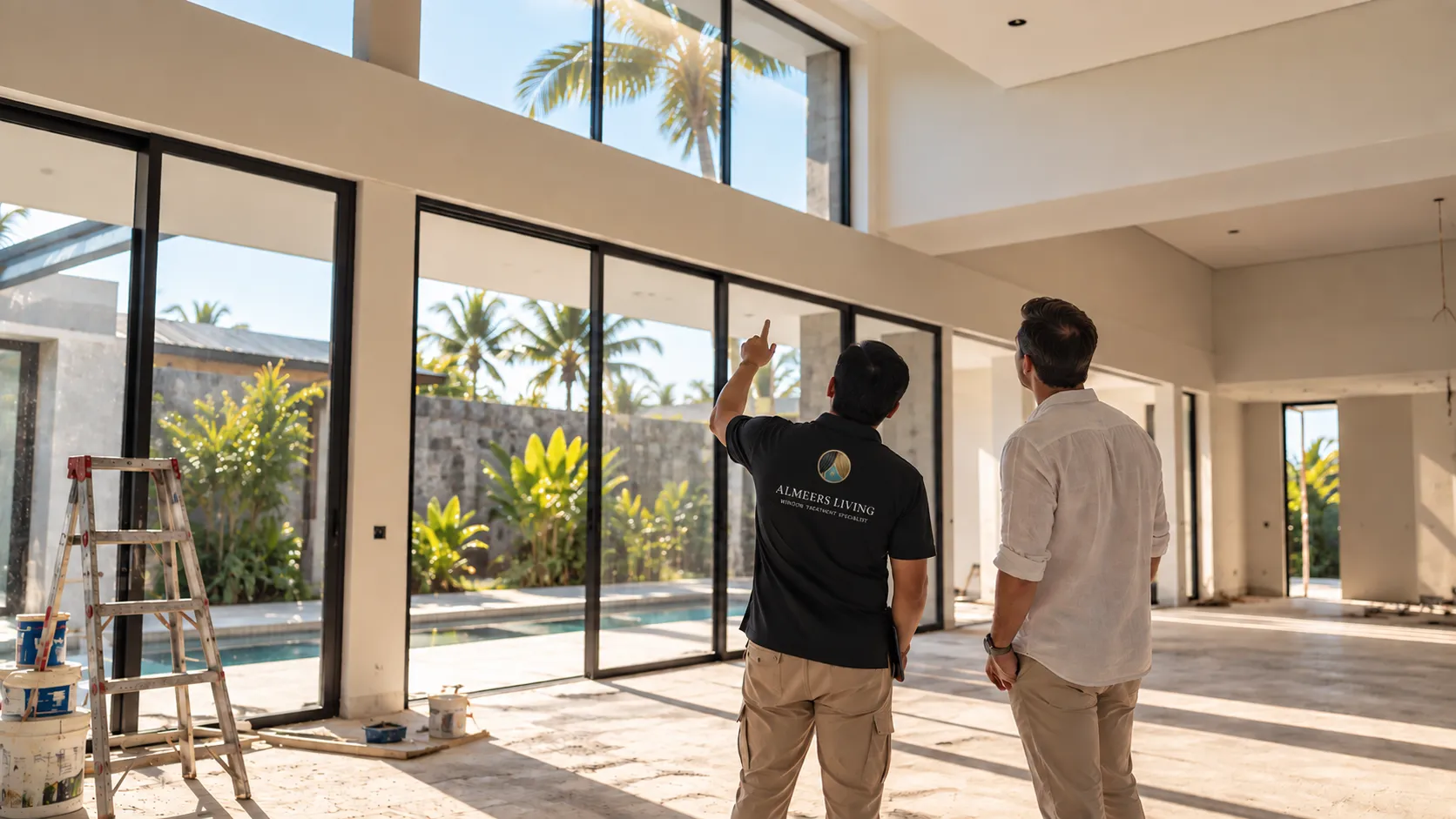
- Review dimensions and mounting conditions.
- Compare samples against fixed finishes.
- Check cleaning and maintenance needs.
- Confirm hardware, operating space and budget.
- Use trends where they support the wider design.
For Bali villas and hospitality projects, filter trends through strong sunlight, humidity, large glazing and daily maintenance. Almeers Living can translate design references into a practical specification for curtains, blinds and tracks.