How Curtain Weave Changes Drape, Fullness and Light Filtering
Two curtain fabrics made from similar fibres can look very different because their weave, density, weight and finish are not the same. These construction details affect how the fabric hangs, how much light passes through and whether the folds look soft, crisp or structured. When comparing samples, look beyond the fibre name and assess the actual fabric behaviour.
Weave, weight and drape are different factors
Weave describes how the yarns are interlaced. Weight affects how the fabric falls and how much load the track must support. Drape is the way the material hangs and forms folds. These factors interact, but one does not reliably predict the others: a dense fabric may be soft or stiff depending on yarn, construction and finish.
Open and close constructions
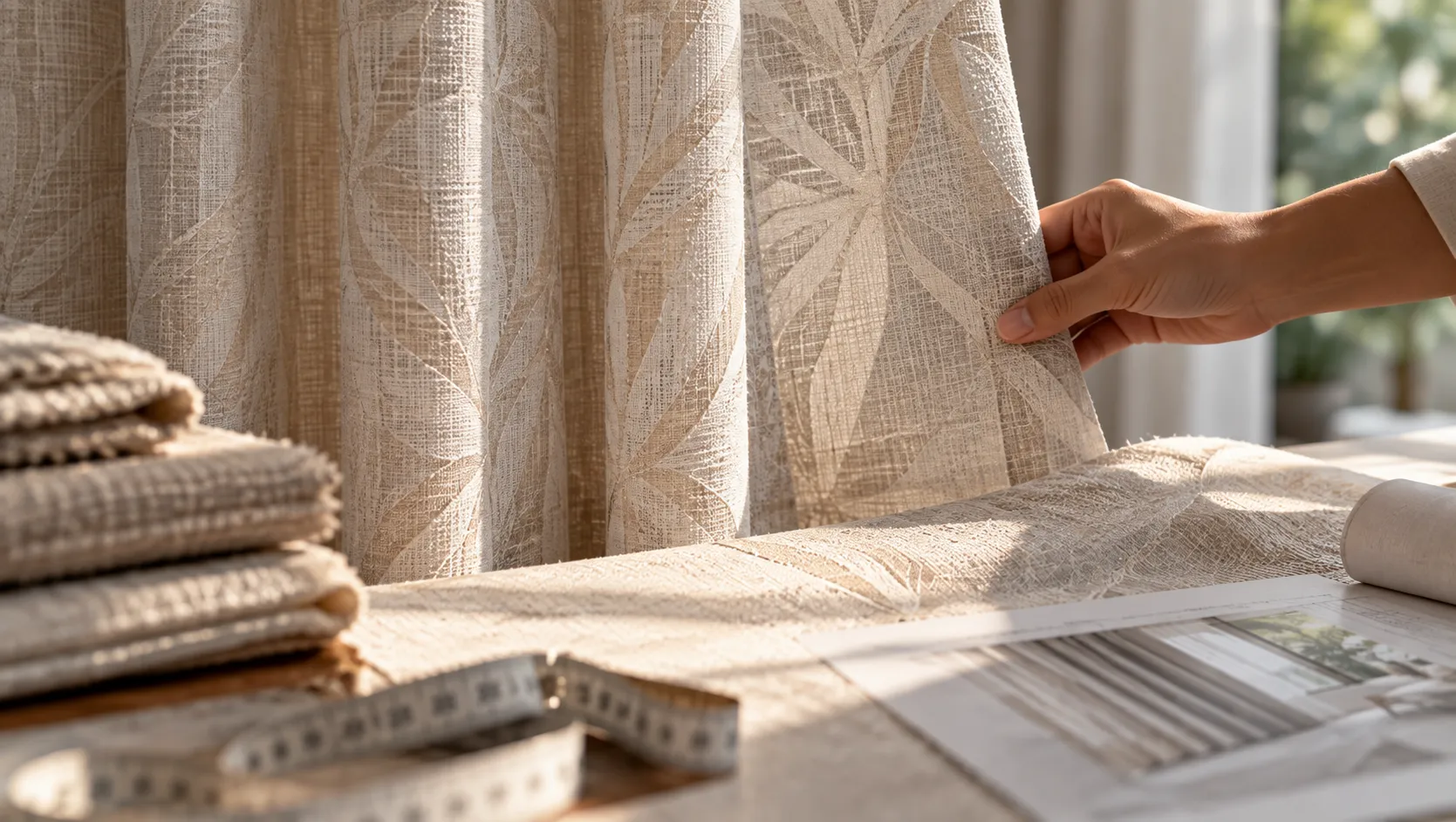
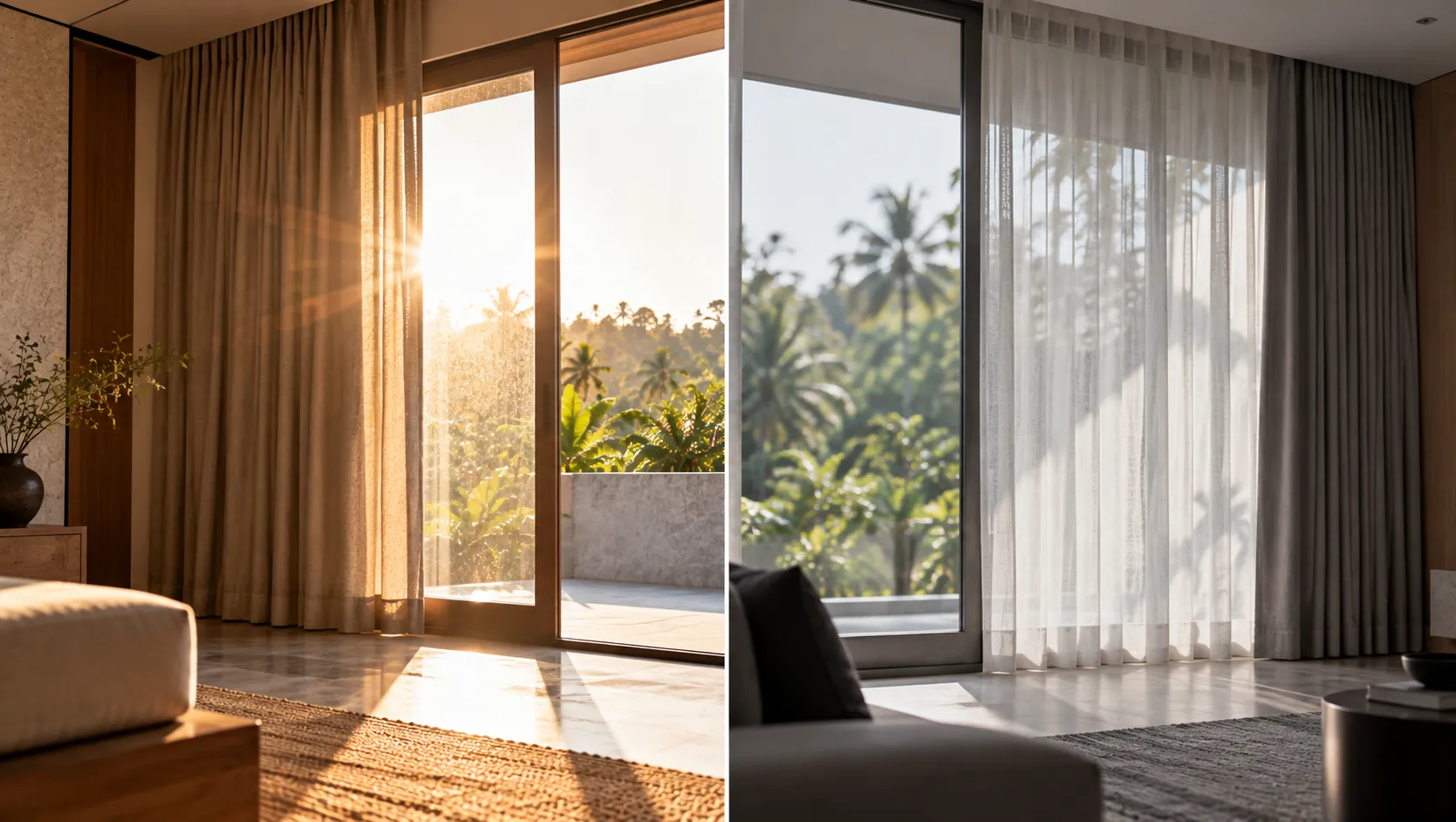
A more open construction may allow more daylight through and make the weave visibly textured. A denser construction can appear more solid and provide greater screening, though opacity still depends on colour, yarn, backing and lighting. Hold the sample against a window and inspect it from both sides. A product photograph cannot reliably show how transparent it will feel in your room.
How fabric behaves in folds
Soft, fluid fabrics tend to form rounded folds; firmer fabrics may hold a more defined shape. Fullness—the amount of fabric relative to the track width—also changes the finished look. More fullness creates more folds and may increase the visual depth of the fabric, but it also requires more material and adequate space to stack when open.
Why the heading matters
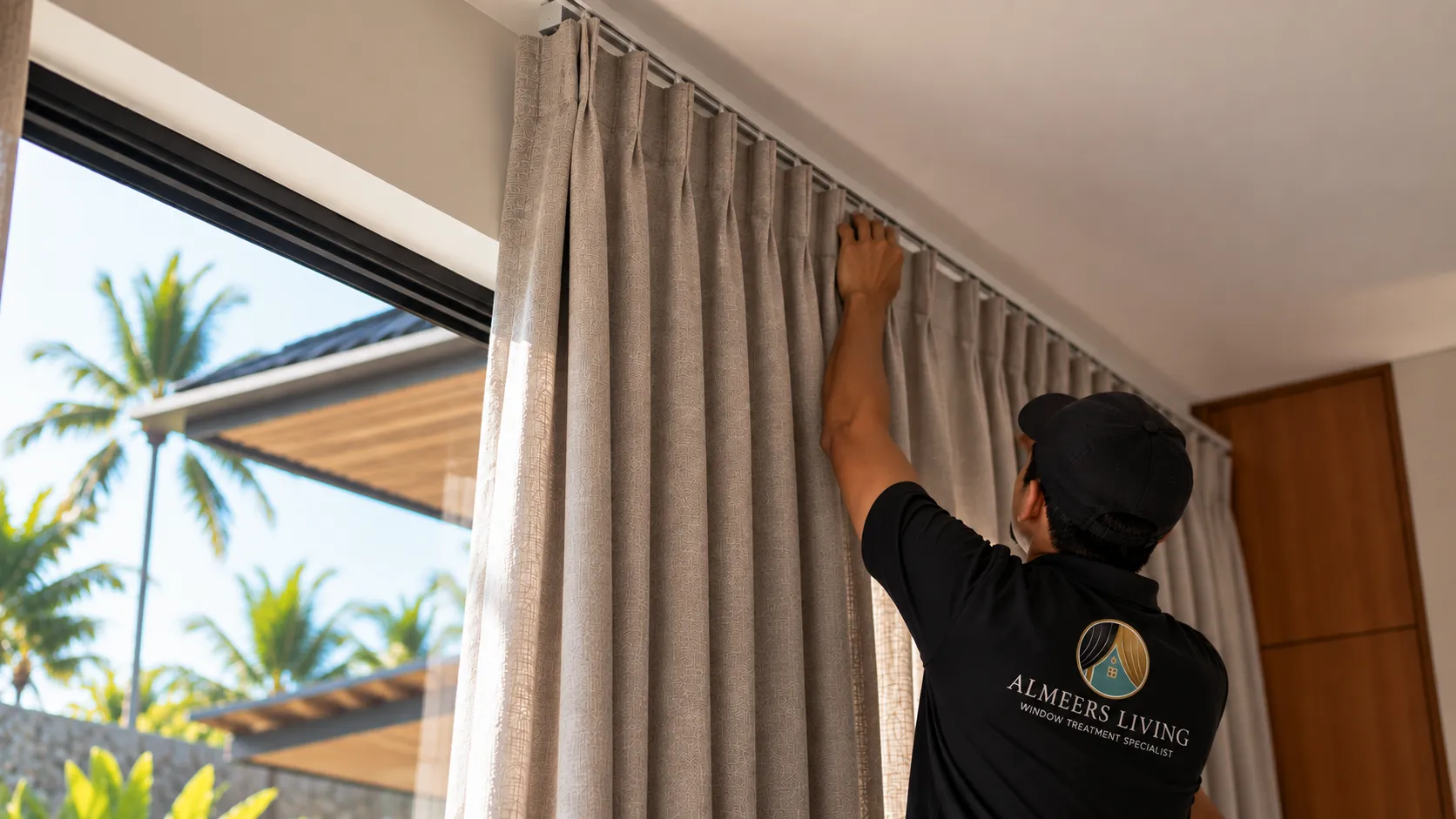
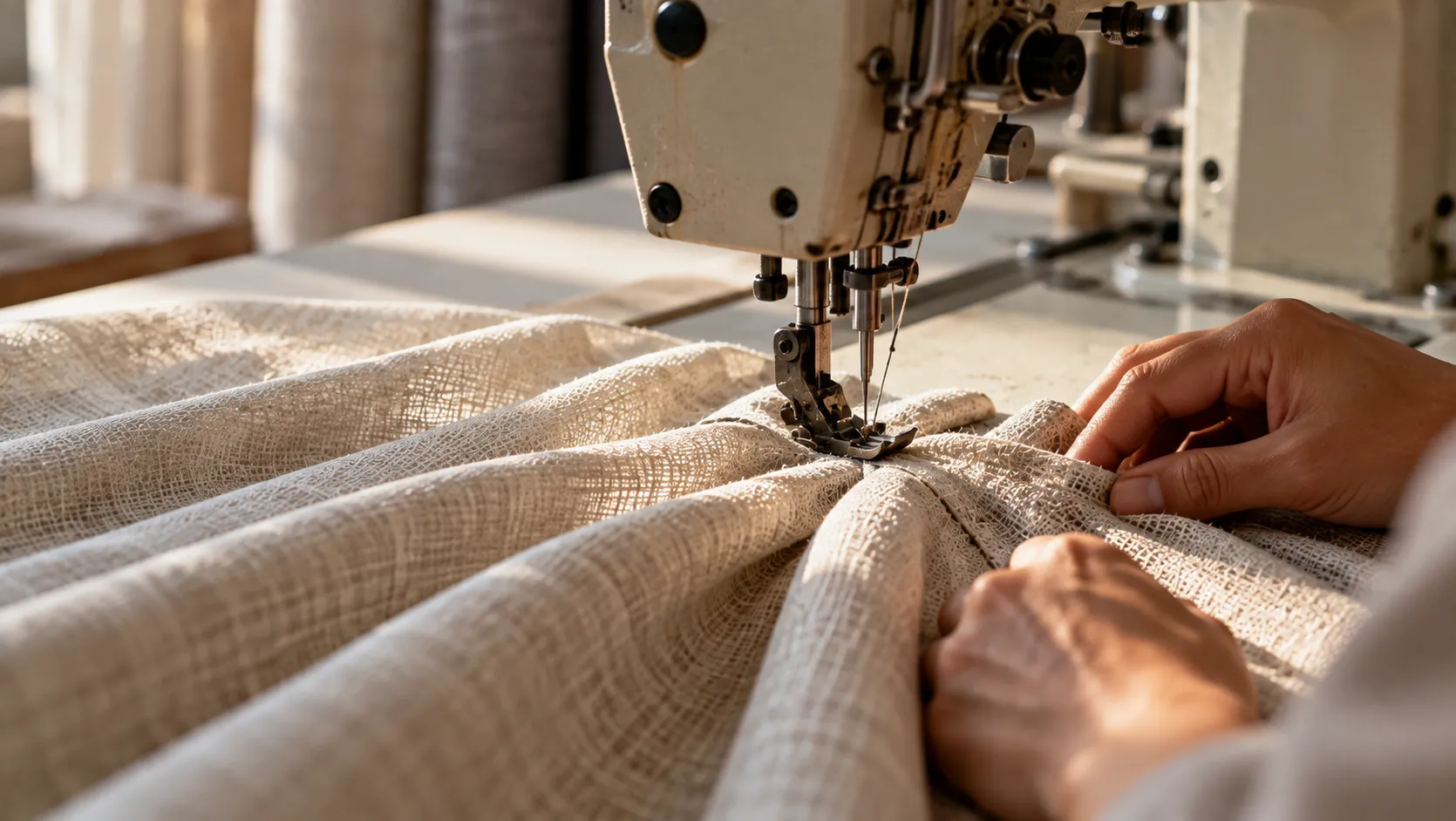
Pencil pleats, pinch pleats, wave headings and other constructions distribute fabric differently. A fabric that looks fluid on a flat table may form a different rhythm when sewn into a particular heading. Consider the sample together with the intended heading and track, especially for wide, full-height windows where the folds are a major design feature.
What to check in a fabric sample
- Hold it against daylight to assess transparency and texture.
- Gather it by hand to approximate the planned fullness.
- Observe whether the folds fall softly or keep a firmer shape.
- Compare colour and texture in daylight and evening lighting.
- Ask about lining, care instructions and sunlight suitability.
- Confirm the roll width and whether seams may be visible at the finished drop.
Match construction to the room
Living areas may benefit from a fabric whose texture is visible in daylight, while a bedroom may need a separate lining or second layer for darkness. For a large glass door, fabric weight and stack-back space should be checked together. In a rental property, maintenance and replacement practicality may matter as much as the initial appearance.
Do not assume weave alone determines performance
Light control, privacy and durability depend on the full fabric specification and the way it is installed. A sheer fabric can soften daylight without providing night privacy; a dense-looking curtain can still leave light gaps around the opening. Ask for product-specific information rather than relying on broad claims based on texture.
Related guides
See our curtain fabric types guide, linen curtains guide and colour and pattern checklist.
Compare fabric in its intended construction
Ask to review the fabric with the planned heading, fullness and lining before production. Almeers Living can help compare samples and explain how weave, weight and construction may affect the finished curtain.