Solar Gain vs Glare: How to Specify Window Coverings for Each Window
Solar heat gain and visual glare are related but different problems. Solar gain concerns heat entering through a window; glare is visual discomfort caused by excessive brightness or contrast. A treatment that improves one may not fully solve the other. Start by identifying what happens at each window instead of choosing one product for the entire property.
Diagnose the problem window by window
Record the window orientation, glazing size and times when direct sun reaches the room. Note whether the main complaint is a warm interior, reflections on a screen, fading concerns, lack of privacy or a combination. Also record where people sit, sleep or work. This simple survey helps avoid paying for features that do not address the actual issue.
Solar gain: what to consider
Direct sunlight can add heat to a room after passing through the glazing. The result depends on orientation, glass type, external shading, surrounding surfaces and local weather. Interior curtains and blinds can change the experience of the window, but their thermal effect varies by construction, fit and how they are used. Where heat is the main issue, ask about product data relevant to solar transmission and reflectance instead of relying on a generic “energy-saving” label.
Glare: what to consider
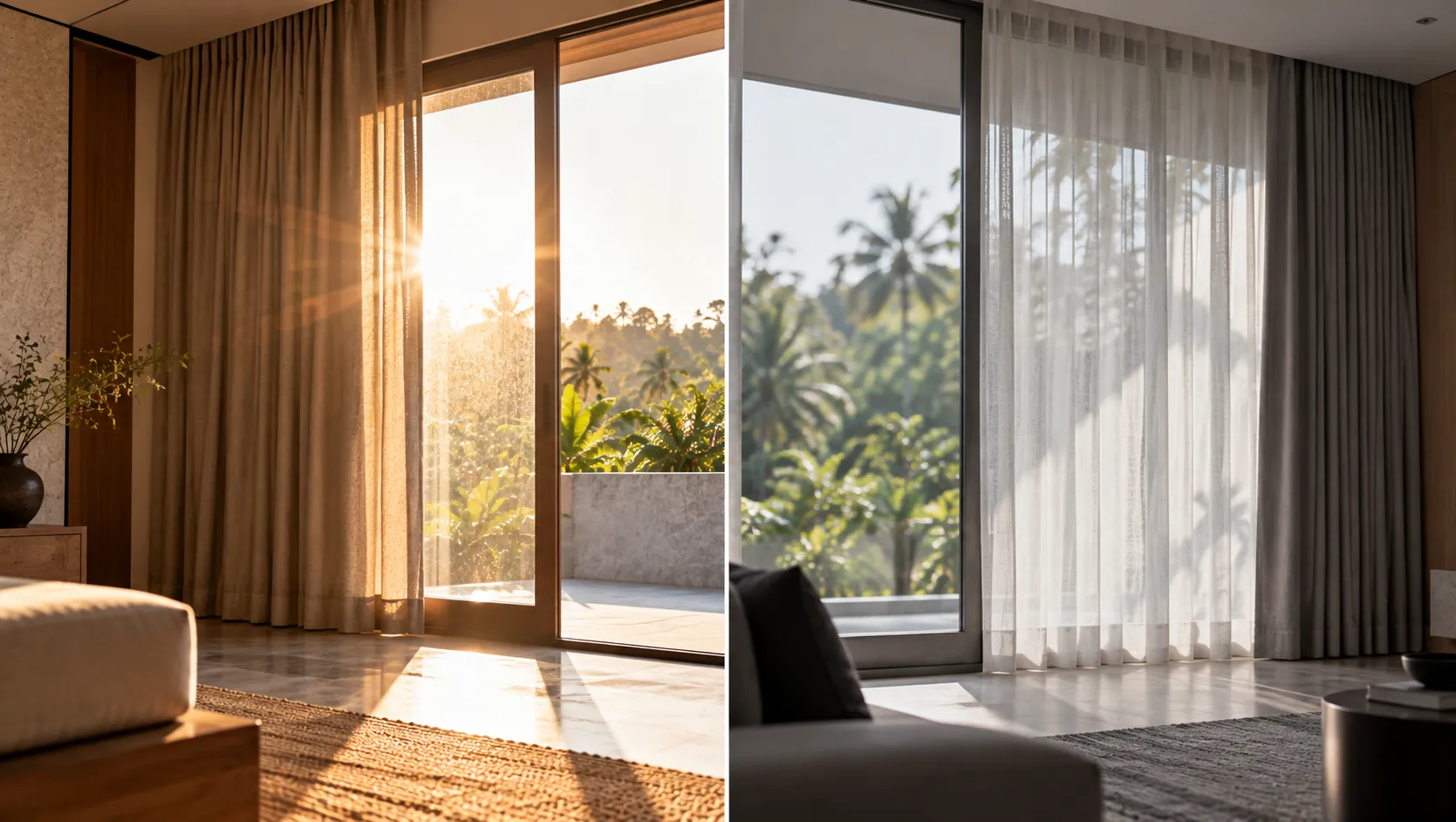
Glare often needs adjustable daylight control. Screen roller blinds can filter bright light while retaining some outward visibility; the result depends on openness factor, colour and weave. Sheers can soften contrast and maintain a light appearance, but they may not control strong direct sun sufficiently for every task. Blackout curtains are designed for stronger light blocking, yet may remove more daylight than a living or working space needs.
Match the approach to the room
- Home office: Prioritise glare control at the screen and choose an adjustable solution that preserves useful daylight.
- Bedroom: Define the darkness needed for sleep separately from daytime heat or glare concerns.
- Living room: Balance view preservation, glare and the times the room is occupied.
- Large sliding doors: Consider access, stack-back space and how the treatment operates throughout the day.
Interior and exterior shading
Exterior shading can intercept sunlight before it reaches the glass, while interior coverings act after light has passed through the glazing. Exterior options may be limited by wind exposure, façade rules, building management or maintenance. If exterior shading is not practical, an interior treatment can still be selected to improve visual comfort; simply be clear about what it can and cannot achieve.
Ask for comparable product information
When comparing options, ask what data is available for solar transmission, reflectance, openness factor or visible-light transmission, as relevant to the product. The terms and test methods can differ by product type, so compare like with like. Also check whether the quoted performance applies to the fabric alone or to a complete installed system.
Installation details still matter
Gaps at the sides, top and bottom can affect light control. Inside-mounted blinds may give a neat fit but leave some light around the edges; outside-mounted systems may cover more of the opening if space allows. Confirm frame depth, handles, fixing points and clearances before ordering.
Related guides
Read our inside versus outside mount guide, blackout, dimout and sheer comparison and window treatment buying guide.
Specify the problem before the product
A clear diagnosis of solar gain, glare and room use makes product comparisons more meaningful. Almeers Living can help assess the window conditions and compare curtain or blind options. Request a site survey before confirming measurements and specifications.