Panduan Kombinasi Gorden & Blind: What to Know Before You Choose
Combining curtains and blinds can solve problems that a single window treatment cannot. A blind can provide precise daytime light control while a curtain adds softness, privacy, visual height and a second layer of coverage. The key is to specify both systems as one window-treatment plan rather than choosing each product independently.
Short answer: use the blind for the function that needs precision and the curtain for the function that benefits from coverage, softness or architectural framing. Then check mounting depth, handles, stack-back, fabric weight, light gaps and operating clearance before confirming the design.
Why Combine Curtains and Blinds?
Roller, Venetian and other blinds sit close to the window and can control light without occupying much floor space. Curtains extend farther into the room and can cover a wider area around the opening while adding texture.
| Need | Blind contribution | Curtain contribution |
|---|---|---|
| Daylight control | Precise adjustment depending on blind type and fabric | Softens daylight and changes the room atmosphere |
| Privacy | Fast, practical coverage | Broader visual coverage and stronger layering |
| Glare | Useful for directional or solar-control needs | Can reduce direct glare when closed |
| Interior softness | Structured appearance | Adds textile texture and vertical lines |
Start With the Window, Not the Product
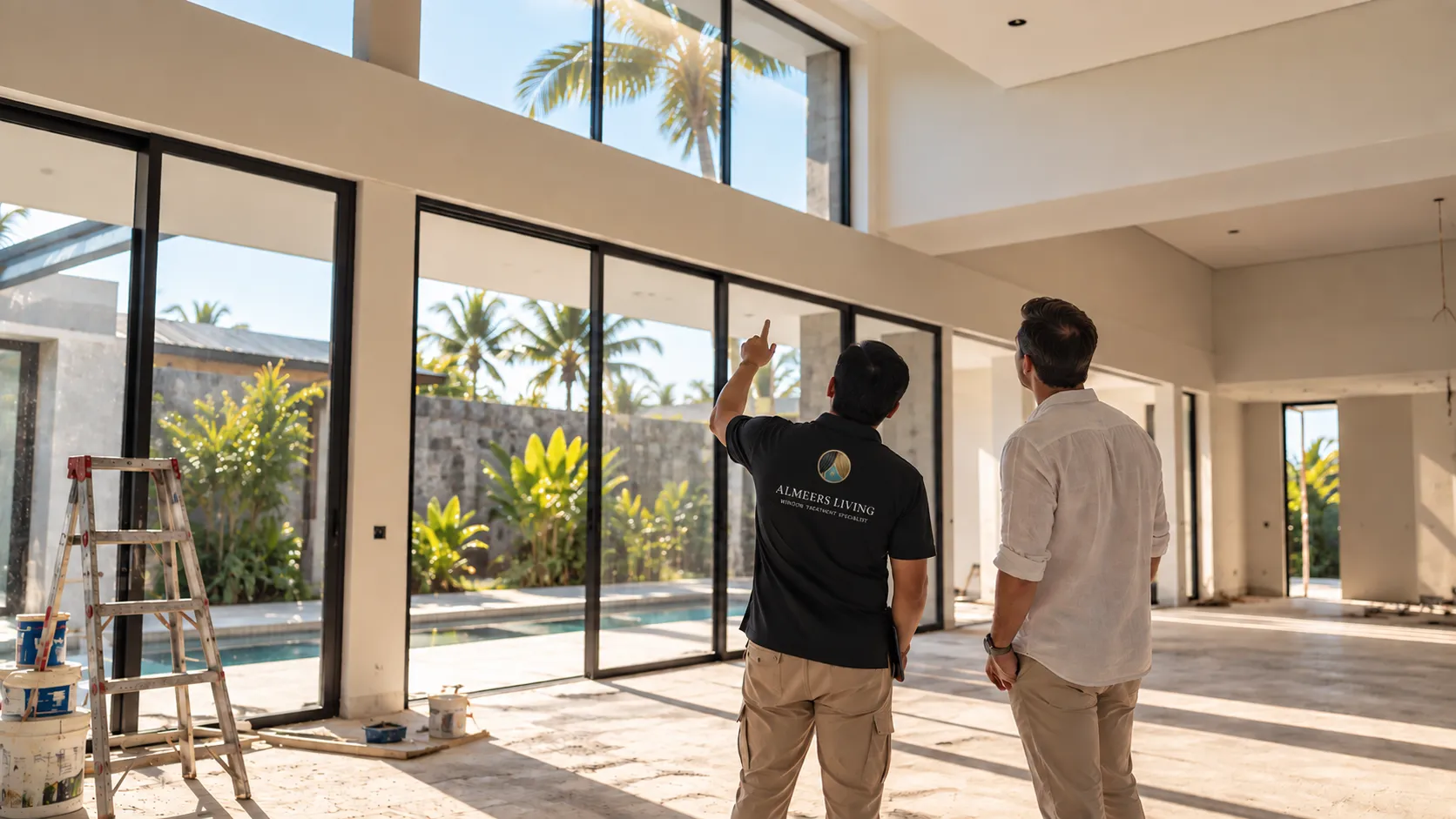
Inspect the actual opening before selecting either product. Check width, height, recess depth, frame profile, handles, sliding direction, ceiling condition and available wall space. A combination that looks simple in a reference image may require different mounting positions on the real window.
A deep recess may allow an inside-mounted roller blind while the curtain track sits outside the recess. A shallow recess or projecting handle may require the blind to be mounted differently. Resolve these details before fabrication.
Roller Blind + Full-Height Curtain
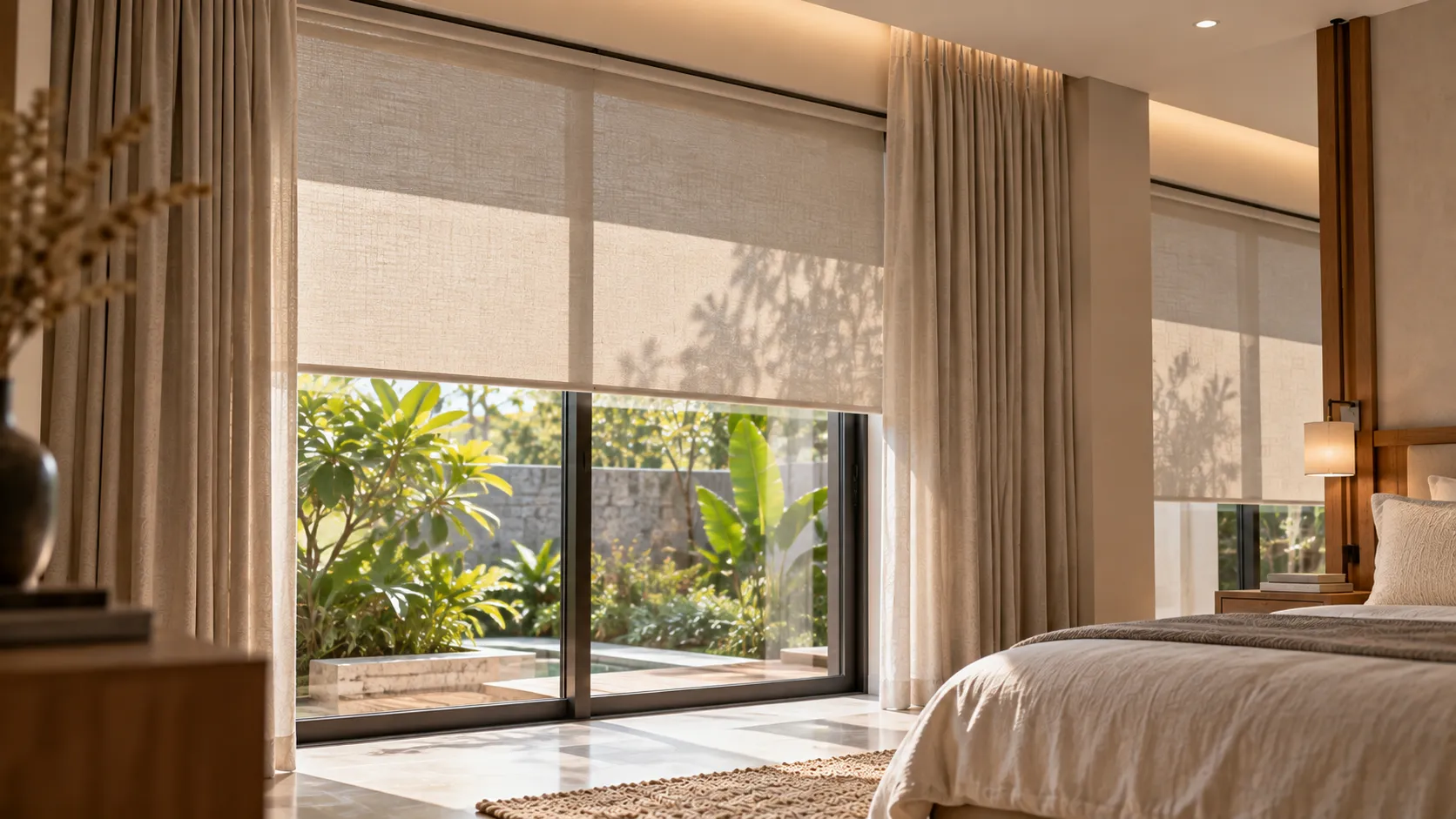
This is a versatile combination for contemporary interiors. The roller blind provides compact daytime control, while the curtain creates a softer architectural layer. It works well in living rooms, bedrooms and offices where a clean blind is useful during the day but a more finished appearance is wanted when the curtains are closed.
Venetian or Wooden Blind + Curtain
Horizontal blinds provide adjustable light direction and privacy. Adding a curtain introduces a vertical textile layer that softens the horizontal lines. For tropical interiors, wood-look or wooden blinds can coordinate naturally with timber, stone and woven materials, while the material should still reflect moisture, cleaning and operating conditions.
Blackout Blind + Sheer Curtain
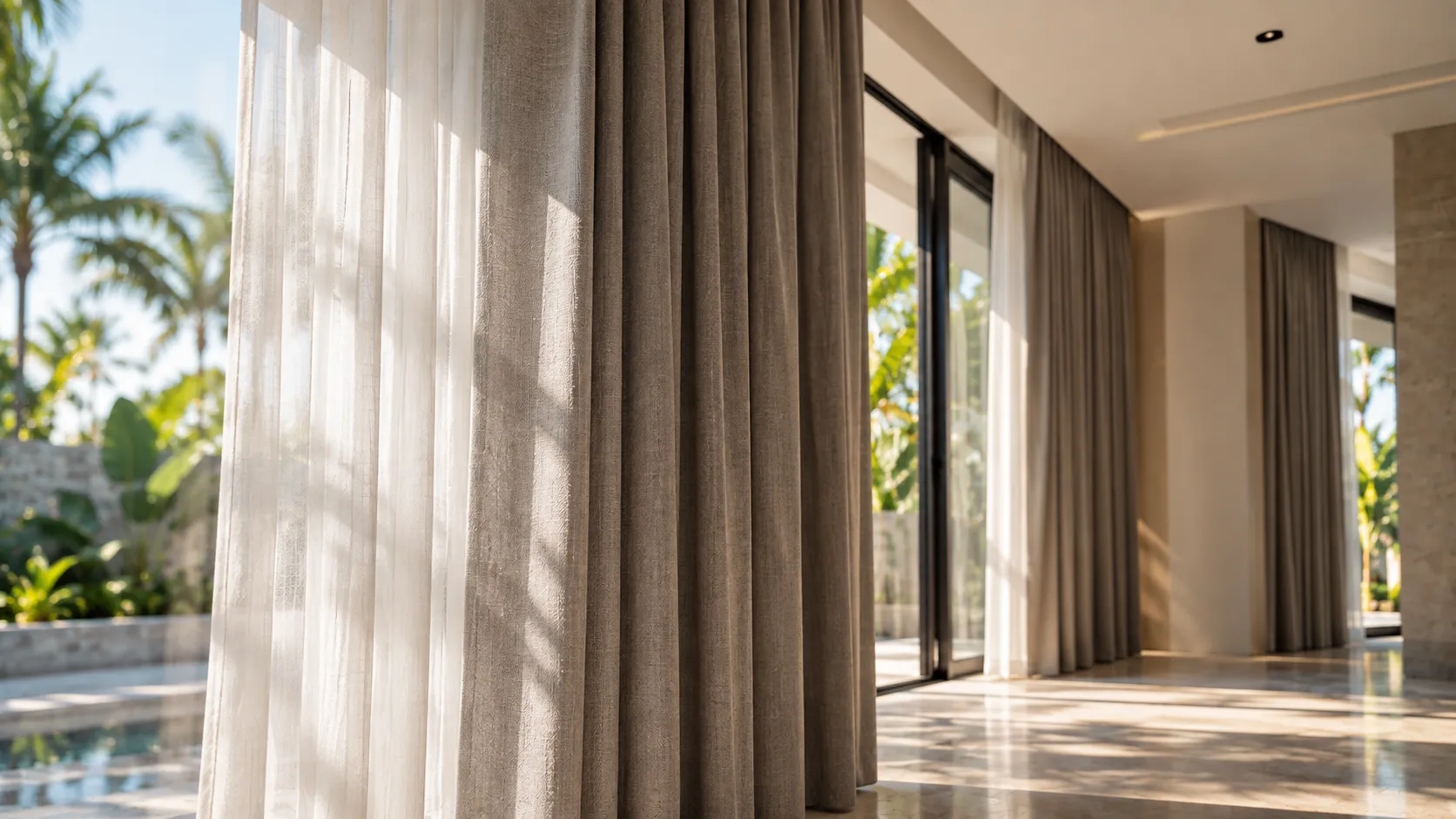
For bedrooms, a blackout roller blind can provide strong room-darkening capability while a sheer curtain maintains a lighter daytime appearance. The two layers should not compete for the same physical space, so confirm blind depth, curtain-track position and stack-back before installation.
How to Coordinate Colour and Texture
- Use a quieter blind colour when the curtain is the main decorative element.
- Use a textured curtain when the blind is visually minimal.
- Keep undertones compatible rather than matching every element exactly.
- Test physical samples together under actual daylight.
- Use contrast deliberately, not simply because two products are present.
Mounting Order Matters
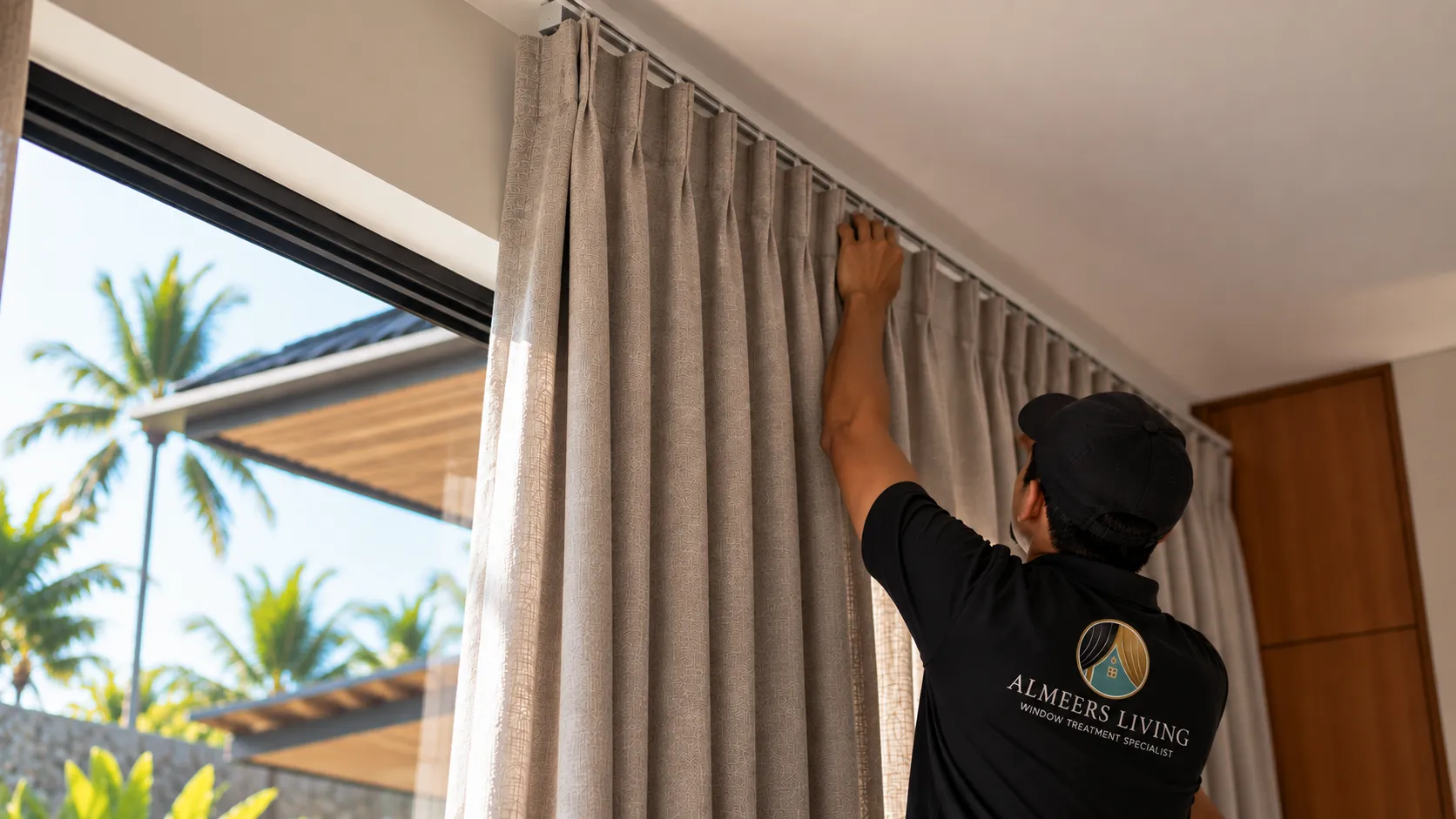
Hardware should be planned as a system. An inside-mounted blind can preserve wall space for a curtain track, while an outside-mounted blind may require additional clearance. For ceiling-height curtains, check whether the track interferes with the blind headrail or cassette. Also check doors, handles, sliding panels and air-conditioning units.
Think About Light Gaps
Layering does not automatically create blackout conditions. Light can still enter around sides, above the treatment or between moving panels. If darkness is important, specify the blind, curtain, mounting position and coverage together.
Room-by-Room Specification
| Room | Possible combination | Primary reason |
|---|---|---|
| Master bedroom | Blackout blind + sheer/blackout curtain | Sleep, privacy and flexible daylight |
| Living room | Roller blind + linen or sheer | Glare control with softer styling |
| Home office | Roller blind + side curtain | Screen glare and visual comfort |
| Dining area | Roller or Venetian + sheer | Daylight without heavy appearance |
| Large glass opening | Selected blind + full-height curtain | Flexible control and architectural framing |
Common Mistakes
- Choosing blind and curtain separately without checking clearance.
- Using two visually heavy fabrics in a small room.
- Ignoring the blind headrail when planning a ceiling curtain.
- Forgetting handle projection.
- Assuming two layers automatically mean complete blackout.
- Choosing colours from separate screens instead of physical samples together.
Bali and Tropical-Climate Considerations
Large glazed openings, strong sunlight and humid conditions make the relationship between the two layers especially important. Allow practical airflow, choose materials appropriate to the room and make sure both systems can be cleaned and operated easily.
Professional Measurement Checklist
- Measure the full opening, not only the glass.
- Record recess depth and frame projections.
- Check handles and door movement.
- Decide blind mounting method.
- Determine curtain track position and stack-back.
- Confirm finished curtain height and width.
- Define light-control and privacy requirements.
- Compare blind and curtain samples together.
- Confirm manual or motorized operation.
- Review the complete specification before production.
Almeers Living can assess the opening, compare blind and curtain combinations, and coordinate measurement, fabric selection, custom production and installation for Bali properties.