Best Rooms for Venetian Blinds: Moisture Resistance, Light Control, and Spatial Adaptability
Venetian blinds are renowned for their exceptional spatial adaptability and granular light filtering capabilities. However, maximizing their functional performance requires matching specific slat materials to the environmental conditions of different rooms throughout your home.
Here is an architectural guide detailing the best room applications for Venetian blinds and ideal material choices for each space.
1. Bathrooms and Kitchens (Faux Wood & Composite PVC)
High ambient steam, water splashes, and cooking grease ruin traditional fabric drapes. Faux wood (PVC composite) or aluminum Venetian blinds thrive in high-humidity wet zones, offering 100% moisture resistance without warping, cracking, or absorbing damp odors.
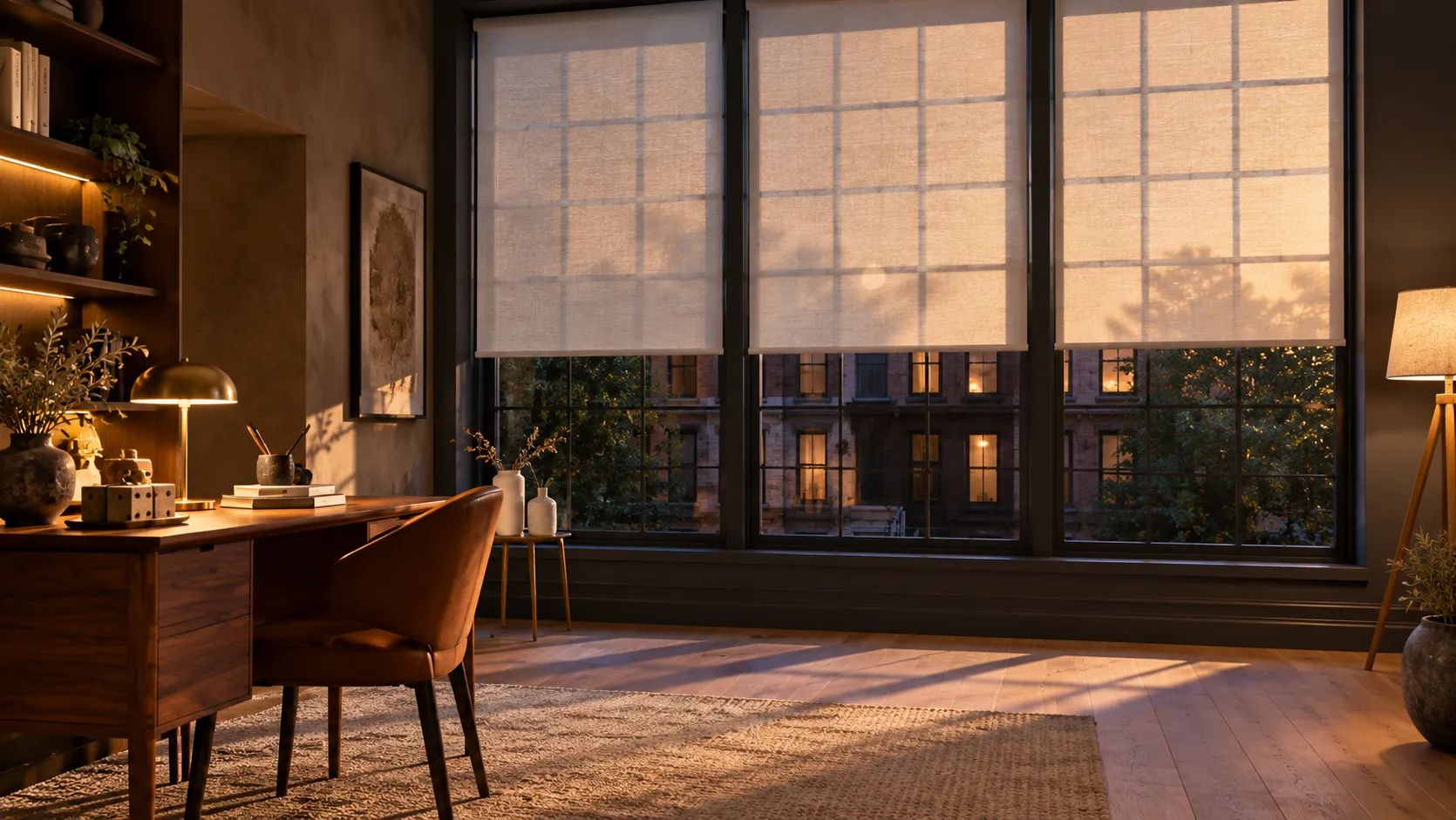
2. Home Offices and Study Nooks (Natural Timber & Aluminum)
Productive work spaces require adaptable solar control to eliminate computer screen glare without darkening the room. Tilting horizontal timber or aluminum Venetian slats directs sunlight toward ceilings, filling study spaces with comfortable indirect daylight.
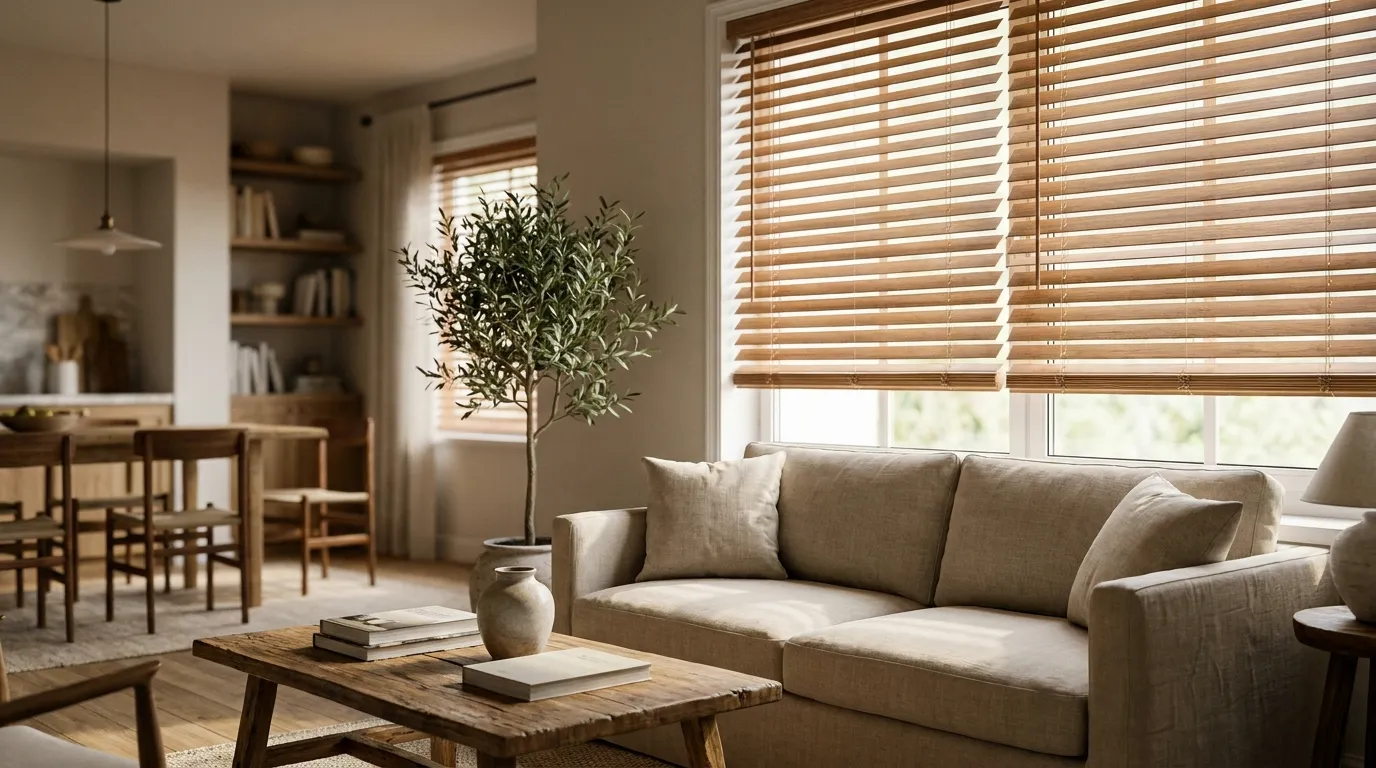
3. Living Rooms and Sunrooms (50mm Hardwood Slats)
Expansive 50mm hardwood Venetian blinds in warm oak, teak, or matte white finishes frame living room windows with crisp architectural structure, adding natural timber warmth that complements biophilic and contemporary decor styles.
4. Easy-Clean Maintenance Advantage
Unlike heavy drapery requiring professional dry cleaning, Venetian blinds can be maintained effortlessly by dusting slats regularly using a microfiber wand or damp cloth, keeping window treatments hygienic year-round.