
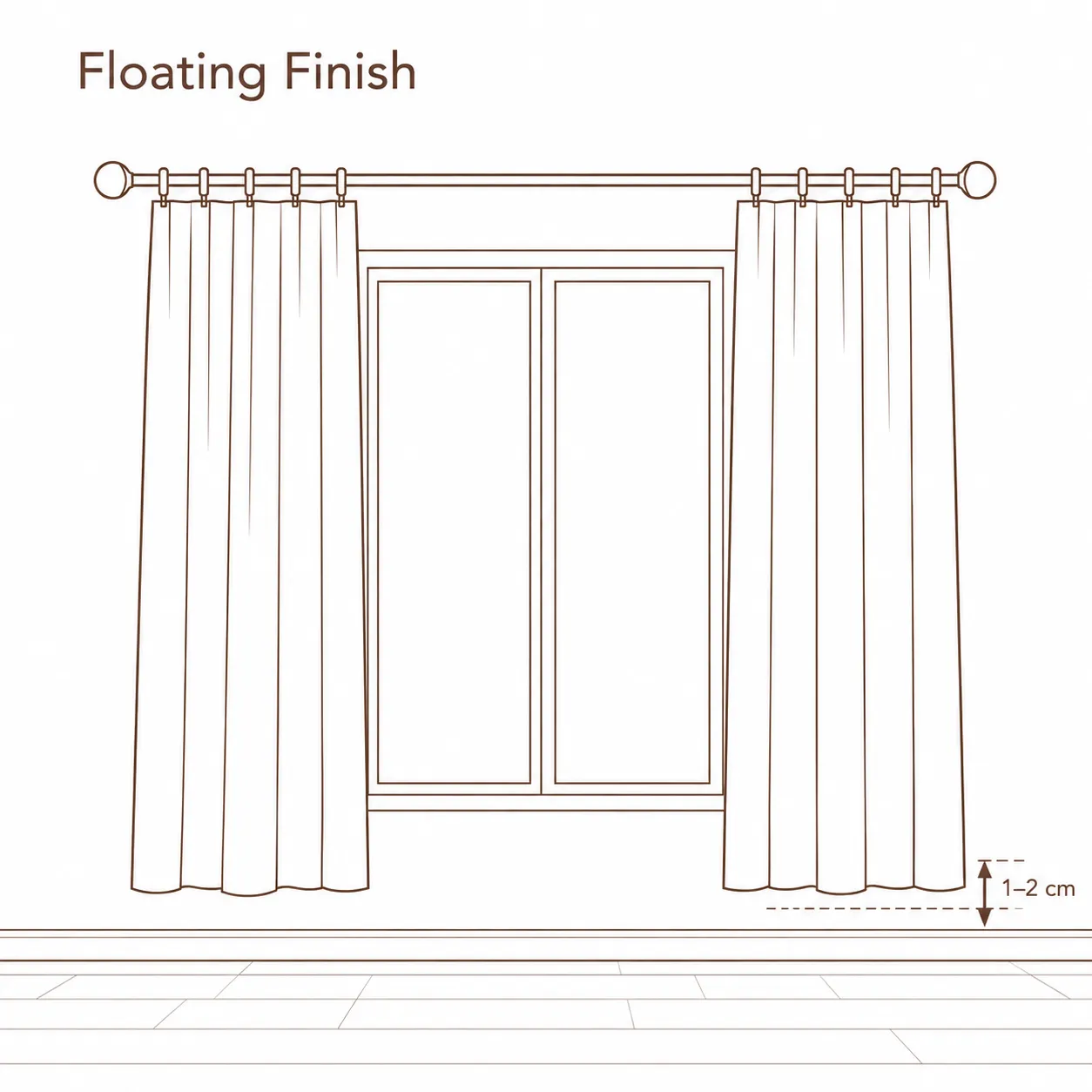
 01 · FLOATING
Floating above the floor
A small clearance—often around 1–2 cm—keeps the hem off the floor and can make cleaning easier. The right clearance depends on the desired look and whether the floor is level.
CUSTOM CURTAINS · ALMEERS LIVING
Accurate measurements are the foundation of curtains that hang beautifully, frame a window properly and work with your chosen hardware. Use this step-by-step guide to plan width, finished drop and fullness before requesting a custom quotation.
Start measuring →For tall glazing, unusual windows or layered treatments, use this as a planning guide and confirm final production measurements with your curtain specialist.


MEASURE FIRST · ORDER WITH CONFIDENCE
Record the opening, hardware position and intended finish first. Then confirm the final production measurements with your curtain specialist.
Identify the window, hardware and finish you want before taking measurements. This prevents confusing window dimensions with the finished curtain dimensions.
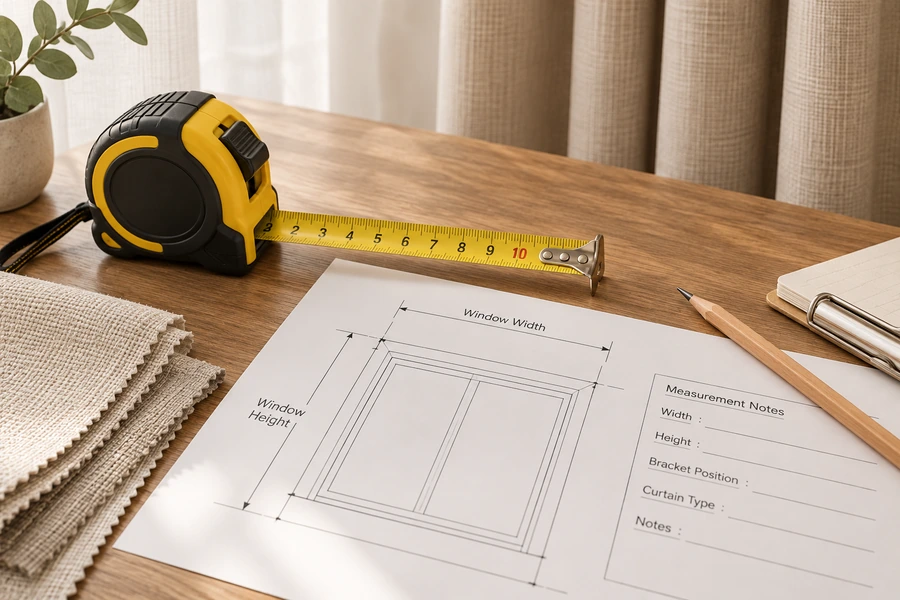

Width planning determines how much glass the curtains cover when closed and how far they can move away from the opening when open.
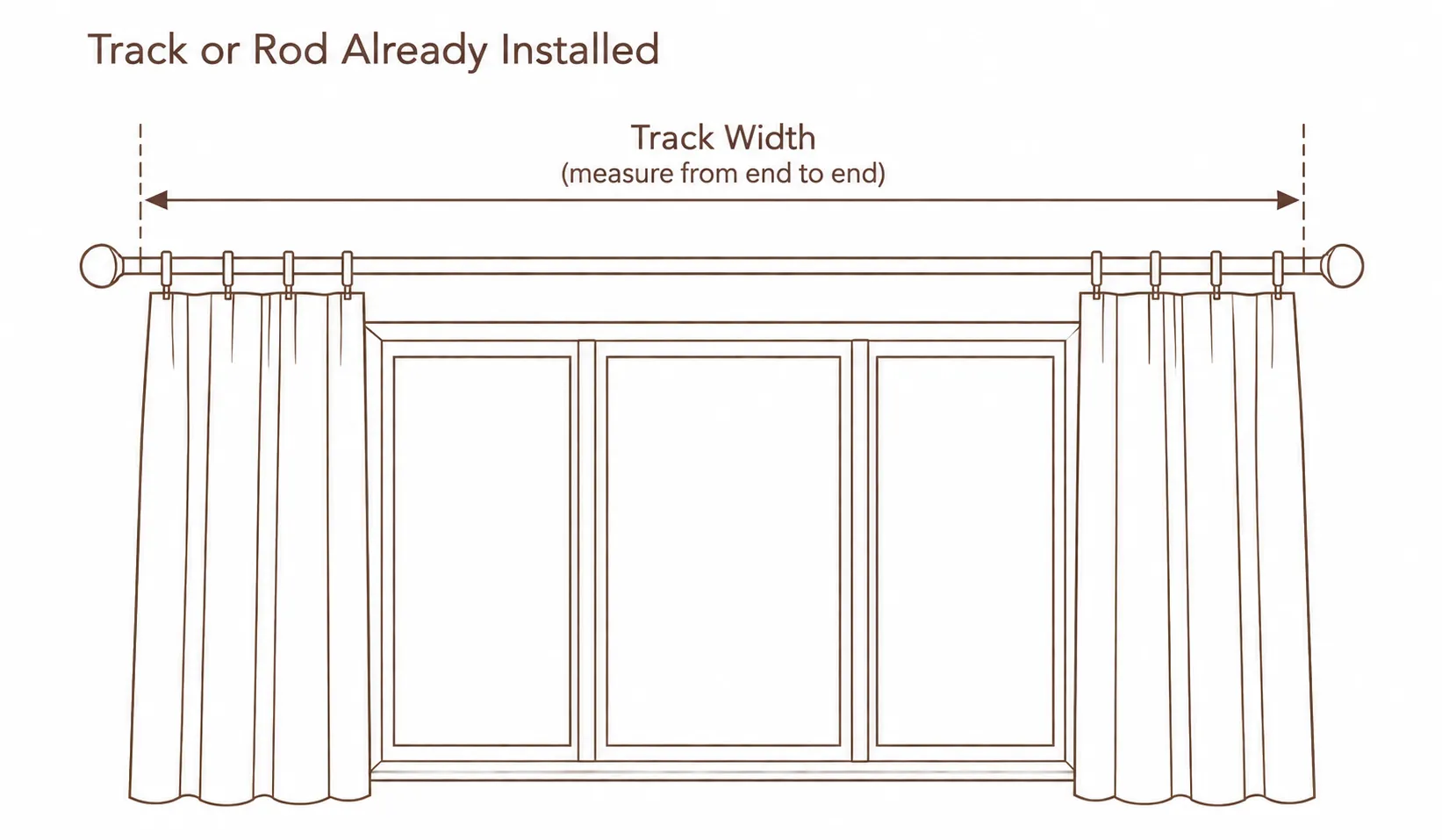
Measure the usable curtain-running length according to the hardware design. Do not include decorative finials if they are not part of the usable curtain span. Check whether the end return or bracket affects the measurement.
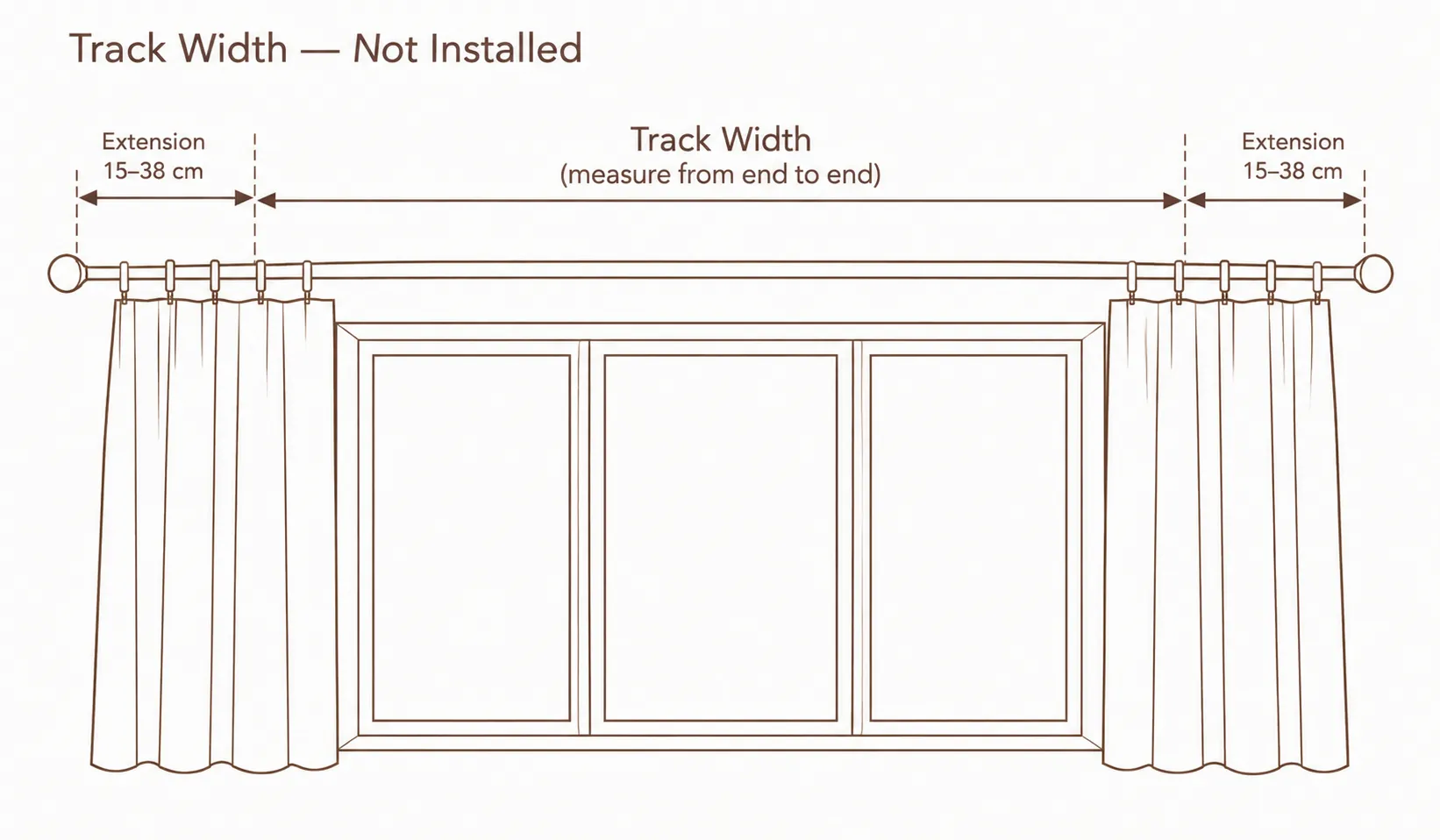
Plan where the track will sit. Side extensions can let curtains stack beyond the glass, improve daylight access and make a window feel wider. The suitable extension depends on wall space, fabric bulk, furniture and door access.
PLANNING FORMULA
Planned track width = window reference width + left extension + right extensionExample: a 180 cm window with a 20 cm extension on each side gives 180 + 20 + 20 = 220 cm planned track width. This is an example, not a universal specification.
Record the planned track width separately from the fabric width. They are related measurements, but they are not interchangeable.
The drop is the vertical distance from the correct hardware reference point to the bottom edge of the finished curtain. It is not automatically the same as the window height.

Depending on the system, the starting point may be the top of a track, carrier, hook position or rod reference. If the curtain uses hooks or adjustable carriers, their setting can affect the finished hem position. Confirm the exact reference point before recording the final drop.
01 · FLOATINGA small clearance—often around 1–2 cm—keeps the hem off the floor and can make cleaning easier. The right clearance depends on the desired look and whether the floor is level.
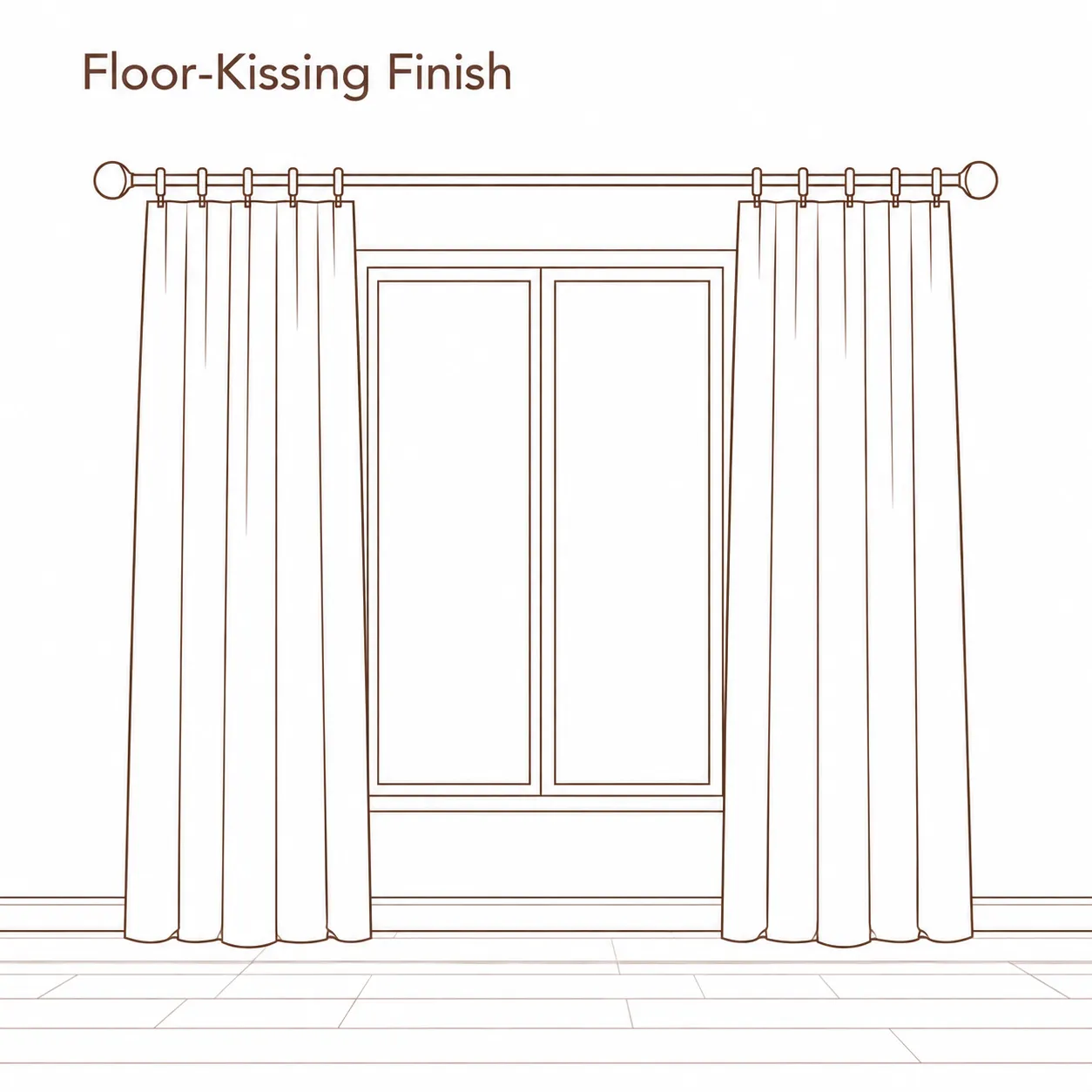 02 · FLOOR-KISSING
The hem sits at floor level for a clean, tailored finish. Measure carefully because small floor variations can make one side appear to drag or hover.
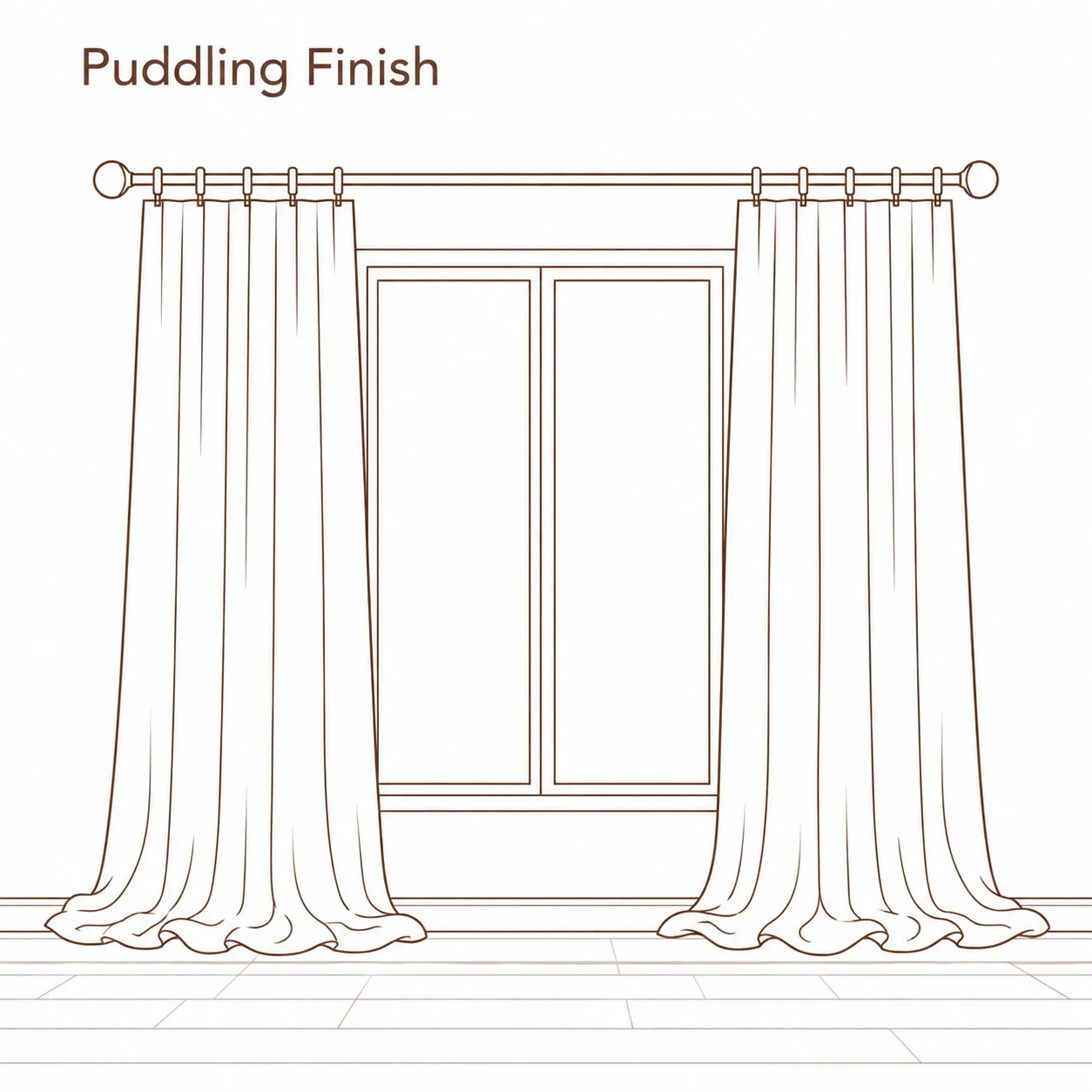 03 · PUDDLING
Additional fabric creates a relaxed pool. It can look decorative but may collect dust and is less practical in busy walkways. Agree the extra length with the maker.
Fullness describes how much fabric is used in relation to the width it needs to cover. More fullness generally creates deeper folds; less fullness gives a flatter appearance.
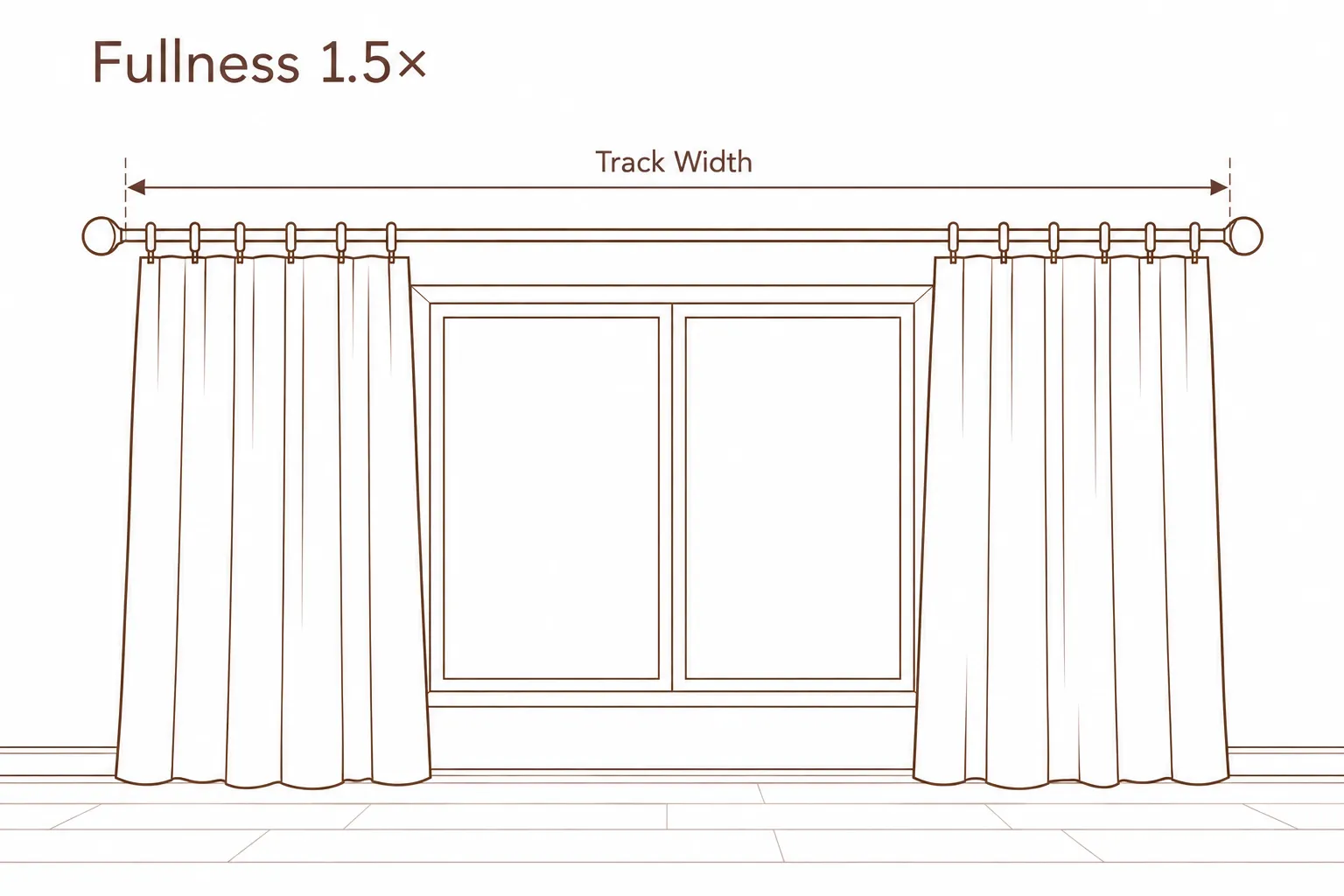
A restrained, relaxed appearance with more open folds and a less dense look.
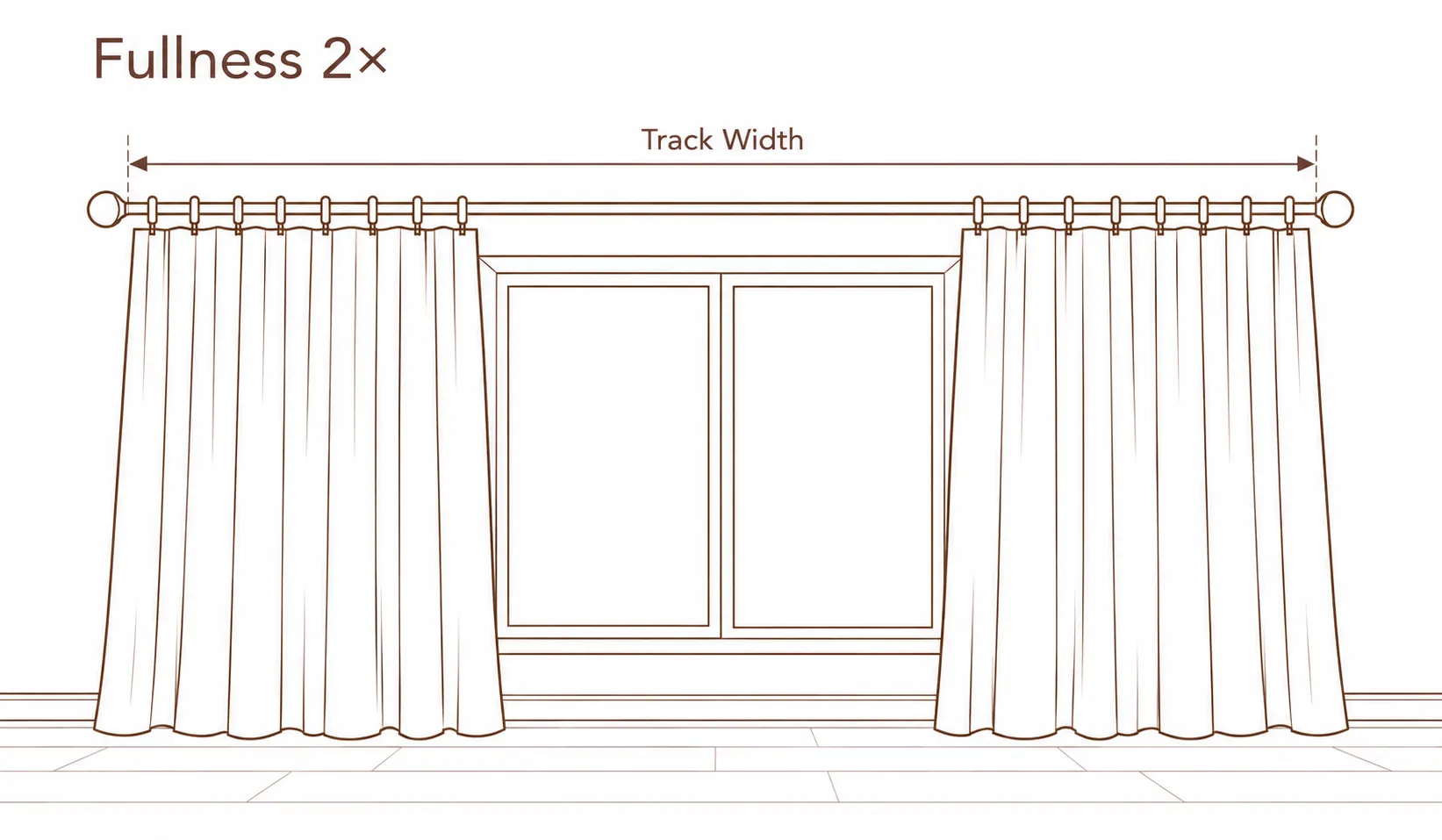
A fuller drape with more defined folds. The right amount depends on fabric weight, heading and desired look.
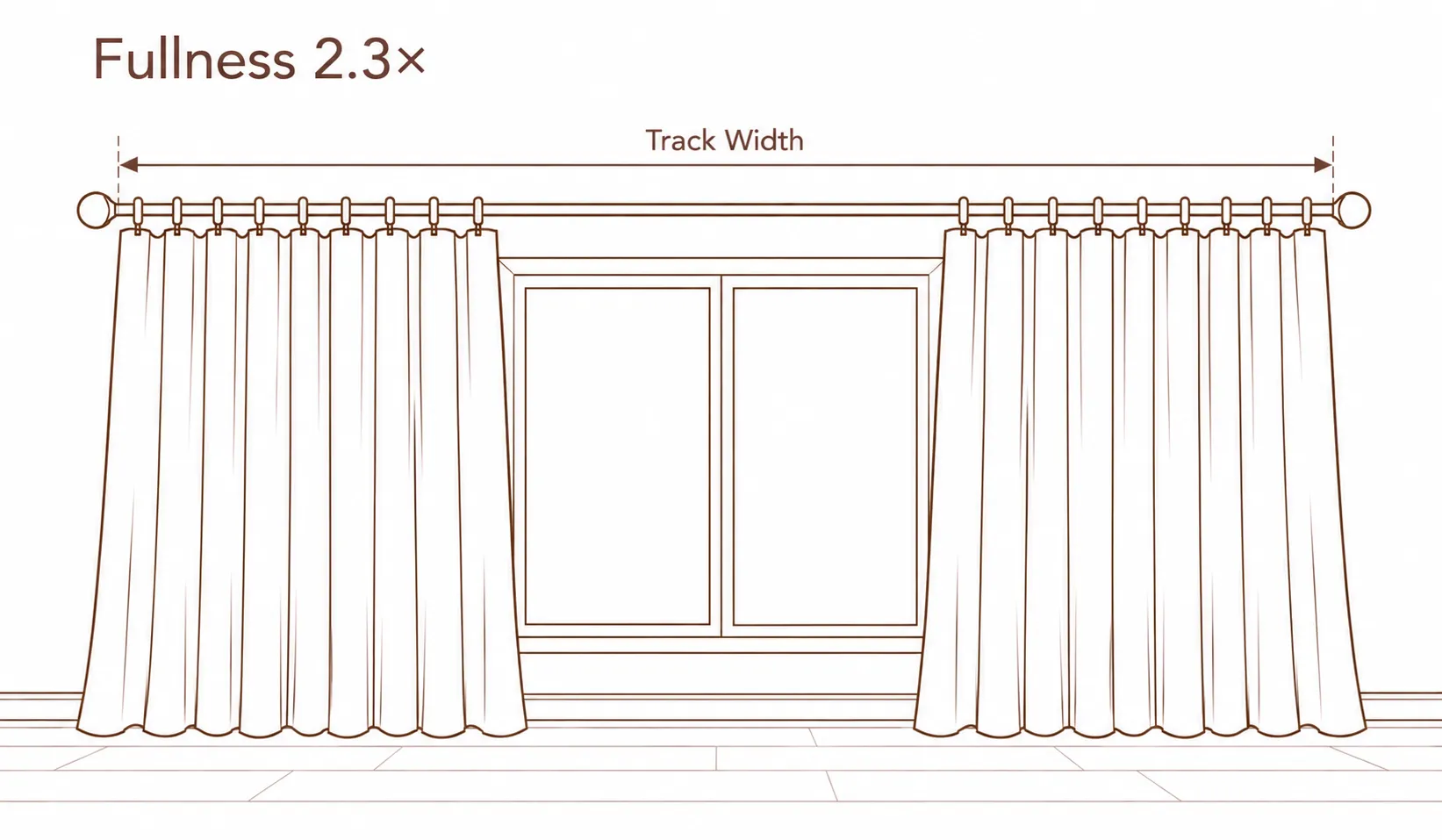
A generous decorative appearance. More fabric can increase side stack-back, so check available space.
SIMPLE ESTIMATE · MANUAL FULLNESS ONLY
Theoretical fabric width = track width × selected fullnessFor a 200 cm track at 2× fullness, theoretical flat fabric width is 200 × 2 = 400 cm before product-specific allowances, seams, returns, overlaps or construction rules. Split into two equal panels, the simple estimate is 200 cm per panel.
Do not apply this formula blindly. Pleated and ripple-fold systems can have fullness built into their heading or carrier spacing. Use the selected supplier’s specification and do not add fullness twice.
A pair of curtains usually has a left and right panel, but the split is not always exactly half-and-half. Consider how the curtains open and where the fabric sits when drawn aside.

Confirm whether the supplier asks for flat fabric width, finished panel width or installed coverage width.
The heading is the top construction of the curtain. It influences hardware compatibility, fold formation and the reference points used for width and drop.
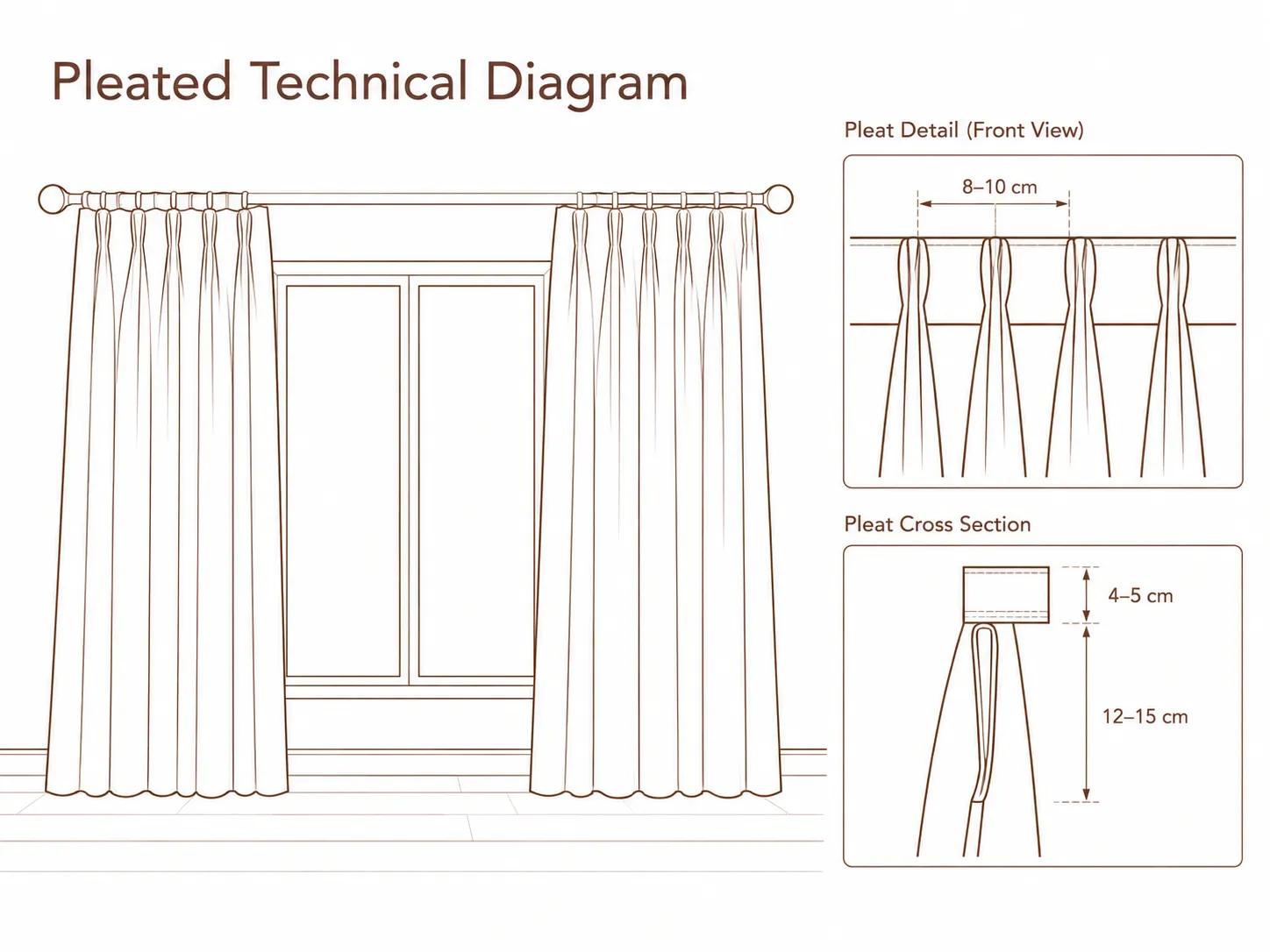
Pleats create structured folds. Confirm the pleat type, hook position and supplier’s definition of finished width. Some products already incorporate fullness, so multiplying track width again may overestimate the requirement.
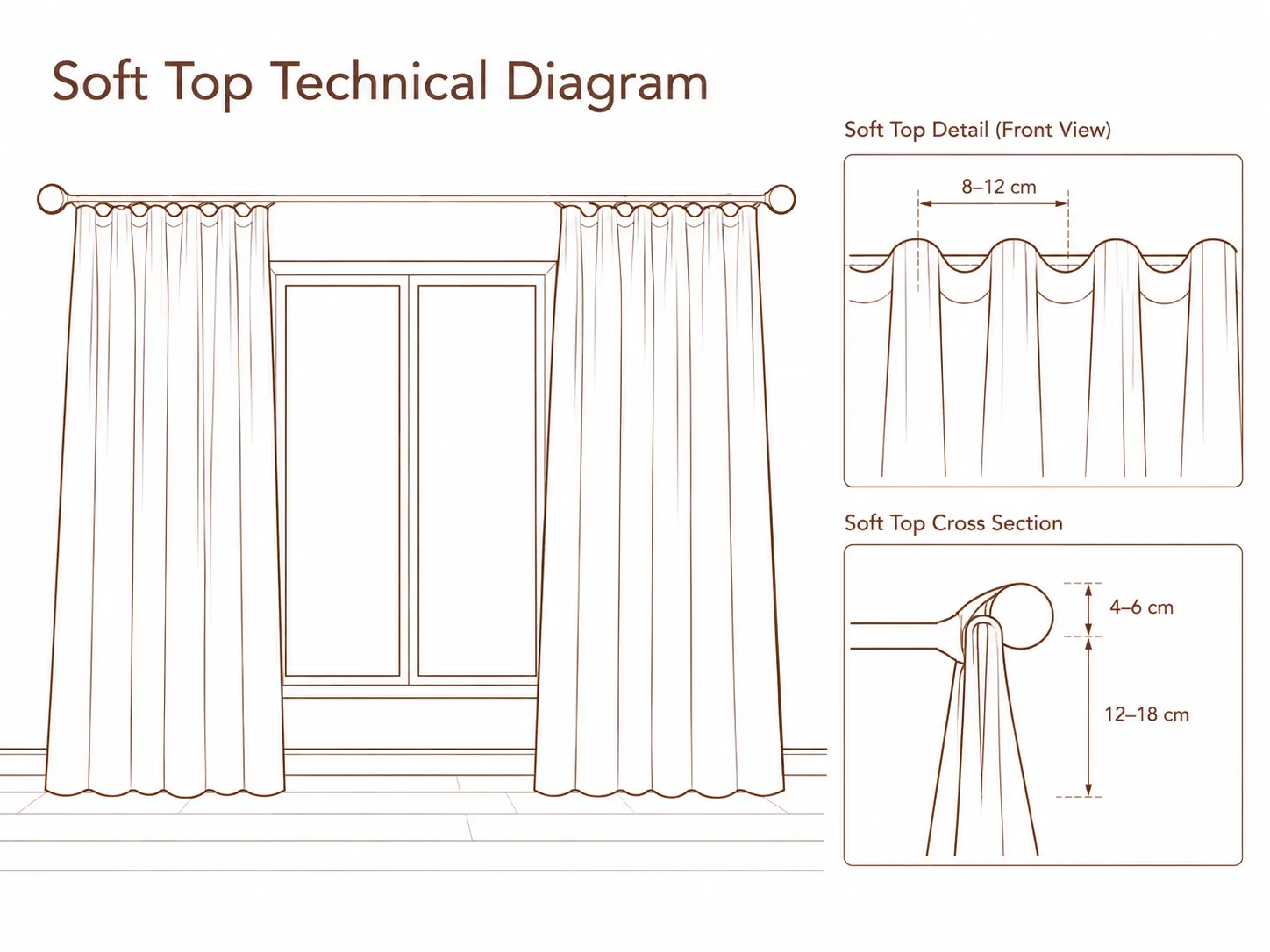
A soft top can use a manually selected fullness target. If the maker asks for flat fabric width, the simple multiplier can help with planning—but it is not a cutting pattern.
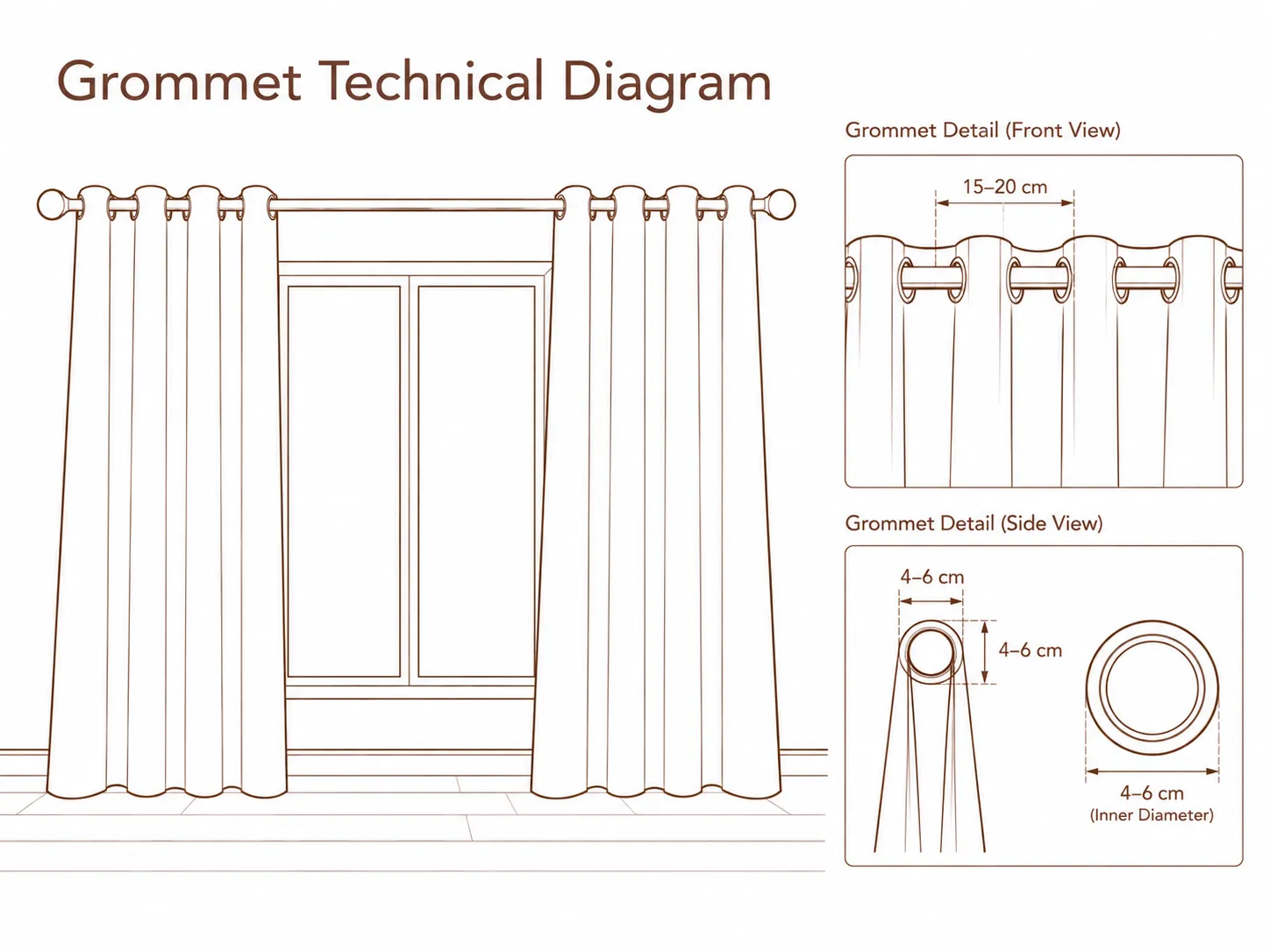
Eyelets slide over a compatible rod and create regular waves. Rod diameter, eyelet inside diameter, spacing and the width occupied by the stack all matter.
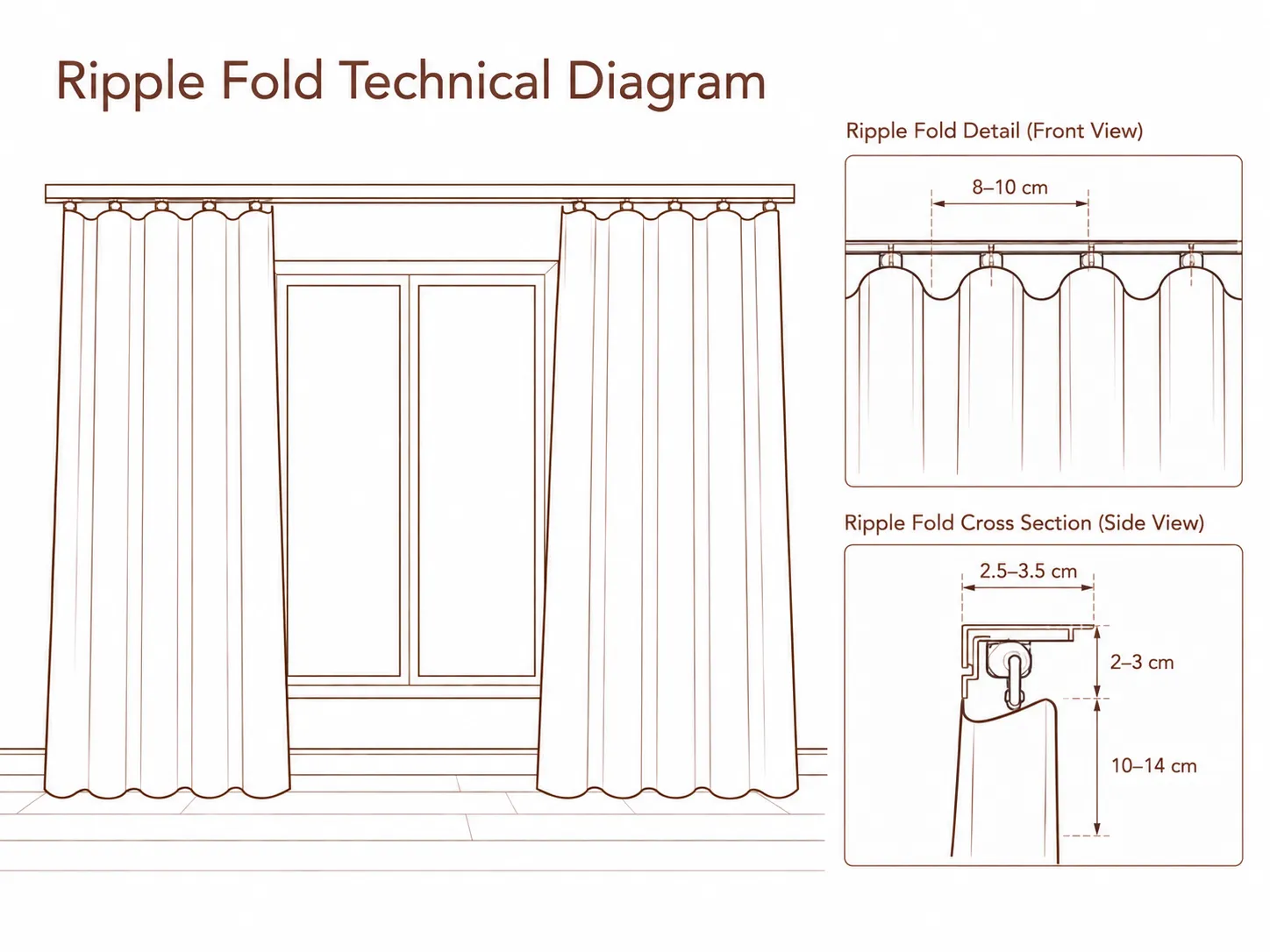
Ripple fold depends on a compatible track, carriers and tape. Wave shape is created by system spacing, so required fullness and finished width must follow the product specification.
Use these overview images to compare the appearance of pleated, soft top, grommet and ripple-fold curtains before reviewing their construction details.

Tailored, structured folds.

Soft, manually gathered fullness.

Metal eyelets over a compatible rod.

Uniform waves formed by track hardware.
Compare the actual fabric construction and hardware details with the technical diagrams. Final folds depend on the chosen fabric and heading system.
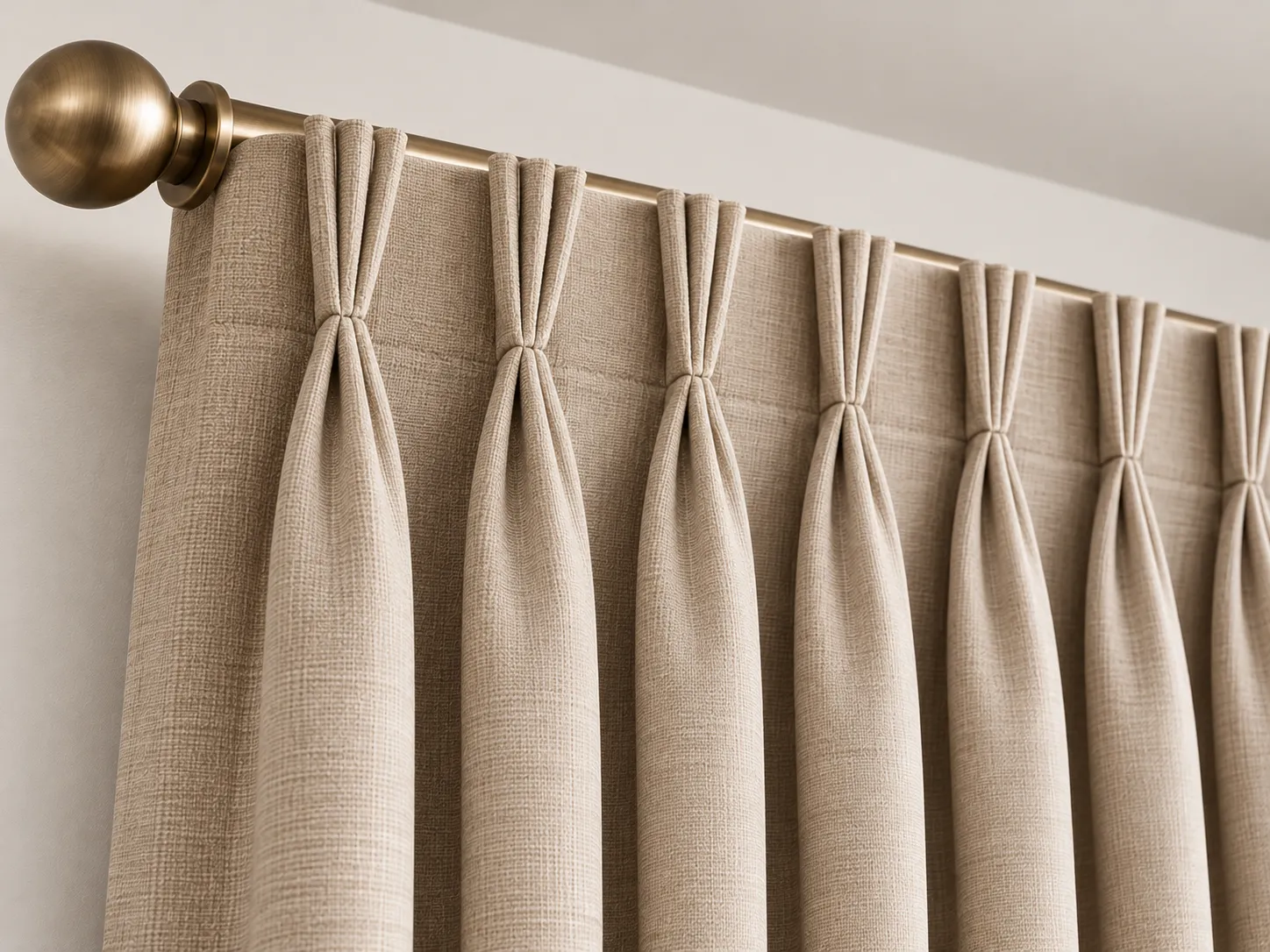
Structured, tailored pleats in textured beige fabric.

Soft gathers with the finished fabric edge visible.

Metal eyelets, rod fit and fabric texture.
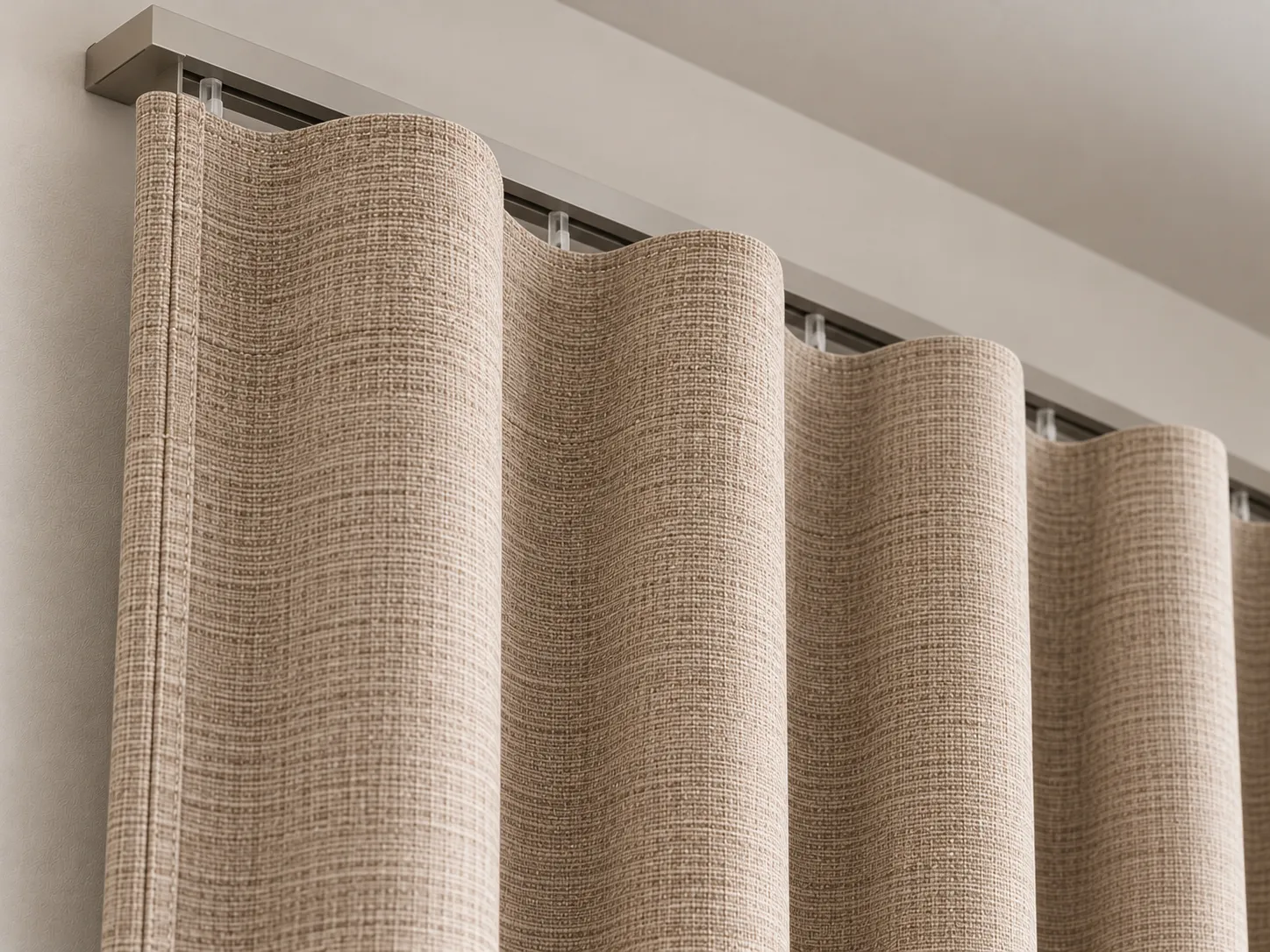
Consistent wave folds formed by a compatible track system.

Useful when one side of an opening is covered or a single panel is specified.
A left and right panel commonly meet in the centre.

Multiple panels can cover two connected window spans; measure each side separately.
Use this for an initial estimate when the selected product requires a manually chosen fullness ratio. It does not calculate a final cutting pattern or replace product-specific instructions.
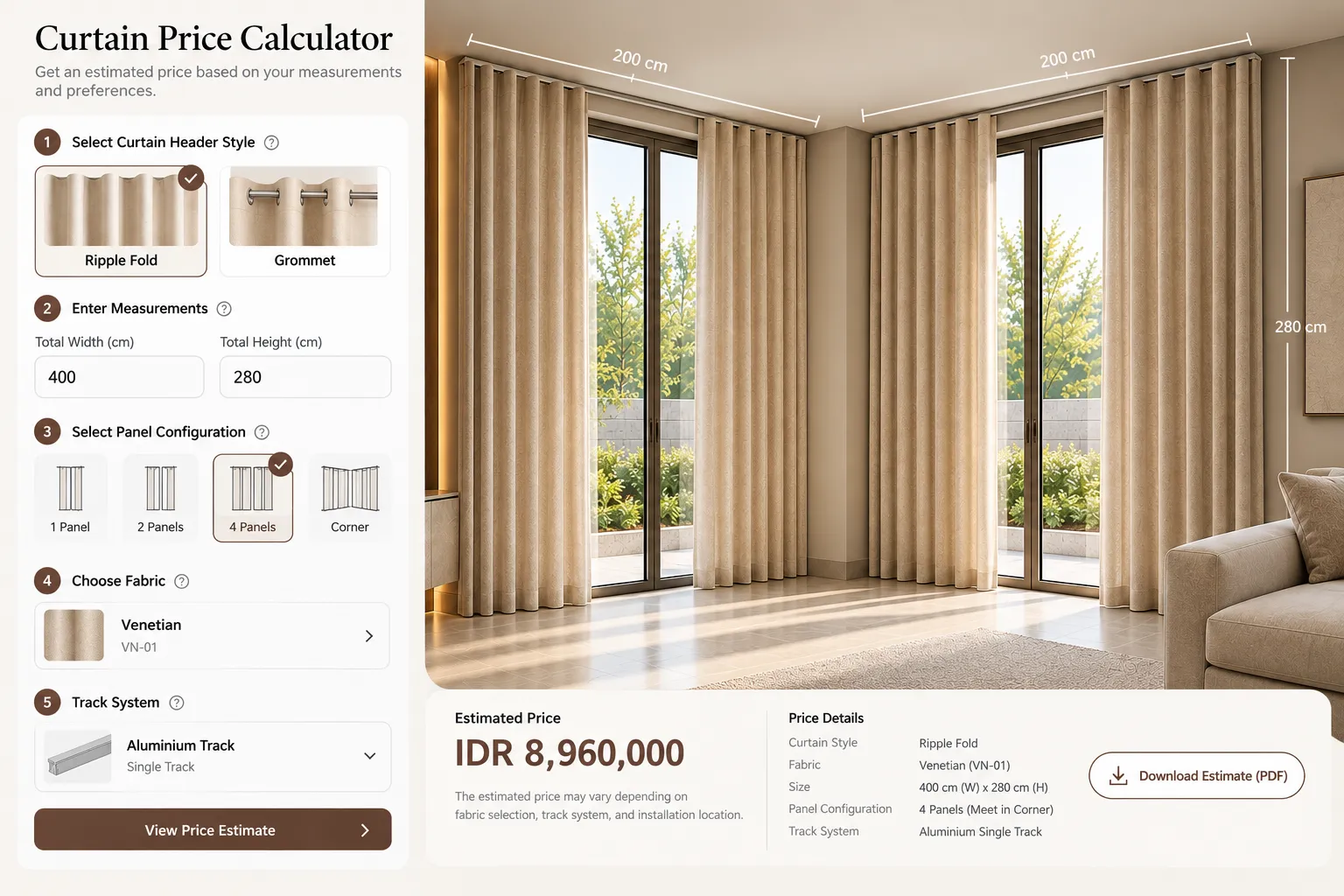
Estimated theoretical flat fabric width
400 cmEstimated width per panel
200 cmPlanning estimate only. Construction allowances are not included.
Tick each item once it has been checked before requesting a quote or confirming a custom order.
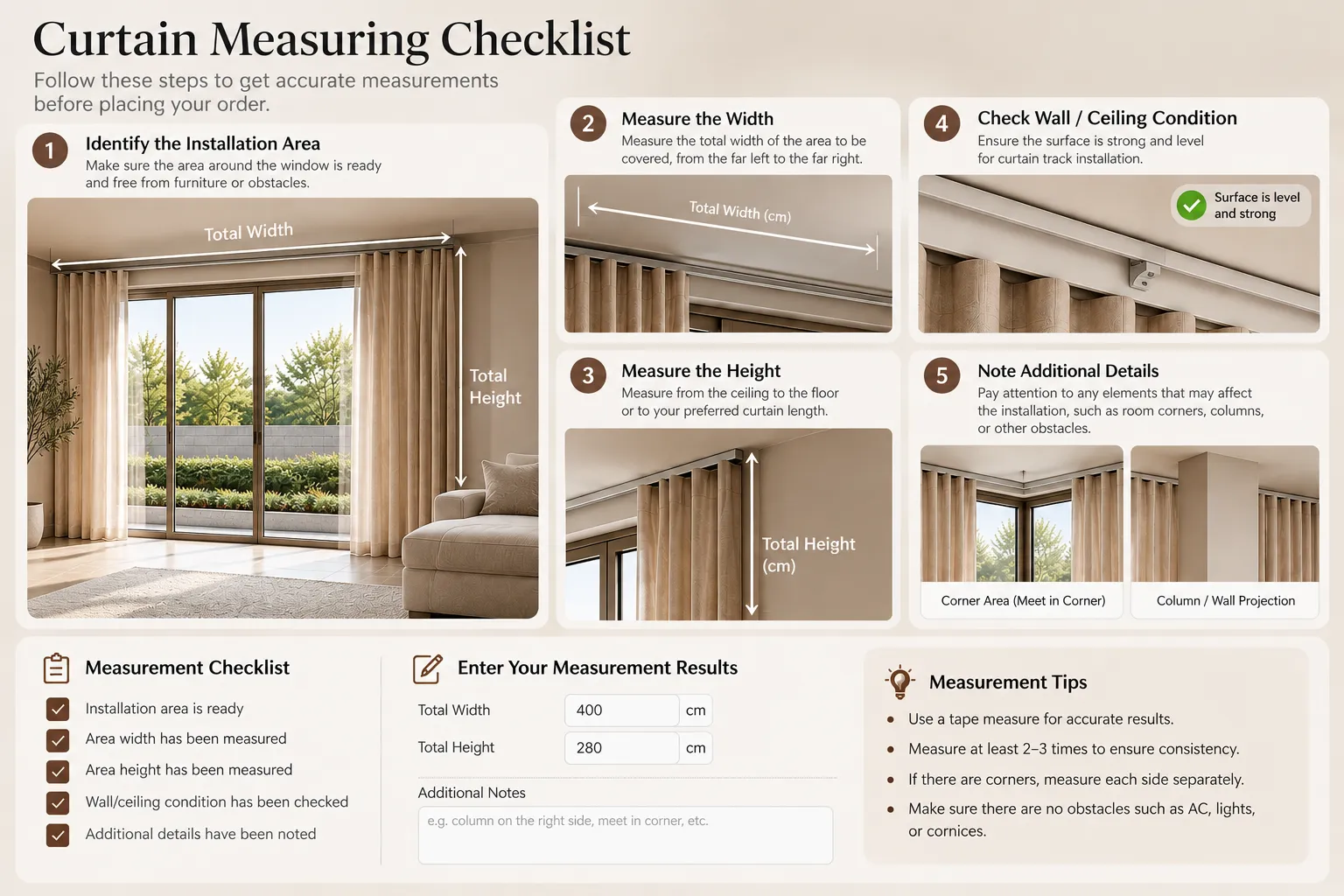
Answers to common questions before finalising measurements.
Measure the installed track or rod when possible because it is the hardware the curtain will run on. If it is not installed, plan its position and side extensions first. Glass width alone does not tell you how much space the curtain should cover or where the open panels will stack.
No. Track width describes the span to cover. Fabric width depends on fullness, heading style, panel count and construction allowances. Check which width the supplier is asking you to provide.
Not in every system. The ratio may refer to flat fabric width, while pleated or ripple-fold systems may incorporate fullness in the construction. Confirm the sizing convention before calculating.
Use the hardware-specific reference point specified for the chosen heading, hooks and carrier system, then measure to the intended finished hem.
Measure each opening separately. Similar-looking windows can have different widths, floor levels, ceiling heights or obstructions. Label every measurement by room and window.
There is no single allowance for every curtain. The desired pool depends on fabric, weight, style and use of the room. Agree the intended puddle with your curtain maker and record it as an intentional finish.

MADE FOR YOUR SPACE
For villas, hotels, tall glazing, layered curtains or unusual window layouts, a professional review can help confirm the hardware, finished drop and panel requirements before production.
Request a consultation →