Dimout vs Blackout Curtains: Light Penetration Control, Thermal Insulation, and Sleep Quality Factors
Selecting the proper light-filtering fabric tier is critical when designing peaceful, energy-efficient interior environments. While Dimout Curtains and Blackout Curtains are both engineered to reduce incoming solar radiation, they rely on fundamentally different textile structures and yield distinct light penetration levels.
Here is an expert evaluation comparing dimout and blackout drapes across light control, thermal performance, and sleep quality factors.
1. Light Penetration Control Metrics
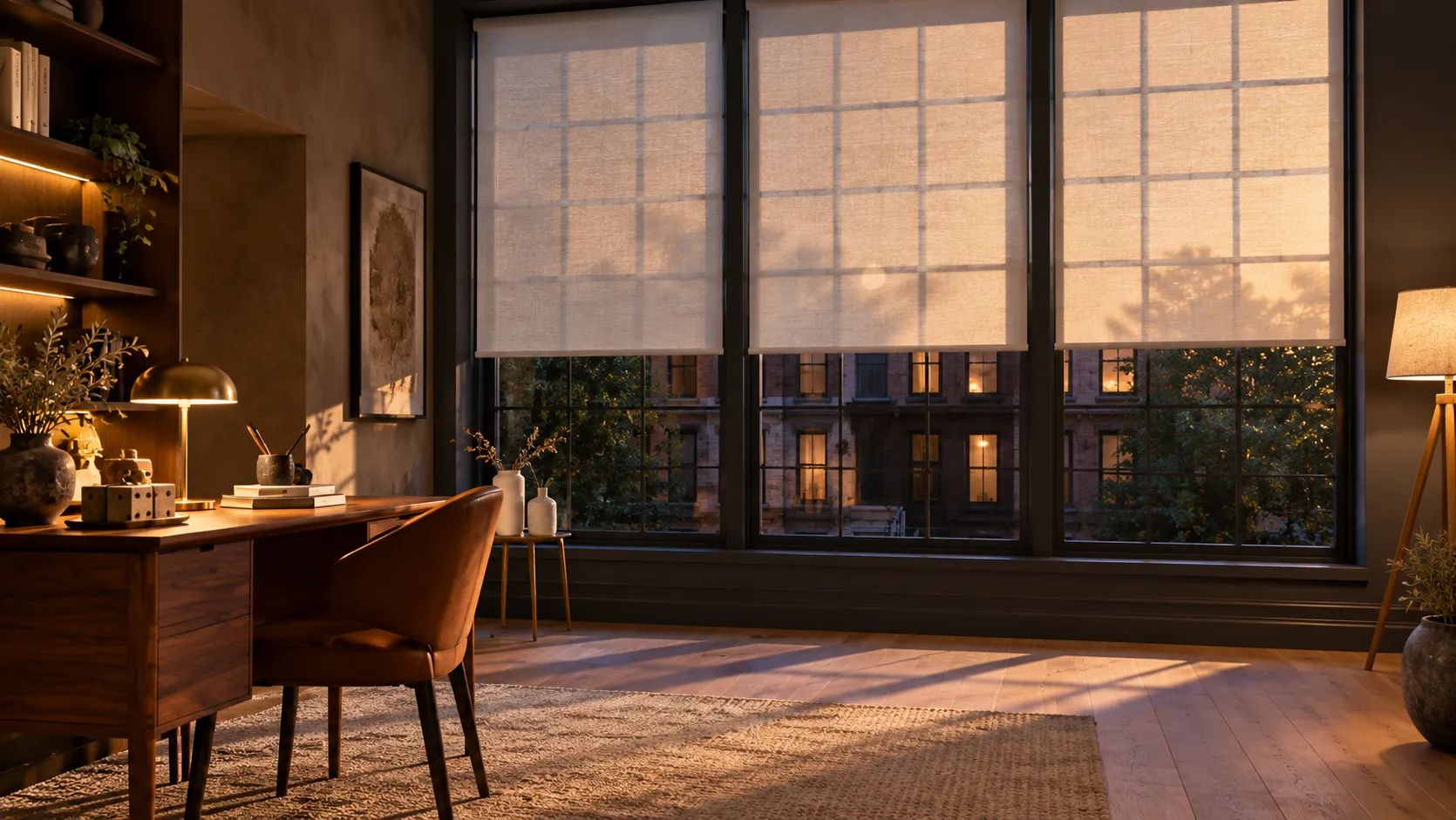
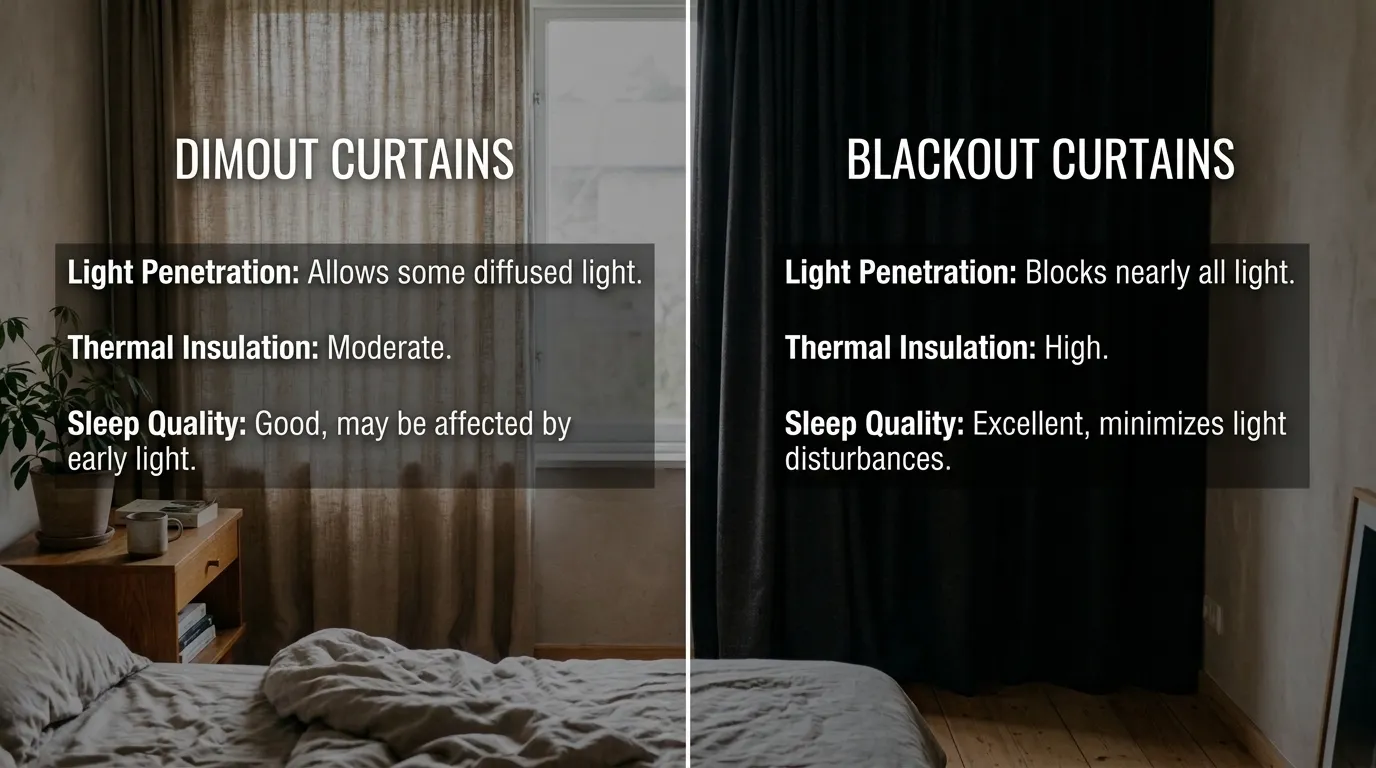
- Dimout Curtains (75% to 90% Light Blockage): Constructed using dense multi-layered weaving techniques with a central black core thread. They block harsh glare and shadows while allowing a soft, ambient glow to filter through, preserving fabric softness and natural drape fall.
- Blackout Curtains (100% Total Light Elimination): Coated with multi-pass acrylic rubber or laminated linings that completely seal textile pores, blocking 100% of direct light rays from passing through the fabric mesh.
2. Thermal Insulation and Energy Efficiency Comparison
Both fabric categories provide substantial thermal insulation near glass surfaces. 100% coated blackout fabrics act as an impenetrable radiant heat barrier, reflecting infrared rays outward. High-density dimout textiles absorb thermal energy internally while maintaining air permeability and long-term coating durability in humid climates.
3. Impact on Sleep Quality and Circadian Rhythms
For master bedrooms, infant nurseries, and shift workers, 100% blackout curtains stimulate natural melatonin production by creating pitch-black darkness during daytime hours. Dimout drapes provide comfortable light reduction for living areas, guest suites, and home offices where total pitch darkness is unnecessary.