How Do I Choose Curtains for My Space: Color Coordination, Fabric Weight, and Interior Layout Matching
"How do I choose the right curtains for my room?" is one of the most frequent questions homeowners ask when renovating or decorating living spaces. Because curtains occupy large vertical surface areas, your choice of color, fabric texture, and opacity dramatically influences room mood, lighting, and perceived spatial size.
Here is a step-by-step interior design framework to guide your curtain selection process.
1. Step 1: Define Room Function and Light Requirements
Before selecting fabric styles, establish the functional requirements of the room:
- Master Bedrooms & Nurseries: Choose 100% Blackout or dense Dimout fabrics for total darkness, privacy, and thermal insulation.
- Living & Dining Rooms: Choose translucent Sheer or Dimout fabrics that soften harsh sun glare while filling living spaces with bright natural daylight.
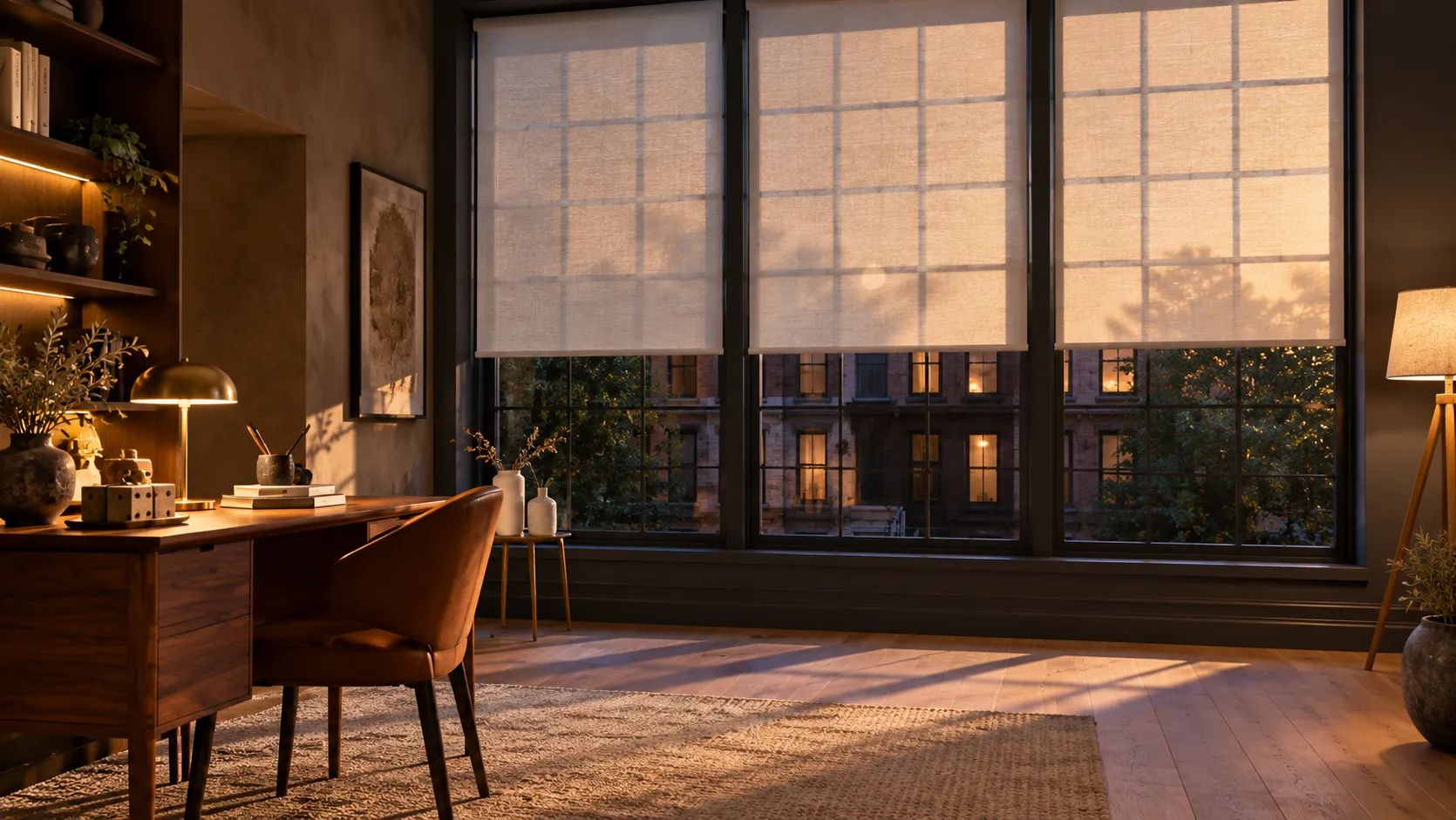
- Home Offices: Select glare-reducing solar screen shades or dimout curtains to protect screens from direct solar reflections.
2. Step 2: Color Coordination Rules for Harmony
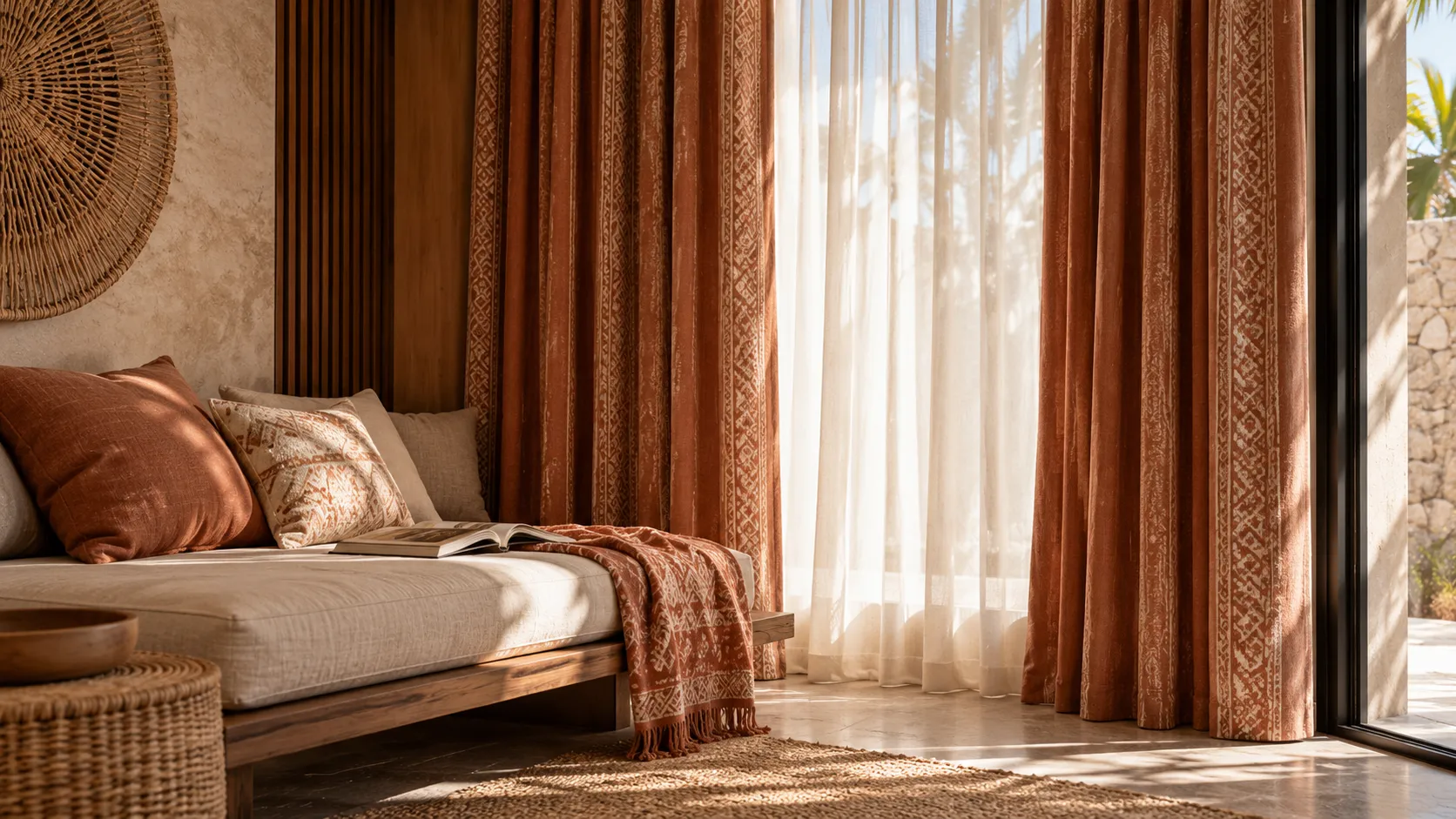
Match curtain color tones to your existing room palette: select drapes that align with wall paint or floor rug tones for a spacious, cohesive look. Alternatively, select contrasting earthy accent tones (such as terracotta, sage green, or deep navy) to create a striking architectural feature frame around windows.
3. Step 3: Match Fabric Weight to Architectural Scale
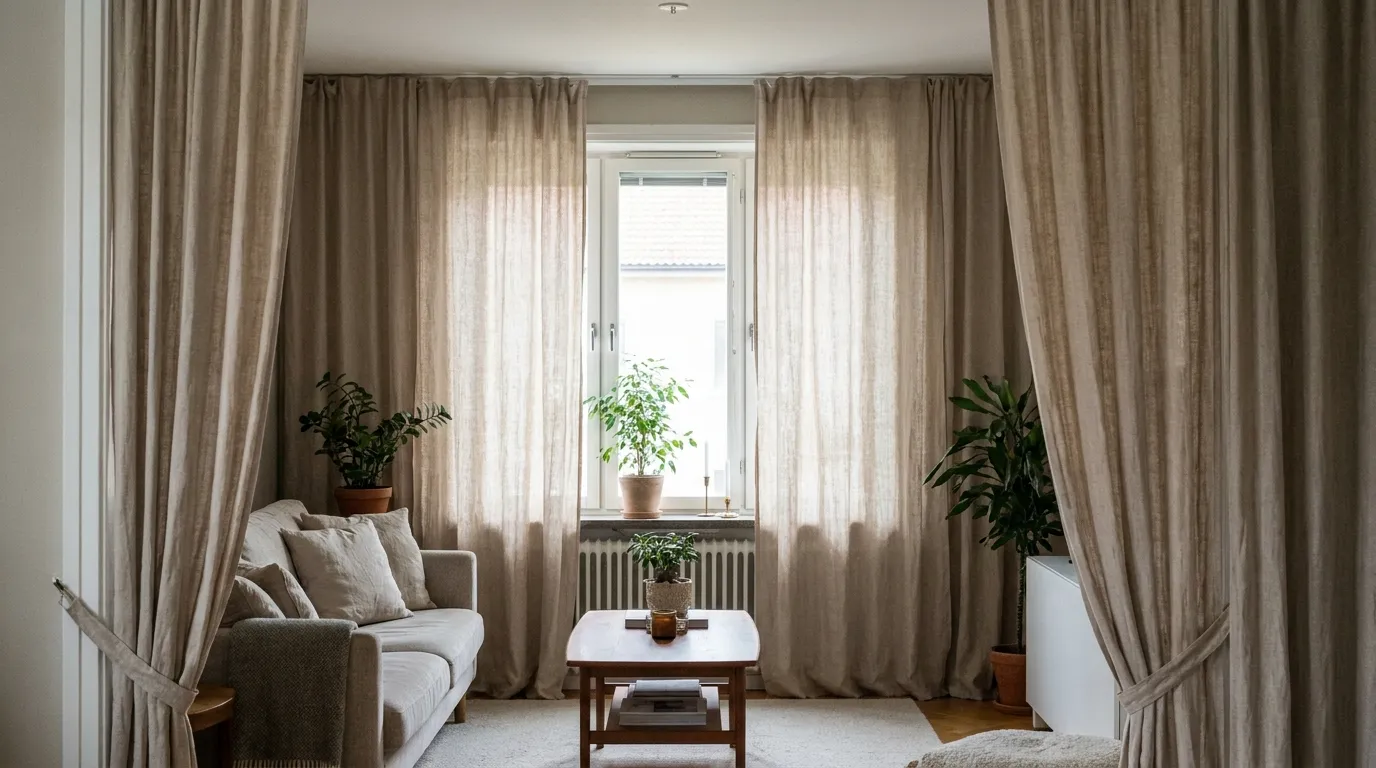
Lightweight slubbed linen and sheer voiles suit breezy open-plan living rooms and modern tropical homes. Heavy velvets, jacquards, and lined cottons provide formal elegance, acoustic dampening, and structure to large rooms with high ceilings.
4. Step 4: Ensure Correct Sizing and Fullness Ratios
Avoid narrow, skimpy curtains. Always specify a minimum 2.0x fullness ratio relative to your track width to ensure rich, luxurious vertical folds when drapes are drawn closed.