How to Measure for Curtains in Traditional Homes: Custom Fitting, Length Rules, and Drop Calculations
Achieving a tailored, professional look with custom window drapery depends entirely on accurate measurements. In traditional, vintage, or heritage homes—where walls, ceilings, and window frames are rarely perfectly square or level—following precise measurement protocols prevents costly fabrication mistakes.
Here is a comprehensive guide to measuring curtain track widths, calculating fabric drops, and selecting the ideal hem style for your property.
1. Measuring Track or Rod Width (Horizontal Dimension)
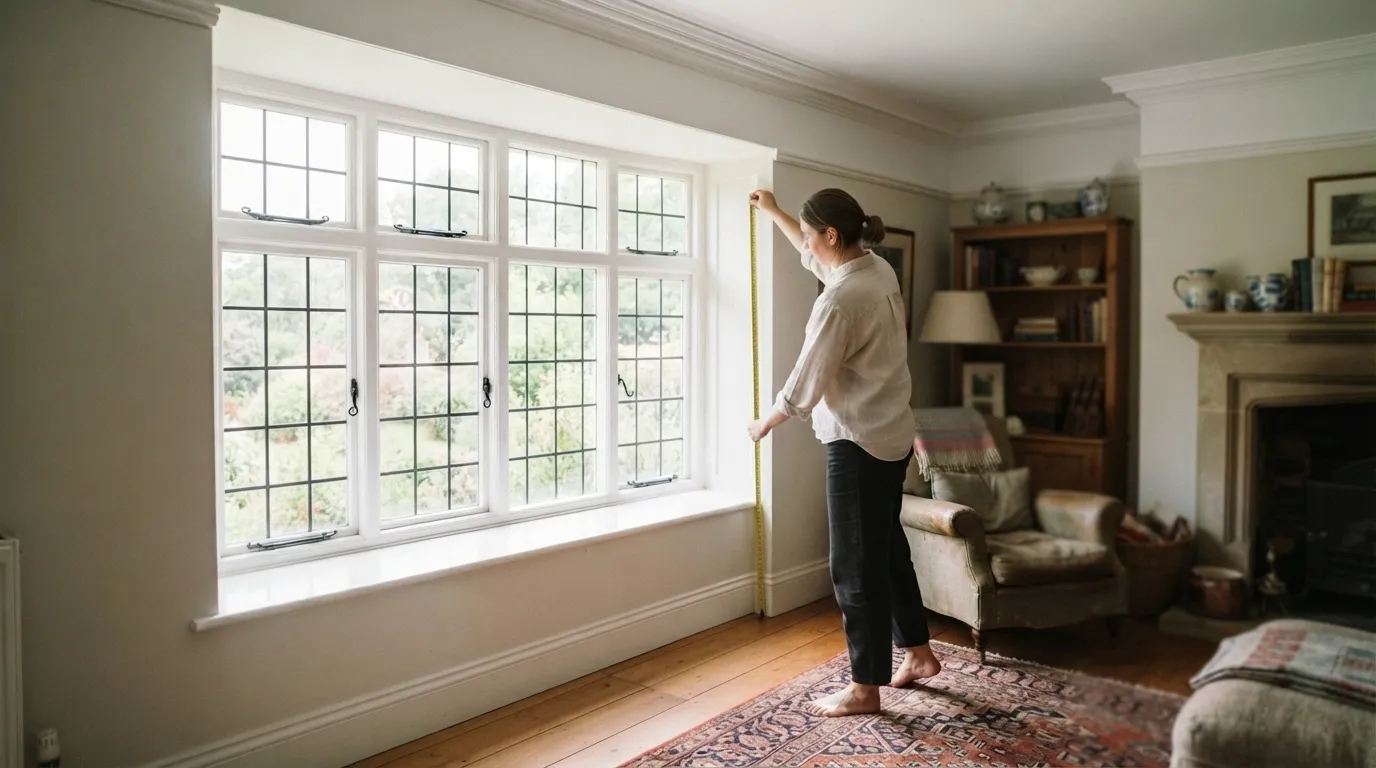
Always measure the length of the curtain track or rod, not the window frame itself. To allow pulled-back drapes to clear the glass opening comfortably during the day, extend tracks 15 cm to 30 cm past the window frame on each side (stack-back area).
2. Establishing the Drop Length (Vertical Dimension)
Measure vertical drop from the top of the track or ring fixing point down to the floor at three distinct points: left side, center, and right side. Traditional home floors often slope; always record all three measurements and use the shortest measurement to ensure drapes do not drag unevenly.
3. Selecting Your Curtain Hem Style
- Float / Hover (1 cm Clearance): Bottom hem hovers precisely 1 cm above floor tiles. Recommended for active, high-traffic rooms for easy cleaning.
- Floor-Touch (Flush): Fabric touches the floor surface precisely, delivering a clean, tailored architectural fall.
- Puddling (2 cm to 5 cm Extra Fabric): Fabric spills gracefully onto the floor, creating a romantic, formal, luxury aesthetic in master suites and classic drawing rooms.
4. Accounting for Fabric Fullness Ratios
To ensure rich, luxurious folds when drapes are closed, multiply your track width by your chosen fullness ratio (standard luxury S-fold requires 2.0x to 2.2x fullness, while sheers often require 2.5x fullness).