Roller Blinds vs Curtains in Bali: Which One Actually Works Better?
Both roller blinds and curtains are popular window treatment choices in Bali. Each has strengths and limitations, and the right choice depends on the room, the window size, and the desired aesthetic.
This guide compares them across the criteria that matter most in tropical properties.
1. Light and Heat Control
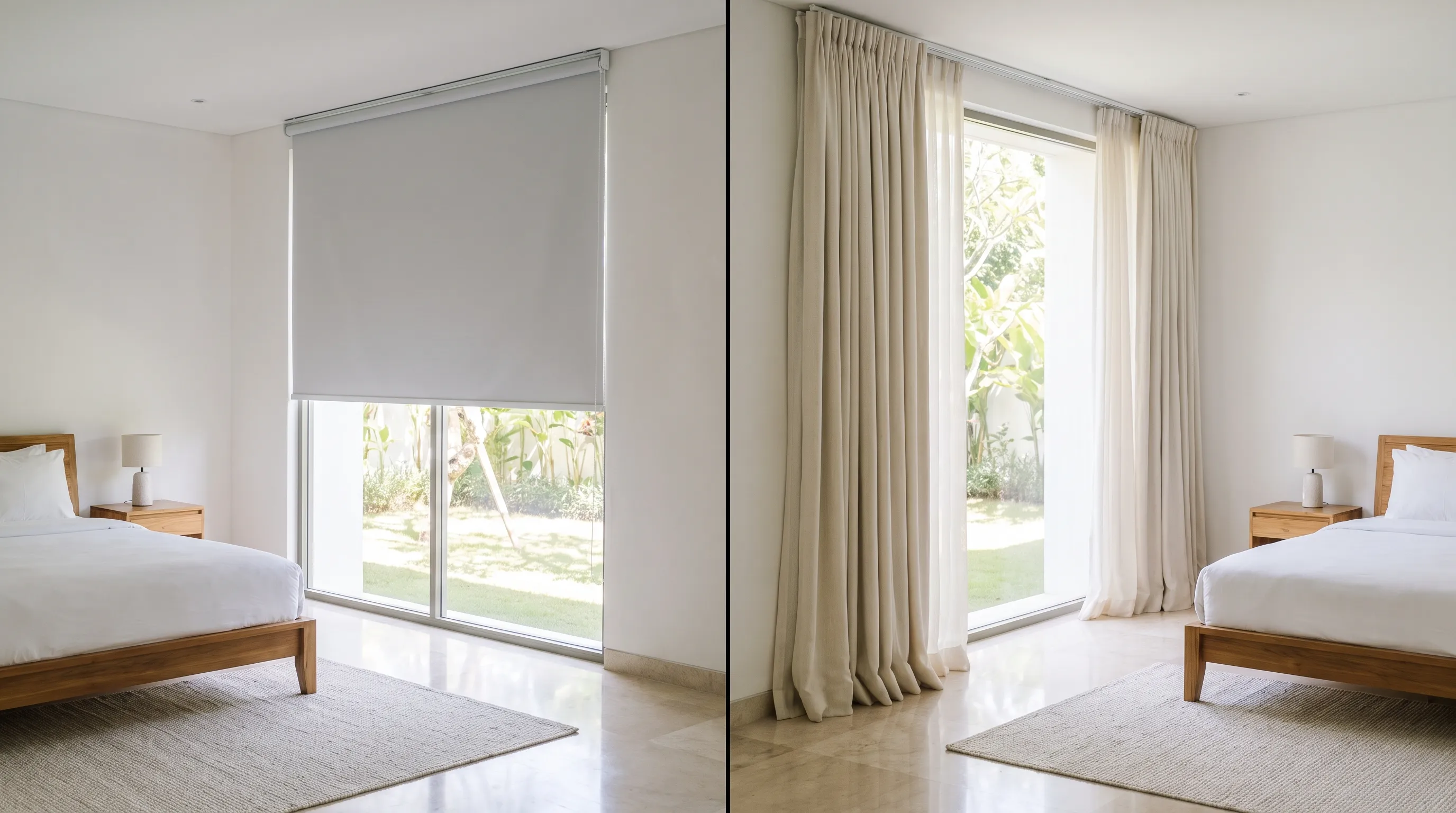
Roller blinds are available in sunscreen, dimout, and blackout options, offering precise light control. Curtains, especially layered curtains, offer similar flexibility but with a softer, more decorative appearance.
Winner: Tie — both can perform well when specified correctly.
2. Humidity and Mold Resistance
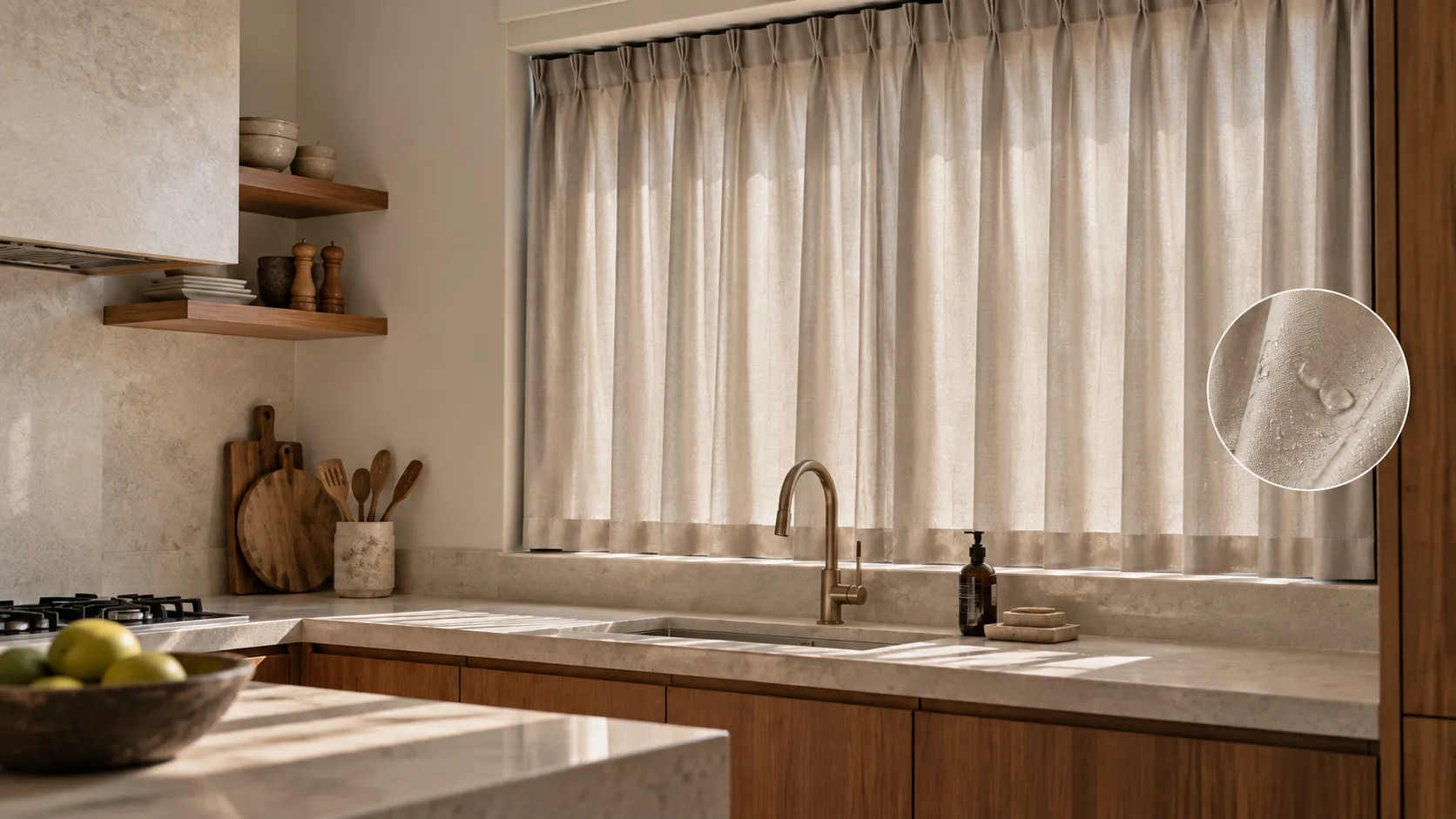
Roller blinds made from fiberglass or PVC-coated fabrics resist humidity and mold exceptionally well. Curtains made from natural fibers require more careful ventilation and cleaning to prevent mildew.
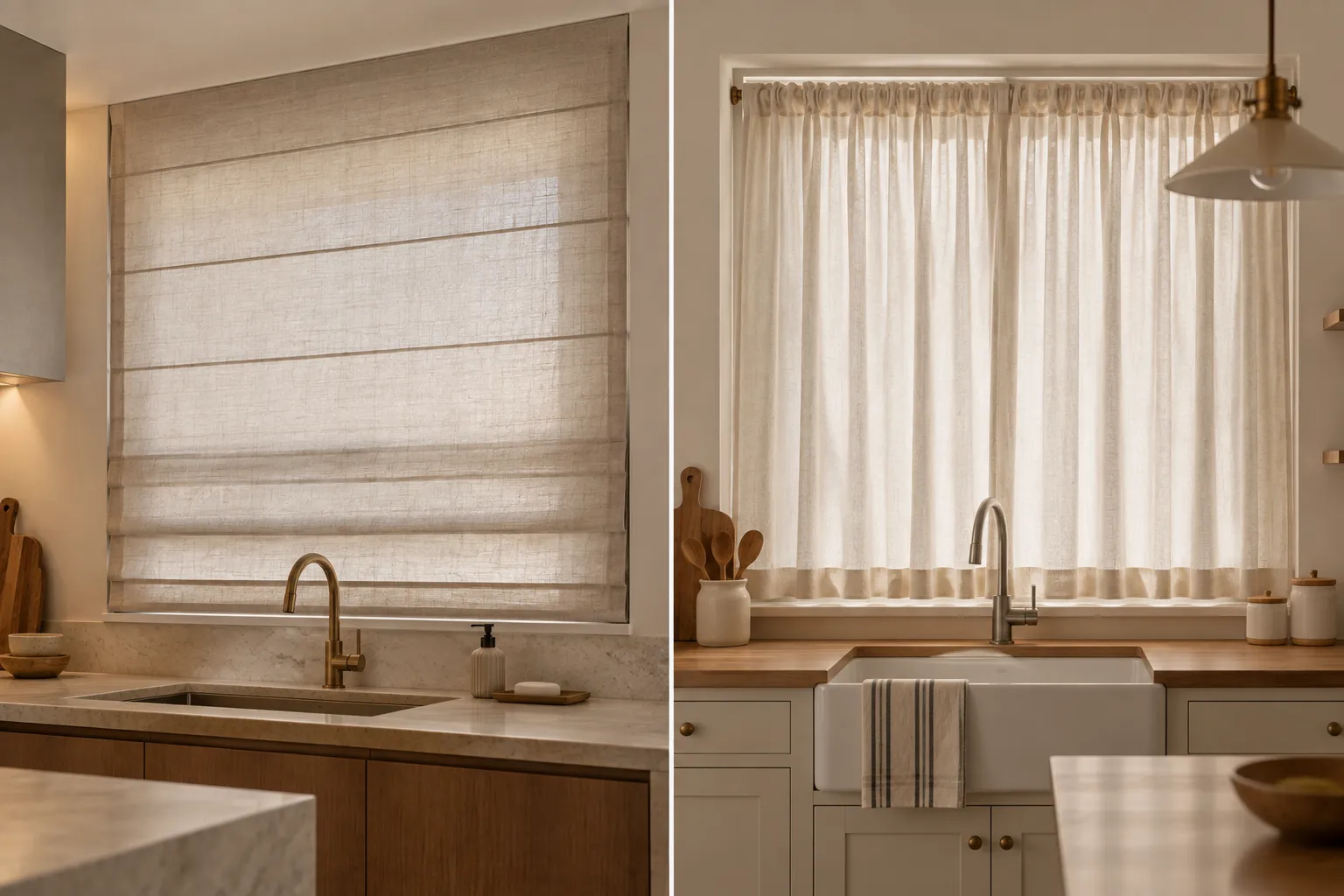
Winner: Roller blinds for kitchens, bathrooms, and high-humidity areas.
3. Aesthetic Impact
Curtains bring warmth, texture, and softness to a room. They frame windows beautifully and can be layered for a luxury effect. Roller blinds are minimalist and practical but offer less decorative richness.
Winner: Curtains for living rooms, bedrooms, and formal spaces.
4. Maintenance
Roller blinds are easy to wipe clean and require minimal maintenance. Curtains require periodic washing, vacuuming, or professional cleaning, especially in humid climates.
Winner: Roller blinds for low-maintenance properties.
5. Cost
Roller blinds are generally more affordable than custom curtains, especially for large windows. Curtains cost more due to fabric, lining, fullness, and track requirements.
Winner: Roller blinds for budget-conscious projects.
Final Thoughts
For most Bali properties, the ideal solution is a combination: roller blinds in kitchens and bathrooms, curtains in bedrooms and living rooms. Each excels where the other falls short.