Roman Blinds vs Venetian Blinds: Style Aesthetics, Space Savings, and Maintenance Requirements
When selecting compact window treatments that mount neatly inside or directly above window openings, homeowners frequently weigh Roman Blinds against Venetian Blinds. Both options eliminate sweeping floor-length fabric bulk, but they deliver contrasting visual personalities and light control dynamics.
Here is a comparative analysis to help you decide which window style fits your room architecture.
1. Aesthetic Silhouette & Material Warmth
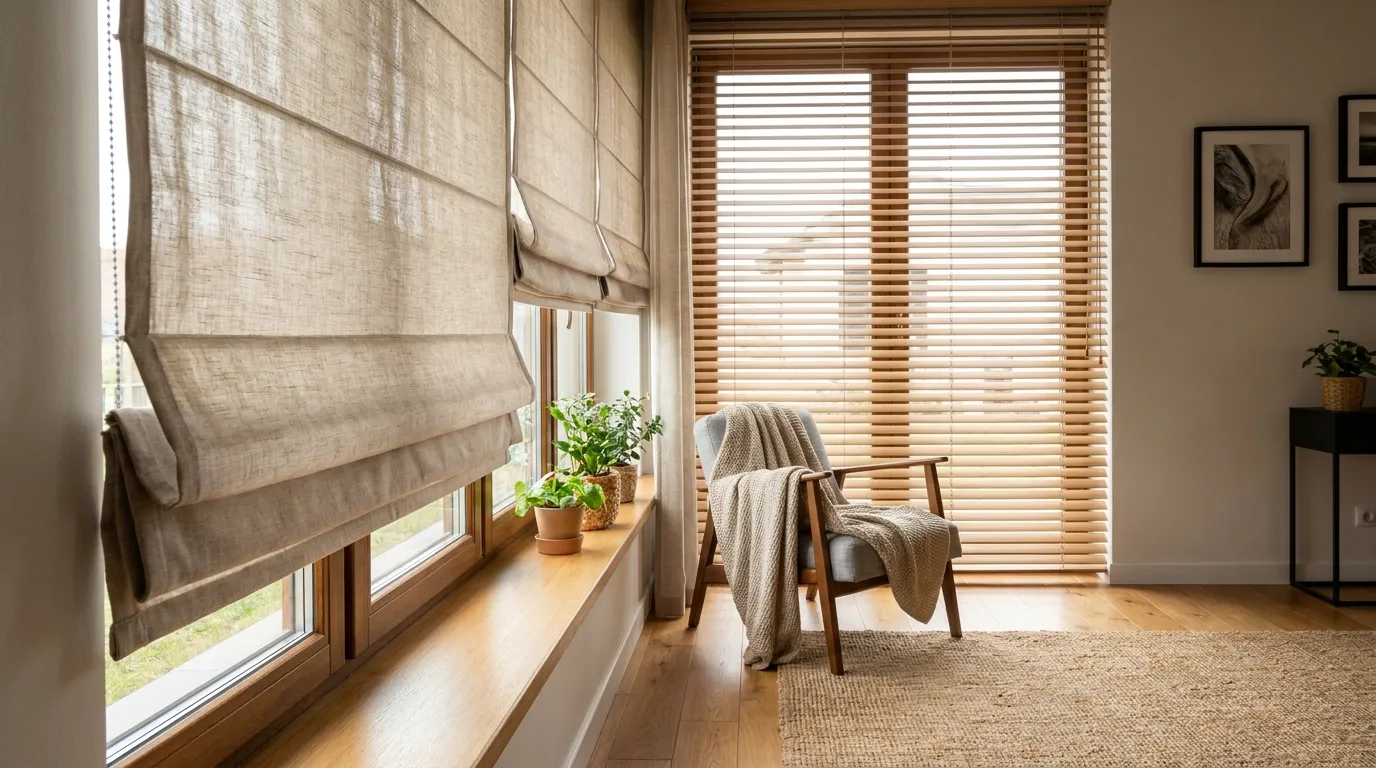
- Roman Blinds (Soft Textile Elegance): Fabricated from decorative woven drapery fabrics that lift upward into soft horizontal pleats. They bring acoustic sound dampening, warmth, and fabric richness to living spaces, dining areas, and master bedrooms.
- Venetian Blinds (Structured Architectural Lines): Constructed from rigid horizontal timber, PVC, or aluminum slats. They deliver crisp geometric lines, clean horizontal symmetry, and precise solar tilt control.
2. Light Control Versatility
Venetian blinds excel in granular solar management: tilting the horizontal slats regulates incoming sunlight angles and street privacy simultaneously without raising the blind. Roman blinds function vertically, providing full open view-through or complete vertical fabric shading.
3. Maintenance and Environment Suitability
In moist environments like kitchens and bathrooms, wipeable moisture-resistant Venetian Blinds (such as faux wood or aluminum) are easier to clean. For formal dining rooms and bedrooms where soft textile warmth and thermal insulation take priority, Roman Blinds provide unmatched tailored elegance.