Tesla’s Viral Flying Roadster Moment Raises a Bigger Question: Are Smart Homes the Next Frontier?
Tesla’s latest Roadster demonstration has captured attention with a spectacular moment that looked more like science fiction than an ordinary car launch. But beyond the viral clips, the bigger story is how people are becoming more interested in technology that makes everyday life feel smarter, more comfortable and more intuitive. That idea does not stop with electric vehicles. Inside a home, motorized curtains and blinds can bring a practical form of automation to one of the most frequently used parts of a room: its windows.
For villa owners, homeowners, architects and interior designers in Bali, the question is not whether a curtain can fly. It is how thoughtful technology can make a property easier to live in, more comfortable throughout the day and more consistent with its architecture. This guide looks at the Tesla story as a timely introduction to the wider smart-living trend, then explains what motorized window treatments can—and cannot—do, how to choose them, and which details matter before specifying them for a tropical property.
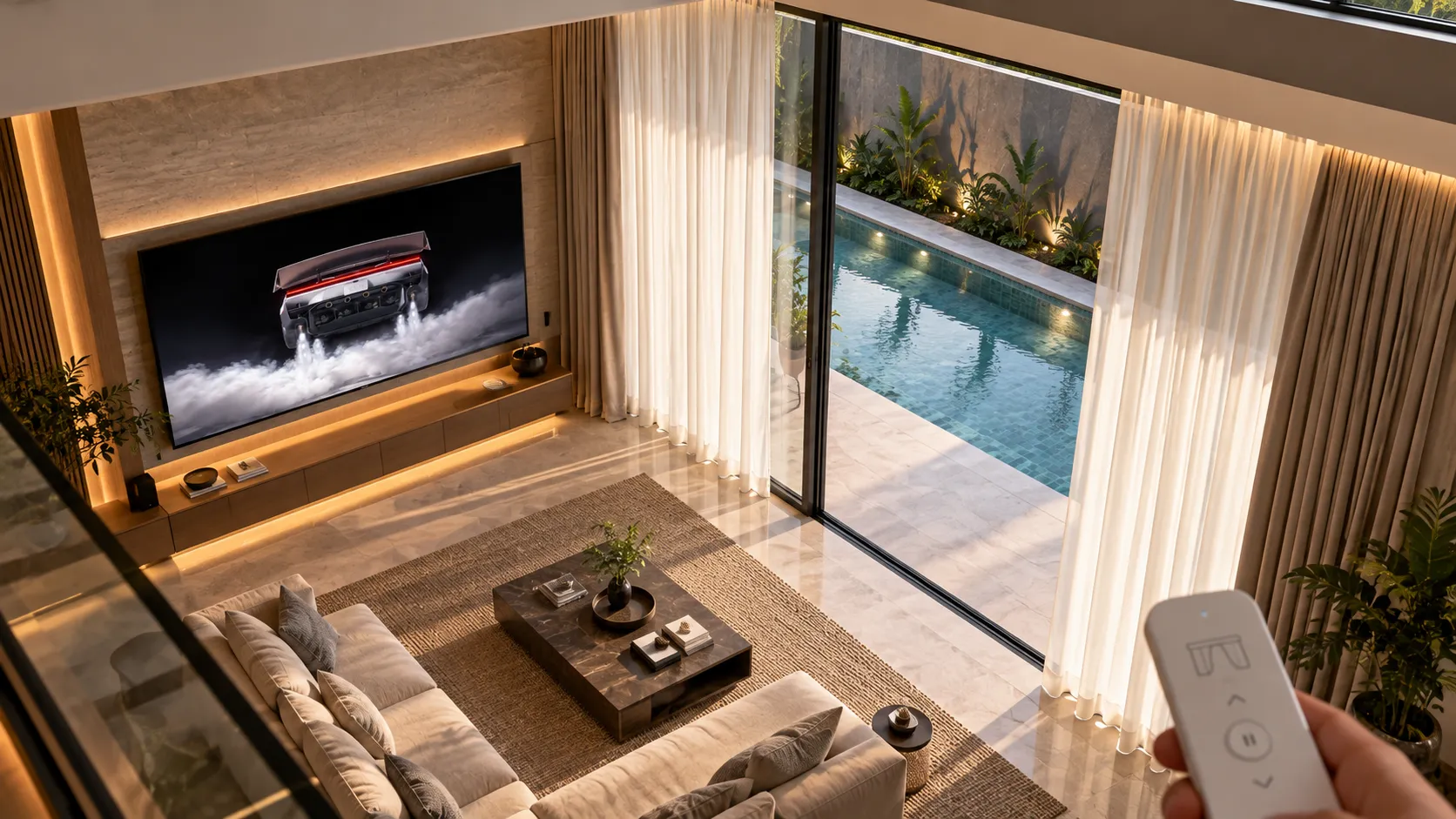
1. Why the Tesla Roadster Demonstration Is Capturing Attention
On 15 October 2026, Tesla presented its next-generation Roadster at an event in Texas. Media reports described a dramatic demonstration involving a curved ramp, an upside-down section and a brief airborne manoeuvre using a system Tesla associated with SpaceX-inspired cold-gas thrusters. The event quickly attracted attention because it combined a familiar object—a sports car—with a capability that viewers do not normally associate with road vehicles.
Technology coverage from TechCrunch, The Verge and Car and Driver covered the unveiling and its unusual demonstration. These reports describe a prototype presentation, not proof that a commercially available car can operate like an aircraft in ordinary conditions. Production timing, specifications and the capabilities of a future customer vehicle should be treated as company claims or plans until independently confirmed.
That distinction matters. A spectacular demonstration can make a technology memorable, but it does not automatically establish its everyday practicality, safety, cost or availability. The same principle applies to smart homes. A product should not be considered useful simply because it has an app, a motor or a futuristic feature. It should solve a real problem in a way that suits the people using it and the building in which it is installed.
2. From Viral Technology to Useful Everyday Innovation
Technology often attracts attention first through dramatic demonstrations. Over time, its lasting value depends on whether it becomes reliable, understandable and useful outside a showcase. For a homeowner, the most meaningful innovation may be less spectacular than a vehicle briefly lifting into the air. It might be a curtain that opens smoothly across a wide window, a blackout layer that closes before bedtime, or a control system that helps staff manage the daylight in a villa without walking from room to room.
Smart living is not a single product category. It is an approach to coordinating the home’s systems—lighting, climate, shading, security and entertainment—so that they support a household’s routine. Some homes need only a few simple automated functions. Others benefit from a connected system with scheduled scenes and central control. The right choice depends on the building, budget, user expectations and the reliability of the equipment.
Window treatments deserve a place in this conversation because windows affect daylight, privacy, glare, views and the feeling of a room. Curtains and blinds are not just decorative finishing touches. They help manage the relationship between the indoor space and the outdoors. When a window treatment is motorized, its movement can become easier to repeat and coordinate with the way a room is used.
3. What Are Motorized Curtains and Blinds?
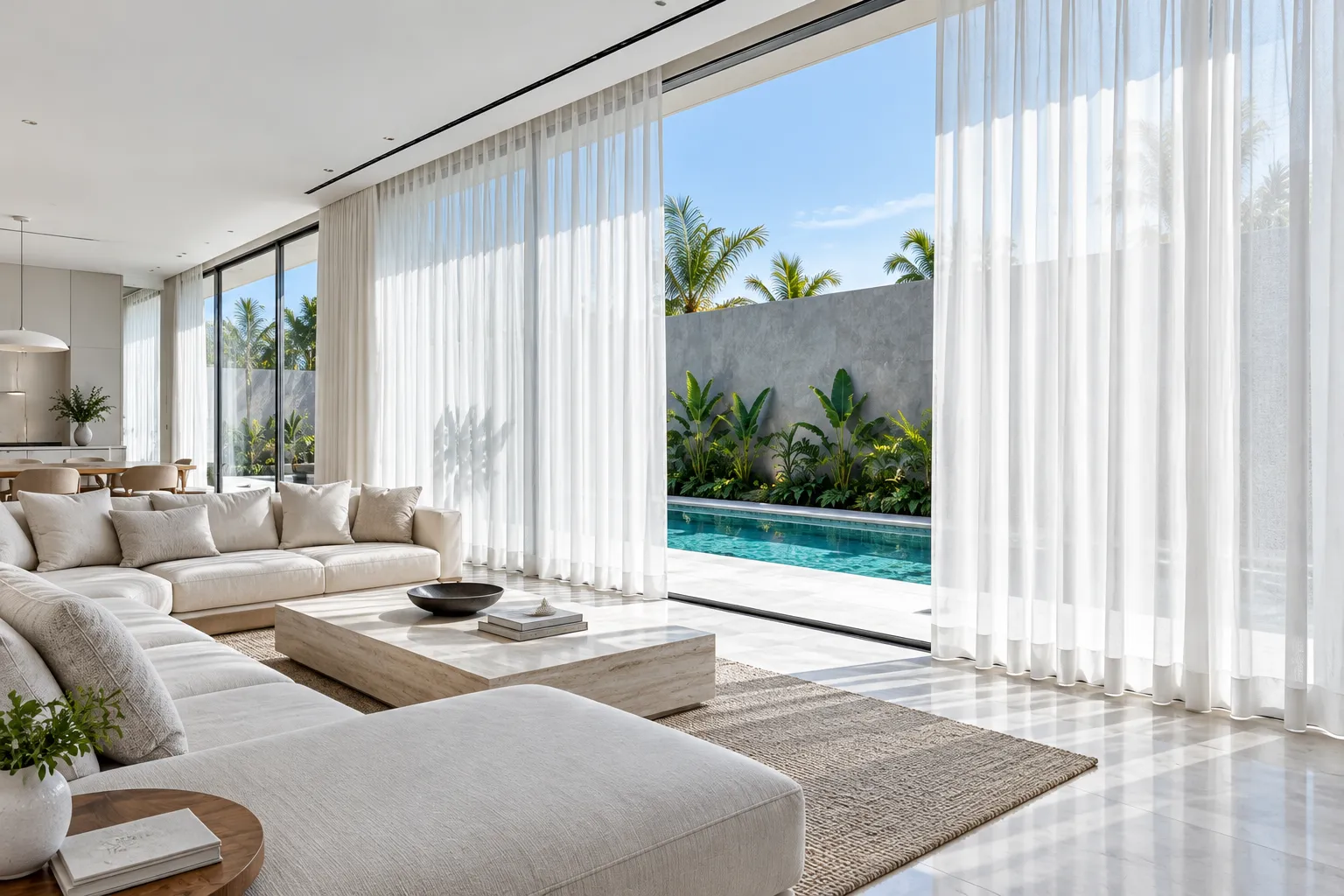
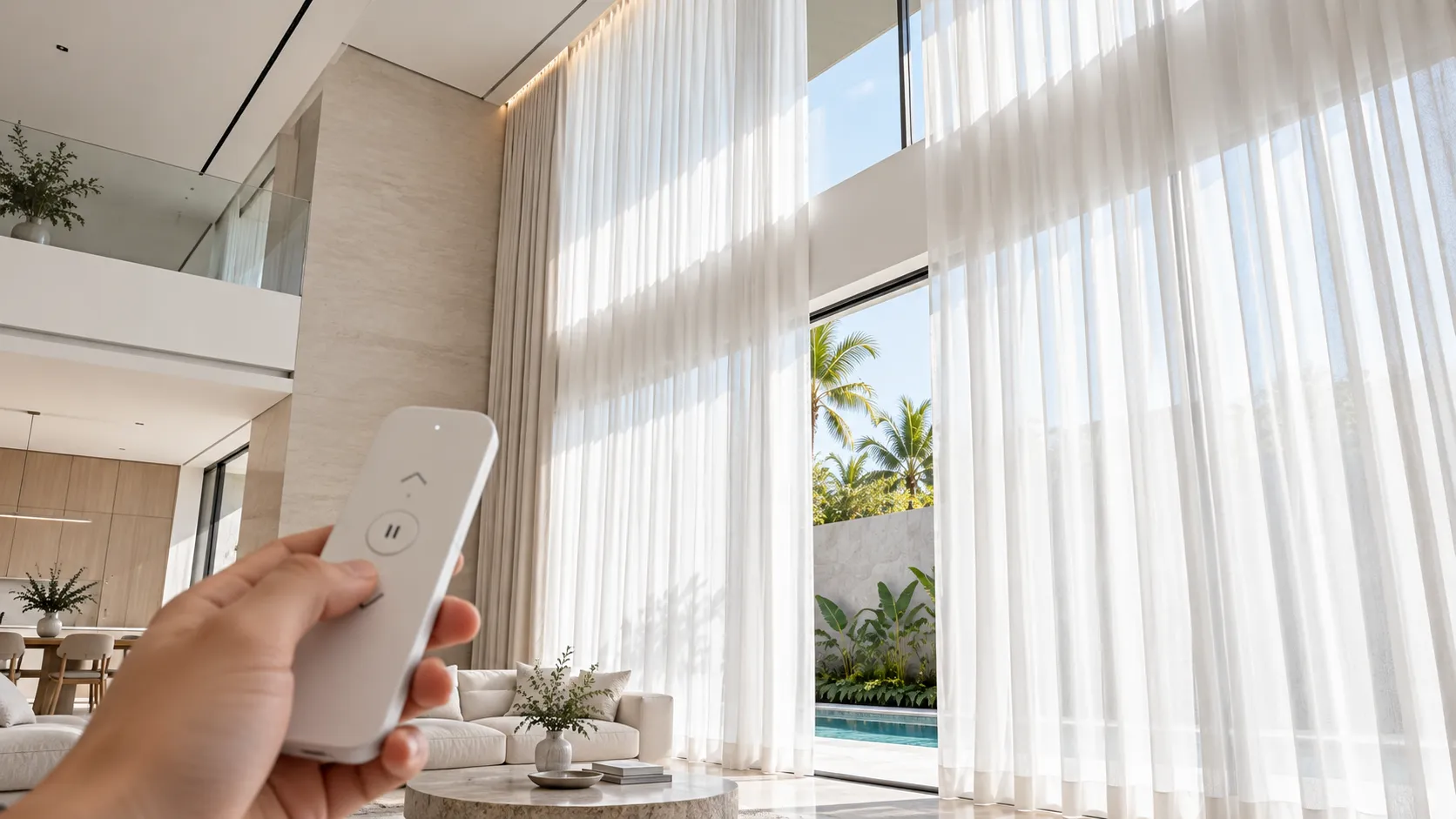
Motorized curtains use a compatible electric motor to move curtain panels along a track. Motorized blinds use a motor to raise, lower, tilt or otherwise adjust the covering, depending on the product design. The user can operate the treatment using a supported remote, wall switch, control hub or smart-home platform. Available control methods vary by motor, brand, installation and integration requirements, so compatibility should be confirmed before ordering.
Motorization does not change the basic purpose of the fabric or blind. A sheer curtain still softens incoming daylight. A blackout curtain still helps block light when the fabric, lining, side coverage and installation are suitable. A roller blind still provides a clean, compact covering. The motor changes how the product is operated; it does not automatically improve the fabric’s light-blocking performance, insulation, privacy or durability.
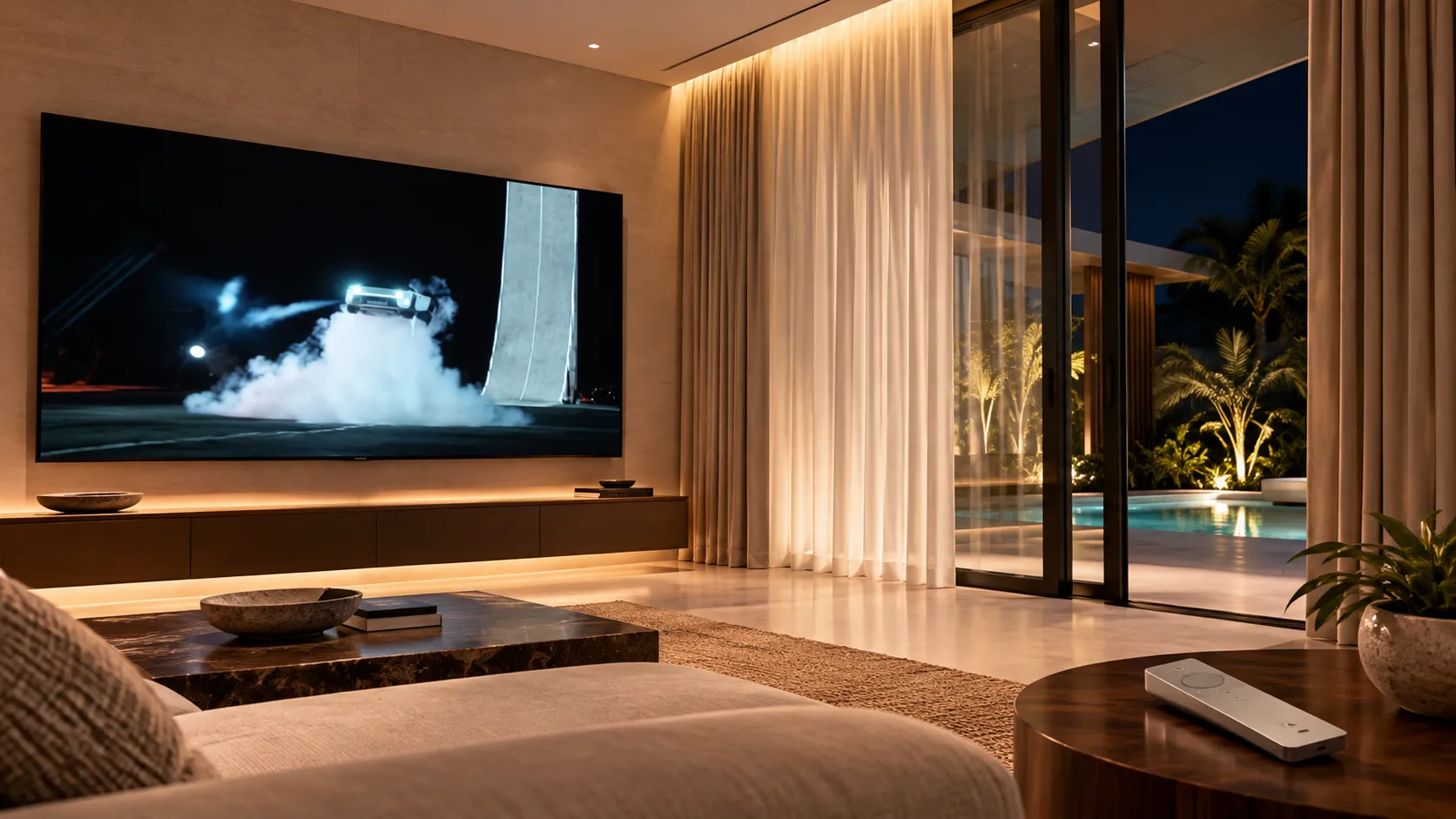
For example, a villa may use a sheer curtain during the day to soften the view through a large glazed opening, then close a blackout curtain in the bedroom at night. A motorized track can make those movements more convenient, particularly if the window is tall, wide or difficult to reach. A living room may use motorized roller blinds to reduce glare at certain times of day, while a hospitality property may prefer controls that are simple for guests and housekeeping staff.
The best specification starts with the window and the people using it—not with the motor alone. The track must suit the span and curtain weight, the fabric must meet the room’s needs, and the controls must be easy to understand. An attractive product that is difficult to operate or poorly matched to the opening is not a good smart-home solution.
4. Why Motorized Window Treatments Can Make Sense for Bali Villas
More convenient control across wide windows
Many villas feature wide sliding doors, floor-to-ceiling glazing or open-plan living spaces. A long manual curtain can require effort to move evenly, especially when the track is wide or the fabric is heavy. A correctly specified motorized system can make opening and closing more consistent. It can also reduce the need to reach across furniture or pull a panel from an awkward angle.
Managing bright daylight and glare
Bali properties can receive strong daylight, depending on orientation, season, surrounding buildings and the amount of glazing. Curtains and blinds allow occupants to adjust the light as conditions change. Automation may make that adjustment more convenient when a room is used throughout the day. However, motorized curtains do not replace appropriate glazing, ventilation, shading design or cooling systems. Their effect depends on fabric, coverage, exposure and how the treatment is used.
Supporting privacy without sacrificing the room’s atmosphere
Sheer curtains can soften views while retaining a light, airy appearance, but they do not provide complete privacy in every lighting condition. Blackout curtains or other opaque coverings can provide more privacy when closed. A layered arrangement can offer different levels of coverage throughout the day. Motorization can make changing between layers easier, provided the tracks and controls are planned for the installation.
Making daily routines easier for guests and staff
In a rental villa or hospitality property, simple operation matters. A clear wall switch or labelled remote may be more useful than a complicated app that guests must download. If the owner wants scheduling or integration with a broader system, the control plan should be agreed with the installer and property manager before installation. A solution should be intuitive for the people who will actually use it.
Keeping a clean visual finish
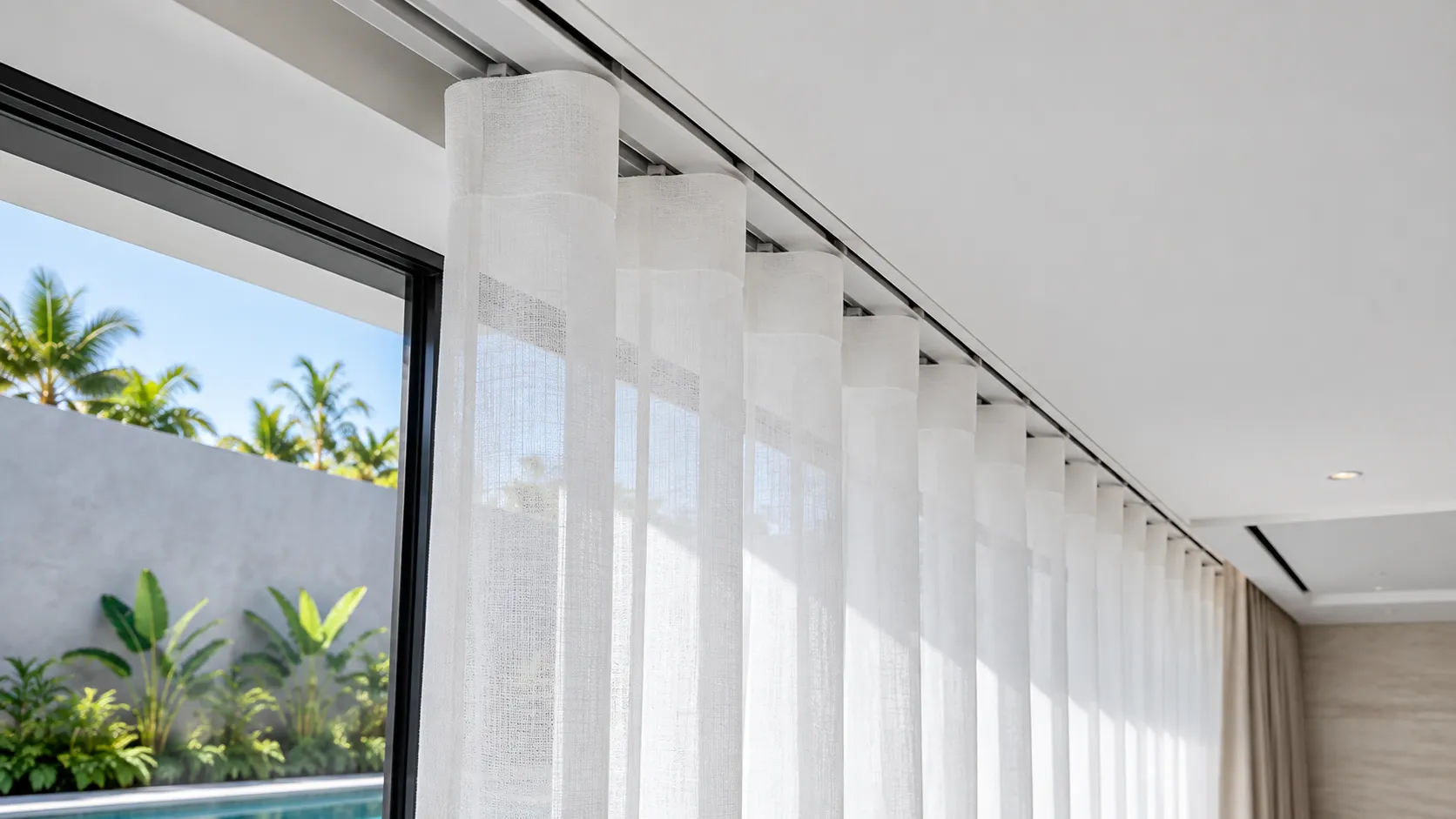
Motorized tracks can be concealed in a ceiling recess or coordinated with a pelmet where the architecture allows it. This can support a minimal interior in which fabric appears to run neatly from ceiling to floor. Concealment is not always necessary, and it should never compromise access for maintenance. The ceiling structure, available depth, electrical provision and track design all affect what is possible.
5. Motorized Curtains vs. Motorized Blinds: Which Is Right?
There is no universal winner. Curtains and blinds create different visual effects and behave differently depending on the opening, fabric, light requirements and maintenance routine. The right option is the one that fits the property rather than the one that sounds most technologically advanced.
Motorized curtains
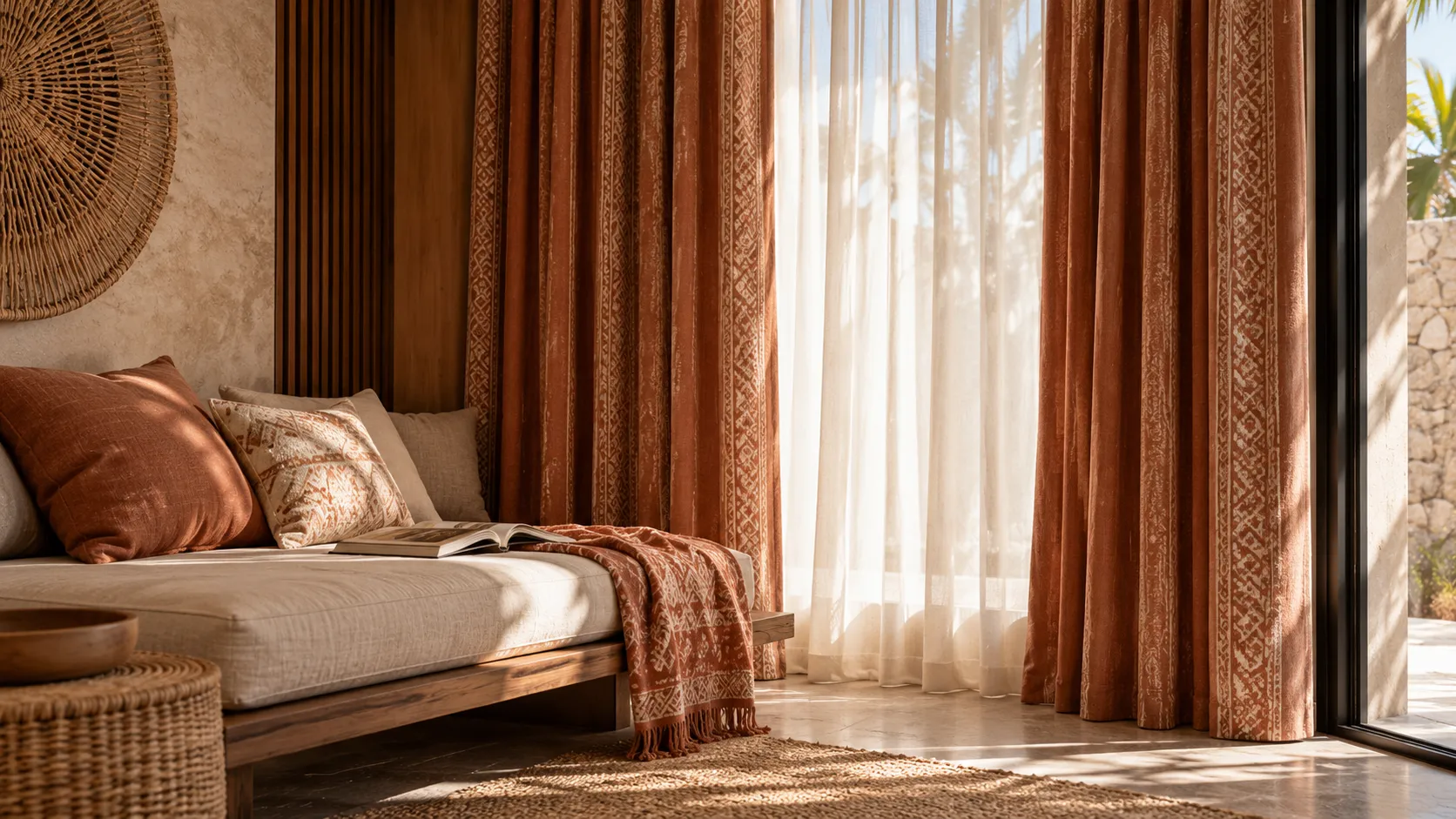
Curtains bring softness, texture and vertical movement to a room. They are available in many fabrics, colours, headings and levels of opacity. A sheer layer can diffuse daylight; a dimout or blackout layer can provide more darkness when selected and installed appropriately. Curtains can be useful for tall glazing and large openings where a continuous fabric surface suits the design. Their stack-back—the space the open panels occupy—must be planned so that the fabric does not cover too much of the glass or obstruct doors.
Motorized roller blinds
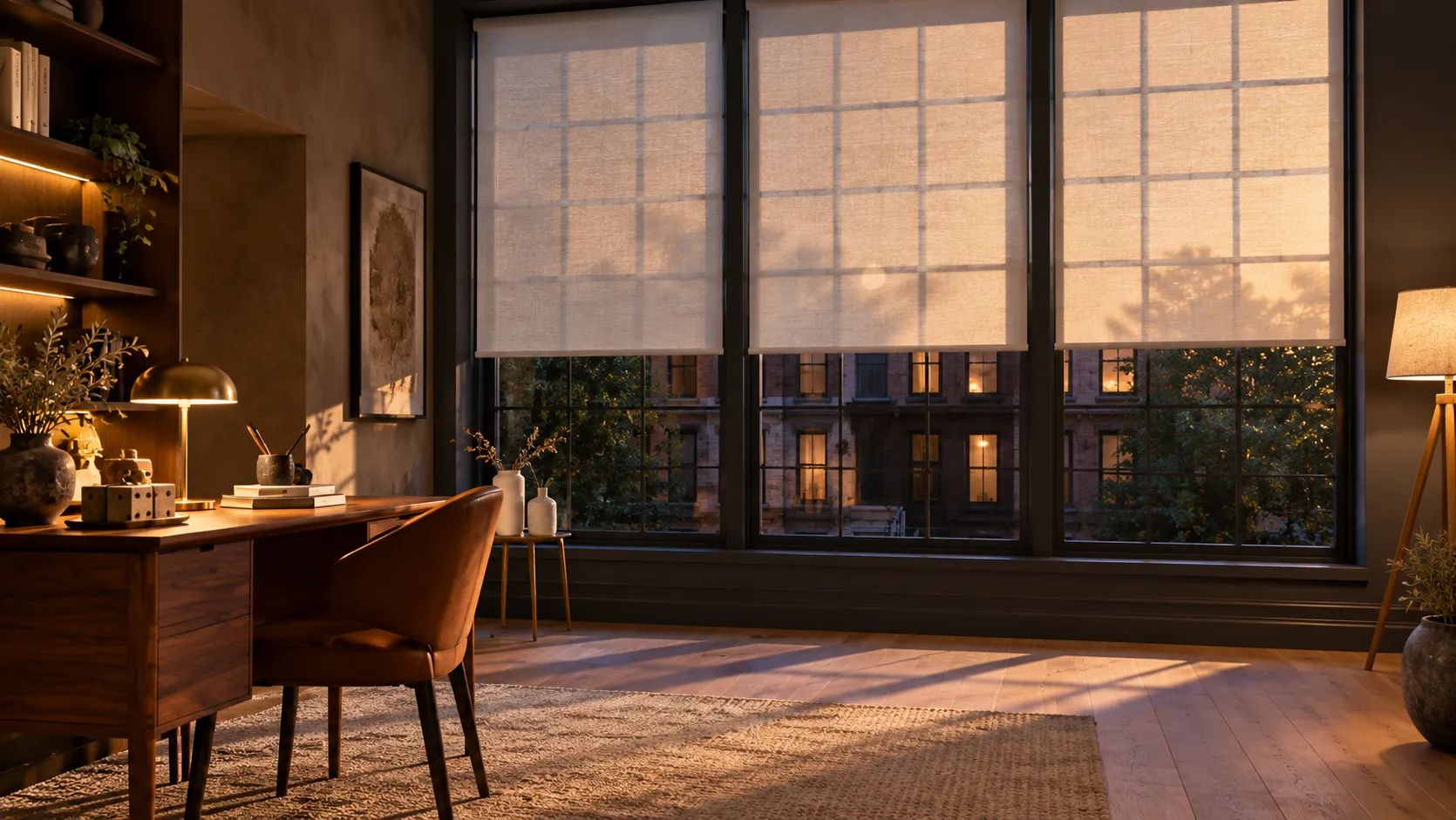
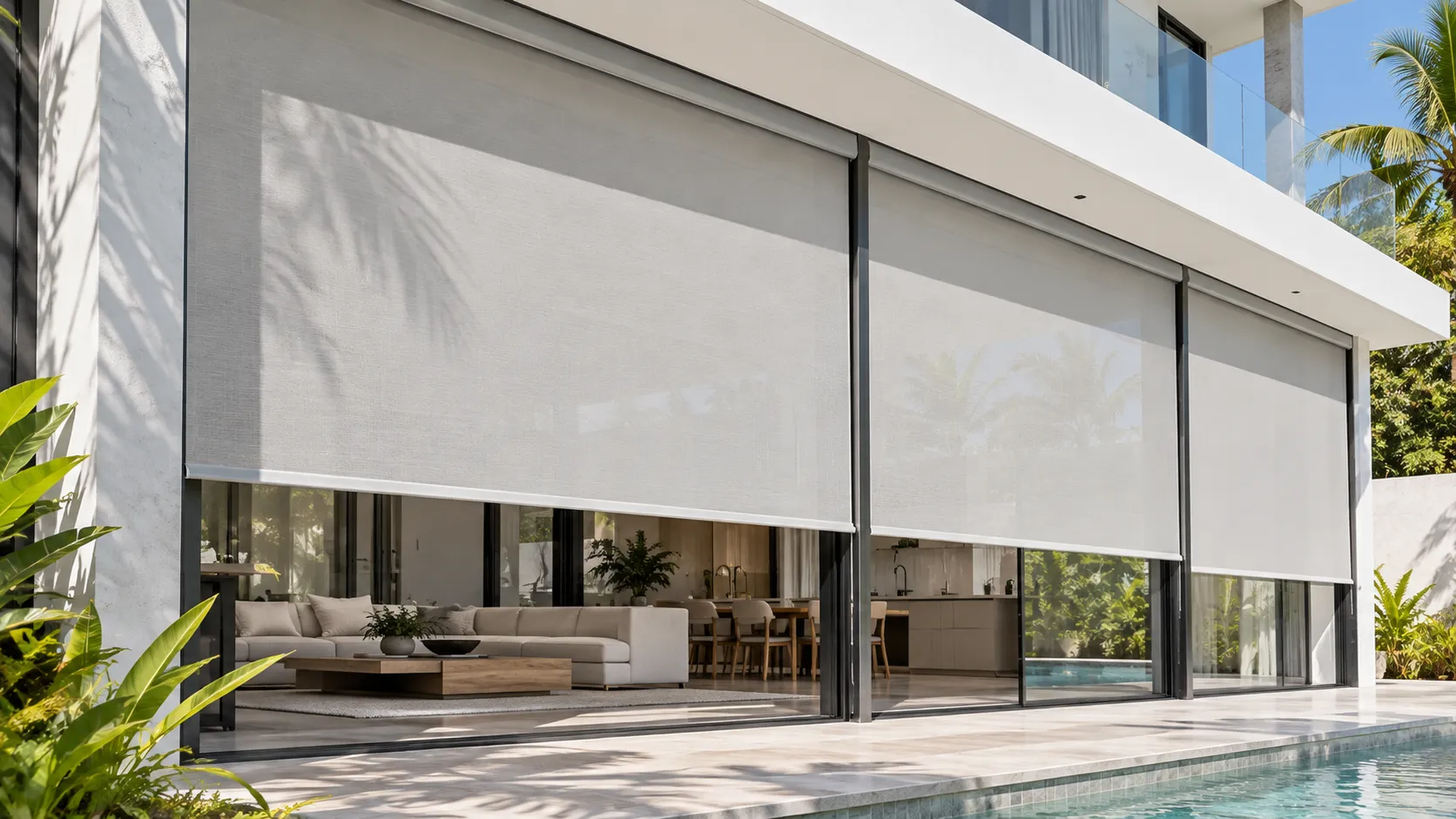
Roller blinds create a more compact appearance and can suit rooms where a neat, minimal finish is preferred. Different fabrics can offer varying degrees of light filtering, privacy and light blocking. The selected fabric and system should be checked against the window dimensions and the desired result. Side light gaps may remain depending on the installation, so a roller blind should not be described as fully blackout unless the whole system is designed to achieve that outcome.
Motorized Roman shades and other blind styles
Roman shades create horizontal folds as they rise and can add a tailored fabric appearance. Venetian and other slatted blinds offer different ways to manage light and views, but their construction, cleaning needs and available motor options vary. Not every style is available with every motor or suitable for every window size. Check product specifications before promising a particular configuration.
Layered window treatments
For a bedroom or living area, a sheer curtain combined with a blackout or dimout layer can provide flexibility. The layers may use separate tracks and separate controls. Planning should account for the total depth, the order of the tracks, the position of handles, the way panels stack and the access needed for cleaning or repairs. The combination should be designed as one system rather than selected as unrelated products.
6. Smart Controls: Remote, Wall Switch, App or Automation?
Control options are not identical across all motorized systems. Some motors work with a dedicated remote or wall switch. Others can connect to a hub or compatible smart-home platform. Voice control, phone control, scenes and scheduled movement may require extra hardware, configuration or a particular communication protocol. Confirm these details before selecting the motor.
Remote control
A dedicated remote is often straightforward for a household or guest property. It can be easy to understand and may operate without a phone app. Before installation, decide where the remote will be stored and whether several rooms need separate channels or grouped control.
Wall switch
A wall switch can provide a familiar fixed control point. Its position should be convenient without interfering with other switches or furniture. Electrical requirements vary by motor, so wiring and installation should be handled by a qualified professional where required.
App and smart-home integration
App-based control may be useful for owners who want to operate coverings remotely or group them into scenes. But a product being described as “smart” does not guarantee compatibility with every platform. Check the exact motor model, hub, network requirements, supported ecosystem, firmware and any subscription or account requirements. Ask what happens if the internet connection is unavailable and whether local control remains possible.
Schedules and scenes
A schedule can move a window treatment at a chosen time, while a scene can coordinate several compatible devices. These functions should be configured around real household routines and adjusted when the property’s use changes. Avoid assuming that a schedule will always reflect the actual daylight, weather or occupancy. Manual override and simple controls remain important.
7. Planning Motorized Curtains for a New Build or Renovation
The most reliable installations are planned early. If a villa is under construction or renovation, discuss window treatments before ceilings, pelmets, cabinetry and electrical points are finalised. Late changes can limit track concealment, access to power or the space available for the curtain stack.
Measure the opening and the finished drop
Record the width and height of the opening, the intended track position and the finished curtain drop. Floor levels and ceiling lines can vary, so measure at several points where appropriate. For wide openings, confirm the required track length and stack-back space. Do not estimate a custom curtain order from a single rough measurement.
Confirm the track and motor capacity
Fabric weight, curtain fullness, panel configuration, track span and bends all affect system selection. The motor and track must be compatible with the intended load and movement. A wide opening or heavy lined curtain may require a different system from a small, lightweight sheer. Use the manufacturer’s specifications and the installer’s assessment rather than assuming one motor suits every window.
Plan power and access
Confirm whether the selected motor requires a nearby power point, hardwiring, a battery or another power arrangement. Plan the position so it is safe, tidy and accessible for maintenance. Concealed systems still need a practical way to inspect or service components. Avoid closing up a ceiling or pelmet until the relevant dimensions and access requirements are confirmed.
Check doors, handles and adjacent layers
Sliding doors, window handles, insect screens, cabinetry and other window treatments can interfere with curtains or blinds. Check how each layer moves when fully open and closed. A sample track layout or installer site survey can help identify clearance problems before production.
Test the controls before handover
At commissioning, test the full travel of each treatment, the stop positions, the remote or switch, any programmed groups and the intended smart-home integration. Give the owner or property manager clear instructions for normal operation, manual override if supported, cleaning and reporting faults. Keep product and warranty information in a place where it can be found later.
8. Fabric, Privacy and Light Control: The Motor Is Only One Part
A motorized system can move a curtain, but the fabric determines much of its appearance and light performance. Selecting the correct material is just as important as selecting the motor.
Sheer curtains
Sheers filter and soften daylight while maintaining a lighter visual appearance. Their level of privacy depends on the weave, lighting conditions and what is happening on either side of the window. At night, a bright interior can be visible from outside through many sheer fabrics. If nighttime privacy is important, consider a second layer or another suitable covering.
Dimout curtains
Dimout materials reduce incoming light to varying degrees, depending on the construction, colour, lining and installation. They may suit living spaces where occupants want to soften strong light without creating complete darkness. Always review a physical sample and the supplier’s performance information.
Blackout curtains
Blackout fabric or lining can substantially reduce light passing through the material, but the finished result also depends on the track, side gaps, overlap, pelmet and installation. A blackout curtain may still allow light around its edges. For bedrooms, media rooms or shift workers, plan the whole window treatment rather than relying on the fabric label alone.
Colour and texture
Warm whites, natural beige, greige, taupe and muted earth tones are common choices for calm tropical interiors, but the right colour depends on the walls, floor, timber, furniture and daylight. Screen images can misrepresent undertones. View samples in the actual room during daytime and evening lighting before approving a custom order.
Cleaning and maintenance
Cleaning requirements vary by fabric, lining, heading and blind mechanism. Follow the product care instructions rather than assuming all curtains can be machine washed. In humid environments, allow cleaned fabrics to dry fully and investigate persistent dampness or condensation. For motorized products, follow the supplier’s instructions for keeping motors, controls and electrical components dry and accessible.
9. Common Mistakes When Choosing Smart Curtains and Blinds
- Choosing the motor before measuring: the system needs to suit the actual opening, track span and curtain load.
- Assuming every motor is smart-home compatible: confirm the exact control protocol and supported platform.
- Ignoring stack-back: open curtains may cover glass, obstruct a handle or crowd a narrow wall section.
- Expecting sheer fabric to provide full privacy: privacy changes with interior and exterior lighting.
- Assuming blackout means zero light gaps: fabric performance and installation details both matter.
- Forgetting maintenance access: concealed tracks and motors still need to be serviceable.
- Overcomplicating guest controls: a simple remote or wall switch may be more practical than an app-only setup.
- Ordering from screen colours alone: inspect fabric samples beside the room’s finishes.
- Skipping commissioning: test the full movement, controls and any integration before handover.
- Assuming automation replaces good design: orientation, shading, glazing, ventilation and fabric choice still matter.
10. Are Motorized Curtains Worth It for a Bali Property?
The value depends on how the space is used. Motorization may be especially useful for wide or tall windows, heavy curtains, hard-to-reach glazing, layered treatments or properties where many rooms need to be managed consistently. It may be less essential for a small window with a lightweight curtain that is easy to reach and operate manually.
When comparing options, consider the whole installed system: fabric, track or blind mechanism, motor, controls, electrical work, installation, commissioning and future maintenance. The lowest initial price does not always represent the best value if the system is difficult to service or does not meet the user’s needs. At the same time, extra automation is not automatically worthwhile if its functions will rarely be used.
For rental villas, consider the experience of guests and the workload of housekeeping. For a private residence, consider daily routines, accessibility and the level of integration desired. For a new build, coordinate window treatments with the architect, interior designer, electrical contractor and installer. Clear decisions early in the project usually make the final result easier to execute.
11. What the Tesla Story Can—and Cannot—Tell Us About Smart Homes
The Tesla Roadster demonstration is an attention-grabbing example of technology presented as a spectacle. Motorized curtains are a much more modest application, but they illustrate an important distinction between a demonstration and a useful product. The real question is not whether a device can perform an impressive trick once. It is whether it can perform its intended job reliably, safely and conveniently over time.
It would be misleading to imply that Tesla’s Roadster technology directly powers, improves or proves anything about motorized curtains. The two are different technologies serving different purposes. The connection is the broader cultural interest in automation and future-facing design. In a home, the best result may be an almost invisible system that works quietly in the background and allows the fabric, architecture and daylight to remain the focus.
For villa owners in Bali, a practical smart-home upgrade can begin with one room or one difficult opening. Define the problem first: too much glare, heavy panels, inconvenient access, a need for layered light control or a desire to coordinate window treatments with a broader home system. Then choose a suitable fabric and mechanism, verify compatibility and make sure the installation can be maintained.
12. A Practical Checklist Before Ordering
- Identify the main need: daylight filtering, privacy, darkness, appearance or easier operation.
- Measure the opening, track position, finished drop and available stack-back.
- Select sheer, dimout, blackout or blind fabric according to the room’s needs.
- Confirm motor capacity and compatibility with the track or blind system.
- Choose the control method: remote, wall switch, app or supported smart-home integration.
- Plan power, wiring, concealment and service access before finishing the ceiling or pelmet.
- Check handles, sliding doors, furniture and any second curtain layer.
- View physical samples in the property’s actual lighting.
- Confirm cleaning instructions, warranty coverage and maintenance arrangements.
- Test every treatment and control before final handover.
Frequently Asked Questions
Did Tesla really demonstrate a flying car in October 2026?
News reports dated 15–16 October 2026 described a next-generation Tesla Roadster demonstration involving a ramp, an airborne manoeuvre and SpaceX-inspired cold-gas thrusters. The demonstration should not be confused with proof of ordinary aircraft-like flight or with confirmation that every capability will be available in a production vehicle. See the linked reports from TechCrunch, The Verge and Car and Driver for coverage of the event.
Are motorized curtains part of the same technology as Tesla’s Roadster?
No. A motorized curtain uses an electric motor to move a curtain along a track. The Roadster demonstration involved vehicle systems and thrusters. They are connected here only through the broader topic of futuristic technology and automation, not through shared hardware or engineering.
Can motorized curtains be controlled with a phone?
Some systems support phone apps or smart-home integration, while others use a remote or wall switch. Compatibility depends on the specific motor, controller, hub and platform. Confirm the exact supported configuration before purchasing.
Are motorized curtains suitable for Bali villas?
They can be suitable when the track, motor, fabric and controls are chosen for the property’s windows and use. Consider humidity, sun exposure, cleaning routines, access for maintenance and whether guests or staff need simple controls.
Do motorized curtains save energy?
They may make it easier to manage daylight and window coverings consistently, but energy performance depends on glazing, fabric, orientation, gaps, climate and how the system is operated. Do not assume a specific energy saving without a suitable assessment.
Are motorized blinds better than motorized curtains?
Neither is universally better. Roller blinds may suit a compact, minimal finish, while curtains offer fabric texture and flexible layering. Choose based on light control, appearance, window dimensions, maintenance and budget.
Can motorized curtains be installed in an existing villa?
Often, yes, but feasibility depends on the track location, available power, mounting surface, curtain dimensions and selected motor. A site assessment can identify whether new wiring, mounting changes or another track arrangement is needed.
Should I choose blackout curtains for every bedroom?
Not necessarily. Blackout may suit rooms where darkness is important, while dimout or layered sheers may be preferred elsewhere. Consider each room’s orientation, occupancy, privacy needs and desired atmosphere.
What should I ask a supplier before ordering?
Ask about track and motor compatibility, load capacity, control options, electrical requirements, service access, fabric care, warranty, installation and commissioning. Request confirmation of any smart-home integration rather than relying on a general “smart compatible” description.
Bring Smarter Comfort to Your Bali Property
The viral Tesla Roadster demonstration has made futuristic technology a conversation topic, but the most valuable innovations are the ones that fit real life. For a home or villa, motorized curtains and blinds can make daily light control more convenient while supporting the property’s interior design.
At Almeers Living, the starting point is the window, the fabric and the way the space is used. If you are planning a new villa, renovating a property or upgrading large windows, explore suitable curtain and blind options and discuss the measurements, control requirements and installation details before choosing a system.
Planning a window-treatment project in Bali? Contact Almeers Living to discuss your property, explore fabric options and arrange a consultation or site survey where available. A carefully planned system should look right, work reliably and remain practical to maintain.
Editorial note: This article uses the Tesla Roadster event as a topical introduction. Product capabilities and availability should be checked with the relevant manufacturers and installers. Almeers Living is not affiliated with Tesla or SpaceX.
Further reading: Window Treatment Buying Guide · Choosing Between Blackout, Sheer and Dimout Fabrics · Understanding Curtain Fabric Types · Curtain Tracks vs. Rods for Bali Villas