Tren Kain Berteknologi Tinggi (Anti-Mold): Ideas Worth Watching
Why Anti-Mould Fabric Technology Is Getting Attention
Humidity and limited airflow can create conditions in which mould becomes a maintenance concern. For curtain fabrics in tropical homes and Bali villas, moisture management, suitable cleaning, and careful product selection are important. Some textile products are marketed with anti-mould or mould-resistant properties, but the wording and supporting evidence can differ substantially between manufacturers.
A fabric treatment should not be treated as a guarantee that mould can never develop. Conditions in the room, condensation, damp walls, dust, and maintenance practices still matter.
Understand the Product Claim Before Buying
Terms such as anti-mould, mould-resistant, antimicrobial, and moisture-resistant do not necessarily mean the same thing. Ask the supplier what the exact claim covers and whether it applies to the fabric, a surface finish, a lining, or another part of the product.
- Request documentation. Ask for the product data sheet and any relevant test information.
- Check the test conditions. A result under controlled conditions does not guarantee identical performance in every building.
- Ask about treatment durability. Find out whether performance can change after washing, abrasion, or prolonged use.
- Confirm safe care methods. Use only cleaning methods approved for the fabric.
- Avoid unsupported health promises. A fabric claim is not proof that a room is free from mould or that occupants are protected from health effects.
Moisture Management Comes First
Even a fabric marketed as mould-resistant cannot correct a persistent leak, damp wall, or poorly managed condensation. Inspect the room for water ingress, improve ventilation where appropriate, and address moisture sources promptly. Curtains should not remain pressed against damp walls or trapped in persistently wet areas.
In rooms with high humidity, allow curtains to dry after becoming damp and follow the recommended cleaning schedule. Check the wall, window frame, and the back of the curtain periodically, particularly where airflow is limited.
Choose Fabric According to the Room
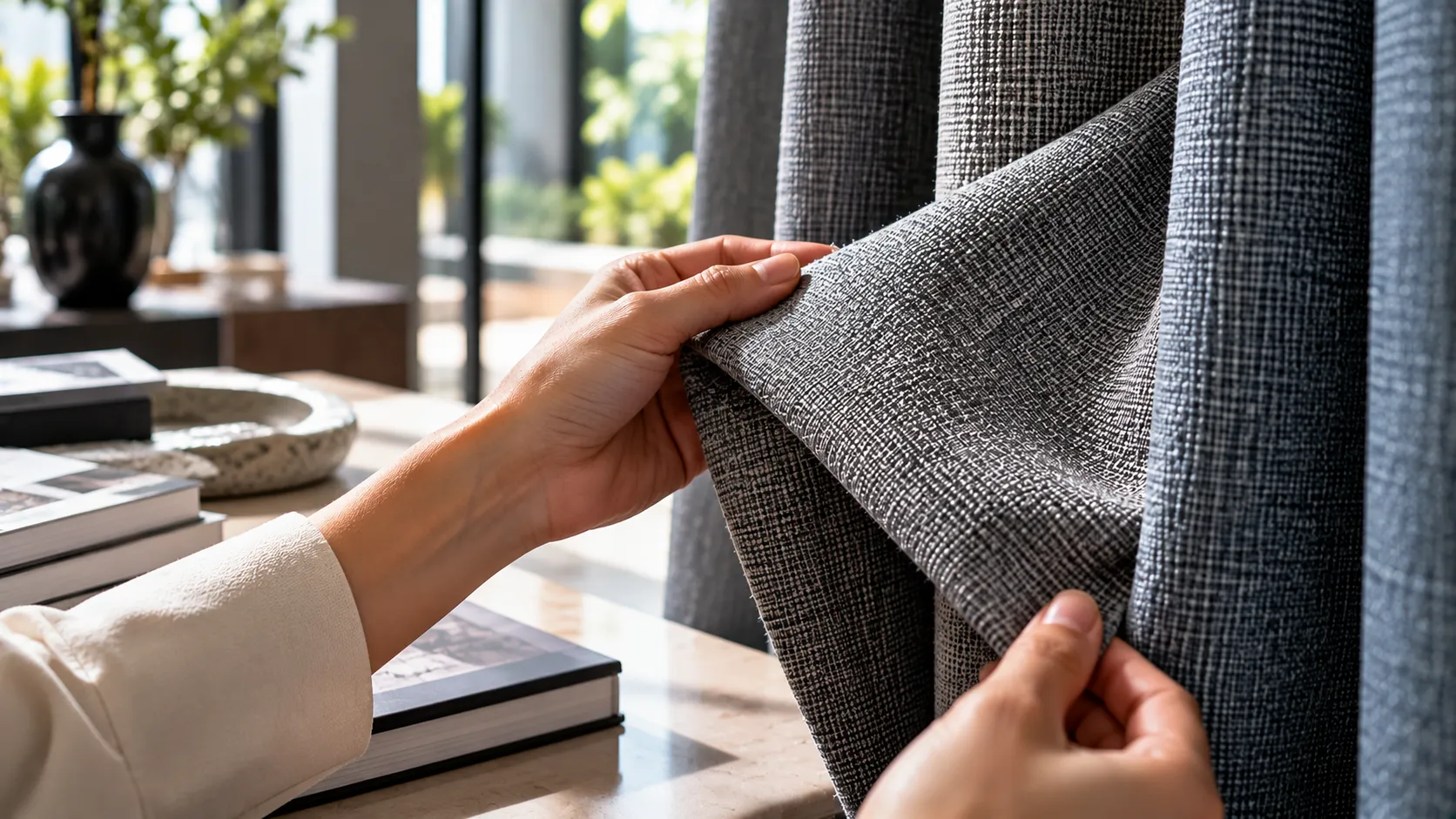
Fabric selection should consider weight, weave, opacity, sunlight exposure, cleaning needs, and the way the room is used. A sheer may dry differently from a heavy lined curtain, but actual performance depends on the fibre, construction, finish, and surrounding conditions.
For bedrooms, privacy and light control may be important. For living spaces, the owner may prefer a lighter appearance and a clear view. In rental properties, maintenance requirements and replacement practicality should be considered from the beginning.
Care and Maintenance Practices
- Follow the manufacturers cleaning instructions instead of applying unverified chemical treatments.
- Remove dust regularly using a method suitable for the fabric.
- Investigate musty odours, visible spots, or persistent dampness rather than covering the symptoms.
- Dry cleaned curtains fully before rehanging them when the care instructions permit washing.
- Check that the curtain does not remain in contact with damp surfaces.
- Seek professional cleaning advice when the fabric is delicate, lined, or difficult to remove safely.
What to Ask a Curtain Supplier
Before choosing a high-technology fabric, ask for the exact composition, care label, performance documentation, expected limitations, warranty terms, and availability of replacement material. Also confirm whether the finished curtain requires a particular lining, heading, track, or installation clearance.
Frequently Asked Questions
Does anti-mould fabric make a room mould-proof?
No. Mould prevention also depends on moisture control, ventilation, cleaning, and the condition of the building.
Is anti-mould fabric the same as antimicrobial fabric?
Not necessarily. The claims can refer to different properties and test methods. Ask the manufacturer to define the exact performance claim.
Can I use bleach on a treated curtain?
Do not assume bleach is safe. It may damage fibres, colour, or finishes. Follow the care label and seek professional advice when necessary.
Choose Performance with Clear Evidence
High-technology textiles can be worth considering when their documented properties match the needs of a room. For a Bali property, combine careful fabric selection with moisture management and a realistic maintenance plan. Almeers Living can help you compare custom curtain materials and practical window treatment options. Request a consultation or site survey to discuss the requirements of your space.