Types of Venetian Blinds: Material Selection, Slat Size Options, and Mechanism Comparison
Venetian blinds remain one of the most versatile and timeless window covering solutions in architectural design. Characterized by horizontal slats held together by cord ladders or decorative fabric tapes, Venetian blinds allow occupants to adjust incoming solar angles, light levels, and sightline privacy with subtle tilt adjustments.
Understanding material compositions, slat width options, and control mechanisms is key to choosing the right Venetian blind for your space.
1. Material Selection: Hardwood vs. Faux Wood vs. Aluminum
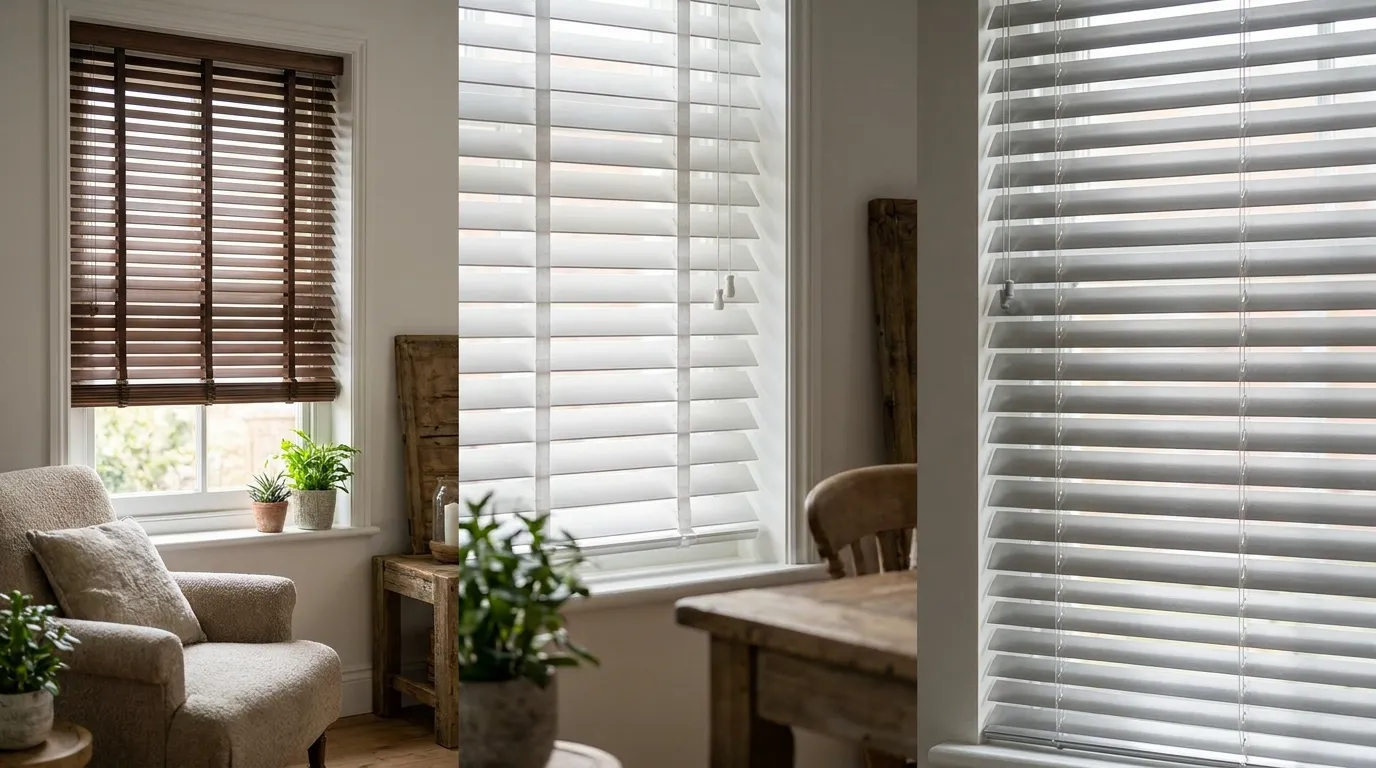
- Natural Hardwood Blinds: Crafted from lightweight, high-grade timber (such as Basswood or Paulownia). They introduce organic grain textures, warmth, and natural elegance to living rooms, executive offices, and dry lounge areas.
- Faux Wood (Composite PVC) Blinds: Engineered from high-density polymers that replicate natural wood grain while offering 100% moisture and water resistance. Ideal for high-humidity bathrooms, kitchens, and coastal properties.
- Extruded Aluminum Blinds: Durable, ultra-thin metallic slats offering sleek industrial aesthetics and minimal stack height when fully raised.
2. Slat Size Dimensions and Visual Impact
Slat width dramatically influences the view-through clarity and visual scale of window frames:
- 25mm (1 Inch) Slats: Compact profile best suited for narrow window frames, french doors, and small utility spaces.
- 35mm & 50mm (2 Inch) Slats: The luxury architectural standard for medium to large windows, offering expansive view-through spacing when tilted open.
3. Operating Mechanisms: Corded, Wand, and Motorized Controls
Traditional cord-tilt and lift mechanisms are increasingly updated with continuous cord loops or cordless push-pull systems for enhanced safety. Modern luxury installations integrate silent motorized tilt-and-lift actuators compatible with smart home ecosystems and handheld remote controls.