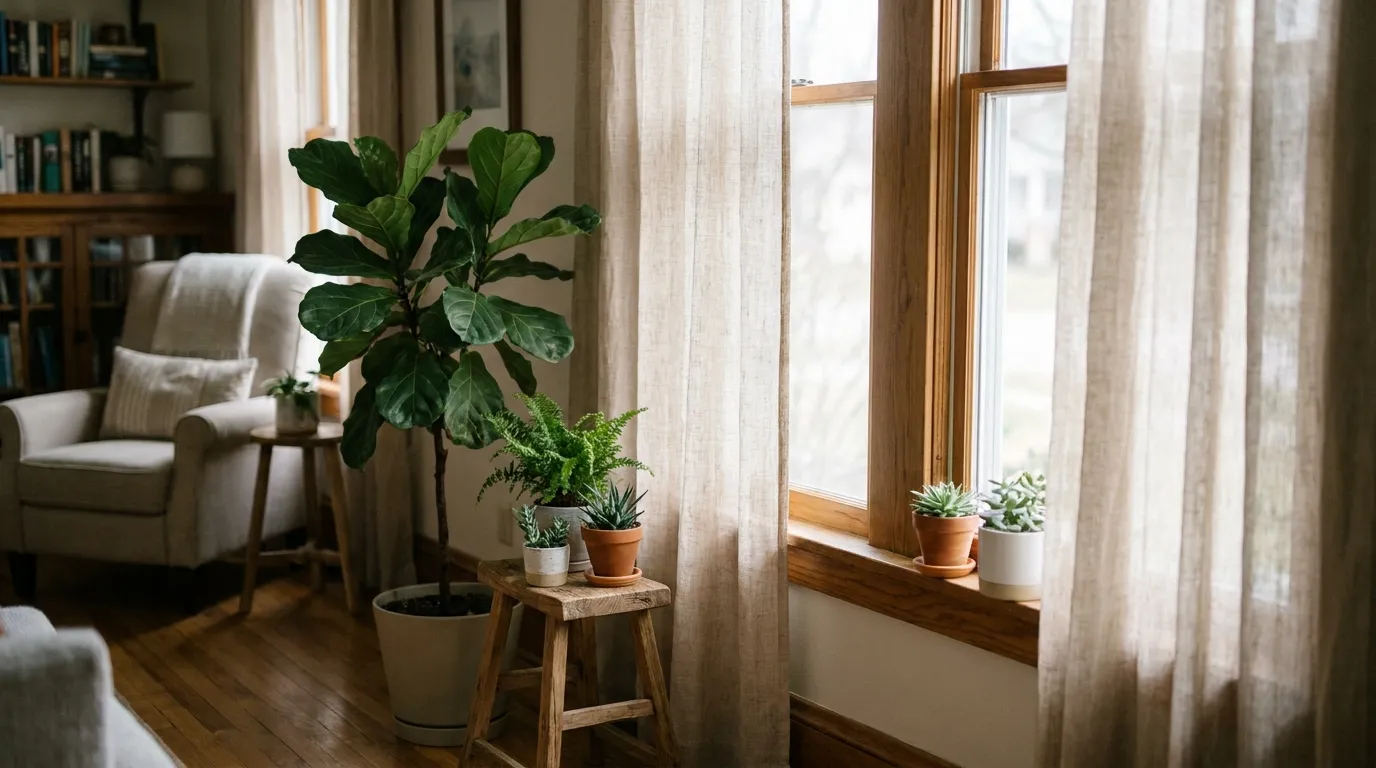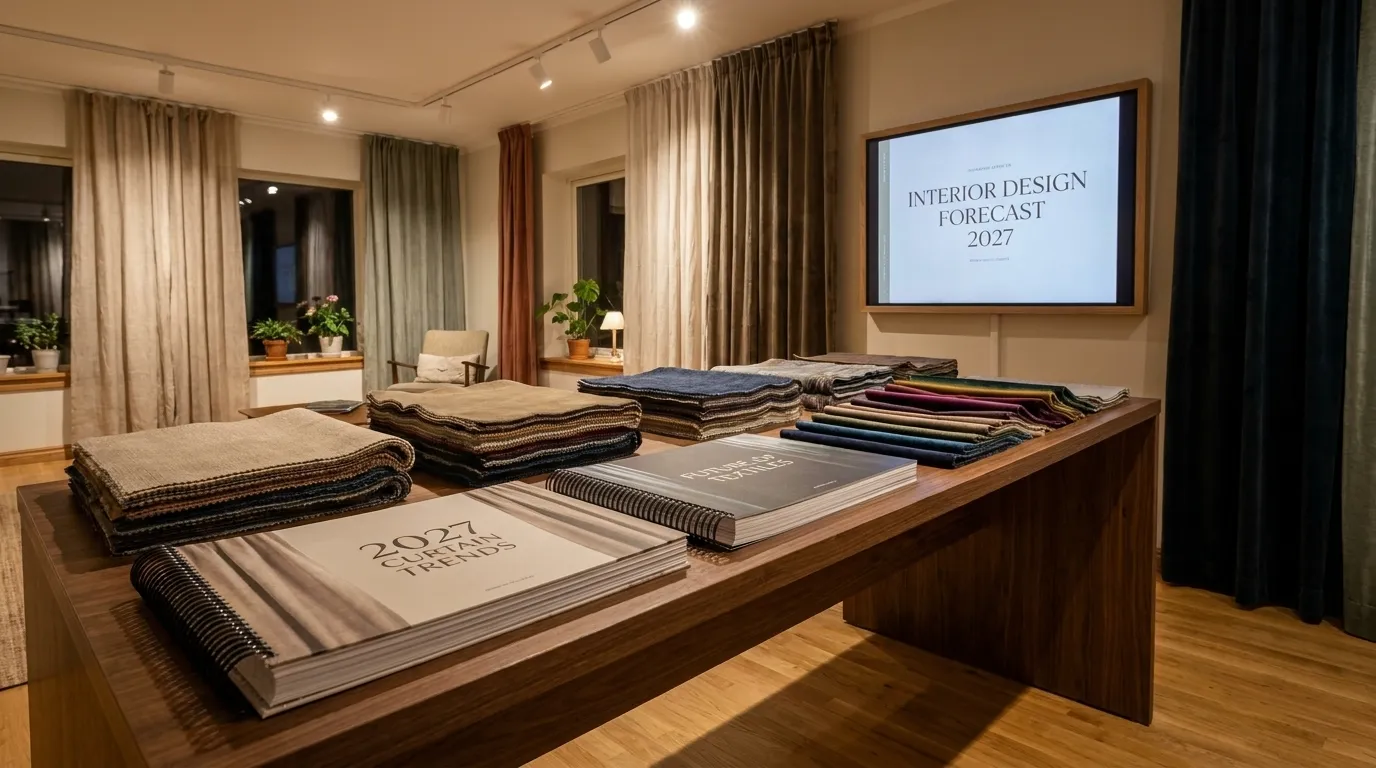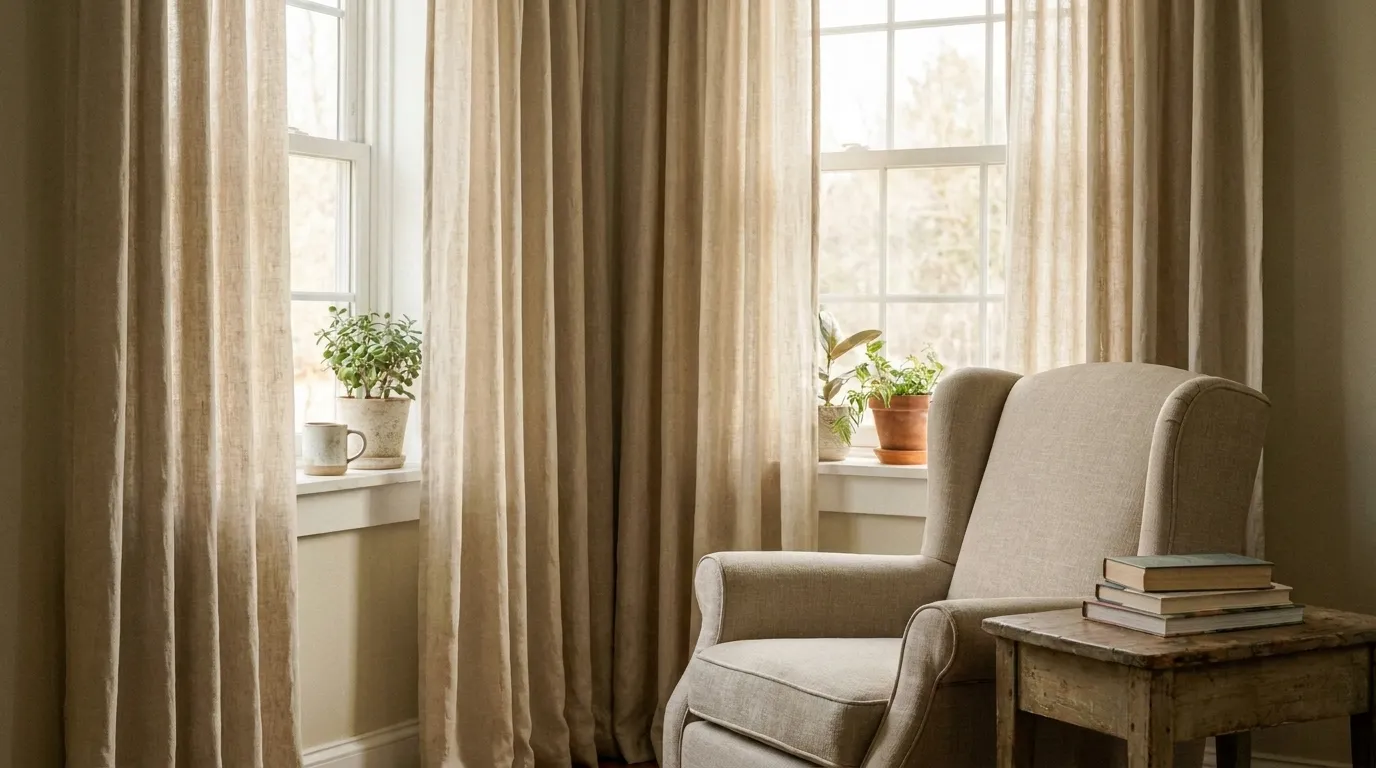
A relaxing room is shaped by more than furniture and decoration. The quality of daylight, the colours surrounding us, the feel of materials and the level of outside disturbance all influence how comfortable a space feels. Curtains bring these elements together at the window. They can soften bright sunlight, introduce gentle colour and texture, provide privacy and, when properly selected, help reduce some indoor sound reflections.
In Bali homes and villas, windows often frame tropical gardens, pools and outdoor living areas. Strong daylight can make a room feel open and bright, but it can also create glare, heat and a loss of privacy at certain times of day. The right curtain arrangement helps create a more balanced interior while preserving the connection to the outdoors.
This guide explores how to choose curtains for a calmer atmosphere, with practical advice on ambient light filtering, colour selection, fabric texture and acoustic expectations. It is written for homeowners, villa owners, hospitality operators, interior designers and anyone planning a more restful bedroom, living room or private retreat.
1. What Makes a Room Feel Relaxing?
A calming interior is not necessarily dark, minimal or filled with neutral colours. It is a space in which light, privacy, temperature, sound and visual detail work together in a way that suits the people using it. Curtains can support that balance because they occupy a large visual area and directly influence the way a window behaves throughout the day.
When planning a relaxing room, consider five connected factors:
- Light quality: reduce harsh glare while allowing enough natural daylight for the room's purpose.
- Privacy: create a sense of comfort without unnecessarily blocking garden views or outdoor connections.
- Colour balance: choose tones that complement the room's materials and desired atmosphere.
- Material character: use fabric texture and folds to add softness without making the room feel visually crowded.
- Sound environment: use curtains as one part of a broader strategy for managing echo and indoor sound reflections.
The best solution is specific to the room. A bedroom may need stronger light control and a heavier fabric, while a living room may benefit from a sheer curtain that preserves daylight and views. A reading corner may need a softer, more enclosed atmosphere than an open-plan dining area.
2. Creating Soft, Balanced Ambient Light
Ambient light is the general level of illumination in a room. Direct sunlight can be beautiful, but when it enters at a low angle or reflects off floors, glass and polished surfaces, it may create uncomfortable glare. Curtains help moderate this light and make the room easier to use at different times of day.
Diffusing daylight with sheer curtains
Sheer curtains filter and diffuse incoming daylight, softening the contrast between bright windows and darker interior areas. They can create a gentle glow while allowing the room to remain visually connected to the outdoors. This is useful in living rooms, dining areas and bedrooms where complete darkness is not required during the day.
Managing stronger sunlight
For windows exposed to strong morning or afternoon sun, a sheer layer alone may not provide enough glare or heat control. A lined curtain, dimout fabric or suitable blind may be more appropriate. The correct option depends on window orientation, glazing, external shading and how the room is used.
Maintaining a natural rhythm
A flexible window treatment lets occupants respond to changing daylight. Sheers can remain closed during bright hours, while an opaque layer can be drawn when privacy or stronger light reduction is needed. This simple adjustment can make a room feel more comfortable without keeping it permanently dark.
3. Choosing the Right Curtain Opacity
Opacity describes how much light passes through a fabric. Choosing the right level is one of the most important decisions when creating a restful interior. The terms sheer, dimout and blackout describe different levels of light control, but actual performance varies by fabric construction, colour, lining and installation details.
| Curtain type | Light behaviour | Atmosphere it can support | Typical application |
|---|---|---|---|
| Sheer / voile | Filters and diffuses daylight | Airy, bright and gentle | Living rooms, dining areas and daytime layers |
| Dimout | Reduces incoming light without necessarily making a room fully dark | Soft, subdued and flexible | Bedrooms and spaces needing moderate light reduction |
| Blackout | Blocks a high proportion of light through the fabric | Private, darker and sleep-oriented | Bedrooms and media rooms |
| Layered sheer and opaque | Offers more than one light-control setting | Adaptable throughout the day | Bedrooms, living rooms and large glazed openings |
For a relaxing bedroom, blackout fabric may help guests or household members sleep when external lighting or early sunrise is disruptive. However, the fabric alone does not guarantee complete darkness. Light may enter around the sides, top or bottom if the curtain does not cover the opening sufficiently.
For a living room, a sheer or a combination of sheer and dimout may be more appropriate. It can soften daylight while preserving a bright, welcoming feeling. Review the room at different times of day before making a final decision.
4. Soft Colour Psychology for Window Treatments
Colour influences the visual character of a room and can affect how people interpret its atmosphere. Soft colours are often chosen for restful interiors because they can create a gentle backdrop, but there is no universal colour that makes everyone feel relaxed. Personal preference, cultural associations, natural light and the surrounding materials all matter.
Warm whites and ivory
Warm white and ivory can make a room feel light and welcoming without the sharper appearance that some cool whites create. These shades work well with timber, natural stone, warm metals and neutral upholstery. Check fabric samples against the wall colour because undertones can look different in daylight and artificial lighting.
Beige, sand and oatmeal
Earth-inspired neutrals add warmth and can connect indoor spaces with tropical landscaping and natural materials. Beige, sand and oatmeal are versatile choices for villas with timber furniture, woven accessories and textured finishes. Their exact appearance depends on the fabric weave and surrounding colours.
Soft greens
Muted sage, olive-grey and other softened greens can echo garden views and introduce a subtle connection to nature. They can work particularly well in bedrooms and sitting areas when balanced with warm neutrals and natural textures.
Blue-grey and muted blue
Soft blue and blue-grey tones can create a cool, quiet visual impression. They may suit bedrooms or rooms with warm timber and pale stone. In spaces with limited daylight, very cool or dark shades should be sampled carefully to avoid making the room feel colder than intended.
Taupe and warm grey
Taupe and warm grey provide understated depth while remaining easy to coordinate with many interior palettes. They can be useful where a property needs a consistent look across several rooms but still benefits from subtle tonal variation.
| Colour direction | Visual character | Pairs well with |
|---|---|---|
| Warm white / ivory | Light, soft and understated | Oak, limestone, warm beige and natural fibres |
| Sand / oatmeal | Earthy and relaxed | Rattan, teak, stone and cream upholstery |
| Muted sage | Nature-inspired and gentle | Warm white, timber and soft grey |
| Blue-grey | Cool and quiet | Pale stone, brushed metal and warm wood |
| Taupe / warm grey | Balanced and versatile | Neutral walls, textured rugs and darker timber |
Before ordering, view a physical sample beside the wall, floor and upholstery. A colour that appears calm in a showroom may look noticeably different in a bright Bali villa or under warm evening lighting.
5. Fabric Texture, Drape and Visual Comfort
Texture adds depth to a room without relying on strong patterns or bold colours. A plain curtain with a subtle woven surface can make a window feel more considered, especially when the rest of the interior uses natural materials.
Linen-look and woven textures
Linen-look fabrics and softly woven textiles can create an informal, natural appearance. They are often chosen for tropical and contemporary interiors because they complement timber, stone, rattan and organic shapes. Confirm the actual fibre composition rather than assuming that a linen-look fabric is made from pure linen.
Weight and drape
Fabric weight influences how a curtain hangs, how it moves and how full it appears. Lightweight fabrics create a flowing and airy effect, while heavier fabrics can produce more substantial folds. Neither is automatically better: the appropriate weight depends on the track, window size, heading style and desired appearance.
Folds and fullness
Well-planned fullness creates regular folds and prevents curtains from appearing stretched or flat. Wave or S-fold headings can provide a clean, continuous rhythm, while pinch pleat and other tailored headings create a more traditional or decorative finish. The heading must be compatible with the selected track and fabric.
When a room is intended to feel calm, avoid unnecessary visual competition. A quiet fabric texture, consistent folds and a considered colour can create enough interest without requiring a busy pattern.
6. How Curtains Influence Indoor Acoustics
Sound comfort is an important part of a relaxing space. Rooms with large glass surfaces, hard floors, stone walls and minimal furnishings can produce noticeable reflections. Curtains introduce a soft, porous surface that can absorb some sound energy and help reduce certain reflections, particularly at mid and high frequencies.
What curtains can realistically do
Depending on their thickness, construction, fullness and coverage, curtains may help soften the sound of voices and reduce a room's sense of liveliness or echo. Heavier, fuller curtains generally provide more sound absorption than a thin sheer, although performance varies considerably. Curtains can contribute to a more comfortable acoustic environment, but they are not a substitute for purpose-designed acoustic treatment.
What curtains cannot guarantee
Ordinary decorative curtains should not be described as soundproof. They do not reliably block traffic noise, construction noise or sound passing through walls and poorly sealed windows. Significant noise reduction may require improvements to glazing, window seals, doors, wall construction or dedicated acoustic materials.
Practical ways to improve the room's sound environment
- Use adequately full curtains across large glazed surfaces where the design allows.
- Consider a heavier fabric or lining if it suits the room's light-control and design requirements.
- Combine curtains with rugs, upholstered furniture, cushions and other suitable soft furnishings.
- Address obvious sound leaks around windows and doors if outside noise is the main concern.
- For a room with a specific acoustic requirement, seek advice from an acoustic professional rather than relying on curtain fabric alone.
7. Layering Curtains for Flexible Comfort
Layering is one of the most practical ways to create a comfortable window because it gives occupants more control over daylight and privacy. A common arrangement combines a sheer curtain with a dimout or blackout curtain on a double track. Each layer can be operated independently according to the time of day and the activity in the room.
Sheer with blackout
This combination is useful in bedrooms where occupants want soft daylight during the day and stronger light reduction at night or in the early morning. It also offers more privacy choices than a single curtain, provided the sheer's limitations after dark are understood.
Sheer with dimout
For living areas and bedrooms that do not need complete darkness, sheer and dimout layers can provide a flexible balance. The sheer softens the view during bright hours, while the dimout layer reduces light when required.
Coordinate the layers
The two fabrics do not need to be identical. A warm white sheer paired with oatmeal, taupe or soft grey dimout can create depth while keeping the palette calm. Consider how the fabrics look together when both are closed and when one is stacked open.
For more information about available fabric and window-covering options, visit the Almeers Living products page.
8. Curtain Ideas for Different Rooms
| Room | Suggested curtain direction | Comfort objective |
|---|---|---|
| Bedroom | Dimout or blackout, optionally layered with a sheer | Sleep, privacy and flexible daylight control |
| Living room | Sheer or sheer with an opaque layer | Soft daylight, views and adaptable privacy |
| Reading corner | Soft textured fabric with suitable glare control | Reduced glare and a visually quiet setting |
| Dining room | Easy-care sheer or textured curtain based on exposure | Gentle ambience without obstructing the space |
| Home office | Light-filtering fabric or blind with glare control | Comfortable screen use and manageable daylight |
| Media room | Blackout curtain with carefully planned coverage | Reduced stray light for viewing |
Room function should guide the specification. A living room that opens onto a private garden may need only a sheer layer during the day, while a bedroom facing a neighbouring property may require a stronger privacy solution. Avoid applying one curtain specification to every window without assessing its use.
9. Practical Considerations for Bali Interiors
Bali's tropical setting creates specific design considerations. Bright sunlight, humidity, coastal air in some locations and frequent indoor-outdoor movement can influence fabric selection and hardware maintenance. A relaxing atmosphere should be supported by materials that are suitable for the actual property conditions.
Sunlight and colour durability
Strong sunlight can contribute to fading over time. Assess the window's orientation and ask about colourfastness information where available. Lined curtains, suitable blinds and external shading may help manage exposure, depending on the opening and building design.
Humidity and ventilation
In humid rooms, air circulation and moisture management are important. Curtains should not remain pressed against damp surfaces, and fabrics should be maintained according to their care instructions. Bathrooms and areas exposed to direct water require products selected specifically for those conditions.
Coastal environments and hardware
Properties near the coast may expose metal components to salt-laden air. Select appropriate hardware and maintain it according to the supplier's recommendations. Periodic checks of tracks, brackets and fixings can help identify wear or corrosion before it affects operation.
Natural materials and a tropical palette
Warm neutrals, woven textures and soft greens can complement Bali's landscape and common interior materials. The aim is not to create a themed room, but to establish a comfortable relationship between the interior and its surroundings.
10. Measuring, Installation and Care
A relaxing design can be undermined by curtains that are too short, difficult to move or poorly proportioned. Accurate measurement and compatible hardware are essential to achieving a neat finish and dependable everyday use.
Measure the opening and stacking space
Record the width and height of the window or door, the proposed track position, ceiling height and any nearby obstructions. Also consider where the curtain will sit when fully open. The amount of wall space available beside the opening affects how much glass remains visible when the curtains are stacked.
Use the curtain measuring guide as a starting point. For an estimate of how much space open curtains may occupy, try the curtain stacking calculator.
Choose a suitable track and heading
Track capacity, glider spacing, fabric weight and heading style should be considered together. A smooth-running track makes daily operation easier, while the correct heading helps create consistent folds. For wide or tall openings, professional measurement and installation can help confirm fixing points and clearances.
Maintain the fabric correctly
- Follow the manufacturer's care label and recommended cleaning method.
- Remove dust using a method suitable for the fabric construction.
- Address stains promptly without using unapproved chemicals or excessive rubbing.
- Inspect hooks, gliders, hems and track movement periodically.
- Allow suitable ventilation and avoid leaving damp fabric gathered for extended periods.
Before confirming an order, request physical fabric samples and review them in the room during both daylight and evening conditions. This is especially important for soft colours, which can appear warmer, cooler or darker depending on surrounding finishes and lighting.
11. Frequently Asked Questions
Which curtains are best for creating a relaxing bedroom?
Dimout or blackout curtains can help reduce unwanted light, while a sheer layer provides softer daylight during the day. The best combination depends on the bedroom's orientation, privacy needs and personal preference.
Do sheer curtains make a room feel calmer?
Sheers can diffuse daylight and soften the appearance of a window, which may contribute to a gentler atmosphere. Their suitability depends on the level of glare, privacy and light control required.
What curtain colours are suitable for a calm interior?
Warm white, ivory, sand, oatmeal, taupe, muted sage and soft blue-grey are common choices for understated interiors. View samples in the actual room because daylight and artificial lighting can change how colours appear.
Can curtains reduce noise in a room?
Some curtains can absorb a portion of sound energy and reduce certain indoor reflections. The result depends on fabric weight, fullness and coverage. Standard curtains are not soundproof and cannot be relied on to block significant outside noise.
Are heavier curtains always better for acoustic comfort?
Not necessarily. Heavier and fuller curtains may provide more absorption than thin sheers in some situations, but acoustic performance depends on several factors. The room's hard surfaces, furnishings and window construction also matter.
Should I choose linen curtains for a relaxing space?
Linen and linen-look fabrics can create a natural, tactile appearance. Consider the actual fibre composition, creasing, sunlight exposure and cleaning requirements before selecting them for a particular room.
Can I use the same curtain colour throughout my villa?
Yes. A consistent colour family can create visual flow between rooms. You can vary opacity, texture or lining to meet each room's practical requirements while maintaining a coordinated interior palette.
Do blackout curtains make a room completely dark?
Blackout fabric blocks a high proportion of light through the material, but light may still enter around the edges or through gaps at the top and bottom. Installation coverage is important.
Conclusion: A More Comfortable Atmosphere Starts at the Window
The right curtains can help transform a room by softening daylight, creating privacy, adding tactile warmth and contributing to a more comfortable sound environment. The most successful choice is not simply the heaviest fabric or the palest colour. It is a considered combination of opacity, texture, colour, proportion and practical performance that suits the room and the people using it.
For homes and villas in Bali, consider the direction of sunlight, humidity, views, privacy and the way each space is used throughout the day. Layered curtains can offer flexibility, while carefully selected fabrics and well-installed tracks help the design remain functional. Almeers Living provides custom curtains and blinds for villas, hotels and residential interiors in Bali, with solutions planned around each window's measurements and design requirements. Explore our window-treatment range or consult the curtain measuring guide when planning your project.