How to Block Sunlight with Curtains: Expert Tips for Tropical Homes
Strong sunlight is best controlled by treating the whole window system, not simply by choosing a thick-looking curtain. Fabric opacity, lining, coverage, fullness, installation position and side gaps all affect the result.
1. Choose the Right Level of Light Control
Start by deciding whether you need glare reduction, softer daylight, strong room darkening or near-total blackout. Sheer, dimout and blackout fabrics serve different purposes.
| Requirement | Typical approach |
|---|---|
| Soften daylight | Sheer curtain |
| Reduce glare | Dimout or suitable solar-control treatment |
| Improve sleep comfort | Dimout or blackout depending on requirement |
| Maximum darkness | Blackout fabric/lining with good window coverage |
2. Understand Fabric and Lining
A decorative outer fabric may look substantial but still allow significant light through. If stronger light control is required, a dedicated dimout or blackout lining can provide a more predictable result.
3. Cover Beyond the Glass
If the curtain finishes exactly at the glass edge, light can enter from the sides, top or bottom. Extending the treatment beyond the opening can improve coverage and create a more finished appearance.
4. Fullness Matters
Fullness creates folds and affects how the curtain hangs when closed. It also changes fabric consumption. The appropriate fullness depends on the fabric, heading style, finished width and desired appearance.
5. Consider Curtain Position
Where the track or rod is installed can influence light leakage. A ceiling-mounted track or a carefully positioned outside installation can provide broader coverage than a treatment mounted too close to the glass.
6. Use Layering When One Curtain Is Not Enough
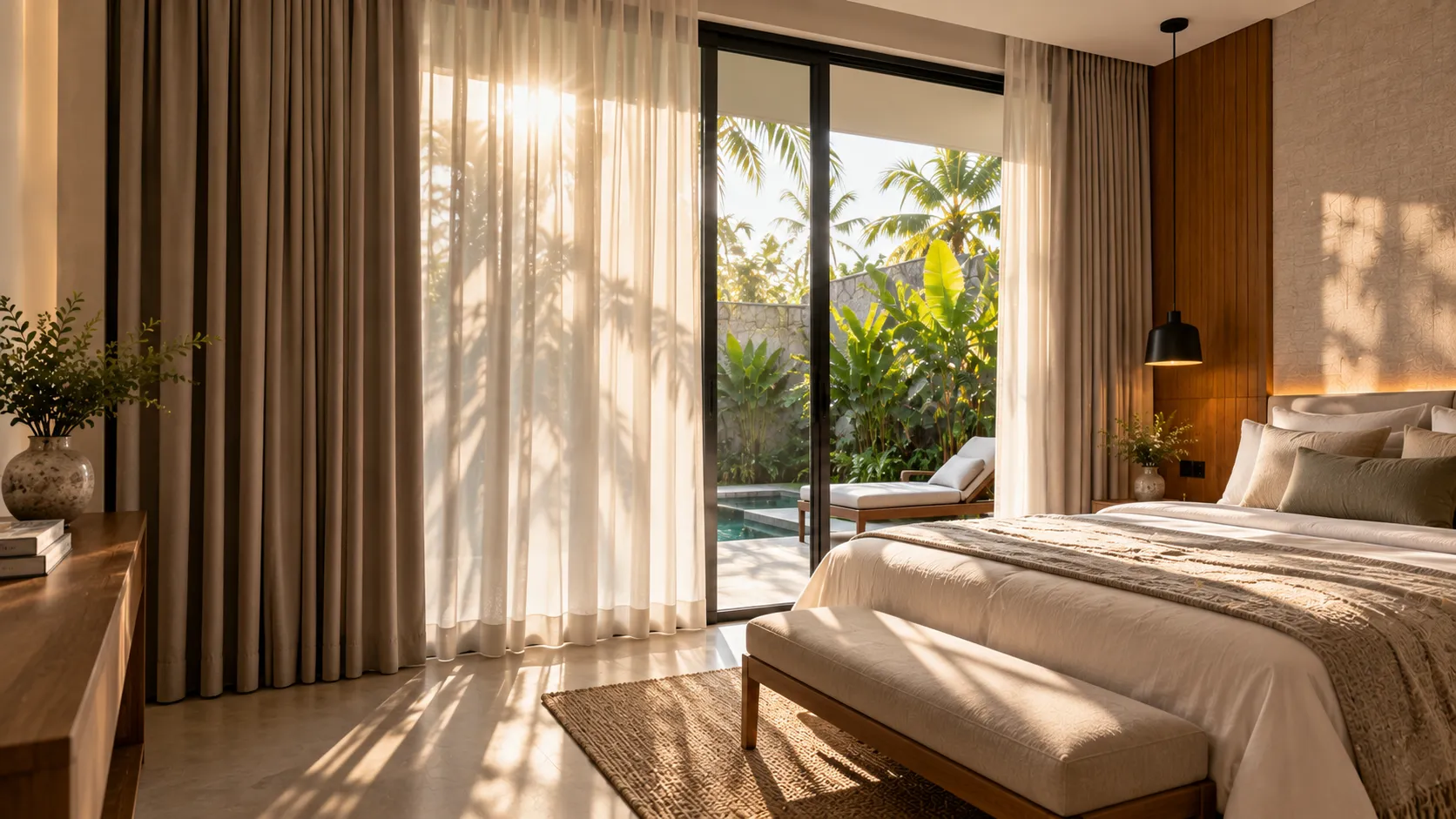
For bedrooms and villas that need both daylight and strong night-time privacy, sheer + blackout is often more versatile than using a single curtain all day.
The sheer can remain closed during the day while the blackout layer is opened. At night, both layers can be closed when stronger privacy and light control are required.
West-Facing Windows Need Extra Attention
West-facing windows can receive intense afternoon sunlight. In these locations, consider the timing and angle of the sun, glare on screens, heat gain and the room's use. A suitable blind can also be combined with curtains when solar control is a higher priority.
Common Mistakes
- Choosing fabric by colour or thickness alone.
- Ignoring side and top light gaps.
- Installing the track too close to the opening.
- Using the same specification for every room.
- Forgetting glare on televisions and computer screens.
- Assuming “blackout” means identical darkness in every installation.
For Tropical Homes in Bali
Large glazed openings can create beautiful views but also expose interiors to strong sunlight. A practical specification should balance daylight, privacy, heat, appearance and ease of operation.
Quick Checklist
- Which direction does the window face?
- When is the sunlight strongest?
- Is the priority glare, heat, sleep or privacy?
- Is a sheer layer useful?
- Is dimout or blackout required?
- Can the treatment extend beyond the glass?
- Is the track or rod correctly positioned?
For a villa, hotel or residence with difficult sunlight conditions, a site assessment can help determine the right combination of fabric, lining, coverage and hardware. Almeers Living provides custom window-treatment consultation and installation in Bali.