
How to Care for Linen Curtains: A Step-by-Step Guide
How Do You Care for Linen Curtains?
The best way to care for linen curtains is to follow the specific fabric care label, remove dust regularly and avoid unnecessary washing. Linen and linen-blend fabrics can vary in weave, weight, finish and lining, so the safest cleaning method depends on the actual product.
1. Identify the Fabric Composition
Before cleaning, check whether the curtain is made from pure linen, a linen blend or a linen-look synthetic fabric. These materials may respond differently to water, heat and agitation. Also check whether the curtain has blackout lining, interlining or decorative details that require separate care.
If the care label is missing, contact the supplier before using a washing machine or applying a cleaning product.
2. Remove Dust Regularly
Use a clean, soft brush attachment on a vacuum at a suitable low setting, or gently dust the surface with a clean cloth. Support the fabric while cleaning so the heading and stitching are not pulled. Regular dust removal can reduce the need for frequent washing.
3. Check Before Washing
Do not assume all linen curtains are machine washable. Some fabrics may shrink, wrinkle, lose their finish or become distorted when washed incorrectly. If machine washing is permitted, follow the stated temperature, cycle and drying instructions. Avoid mixing incompatible fabrics or using aggressive detergents.
For lined, structured, delicate or expensive curtains, professional cleaning may be the safer option.
4. Protect the Natural Texture
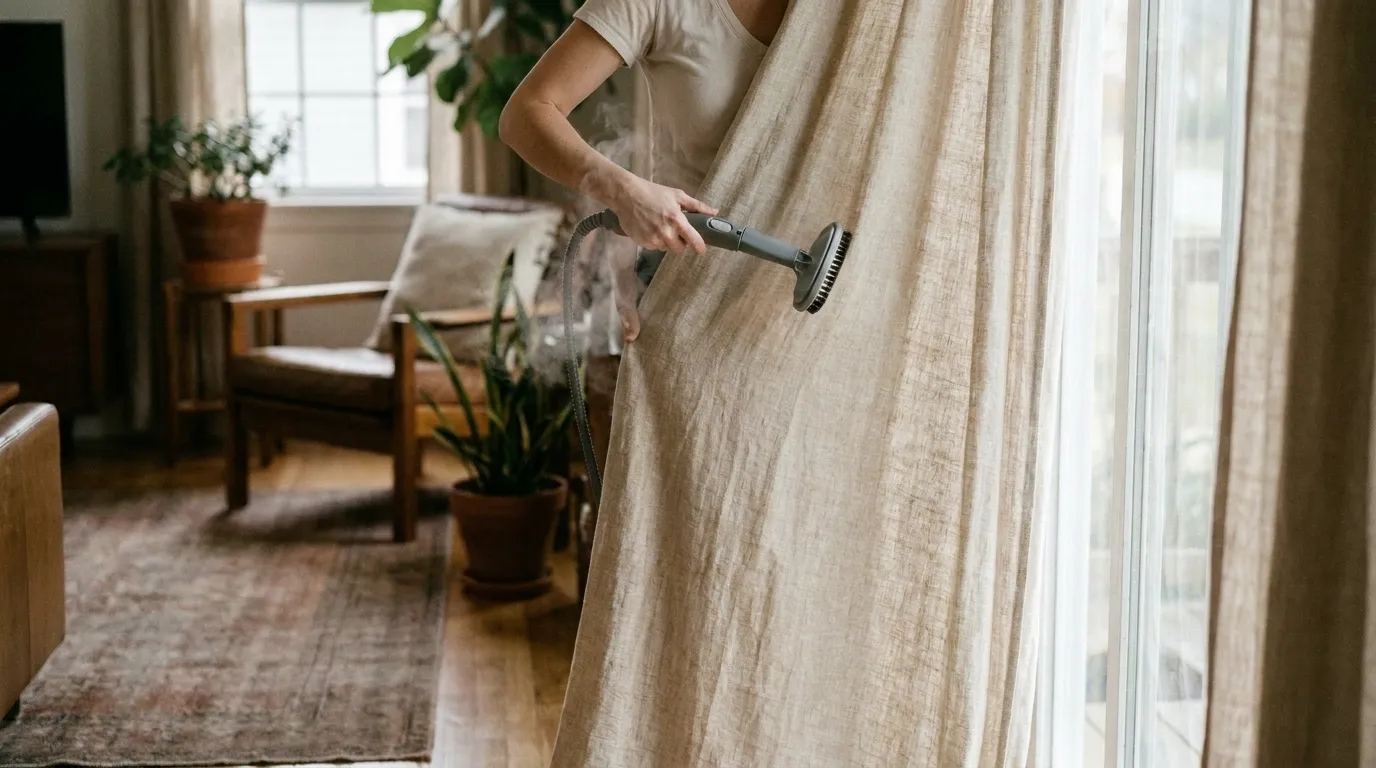
Linen often has natural texture and relaxed creasing. Excessive heat or aggressive ironing can affect the appearance of the fabric. If ironing is permitted, use the recommended temperature and test an inconspicuous area first. A suitable steamer may help with some fabrics, but always check the care instructions and avoid saturating the material.
5. Reduce Sunlight Damage
Strong direct sunlight can gradually change the colour and strength of many textiles. Consider a sheer layer, suitable lining or another light-control treatment where exposure is intense. Rotate panels only if the design and fabric allow it, and inspect areas that receive the most sunlight.
6. Manage Humidity and Airflow
In tropical homes, avoid leaving curtains damp for extended periods. Maintain appropriate ventilation and allow fabric to dry fully after cleaning. Check areas behind furniture or close to windows where condensation may occur. Do not assume linen is automatically resistant to mould or moisture damage.
7. Treat Marks Carefully
Blot fresh spills gently with a clean cloth instead of rubbing the stain deeper into the weave. Test any approved cleaning product on a hidden area first. Some stains require professional treatment, particularly on lined or colour-sensitive fabrics.
Common Linen Curtain Care Mistakes
- Washing without checking the fabric care label.
- Using excessive heat or aggressive cleaning products.
- Rubbing stains and damaging the weave.
- Leaving curtains damp in a humid room.
- Ignoring fading near strongly exposed windows.
- Assuming every linen blend has identical care requirements.
Linen Curtain Maintenance Checklist
- Check fabric composition and care instructions.
- Remove dust regularly using a suitable method.
- Inspect lining, seams and heading before cleaning.
- Protect the fabric from excessive heat and direct sunlight.
- Ensure curtains dry fully after approved cleaning.
Choosing Linen Curtains for Your Home
Linen curtains offer natural texture and a relaxed appearance, but their performance depends on the weave, weight, lining and care requirements. Almeers Living can help homeowners and villa owners in Bali compare curtain fabrics and window-treatment options according to their preferred look, sunlight exposure and maintenance needs.