How to Fix Frayed Curtain Edges: Repair or Replace?
Frayed curtain edges may be repairable, but the right approach depends on the fabric, lining and extent of the damage. Avoid pulling loose threads or trimming blindly, as this can make the weave unravel further.
1. Find the cause
Edges may fray from rubbing against walls or floors, snagging on handles, rough track components, pets or frequent handling. Sun exposure and unsuitable washing can also weaken some fabrics. Inspect the side hems, bottom hem and heading for related wear.
2. Stop further damage
Lay the panel on a clean, flat surface and handle it gently. Check whether the fabric catches on a sharp edge or track component. Correct the cause before rehanging the curtain. If the weave is unravelling quickly, seek professional advice.
3. Decide whether repair is suitable
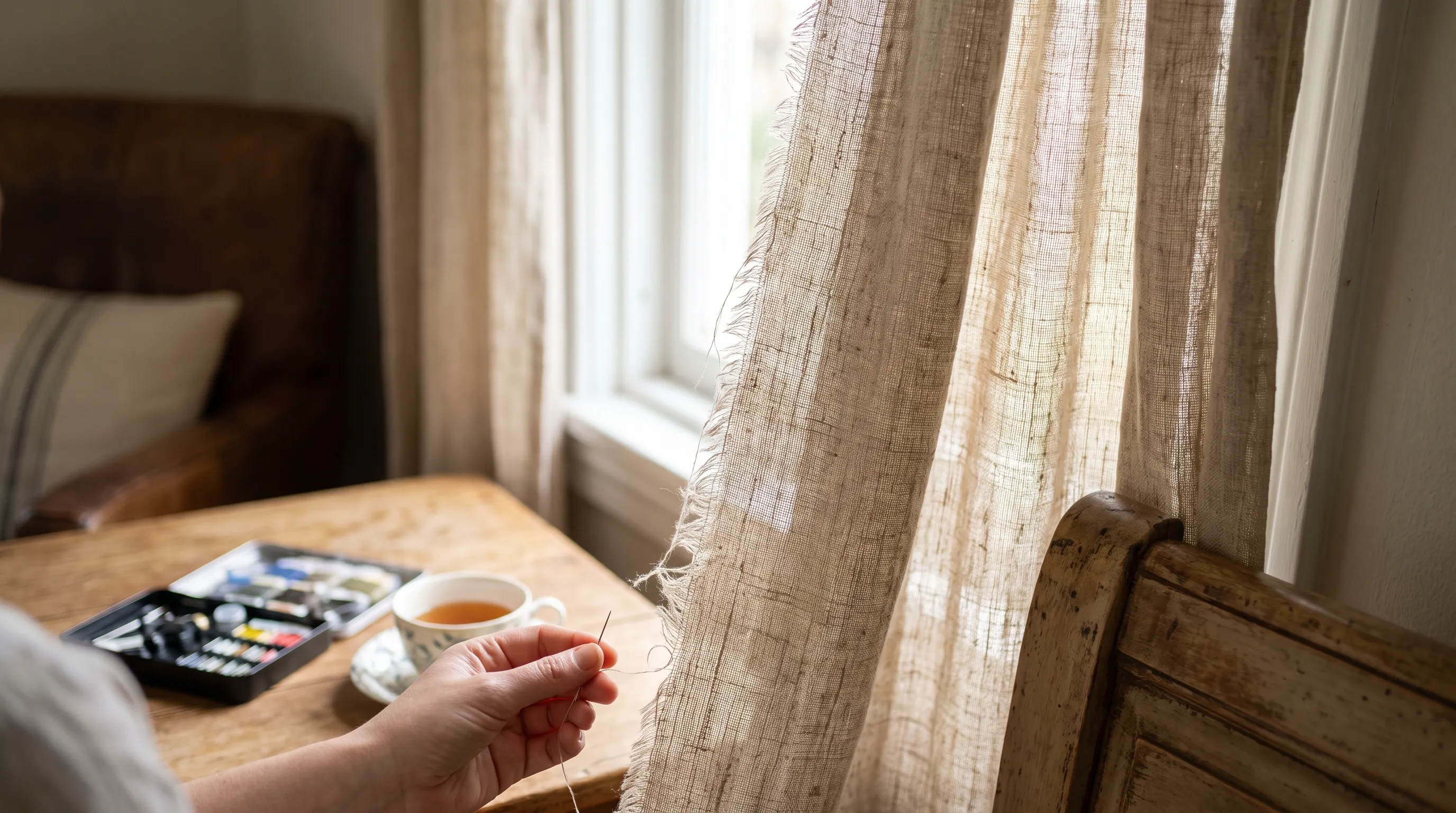
A few loose threads on a stable hem may be repairable with careful stitching. Extensive unraveling, damaged lining, delicate sheers or coated blackout fabric may require a specialist workroom. Test any repair technique in an inconspicuous area because some fabrics show needle holes or colour changes.
4. Avoid risky quick fixes
- Do not use an open flame to seal synthetic fibres.
- Avoid general-purpose glue on the fabric face.
- Do not cut threads close to the weave without understanding the construction.
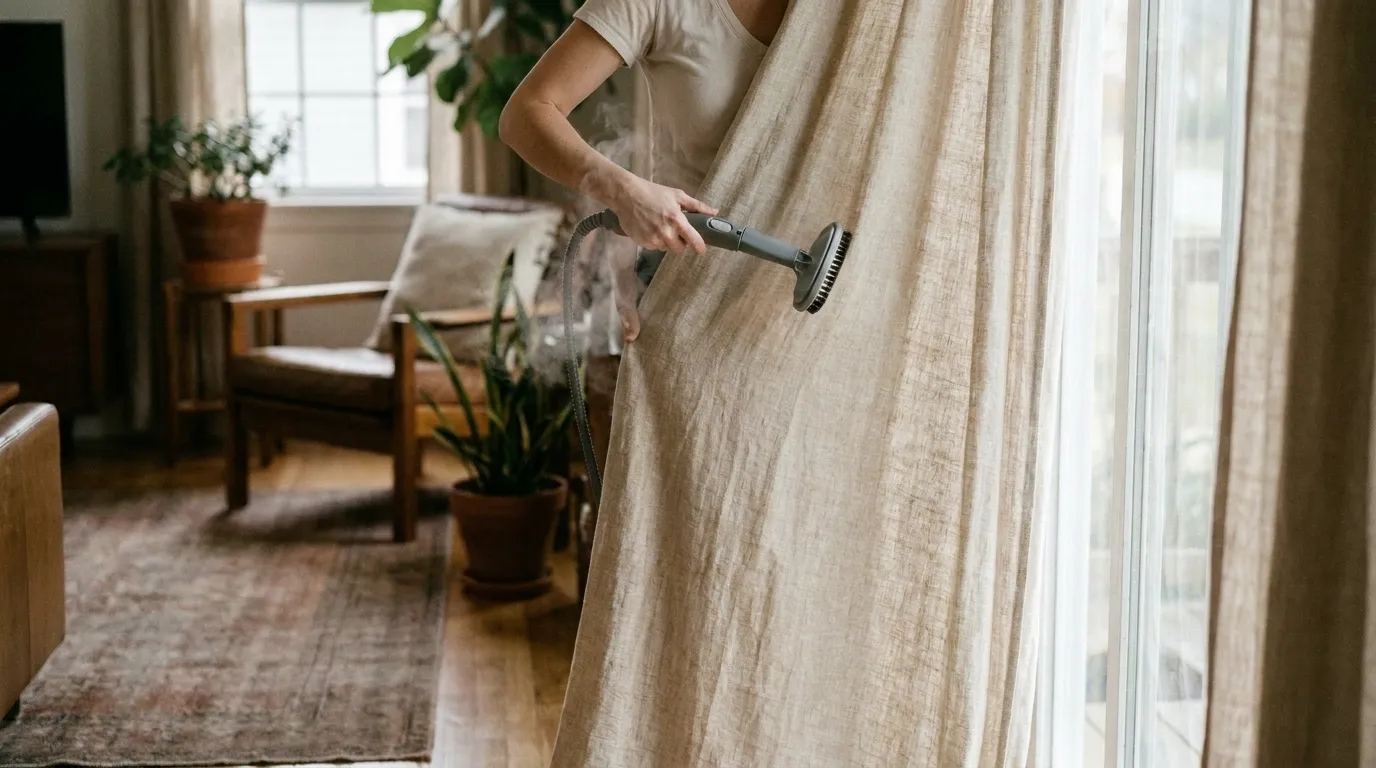
- Follow the care label before washing or ironing lined and coated curtains.
5. Check the length and hardware
If the bottom edge frays because it drags on the floor, check the finished drop. If the side edge rubs against a wall or handle, consider whether the track position or stacking arrangement can be adjusted. Repairing the fabric without fixing the cause may lead to repeat damage.
6. Consider the fabric type
Linen, sheer voile, velvet, blackout-coated fabrics and polyester blends respond differently to stitching, heat and washing. Follow supplier care instructions. Our guide to blackout, sheer and dimout fabrics explains some of the differences between common curtain materials.
Repair or replace?
Replacement may be more practical if the fabric has become brittle, the damage covers a large area or the backing is peeling. If the original fabric is unavailable, a curtain workroom can advise whether one panel can be remade or both panels should be adjusted for a consistent appearance.
Prevent future fraying
- Keep fabric away from sharp handles and rough surfaces.
- Operate curtains using their intended leading edge or wand.
- Keep tracks clean and carriers moving freely.
- Use the recommended cleaning method.
- Inspect hems periodically in frequently used rooms.
Frequently asked questions
Can I cut off frayed threads?
Only when you are sure they are loose surface threads and not part of the fabric structure.
Can blackout curtains be repaired?
Sometimes, but coated fabrics need special care because stitching or heat may affect the backing.
Is repair cheaper than replacement?
It depends on the extent of damage, fabric value, labour and whether matching material is available.