How to Install Curtain Hooks
How Do You Install Curtain Hooks Correctly?
Correct curtain-hook installation depends on the curtain heading and the track or rod system. Identify the heading construction and confirm which hook type it requires before inserting any hooks. The wrong hook or inconsistent positioning can make curtains hang unevenly or move poorly.
1. Identify the Curtain Heading
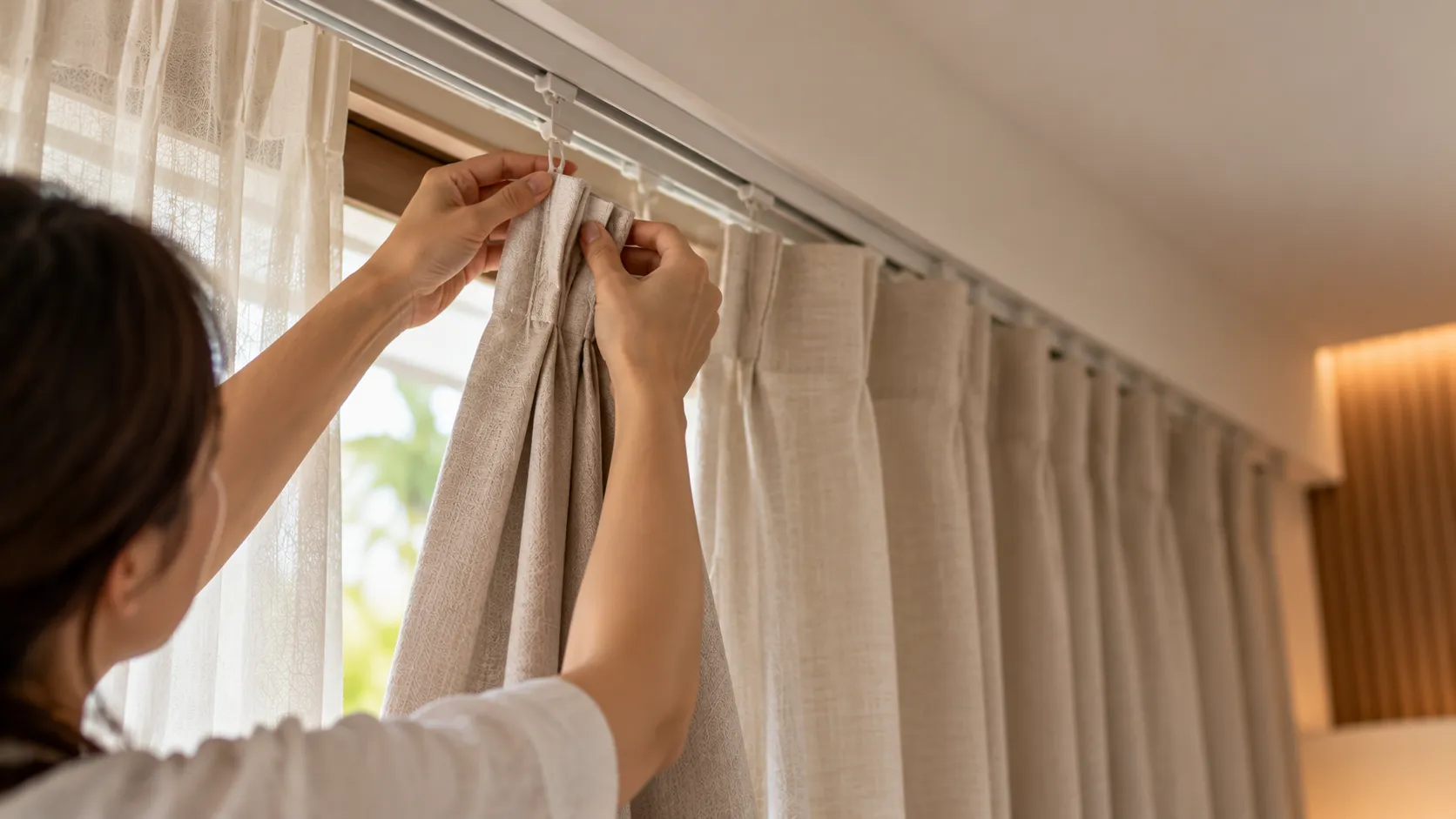
Inspect the top of the curtain. Some curtains use pleating tape with pockets, while others use sewn-in loops, rings or a specialised wave heading system. These constructions do not all use the same hook or carrier.
Follow the supplied installation instructions. Do not force a hook into a heading that was not designed for it.
2. Check the Track or Rod
Confirm whether the curtain will hang from gliders, carriers, rings or another fitting. Check the hook shape and size against the hardware. For wave or S-fold curtains, carrier spacing and compatible heading tape are important for maintaining regular folds.
For a ceiling track or motorised system, follow the hardware manufacturer installation and loading instructions. Heavy curtains may require specific carriers or fittings.
3. Prepare the Curtain
Lay the curtain on a clean, flat surface where the fabric will not be dragged across the floor. Find the heading tape or designated hook positions. Handle delicate fabric gently and avoid pulling the stitching.
4. Insert Hooks Evenly
For pleating tape, insert each hook into the appropriate pocket or position specified for that heading. Keep the insertion depth consistent. Spacing should follow the heading design and available carriers rather than an arbitrary universal measurement.
Do not place hooks into the fabric body or through decorative stitching unless the product instructions specifically allow it. Incorrect placement can damage the curtain and make the top edge uneven.
5. Attach the Curtain to the Track
Starting at one end, connect the hooks to the correct gliders or carriers. Support the curtain while attaching it, especially when it is long or heavy. Avoid concentrating the weight on only one or two fittings while the remaining hooks are still unattached.
For a rod system, check whether the hooks attach to rings or another designated fitting. Confirm that end stops and brackets are secure before hanging a heavy curtain.
6. Check Height and Movement
Once the curtain is hung, draw it across the full width of the track. Look for snagging, uneven spacing, tilted pleats or sections that sit noticeably higher than others. Adjust hook positions only where the heading system permits it.
If the curtain remains uneven, check the track level, floor variation, carrier compatibility and finished curtain measurements. Hook adjustment cannot correct every underlying installation problem.
Common Hook-Installation Mistakes
- Using a hook type that does not match the heading.
- Spacing hooks inconsistently.
- Inserting hooks into the wrong pockets on pleating tape.
- Overloading carriers beyond their intended capacity.
- Ignoring track compatibility or a damaged glider.
- Pulling the curtain forcefully when it catches.
When Should You Call a Professional?
Consider professional assistance for very wide or heavy curtains, high ceilings, motorised tracks, inaccessible mounting points or systems that continue to snag. Do not climb on unstable furniture to reach a high track. Use suitable access equipment and follow safety procedures.
Final Installation Checklist
- Hook type matches the heading and track system.
- Hooks are inserted consistently and securely.
- Carriers, brackets and end stops are in good condition.
- The curtain travels smoothly without excessive force.
- The hem and folds look even after hanging.
Need Help with Curtain Installation?
Correct hooks are only one part of a well-functioning window treatment. Almeers Living can help customers in Bali plan custom curtains, compatible hardware and installation details based on window dimensions and the chosen curtain style.