How to Maintain Curtains in Humid Climate: What to Check Before You Start
To maintain curtains in a humid climate, manage moisture first, inspect the fabric regularly, remove dust gently and follow the care label. Humidity alone does not determine mould growth; condensation, leaks, poor airflow and fabric that stays damp can all contribute.
1. Find the moisture source
Check for condensation on glass, leaking frames, damp plaster, blocked ventilation and curtains pressed tightly against a damp wall. If a window or wall stays wet, cleaning the curtain alone will not solve the problem. In villas closed between stays, include curtains, tracks and window frames in routine housekeeping inspections.
2. Use a simple maintenance schedule
- During weekly housekeeping: check for dust, spills, pet hair and dampness; gently dust the track and sill.
- Monthly: inspect folds, hems, lining, heading tape, hooks and areas close to glass or walls.
- Seasonally or as needed: review care instructions and arrange appropriate washing or professional cleaning.
- After leaks or damp periods: inspect promptly and avoid leaving wet curtains gathered together.
Frequency depends on fabric, occupancy and exposure. Busy hospitality spaces may need more frequent checks than lightly used rooms.
3. Clean according to the material
Start with the manufacturer’s care label. Some sheers can be washed at home, while lined, coated or delicate fabrics may need professional care. Test an approved method on an inconspicuous area first.
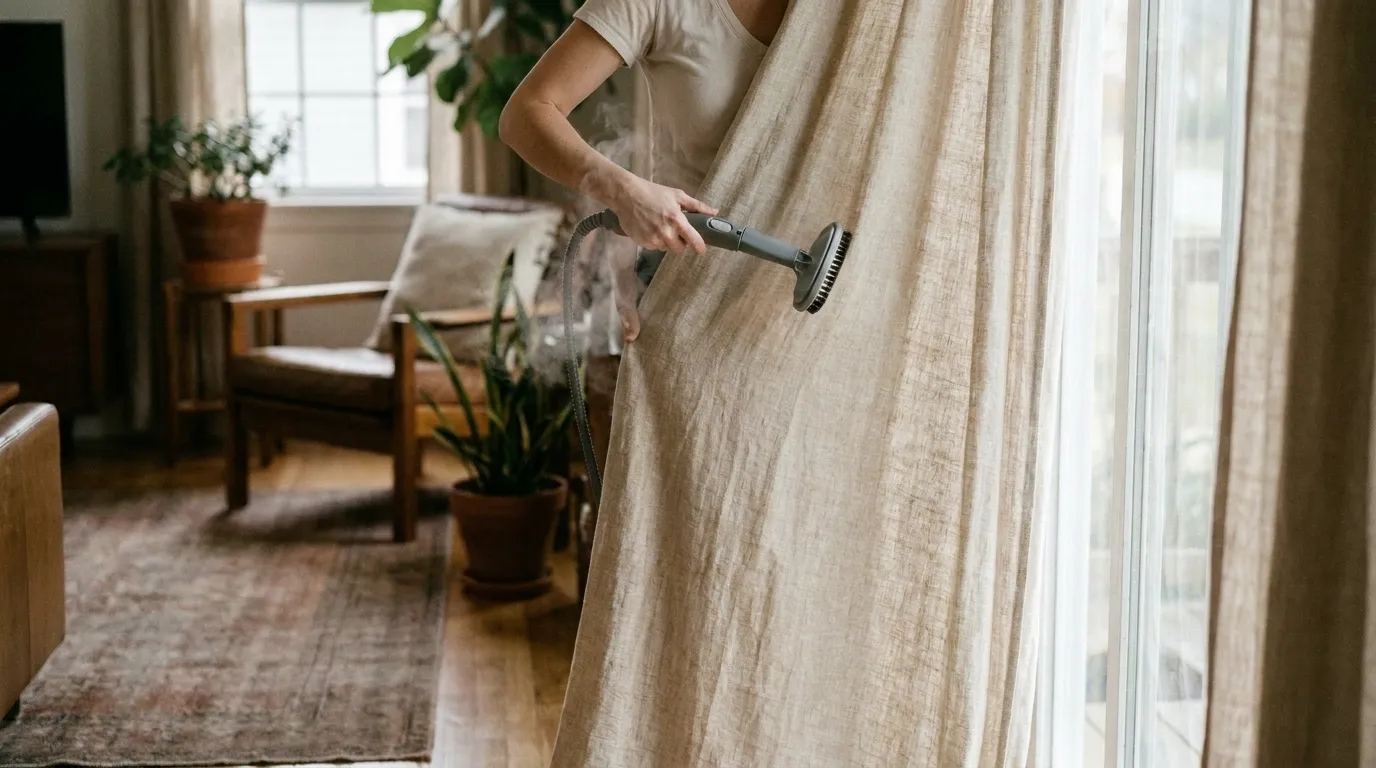
- Remove loose dust with a gentle brush attachment.
- Blot fresh spills rather than rubbing them into the weave.
- Do not mix chemicals or use bleach, solvents or fragranced products unless specifically permitted.
- Dry fabric fully before rehanging or closing it against the window.
If mould is visible, avoid dry brushing that may spread spores. Do not assume a home remedy is safe for every textile. Extensive or recurring growth requires professional advice and correction of the moisture source.
4. Improve airflow
Where practical, keep curtains from being trapped against damp glass or walls. Ventilate when outdoor conditions and security allow, maintain air-conditioning drains and check that curtains do not block air circulation near windows. Outdoor air can also be humid, so opening a window is not always the right answer; use ventilation or dehumidification suited to the room.
5. Notice early warning signs
Musty odour, persistent dampness, speckled marks, discolouration, stiff folds or corrosion on nearby hardware deserve attention. These signs can have different causes. Inspect the frame, wall and lining and note whether the problem returns after cleaning.
Mistakes to avoid
- Closing curtains while still damp.
- Repeatedly washing fabric while ignoring a leak.
- Using hot water or harsh products without checking the label.
- Pulling hard on the fabric and damaging hooks or pleats.
- Assuming synthetic or linen-look fabric is immune to mildew.
FAQs
Can curtains be saved if they smell musty?
It depends on the material and how long it stayed damp. Find the moisture source and follow care instructions; seek professional cleaning advice if uncertain.
Are synthetic curtains immune to mildew?
No. Dust, dampness, airflow and maintenance all influence the result.
See our curtain care guide for rental villas, learn about curtain fabric types, and consult the window treatment buying guide before choosing a fabric for a humid room.