How to Prevent Curtain Fading: The Mistakes to Avoid
You cannot eliminate fading entirely, but you can slow it by reducing prolonged direct sunlight, choosing fabrics suited to the exposure, following care instructions and maintaining the window treatment properly. Fading rates vary with fibre, dye, finish, glazing, orientation and the intensity of sunlight.
1. Understand the Exposure
Windows receiving strong direct sun for long periods may expose curtains to more light than shaded openings. West-facing windows can receive intense afternoon sun, while other orientations may experience strong exposure at different times of day. Notice which panels fade first and whether furniture, rugs or artwork near the same window also show colour change.
2. Select Fabric With the Room in Mind
Ask the supplier about lightfastness or suitability for sun-exposed applications rather than relying on appearance alone. A fabric sample displayed indoors may not represent long-term performance at a bright window. Fibre type, dye method, colour and finishing all influence how a fabric responds to light; no colour is completely fade-proof.
3. Add a Layer or External Shade
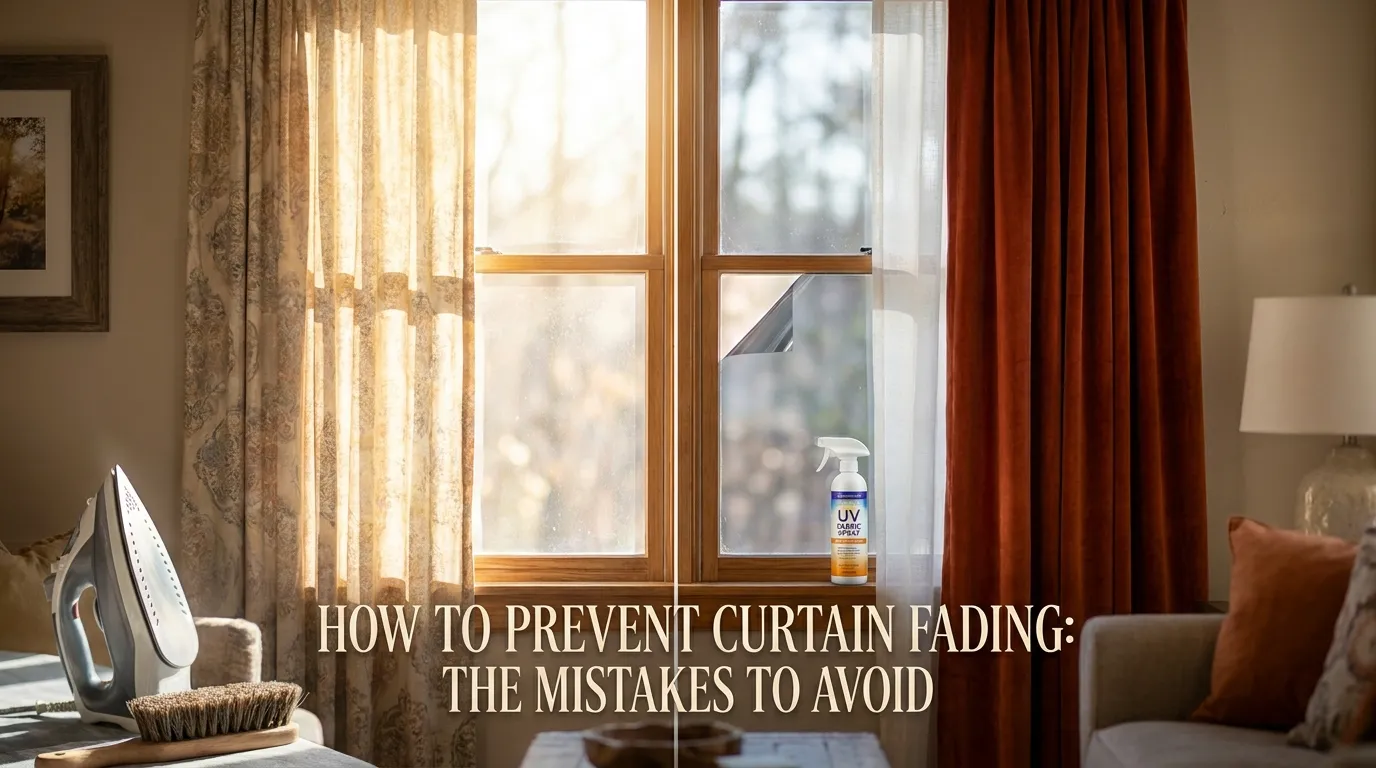
A sheer layer can diffuse daylight, while suitable blinds, shutters or exterior shading may reduce direct exposure when closed or positioned correctly. The best combination depends on the window orientation and the amount of light you want to preserve. Remember that a sheer is not automatically a UV-blocking product; verify any performance claim before relying on it.
4. Reduce Unnecessary Exposure
Close curtains during periods of intense direct sun when practical, especially if the room is unoccupied. Where panels are interchangeable and the fabric permits it, periodically rotating panels may distribute visible wear more evenly. This will not reverse fading already present, and some fabrics or headings are not suitable for rotation.
5. Clean Gently
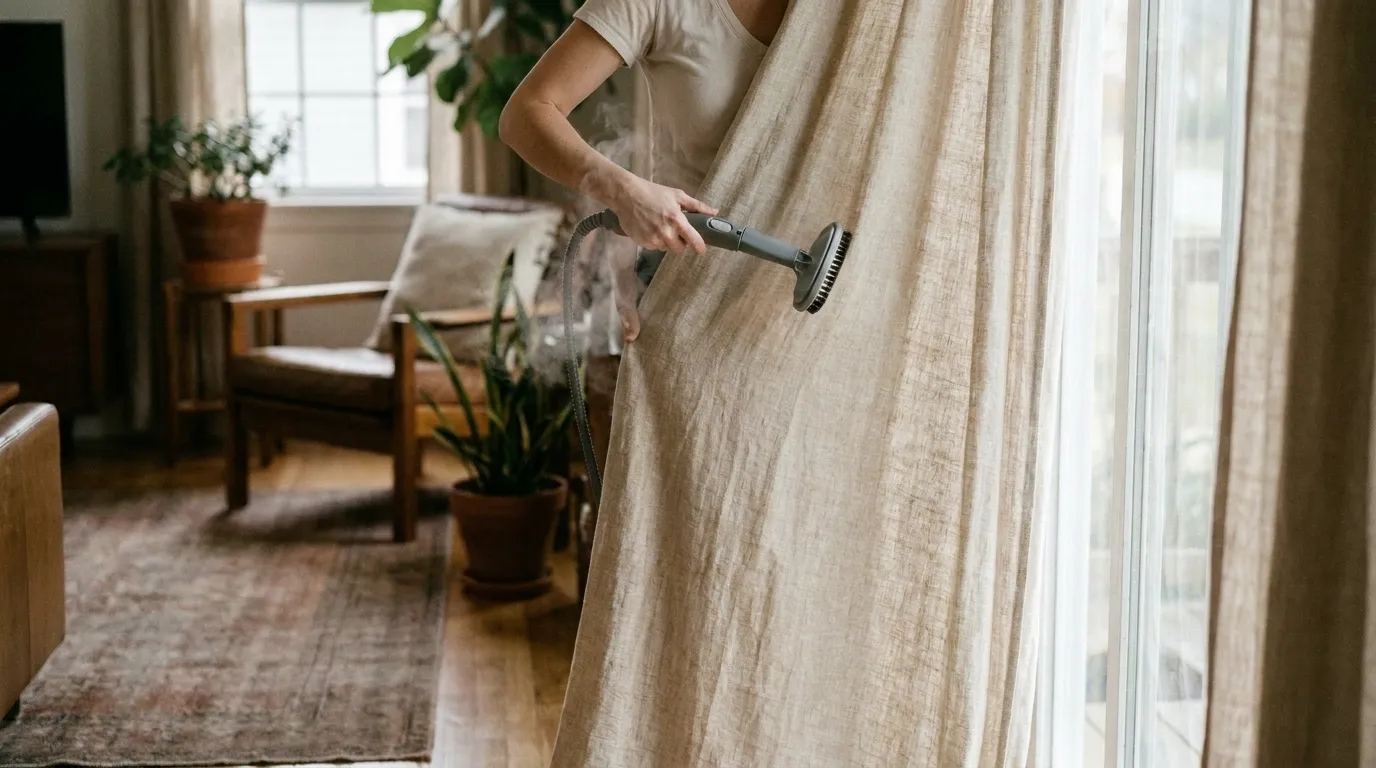
Use the manufacturer's cleaning instructions. Harsh chemicals, unsuitable detergents, excessive heat or aggressive scrubbing can damage fibres or alter colour. Dust removal and prompt attention to stains are preferable to frequent intensive washing. Let fabric dry fully before closing it if moisture is present.
6. Consider Humidity and Maintenance
In tropical settings, light exposure may combine with humidity, dust and condensation. Keep the area ventilated, check for dampness and avoid leaving fabric wet. Fading and mould are different issues, so do not use strong cleaning chemicals in an attempt to solve both without checking fabric compatibility.
Mistakes to Avoid
- Assuming dark fabric is always more fade-resistant.
- Buying without asking about light exposure and care.
- Using bleach or unapproved cleaning products.
- Assuming every sheer blocks UV.
- Expecting indoor curtains alone to solve severe solar heat or glare.
Related Reading
Explore our guide to curtain fabric types and comparison of blackout, dimout and sheer fabrics when selecting a treatment for bright rooms.
Final Takeaway
Long-term colour retention starts with the right specification. Consider sun exposure, fabric performance, layering and care before purchase, and review the actual conditions of the window rather than choosing by colour alone.
Ask Almeers Living for guidance on fabrics and window treatments for bright tropical interiors.