Tips to Dampen Noise with Heavy Curtains: Practical Tips for Bali Homes — Acoustic Sound Absorption Density, Multi-Layer Thermal Linings, and Noise Reduction Protocols
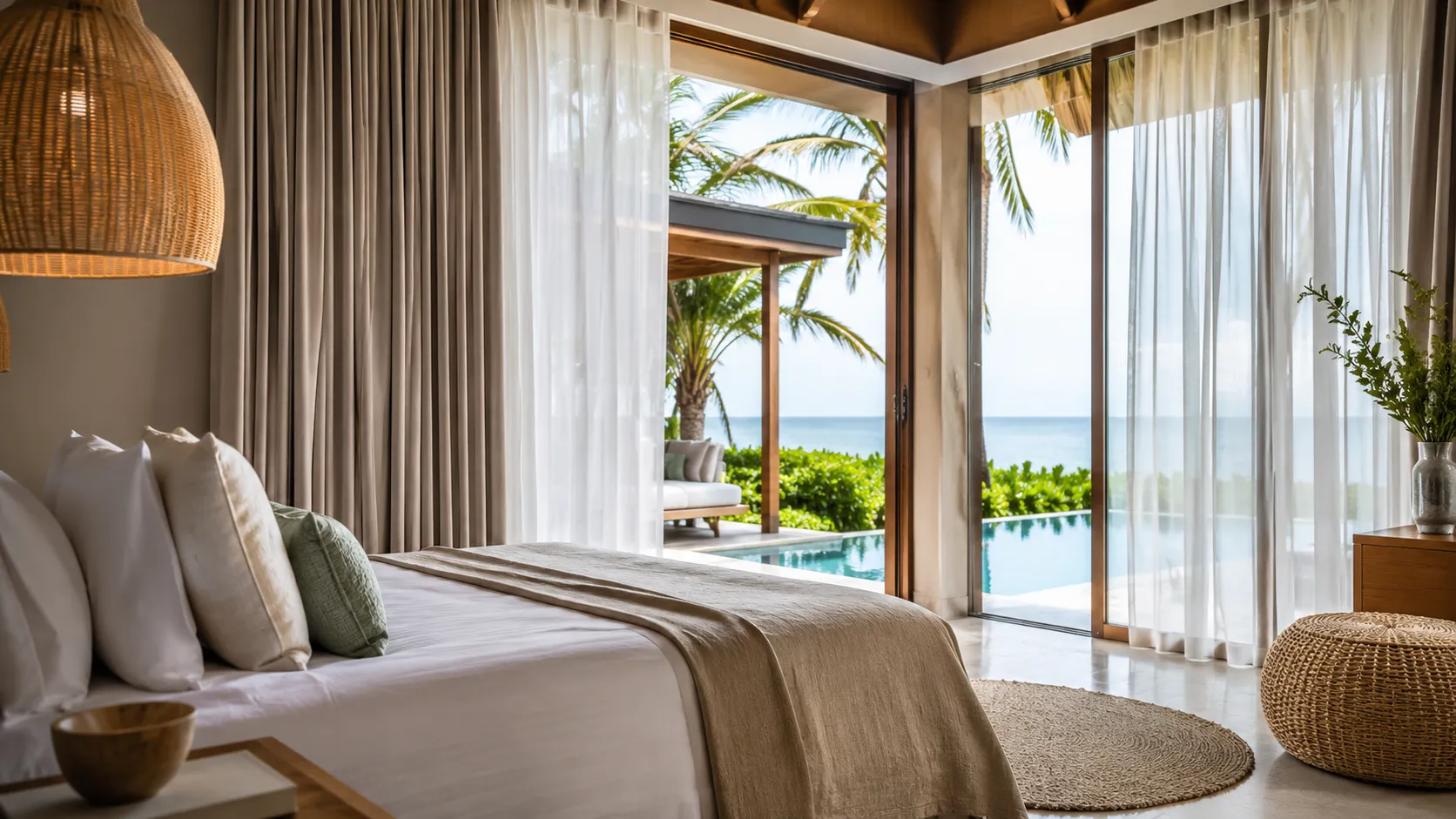
Designing modern luxury residential estates, boutique hospitality resorts, and private rental villas across Bali—from the vibrant, high-energy coastal hubs of Canggu, Seminyak, and Umalas to the serene rainforest sanctuaries of Ubud and dramatic clifftop estates in Uluwatu—requires a delicate balance between visual openness and acoustic sanctuary. Contemporary tropical architecture is celebrated for its open-plan spatial layouts, soaring double-height ceiling voids, polished micro-cement or terrazzo floors, and expansive floor-to-ceiling glass sliding doors. However, these sleek, hard architectural surfaces reflect up to 95% of interior and exterior sound waves, creating severe room echo, reverberation, and noise penetration. External environmental sounds—such as beach club bass beats, motorbike traffic, tropical downpours, and bustling resort pathways—easily transmit through standard glass panes. Property owners, interior architects, and hospitality developers frequently seek authoritative guidance on tips to dampen noise with heavy curtains: practical tips for Bali homes (mastering acoustic sound absorption density, multi-layer thermal linings, and noise reduction protocols) to engineer a peaceful, five-star acoustic retreat.
Executing an effective acoustic window treatment strategy in high-temperature, high-humidity island microclimates involves far more than simply hanging thick fabric panels. It requires an integrated architectural engineering approach: evaluating fabric mass per square meter, calculating Noise Reduction Coefficient (NRC) ratings, building multi-layer acoustic barrier sandwiches using heavyweight velvet and bump cloth interlinings, ensuring continuous perimeter edge sealing, applying non-toxic anti-mold protection, and integrating smart automated solar scheduling. In this comprehensive editorial masterclass, we explore the science of architectural acoustics, sound barrier mechanics, and practical tailoring standards to elevate room comfort across Bali.
1. The Physics of Sound Transmission and Acoustic Reflection in Glass Spaces
To reduce noise pollution effectively, one must first understand how airborne sound waves interact with building materials in tropical homes:
- Acoustic Reflection on Hard Surfaces: Smooth glass sliding doors, stone tile floors, and plastered concrete walls act as acoustic mirrors, reflecting sound waves back into living spaces rather than absorbing them, resulting in annoying room echo and amplified outside noise.
- Airborne Sound Transmission Loss (STC): Single-pane glass windows possess a low Sound Transmission Class (STC) rating of roughly 25 to 28, allowing high-frequency speech and street noises to pass through easily. Installing heavy, dense drapery assemblies increases total window assembly STC ratings significantly.
- Mid-to-High Frequency Rejection (Hz): Heavy acoustic draperies excel at absorbing medium-to-high frequency airborne sounds (500 Hz to 4,000 Hz), which include human speech, vehicle engines, wind noise, and high-frequency music treble.
2. Key Metric: Acoustic Density and Mass-Per-Square-Meter Standards
Acoustic sound absorption relies directly on fabric mass, porous surface area, and fiber density per square meter. Standard sheer voiles or light cotton curtains weigh roughly 80 to 150 grams per square meter (g/m²), offering negligible acoustic resistance:
- Heavyweight Threshold (> 400 g/m²): True acoustic soundproofing curtains require fabrics with a heavy physical mass ranging between **450 g/m² and 650 g/m²**. This high mass acts as a physical acoustic barrier that dampens airborne sound pressure waves before they strike glass surfaces. Explore heavy technical fabrics starting at Rp 60.000/m to Rp 110.000/m on our products page.
- Noise Reduction Coefficient (NRC) Ratings: High-performance multi-layered acoustic draperies achieve NRC ratings between **0.65 and 0.85**, absorbing up to 85% of ambient room sound energy.
3. Material Engineering: Composite Multi-Layer Acoustic Construction
Achieving hotel-grade acoustic dampening requires a composite multi-layer drapery sandwich engineered specifically for high-performance sound absorption:
- 1. Face Fabric (Heavyweight Cut-Pile Velvet or Dense Jacquard): Woven with a dense vertical pile of upright cut loops, heavyweight architectural velvet creates millions of microscopic air pockets that trap high-frequency sound waves.
- 2. Interlining Core (Dense Thermal & Acoustic Bump Cloth Felt): Sandwiched between the decorative front face fabric and rear lining, a soft brushed cotton-wool felt interlining adds substantial physical mass and acoustic insulation without stiffening the curtain drape.
- 3. Rear Shield Lining (Multi-Pass Coated Blackout): The rear layer blocks light completely while acting as a dense physical boundary that dampens sound vibrations passing through window glass.
4. Precision Tailoring Mechanics: S-Fold Wave Pleats and Fullness Ratios
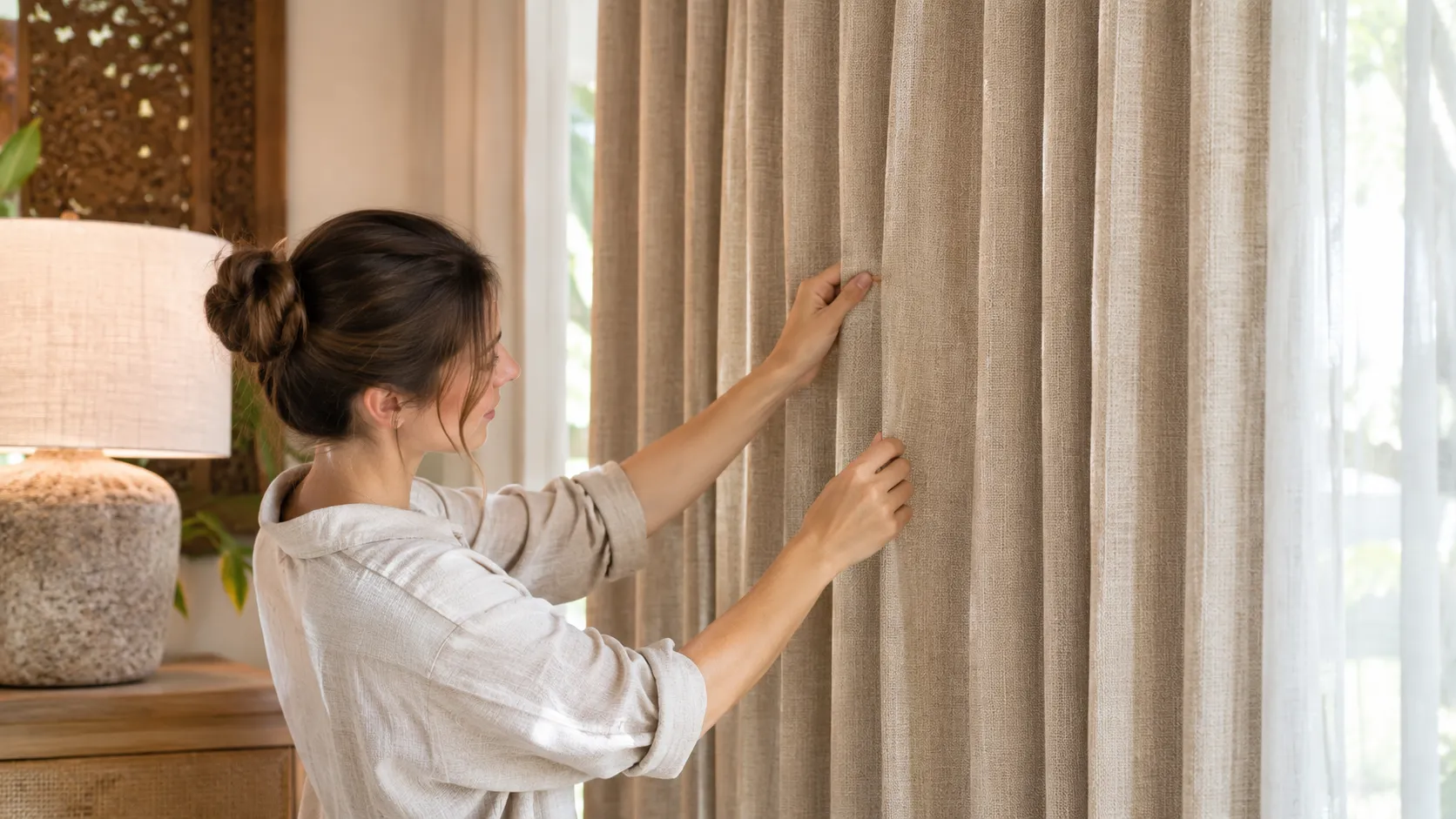
How acoustic fabric hangs across a window span directly dictates its sound absorption efficiency. Flat, thinly stretched fabrics provide negligible acoustic resistance, whereas deep, continuous vertical folds multiply sound absorption surface area:
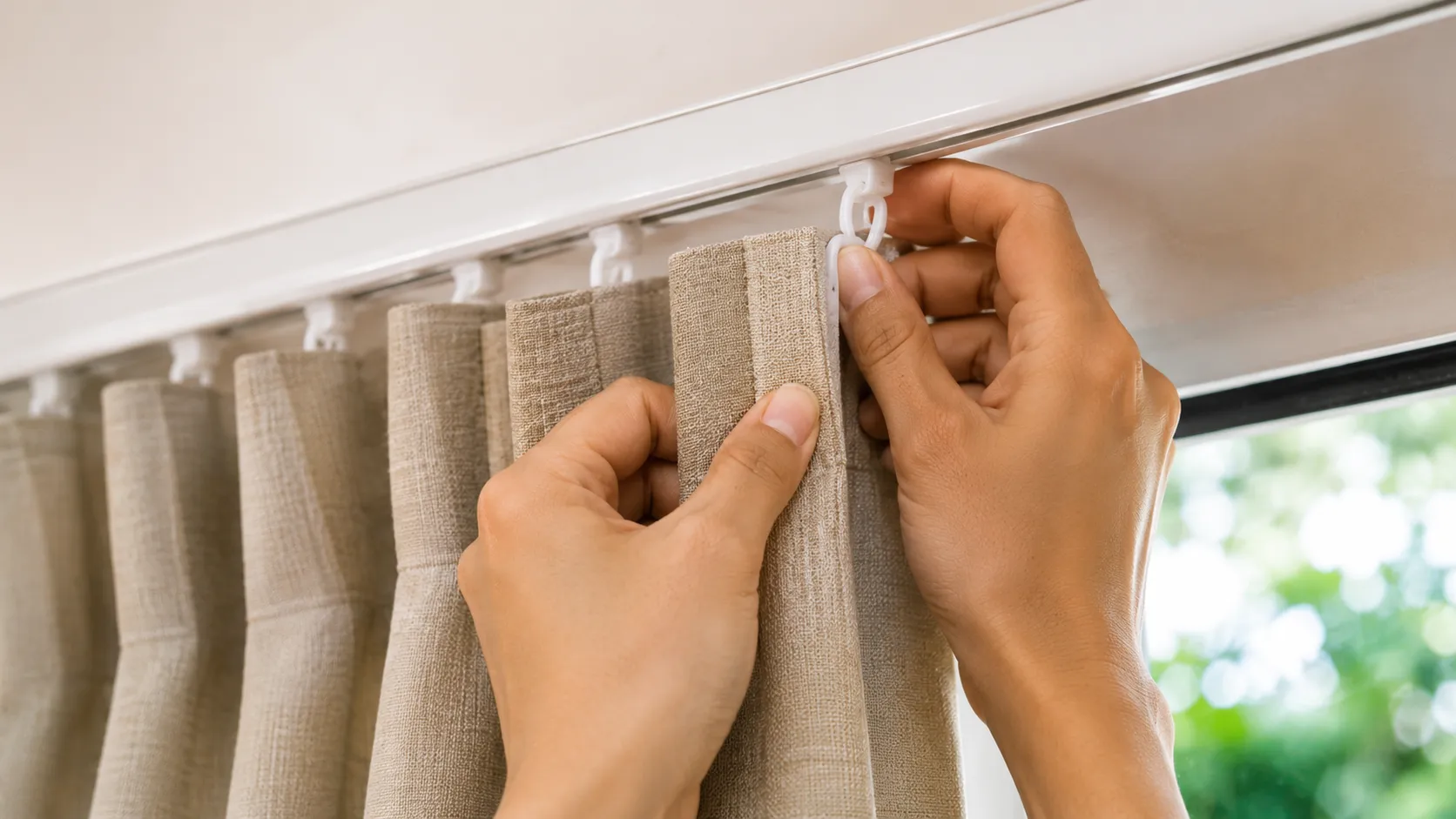
- The S-Fold (Ripplefold) Wave Pleat Standard: Acoustic draperies must utilize S-fold wave pleating systems. Continuous vertical S-curves trap sound waves within deep fabric folds, preventing sound from bouncing directly off window panes.
- The 2.2x to 2.5x High-Fullness Multiplier: Specify a high fullness ratio using 2.2 to 2.5 times the total track width in flat fabric volume. Double-layering fabric volume effectively doubles the total surface area available to absorb acoustic energy. Calculate exact fabric requirements using our digital stacking calculator.
- The 1 cm Floor Hover Clearance Rule: Acoustic drapes must extend completely from ceiling to floor. Tailor bottom hems to hover precisely **1 cm above finished floor level** to eliminate bottom sound leaks while preventing floor dampness absorption. Review drop measurement rules on our curtain measuring guide and dedicated shade measuring guide.
5. Ceiling Recess Mounting and Acoustic Perimeter Edge Sealing
Sound behaves like water; it leaks through any open gaps, perimeter cracks, or exposed voids around window frames. Exposed curtain tracks leave a gap between the top fabric heading and ceiling drywall, allowing sound waves to pass freely over the top of the track. Eliminating acoustic bypass requires tight perimeter sealing:
- Ceiling Recessed Pelmet Pockets (Acoustic Top Baffles): Mount heavy-duty aluminum tracks flush inside concealed ceiling pelmet pockets. Recessing hardware inside a **20 cm to 25 cm wide** and **12 cm to 15 cm deep** pelmet pocket creates a physical baffle that traps sound waves at the ceiling line. Spatial tolerances can be cross-referenced on our valances and cornices measuring guide.
- Overlapping Center Master Carriers: Specify master gliders with a generous 10 cm center overlap so closed curtain panels seal tightly at the middle seam, eliminating central acoustic and light gaps.
6. Tropical Climate Resilience: Advanced Anti-Mold Protection
In humid coastal climates like Bali, heavy multi-layer acoustic draperies absorb atmospheric moisture if untreated, creating severe risk for fungal mildew growth between fabric layers and inside enclosed ceiling pockets.
To preserve pristine indoor air hygiene and long-term textile integrity, high-performance acoustic draperies supplied by Almeers Living incorporate advanced **Anti-Mold** (anti-jamur) technology. This specialized hydrophobic antimicrobial finish repels moisture droplets and prevents fungal spore germination inside dense velvet and interlining fibers, keeping your acoustic soundproofing curtains clean, allergen-free, and pristine season after season.
7. Smart Motorization for Heavy Acoustic Systems
Manually operating heavy multi-layer acoustic draperies across 5-meter to 8-meter wide sliding spans can be cumbersome. Upgrading acoustic installations to a motorized track system powered by industrial-grade DC tubular actuators offers ultimate resort convenience.
Whisper-quiet motorized tracks integrate seamlessly with bedside keypads, hand remotes, smartphone apps, and smart home management systems (Control4 / Apple HomeKit / Google Assistant / Amazon Alexa). Program automated solar and acoustic schedules to close blackout drapes automatically during peak afternoon heat and evening noise hours, maintaining cool, serene indoor atmospheres passively.
8. Elevate Your Acoustic Environment with Almeers Living
Engineering acoustic soundproofing curtains for hotels and high-end residences requires an expert synthesis of NRC acoustic physics, heavyweight textile layering, precision pelmet sealing, and tropical climate endurance. Partnering with an experienced local specialist guarantees precise fabric selection, master tailoring, and long-term operational durability. As a recognized premier window treatment specialist in Bali, Almeers Living offers end-to-end turnkey execution—from complimentary acoustic laser surveys and custom fabric sampling to professional motorized installation across the island.
Transform your hotel suites or private villa into a tranquil, sound-regulated sanctuary today. Browse our extensive collections of custom acoustic velvet, sheer voiles, and automated dual-track systems on our products page to schedule your personalized on-site consultation with Bali’s trusted window experts.