Tips to Install Curtain Hooks Correctly: Expert Tips for Tropical Homes — Heavyweight Drapery Mounting, Proper Pleat Spacing, and Load-Bearing Hardware Positioning
Designing modern luxury residential estates, boutique hospitality retreats, and private rental villas across Bali—from the vibrant coastal enclaves of Canggu, Seminyak, and Umalas to the tranquil jungle sanctuaries of Ubud and dramatic clifftop retreats in Uluwatu—requires an uncompromising focus on physical engineering and architectural execution. In high-end tropical architecture, open-plan living lounges, master bedroom suites, and poolside pavilions feature expansive floor-to-ceiling glass sliding doors. Outfitting these sweeping glass spans with custom drapery cascades provides crucial solar heat protection, thermal insulation, acoustic absorption, and daytime privacy. However, even the most expensive face fabrics, multi-pass thermal blackout linings, and custom sheer voiles will sag, bunch unevenly, or tear away from ceiling tracks if their underlying attachment hardware is installed incorrectly. Property owners, interior architects, and villa maintenance directors frequently search for expert guidance on tips to install curtain hooks correctly: expert tips for tropical homes (mastering heavyweight drapery mounting, proper pleat spacing, and load-bearing hardware positioning) to maintain flawless vertical S-fold symmetry, effortless operational glide, and five-star resort elegance.
Installing curtain hooks and positioning load-bearing drapery hardware in high-temperature, high-humidity island microclimates involves a thorough engineering workflow: selecting anti-corrosive hook alloys, calculating load distributions across heading tapes, establishing uniform pleat pin spacing, calibrating ratchet hook heights, applying non-toxic anti-mold protection, and integrating smart automated solar scheduling. In this comprehensive editorial masterclass, we explore the core principles, hardware selection standards, and step-by-step installation mechanics required to install curtain hooks flawlessly in your Bali residence.
1. The Mechanical Physics of Curtain Hook Load Distribution
Before inserting a single hook pin into a drapery heading tape, it is essential to understand the physical forces operating on hanging window treatments, particularly in tropical high-ceiling properties:
- Gravitational Tension in Heavy Draperies: Multi-layered acoustic draperies, 4-pass thermal blackout linings, and high-ceiling fabric drops exceeding 3.5 meters in height generate immense downward force per meter of track. Concentrating fabric weight onto too few hook attachment points causes heading tapes to bow, tear, or slip off gliders.
- Lateral Operation Torque: Manually pulling curtains across 5-meter to 8-meter sliding door spans creates horizontal tension vectors. Incorrectly anchored hooks bend sideways or pop out of runner eyelets during fast traversal.
- Coastal Salt Air Corrosion: Low-grade steel pin hooks or nickel-plated iron clips oxidize rapidly when exposed to humid coastal salt air, producing dark rust stains that bleed onto heading tapes and permanently ruin custom fabric edges.
2. Choosing the Right Curtain Hook Architecture
Selecting the correct hook type directly dictates the vertical drop appearance, wave stability, and height adjustability of your custom draperies:
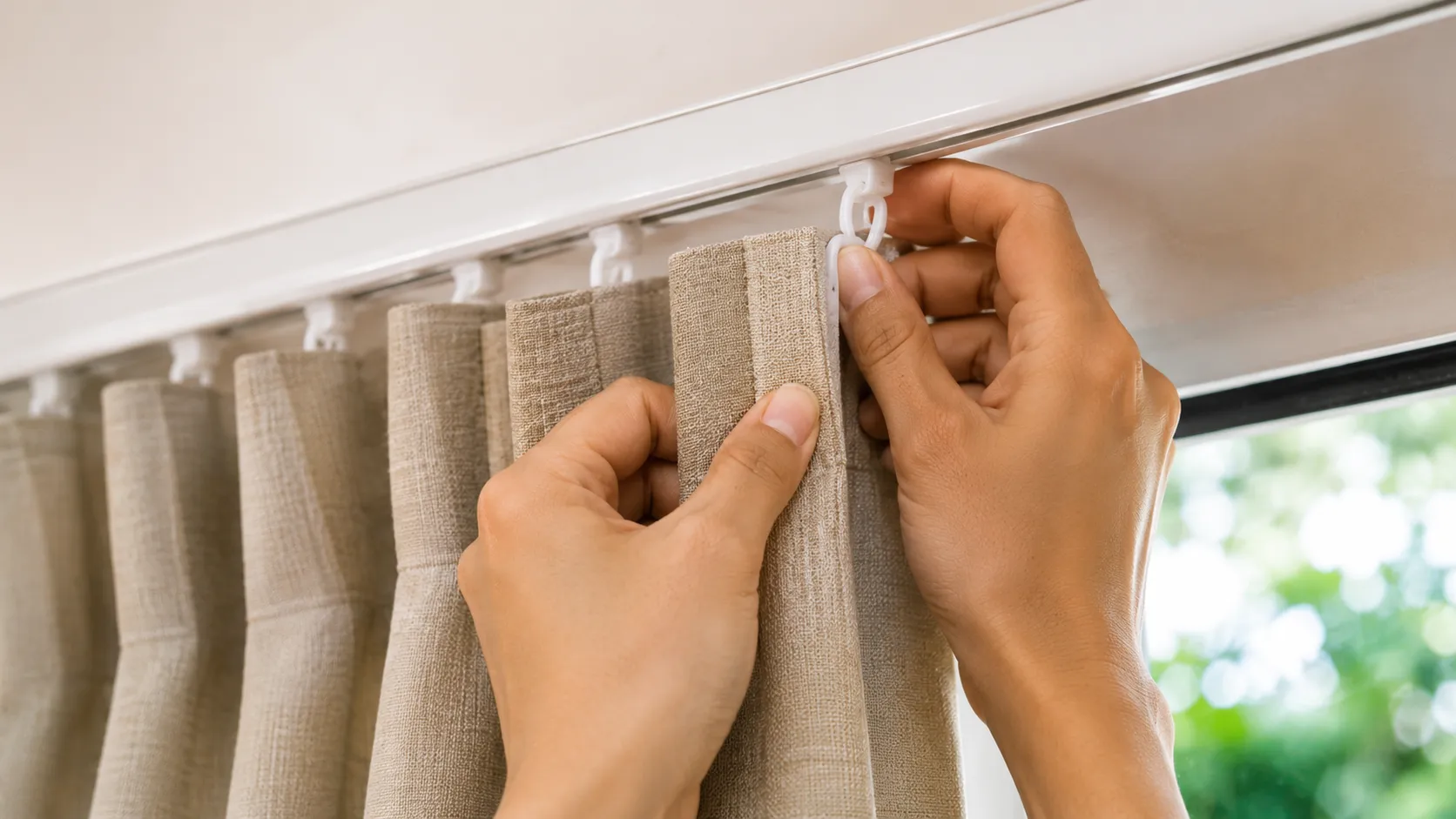
- Heavy-Duty Adjustable Nylon Ratchet Hooks (The Modern Resort Standard): Engineered from high-density, UV-stabilized nylon, ratchet hooks feature a sliding gear mechanism that provides up to 5 cm of precise vertical height micro-adjustment. Ratchet hooks insert into rear heading pockets, completely concealing plastic runner gliders while allowing installers to micro-adjust floor clearances effortlessly.
- 4-Prong Stainless Steel Pinch-Pleat Hooks: Designed specifically for traditional triple-pinch or double-pinch pleat curtain headings, 4-prong hooks insert into designated pockets behind fabric pleats to lock deep folds in place while distributing fabric weight across a wide 5 cm area. Specify AISI 304 or 316 stainless steel to eliminate rust risks.
- Single S-Fold (Ripplefold) Tape Pins: Used in contemporary minimalist S-fold wave pleating, single stainless steel or nylon pins slide directly into pre-metered pockets along the S-fold heading tape, connecting fabric panels to specialized snapping carrier cords.
3. Step 1: Calculating Proper Pleat Spacing and Hook Allocation
Uneven hook placement results in drooping curtain tops and chaotic wave spacing across window spans. Execute these calculations before inserting hook pins:
- Establishing Hook Distance Spacing (10 cm to 12 cm Intervals): For standard S-fold or pinch-pleated draperies, insert hooks at precise intervals of **10 cm to 12 cm** along the rear heading tape. Spacing hooks too far apart (> 15 cm) causes fabric between hooks to sag downward between gliders, creating a wavy top edge. Spacing hooks too close together (< 8 cm) crowds gliders, preventing clean fabric stacking when opened.
- End-Pin Anchoring (Preventing Side Light Gaps): Always place a dedicated end-hook at the absolute outer edge of the left and right side seams. Anchor the outer hook into a fixed end-stop track glider to hold side edges flat against adjacent walls, sealing out light leaks and thermal air gaps.
- Master Overlap Carrier Allocation: At the center meeting point of dual-draw curtains, place two hooks on the lead master carrier plate to overlap left and right fabric panels by at least **10 cm**, eliminating central light gaps. Calculate stack-back allowances using our digital stacking calculator.
4. Step 2: Load-Bearing Hardware Positioning & Ceiling Mounting
Proper hook installation relies on a rock-solid overhead track foundation. Mounting tracks onto weak gypsum drywall without structural backing causes total system failure under heavy fabric loads:
- Structural Plywood Backing for Gypsum Cavities: Never rely on basic plastic wall anchors to support heavy floor-to-ceiling thermal draperies in hollow gypsum ceilings. Install continuous 18 mm marine plywood backboards or heavy-duty galvanized steel framing studs directly into concrete slabs above ceiling pockets before closing drywall.
- Ceiling-Recessed Pelmet Pocket Dimensions: Mount tracks flush inside built-in ceiling recessed pelmet pockets measuring **20 cm to 25 cm wide** for dual-track systems (sheers combined with blackout drapes) and **10 cm to 15 cm deep**. Recessing hardware hides tracks, gliders, and hook tops completely from room view. Spatial tolerances can be cross-referenced on our valances and cornices measuring guide.
- Laser Level Calibration: Use a 360-degree laser level to project a true horizontal line along the ceiling pocket before setting bracket screws, ensuring that all hooks carry an equal distribution of fabric weight.
5. Step 3: Micro-Adjusting Heights and Floor Clearances
Once hooks are inserted into heading tapes and suspended from track gliders, complete the installation by micro-calibrating vertical drop heights:
- Fine-Tuning Ratchet Hook Heights: Slide nylon ratchet hooks up or down in 5 mm increments to eliminate minor floor height variations caused by uneven natural stone or micro-cement flooring.
- The 1 cm Floor Hover Clearance Rule: Calibrate hook positions so bottom curtain hems hover precisely **1 cm above finished floor level**. This prevents bottom hems from dragging across floor tracks, collecting dust, or absorbing moisture during routine floor mopping. Review drop measurement rules on our curtain measuring guide and dedicated shade measuring guide. Explore technical fabric options starting at Rp 60.000/m to Rp 110.000/m on our products page.
6. Tropical Climate Resilience: Advanced Anti-Mold Protection
In humid coastal climates like Bali, open sliding glass doors allow humid outdoor air to mingle with air-conditioned indoor lounges. Trapped humidity inside enclosed ceiling pelmets creates condensation microclimates along rear heading tapes where fungal mold spores thrive, corroding hardware and staining fabrics.
To preserve pristine textile hygiene and hardware integrity, custom drapery systems supplied by Almeers Living incorporate advanced **Anti-Mold** (anti-jamur) technology. This specialized hydrophobic antimicrobial treatment repels moisture droplets and prevents fungal spore germination, keeping your heading tapes, curtain hooks, and draperies clean, vibrant, and allergen-free season after season.
7. Smart Motorization for Strain-Free Hardware Operation
Manually pulling heavy floor-to-ceiling draperies across wide glass sliding spans subjects curtain hooks and heading tapes to continuous jerk tension, pulling hooks out of alignment over time. Upgrading window treatments to a motorized track system powered by whisper-quiet DC actuators offers ultimate operational durability.
Motorized tracks distribute movement torque evenly along the top belt drive, gliding drapes smoothly across ceiling channels without placing manual strain on individual hooks or heading tapes. Systems integrate seamlessly with handheld remotes, wall keypads, smartphone apps, and smart home platforms like Apple HomeKit, Google Assistant, Amazon Alexa, and Control4. Program automated solar schedules to close blackout layers during peak afternoon heat hours (11:00 AM – 3:00 PM), maintaining cool indoor temperatures passively.
8. Elevate Your Residence with Almeers Living
Installing curtain hooks correctly in tropical luxury homes requires an expert synthesis of physical load distribution, anti-corrosive hardware selection, precision pleat spacing, pelmet cavity integration, anti-mold protection, and climate-resilient tailoring. Partnering with an experienced local specialist guarantees precise laser site surveys, custom fabrication, and long-term operational durability. As a recognized premier window treatment specialist in Bali, Almeers Living offers complete turnkey execution—from complimentary on-site laser surveys and custom fabric sampling to professional motorized installation across the island.
Transform your villa or residential property into an expertly tailored, sun-regulated sanctuary today. Browse our full range of custom drapery hardware, sheer voiles, and automated window solutions on our products page to schedule your personalized on-site consultation with Bali’s trusted window experts.