Tips to Decorate Curtains with Houseplants: What to Check Before You Start — Sunlight Diffusion Optimization, Indoor Botanical Styling, and Humidity Balance
Designing modern luxury residential estates, boutique holiday villas, and high-end hospitality sanctuaries across Bali—from the vibrant coastal corridors of Canggu, Seminyak, and Umalas to the serene rainforest havens of Ubud and dramatic clifftop estates in Uluwatu—demands an intuitive mastery of biophilic interior architecture. In contemporary island living, open-plan pavilions and master bedroom suites feature expansive floor-to-ceiling glass sliding doors that blur the boundaries between indoor sanctuaries and lush outdoor tropical gardens. Combining indoor houseplants with tailored window draperies is one of the most effective design strategies to cultivate a serene, biophilic atmosphere. However, pairing living botanical displays with custom window treatments introduces complex physical, optical, and environmental dynamics. Plants transpire moisture continuously, require specific light spectrums, and need unobstructed airflow, while delicate draperies require protection from damp foliage, leaf friction, and excess humidity. Property owners, interior architects, and villa stylists frequently search for authoritative advice on tips to decorate curtains with houseplants: what to check before you start (mastering sunlight diffusion optimization, indoor botanical styling, and humidity balance) to harmonize living greenery with luxurious drapery cascades without compromising fabric longevity or plant health.
Executing an authentic, harmonized botanical drapery scheme in high-temperature, high-humidity island microclimates requires a sophisticated architectural synthesis: engineering sheer fabric light diffusion spectrums, curating compatible shade-tolerant tropical flora, maintaining healthy soil transpiration distances, integrating anti-fungal hydrophobic fabric protection, and calibrating motorized dual-track S-fold systems. In this comprehensive editorial masterclass, we present the definitive design checklist and technical guidelines required to decorate curtains with houseplants flawlessly in your tropical home.
1. The Biophilic Science of Plant Transpiration and Light Filtering
Before arranging indoor pots or hanging curtain tracks, it is essential to understand how living plants and window textiles interact within three-dimensional space:
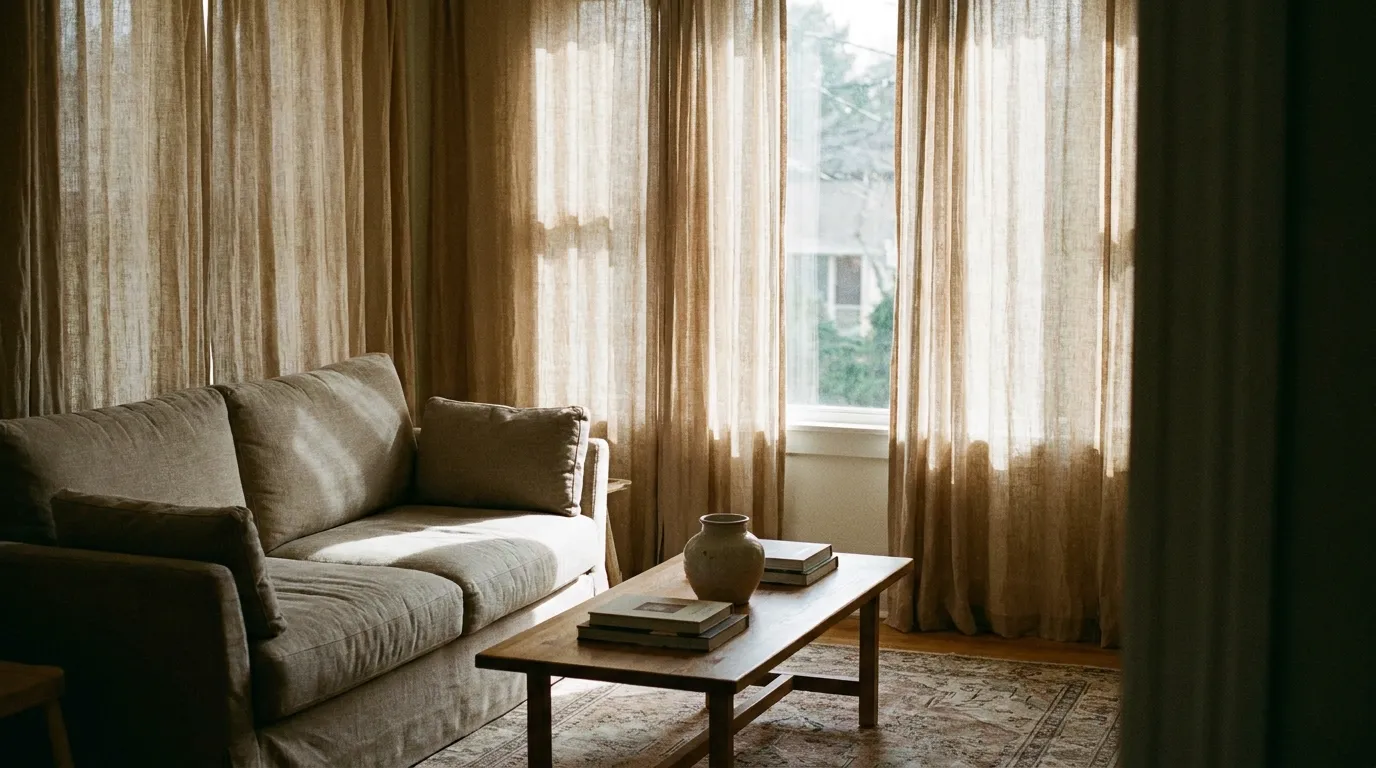
- Solar Radiation Filtration (Photosynthetic vs. Scorching Rays): Direct equatorial sunlight streaming through uninsulated glass window panes often scorches tender tropical foliage (such as Monstera deliciosa, Calatheas, and Ficus elastica). High-performance sheer draperies act as optical diffusers, scattering intense ultraviolet rays into soft, dappled light that mimics a natural rainforest canopy.
- Foliar Transpiration and Microclimate Moisture: Indoor plants constantly release moisture vapor into the surrounding air through stomatal transpiration. Placing dense foliage directly against unlined curtain panels creates localized humidity microclimates that increase ambient moisture near window glass.
- Air Current Circulation Dynamics: Stagnant air trapped between heavy drapery backings and wet potting soil encourages fungal spore germination. Proper spatial separation ensures continuous air movement that keeps foliage dry and textiles pristine.
2. Check #1: Sunlight Diffusion Optimization for Tropical Flora
Balancing plant sunlight requirements with indoor thermal comfort requires precise textile density selection:
- Slubbed Linen-Poly Sheer Voiles for Dappled Light: Specify slubbed sheer voiles with an open-weave density that filters approximately 60% to 75% of direct solar heat while transmitting soft, multi-directional daylight. This open weave creates ideal conditions for understory tropical plants that thrive in bright, indirect light. Explore versatile sheer fabric swatches starting at Rp 60.000/m on our products page.
- Dual-Track Day-to-Night Light Control: Layer lightweight daytime sheer voiles on the inner track (closest to the glass and plants) with 100% thermal blackout drapes on the secondary track channel. This configuration allows you to nourish houseplants with diffused daylight during peak hours while sealing out evening glare and heat (starting at Rp 60.000/m to Rp 110.000/m).
3. Check #2: Indoor Botanical Styling Principles & Spatial Clearance
Arranging plants around window drapes without causing physical damage or visual chaos relies on strict spatial spacing and scale control:
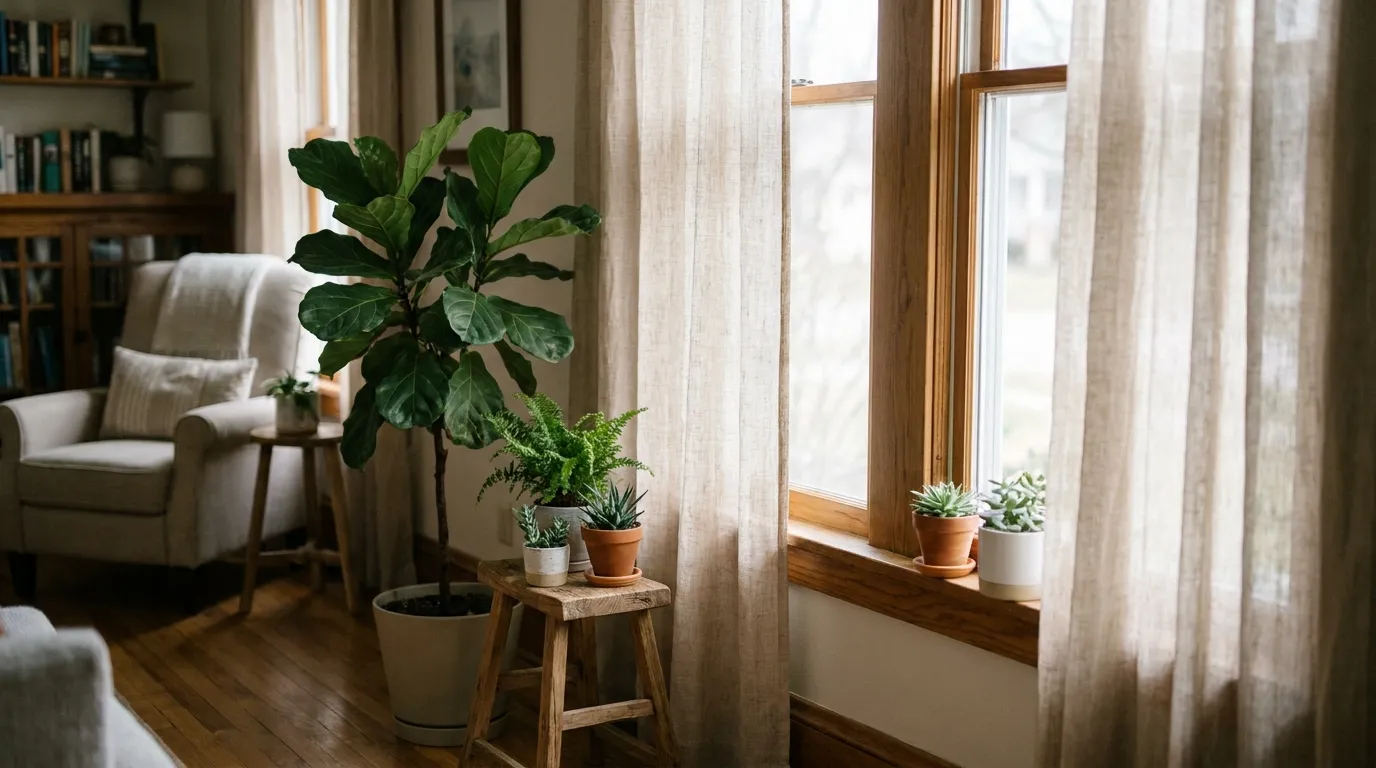
- The 15 cm Foliage Clearance Rule: Never allow plant leaves, stems, or wet pot rims to rest directly against curtain fabrics. Maintain a physical clearance buffer of at least **15 cm** between foliage outer spans and hanging drapery waves. This prevents soil dirt, water splashes, and natural leaf oils from staining custom fabrics.
- Tiered Height Composition (The Triad Layering Rule): Pair floor-to-ceiling drapery drops with tiered botanical groupings. Position tall specimen plants (like Strelitzia nicolai or Ficus lyrata) on the wall side of curtain stack-backs, medium pot clusters in front of sheer panels, and trailing vines (like Epipremnum aureum) on elevated pedestals. This anchors the room visually without blocking window traversal paths.
- Concealed Track Stack-Back Space: Extend curtain tracks 30 cm to 50 cm beyond window frame edges on both sides. When drapes are opened fully, fabric panels stack neatly against adjacent walls, allowing tall plants to frame views without tangling in curtain folds. Calculate stack clearances using our digital stacking calculator.
4. Check #3: Humidity Balance and Anti-Mold Fabric Resilience
In humid island environments like Bali, high atmospheric moisture combined with indoor air conditioning and plant watering creates an ideal breeding ground for fungal spores near window glass. Untreated drapery fabrics absorb ambient dampness, resulting in dark mildew spots and musty odors.
To preserve pristine textile hygiene and indoor air quality, high-performance draperies supplied by Almeers Living incorporate advanced **Anti-Mold** (anti-jamur) technology. This specialized hydrophobic finish repels moisture droplets and prevents fungal germination, keeping your sheer and blackout draperies clean, fresh, and allergen-free season after season.
5. Check #4: Precision S-Fold Pleating and Hardware Installation
Achieving five-star architectural elegance when integrating houseplants requires precise hardware mounting and custom tailoring metrics:
- S-Fold (Ripplefold) Wave Pleat Fullness (2.0x to 2.2x): Tailor draperies using double the track width in flat fabric volume. Continuous vertical S-waves highlight natural textile slubs and ensure fabric stacks back neatly without crushing against nearby plant stands.
- Ceiling Recessed Pelmet Pocket Integration: Mount heavy-duty aluminum tracks flush inside built-in ceiling recessed pelmet pockets measuring **20 cm to 25 cm wide** and **10 cm to 15 cm deep** for dual-track systems. Concealing hardware allows fabric cascades to emerge seamlessly from the ceiling line, creating a clean backdrop for indoor foliage. Review spatial tolerances on our valances and cornices measuring guide.
- The 1 cm Floor Hover Clearance Rule: Verify vertical drop distances from track eyelets down to finished floor surfaces. Calibrate ratchet hooks so bottom curtain hems hover precisely **1 cm above finished floor level**. This prevents curtain hems from touching floor planters or absorbing spilled irrigation water. Review drop measurement rules on our curtain measuring guide and dedicated shade measuring guide.
6. Check #5: Smart Motorization for Friction-Free Botanical Spaces
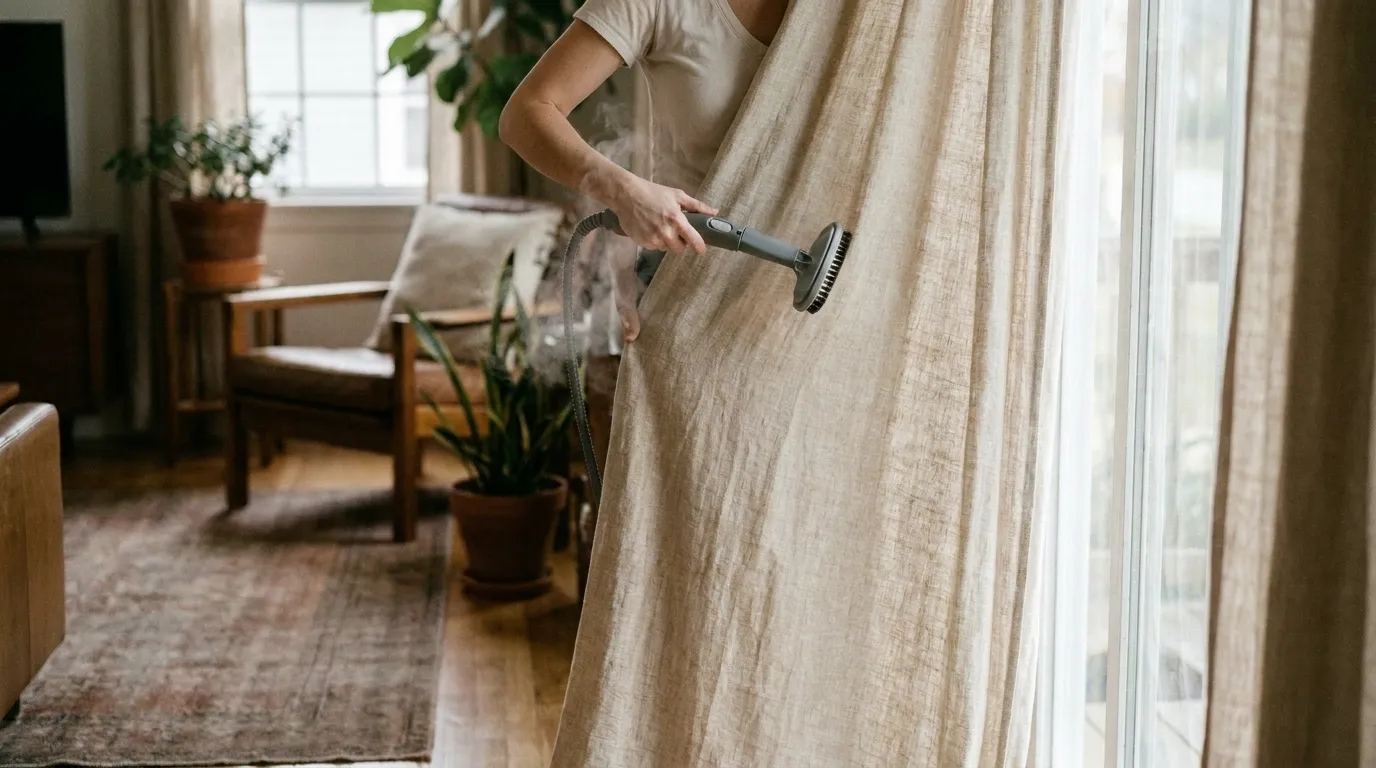
Manually drawing heavy draperies around indoor plant stands often leads to users brushing against foliage, tipping over light planters, or transferring soil dust onto fabric edges. Upgrading window treatments to a motorized track system powered by whisper-quiet DC actuators offers ultimate lifestyle convenience.
Motorized tracks glide drapes smoothly along the ceiling line at the touch of a button, eliminating physical contact with nearby plants. Motorized systems integrate seamlessly with handheld remotes, wall keypads, smartphone apps, and smart home platforms like Apple HomeKit, Google Assistant, Amazon Alexa, and Control4. Program automated solar schedules to open sheer layers at sunrise to nourish houseplants with gentle morning light, and draw blackout panels during peak afternoon heat hours (11:00 AM – 3:00 PM) to preserve cool indoor temperatures passively.
7. Elevate Your Biophilic Sanctuary with Almeers Living
Decorating curtains with houseplants in tropical luxury properties requires an expert synthesis of solar spectrum filtration, botanical layout principles, microclimate moisture management, anti-mold fabric protection, and climate-resilient hardware installation. Partnering with an experienced local specialist guarantees precise laser site surveys, master fabrication, and long-term operational durability. As a recognized premier window treatment specialist in Bali, Almeers Living offers complete turnkey execution—from complimentary on-site laser surveys and custom fabric sampling to professional motorized installation across the island.
Transform your villa or residential estate into a serene, light-filled biophilic sanctuary today. Browse our full range of custom drapery fabrics, dual-track hardware, and automated window solutions on our products page to schedule your personalized on-site consultation with Bali’s trusted window experts.