Use of Patterned Fabrics in 2026: The Bali Edition for Modern Villas
Quick answer: Patterned curtains work best when their scale, contrast and texture are chosen in relation to the room—not as an isolated trend. In 2026, use pattern intentionally: let it add personality while the fabric still meets practical needs for privacy, daylight, maintenance and durability.
What Is Changing in Patterned Curtain Design?
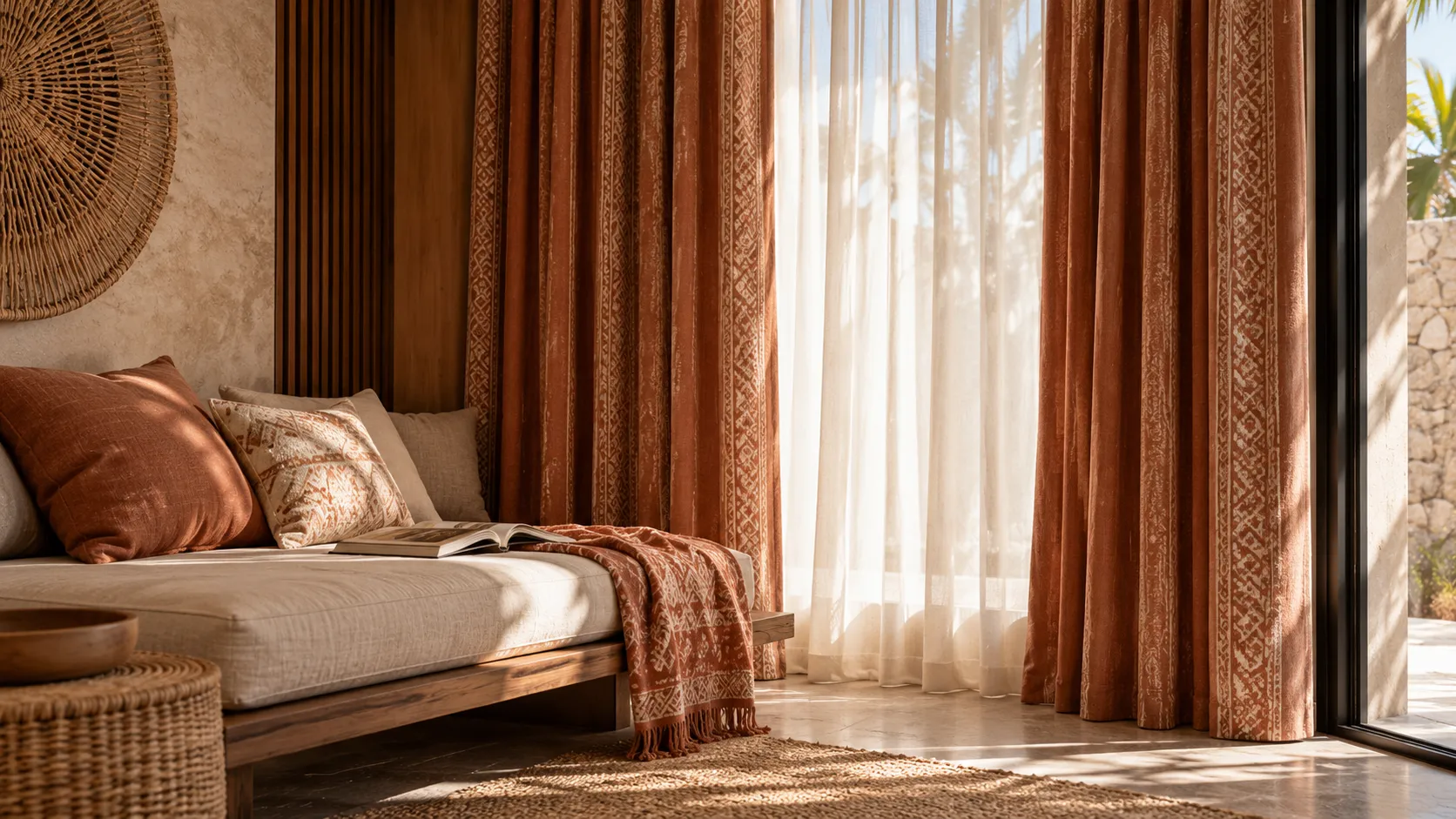
Pattern does not have to mean a loud floral print. It can come from woven geometry, tonal stripes, small repeats, botanical motifs or the natural variation of a textured fabric. A quieter pattern often gives a room depth without competing with architecture, artwork or views.
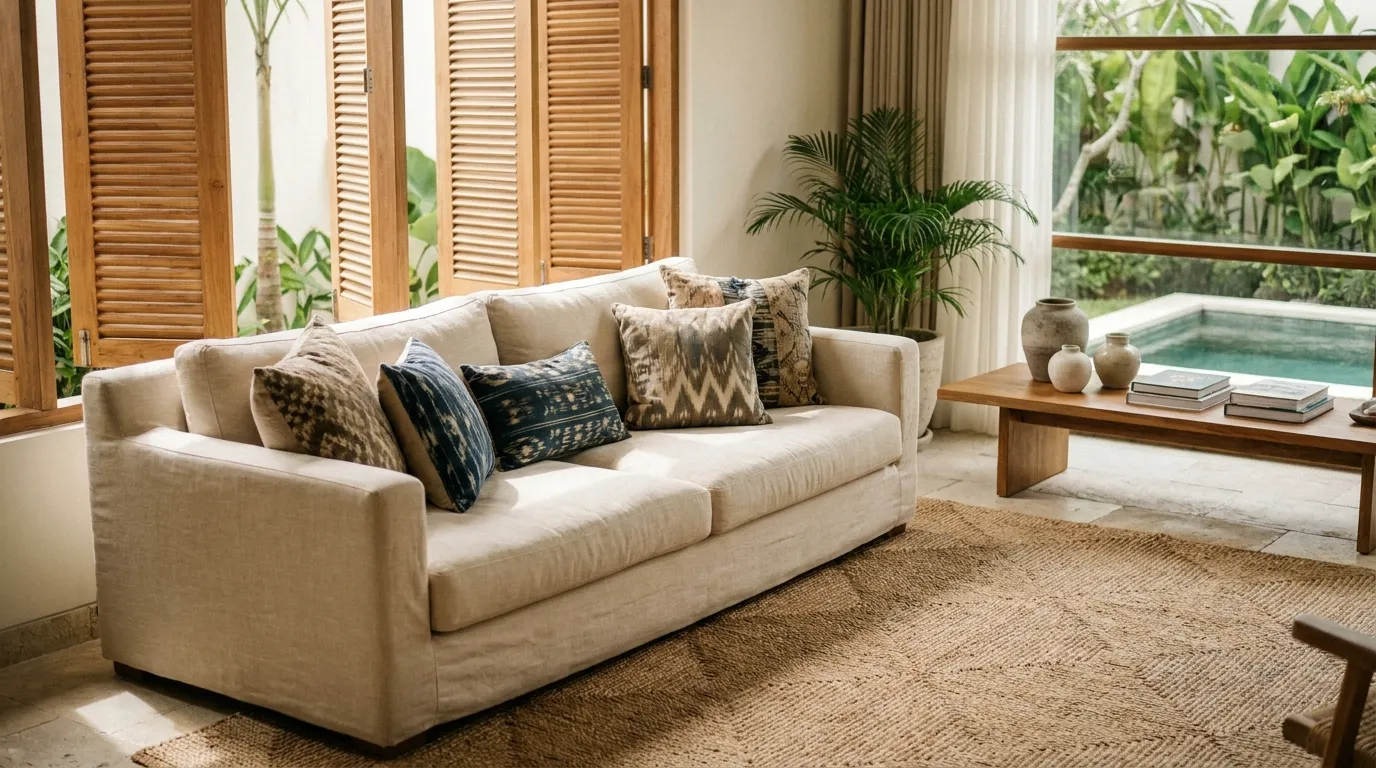
For modern tropical interiors, the most adaptable approach is to balance one expressive element with calmer surfaces. If the rug or upholstery already carries a strong motif, choose a smaller-scale curtain pattern or a fabric whose pattern is visible mainly through texture.
Choose Pattern Scale for the Window
- Large windows: Larger motifs can read clearly across a broad span, but check how the repeat will fall when the curtains are drawn.
- Small windows: Fine stripes, subtle geometry or tonal texture usually feel less crowded.
- Full-height curtains: Ask how the pattern will align from panel to panel and whether the fabric repeat creates extra cutting waste.
- Sliding doors: Consider the pattern when panels stack to the sides; a busy repeat may disappear into folds when open.
Coordinate Colour Without Making the Room Flat
Start with the room’s fixed finishes: flooring, wall colour, timber, stone and major upholstery. Pick one or two colours from that palette for the curtain pattern. A warm neutral base with a restrained accent can connect the window treatment to the room without forcing every item to match exactly.
If you want a more graphic look, use colour blocking or a stronger motif on one key window and keep secondary windows quieter. See our guide to colour-blocking curtain trends for another way to introduce colour deliberately.
Do Not Ignore Fabric Performance
Pattern is only one part of the specification. Check the fabric composition, lining options, light transmission, cleaning instructions and how it drapes. A sheer patterned fabric may soften daylight but provide limited privacy at night. A lined decorative curtain can offer more privacy and body, though the added weight may require suitable tracks and supports.
For bedrooms, consider layering a decorative curtain with a separate blackout or dimout layer where sleep and light control matter. Our layered window treatments guide explains how to separate these functions.
Pattern Considerations for Bali Villas
In a villa, sunlight, humidity, frequent guest turnover and cleaning routines can affect the real-life performance of fabric. Review a sample in the actual room at different times of day; direct sun can change how colours and patterns appear. For rental properties, consider whether the pattern will remain appealing to a broad range of guests and whether the fabric is practical to maintain.
Common Mistakes to Avoid
- Choosing a pattern from a small swatch without checking its full repeat.
- Combining several high-contrast motifs without a clear visual hierarchy.
- Assuming decorative fabric automatically provides blackout or thermal control.
- Forgetting pattern matching can affect fabric consumption and quotation.
Final Checklist
Before ordering, confirm pattern repeat, panel direction, finished drop, fullness, lining, track compatibility, cleaning requirements and the look of a full-size sample. For made-to-measure curtains, a consultation or site survey can help align the design with the opening and the room’s needs.
Explore our window treatment buying guide or contact Almeers Living to discuss custom options for your property.