Blackout, Dimout or Sheer by Room: How to Specify the Right Layer
Blackout, dimout and sheer curtains are not interchangeable. Each provides a different level of light filtration, privacy and visual softness. The suitable choice depends on the room, time of day, window orientation and whether one layer or a combination is required.
Quick Difference
| Type | Primary role | Typical use |
|---|---|---|
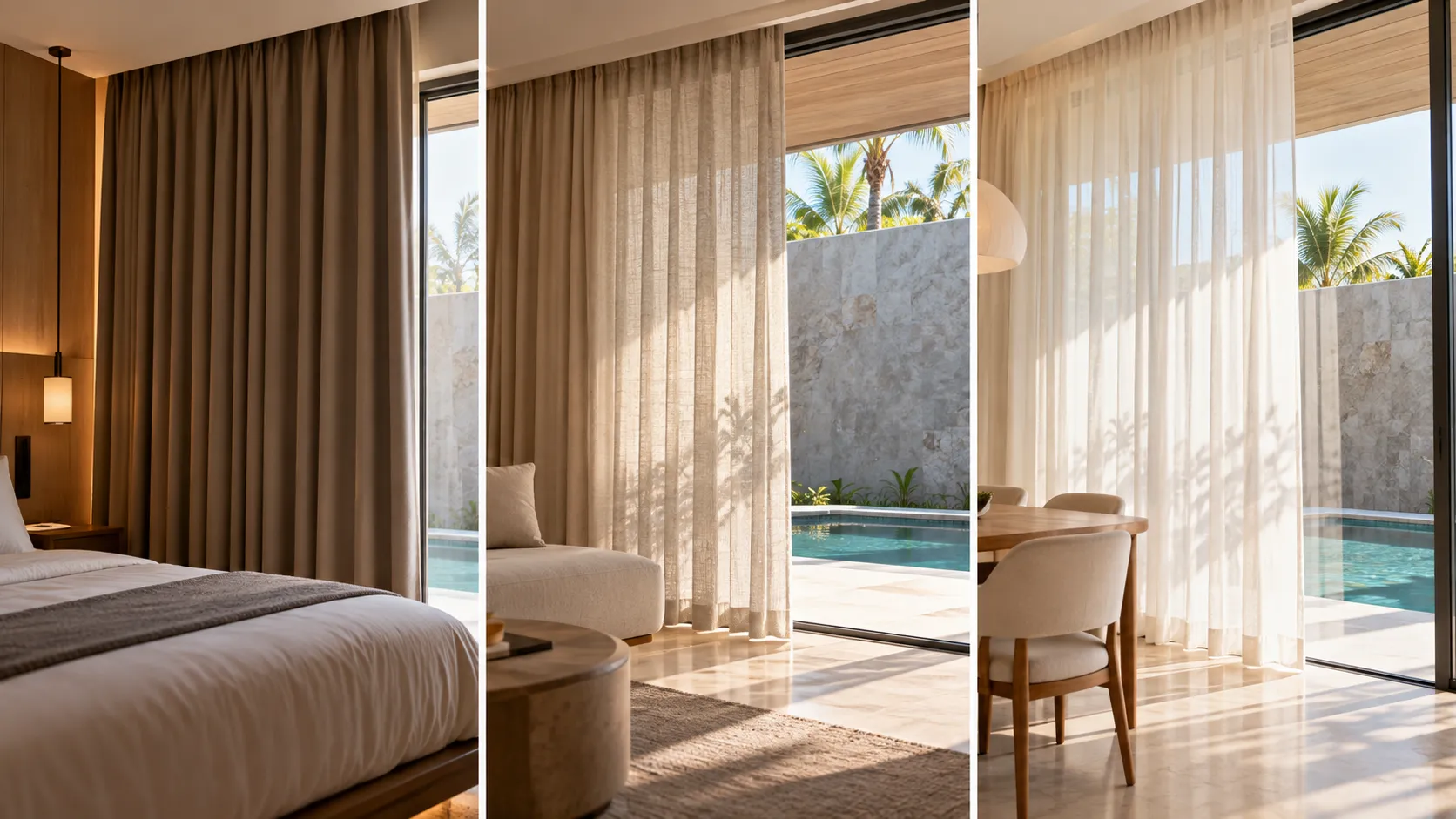
| Sheer | Softens daylight and creates a light decorative/privacy layer | Living rooms, daylight layers and views |
| Dimout | Reduces light and glare more strongly | Bedrooms, living rooms and flexible control |
| Blackout | Provides strong room darkening and privacy | Bedrooms, media rooms and sleep-sensitive spaces |
Choose by Room Function
Bedroom
If the room needs strong night-time privacy and substantial darkness, blackout is a practical starting point. A sheer plus blackout combination can provide more flexibility when daytime daylight is also important.
Living Room
Living rooms often benefit from natural daylight and a connection to the exterior. Sheer or dimout can provide softer control without making the space feel unnecessarily dark.
Home Office
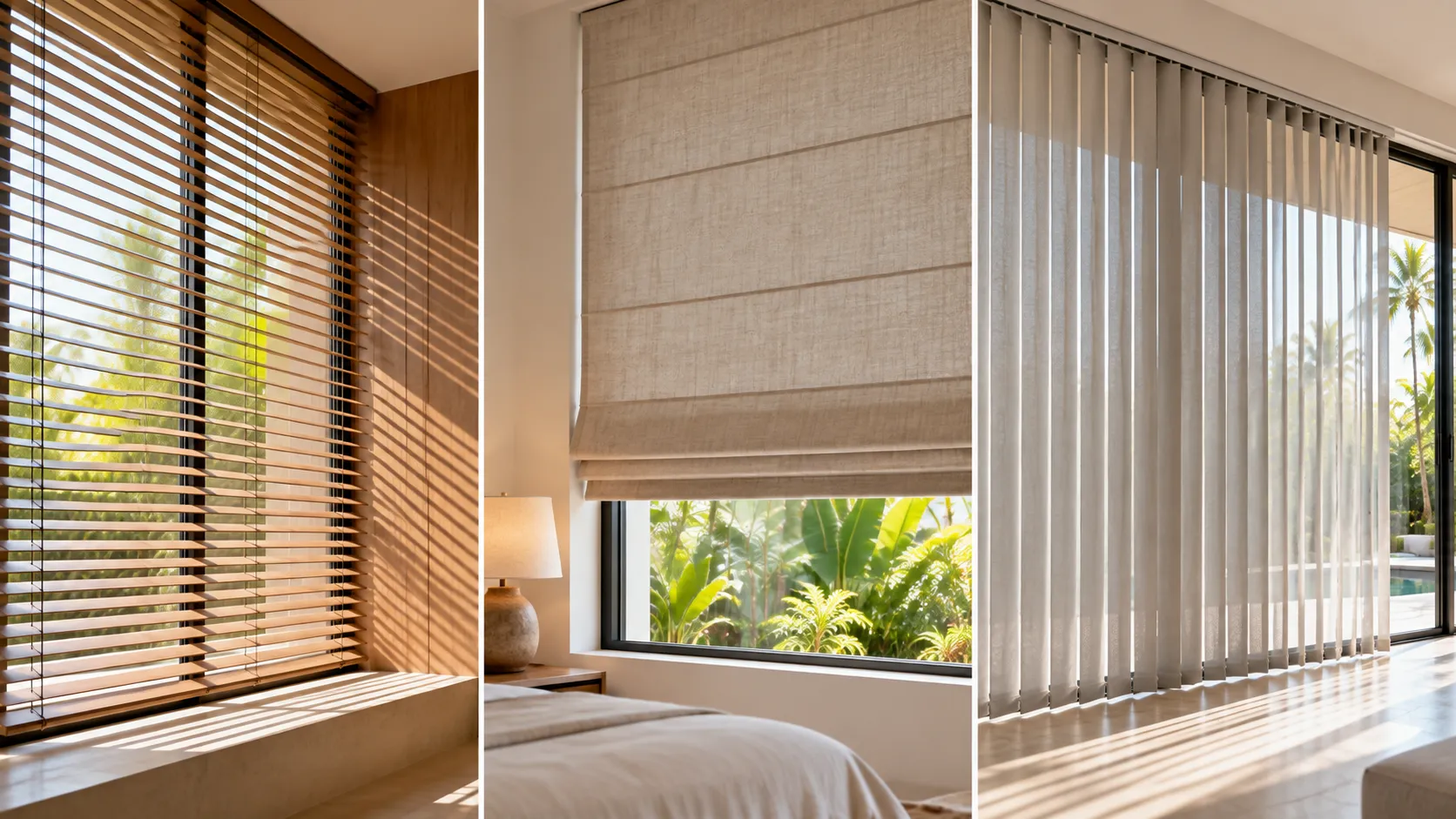
Screen glare may be more important than maximum darkness. A sheer can soften strong daylight, while a dimout or blind can provide more precise control when glare increases.
Media Room
Strong light reduction is usually the priority. Blackout fabric combined with careful coverage can help reduce unwanted daylight, but installation gaps still matter.
Hotel or Rental Villa
Guest rooms need intuitive operation and a predictable privacy experience. A layered system can be useful because different guests may prefer different daylight levels.
Fabric Darkness Is Not the Same as Room Darkness
A blackout fabric can block light through the material while daylight still enters around the sides, top or bottom. Mounting position, panel overlap, finished drop and hardware therefore matter as much as the fabric label.
This is particularly important for large glazed openings. If complete darkness is a priority, specify coverage before finalising the fabric.
When Layering Makes Sense
| Combination | Daytime | Night-time |
|---|---|---|
| Sheer only | Soft daylight | Limited night privacy when interior lights are on |
| Dimout only | Reduced light | Good light control |
| Blackout only | Strong light reduction | Strong privacy and darkness |
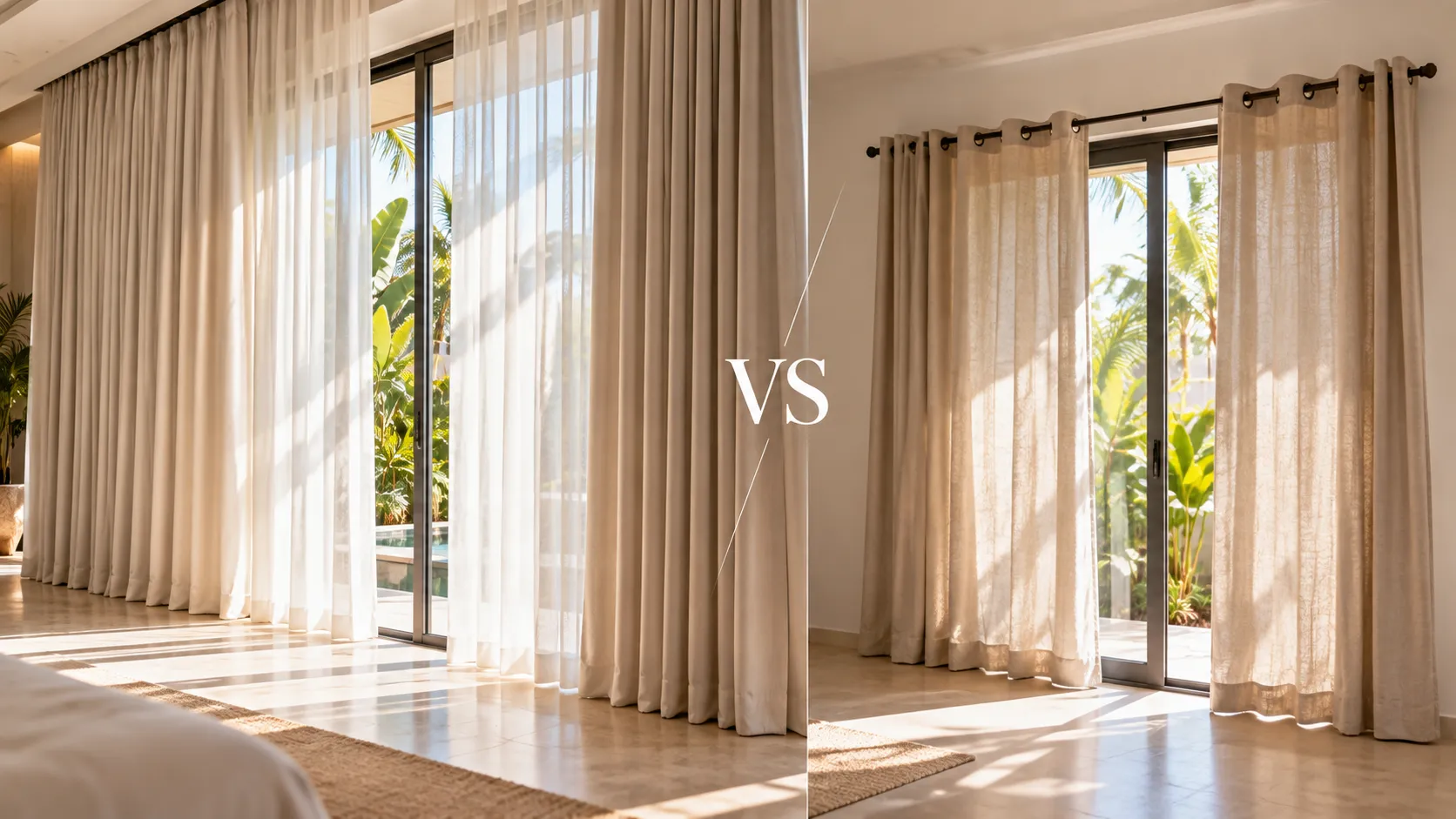
| Sheer + blackout | Soft daylight | Strong privacy and darkness |
| Sheer + dimout | Soft to medium control | More flexible than sheer alone |
Window Orientation Changes the Specification
Two bedrooms with the same size can need different treatments if one faces strong afternoon sun and the other receives indirect light. Consider orientation, glazing size, external shading and the room's actual use before choosing fabric.
Common Mistakes
- Assuming every blackout installation creates a completely dark room.
- Using sheer alone where night privacy is important.
- Choosing dimout without considering actual light exposure.
- Ignoring side gaps and panel overlap.
- Using the same specification for every room in a villa.
Specification Checklist
- What is the room used for?
- When is privacy most important?
- How much daylight should remain?
- Which direction does the window face?
- Is glare a problem?
- Is one layer enough?
- Does the opening require full coverage?
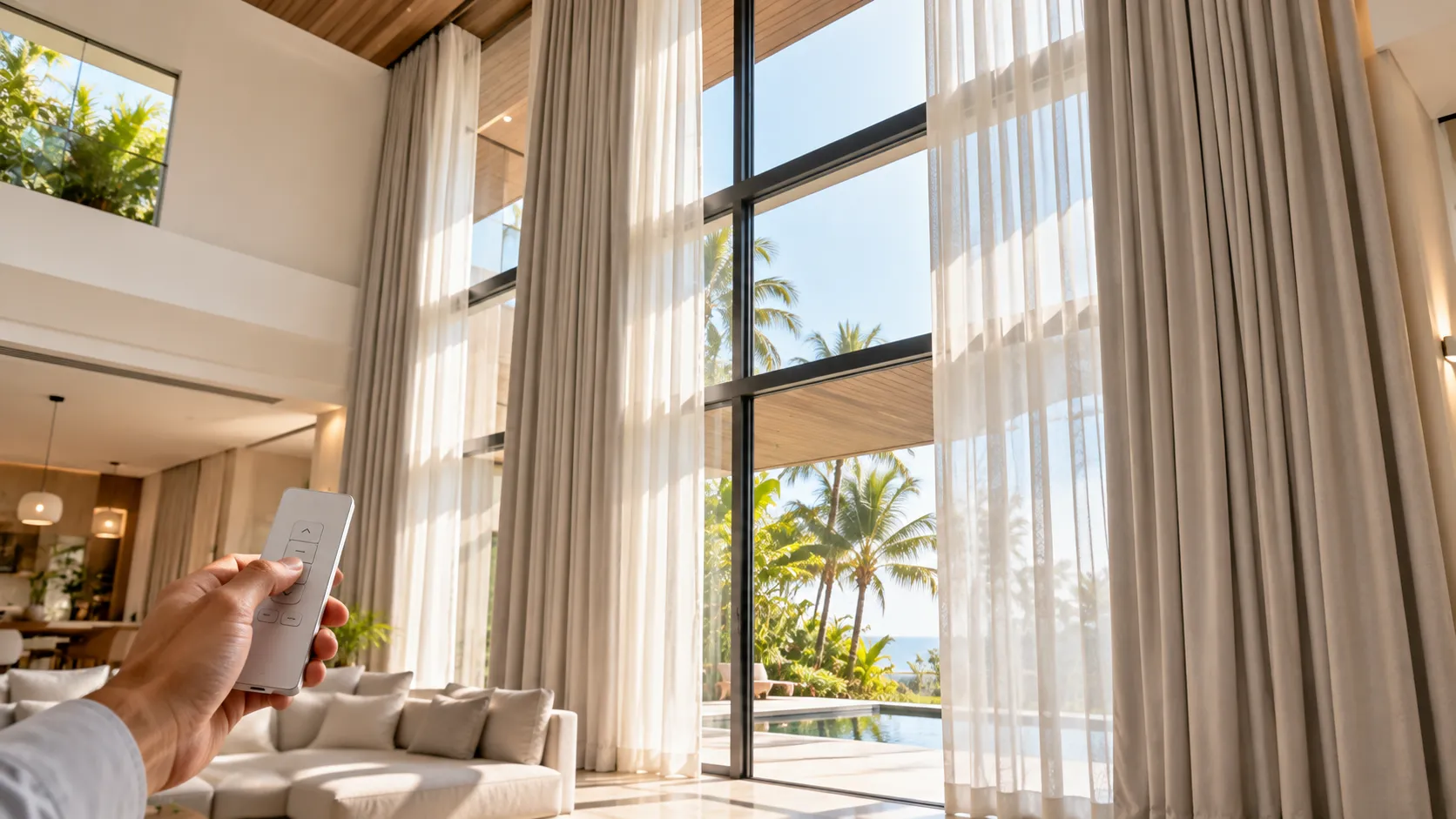
- Will the treatment be manual or motorized?
For a deeper comparison, see our blackout vs. dimout vs. sheer guide and our article on layered sheer + blackout curtains for villas.
Final Takeaway
Choose the fabric according to the room's actual light and privacy requirement, then check coverage, mounting and operation. For properties with changing needs throughout the day, layering can provide a more flexible result than relying on one fabric alone.