Blackout vs. Dimout vs. Sheer Explained: The Complete Bali Guide
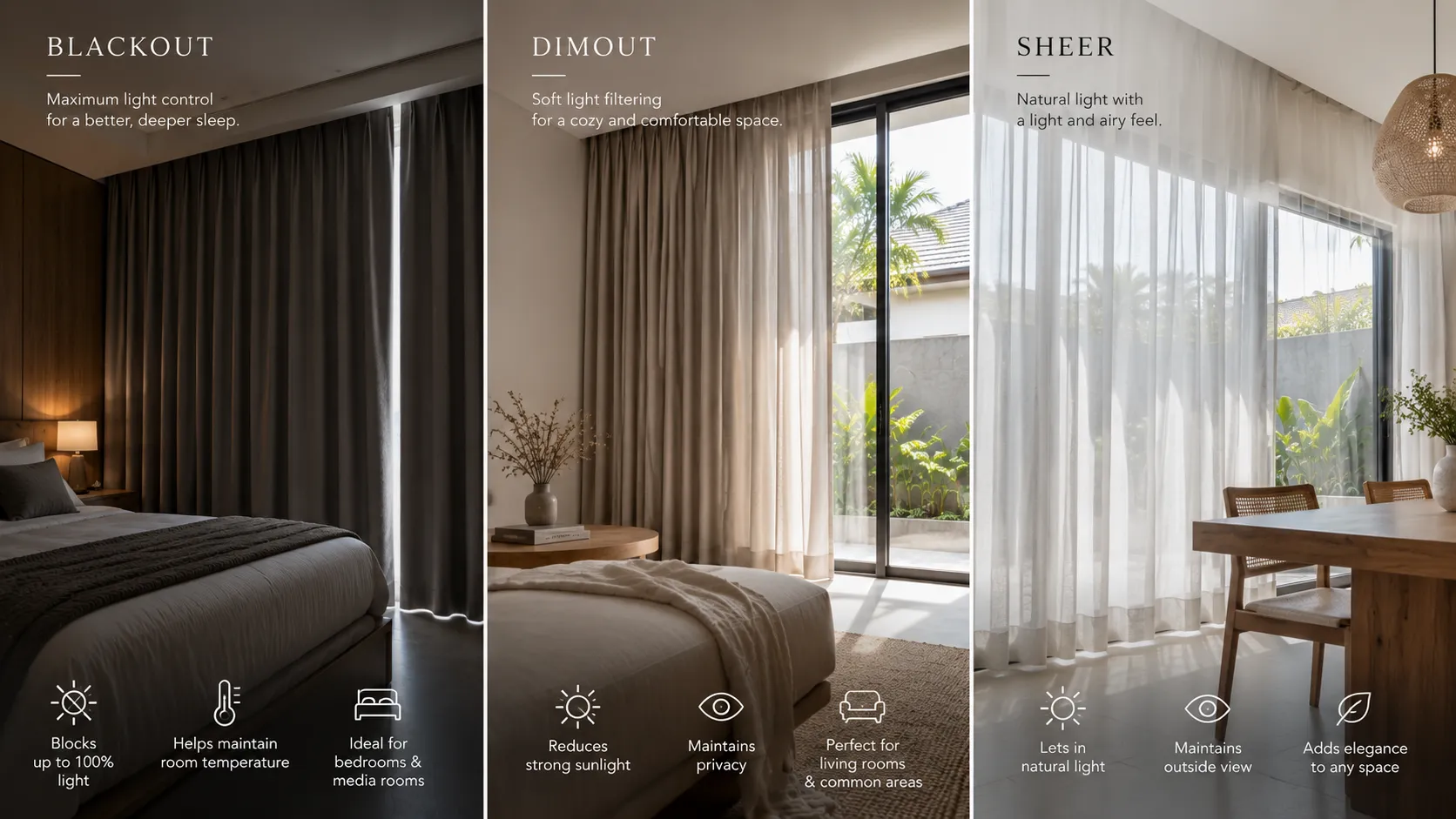
Short answer: Blackout is designed for the strongest room darkening, Dimout reduces glare while keeping some ambient light, and Sheer diffuses daylight while maintaining an airy appearance. For many villas and hotels, layering Sheer with Blackout or Dimout provides more flexibility than choosing one fabric alone.
1. Blackout vs. Dimout vs. Sheer
| Feature | Blackout | Dimout | Sheer |
|---|---|---|---|
| Light control | Strongest | Moderate to strong reduction | Soft diffusion |
| Room darkening | Best suited | Partial | Not intended for darkness |
| Daylight atmosphere | Low when closed | Soft and controlled | Bright and airy |
| Daytime privacy | Strong when fully closed | Strong depending on fabric | Useful but view-dependent |
| Night privacy | Strong | Generally stronger than sheer | Not reliable by itself |
| Typical use | Bedrooms, media rooms | Living rooms, dining, offices | Living spaces, large glazing, inner layer |
2. Blackout: When Maximum Darkness Matters
Blackout fabrics are appropriate where the priority is strong room darkening, privacy, and control of unwanted light. Bedrooms, guest suites, and media rooms are common applications.
Fabric alone does not guarantee a completely dark room. Light can still enter through side gaps, top gaps, floor gaps, or uncovered portions of the opening. Mounting position and overlap therefore matter.
3. Dimout: A Balanced Middle Ground
Dimout fabrics are useful when the room should feel comfortable and protected from harsh glare without becoming completely dark. They can work well in living rooms, dining areas, offices, and other spaces where daylight remains desirable.
4. Sheer: Soft Daylight and Layering
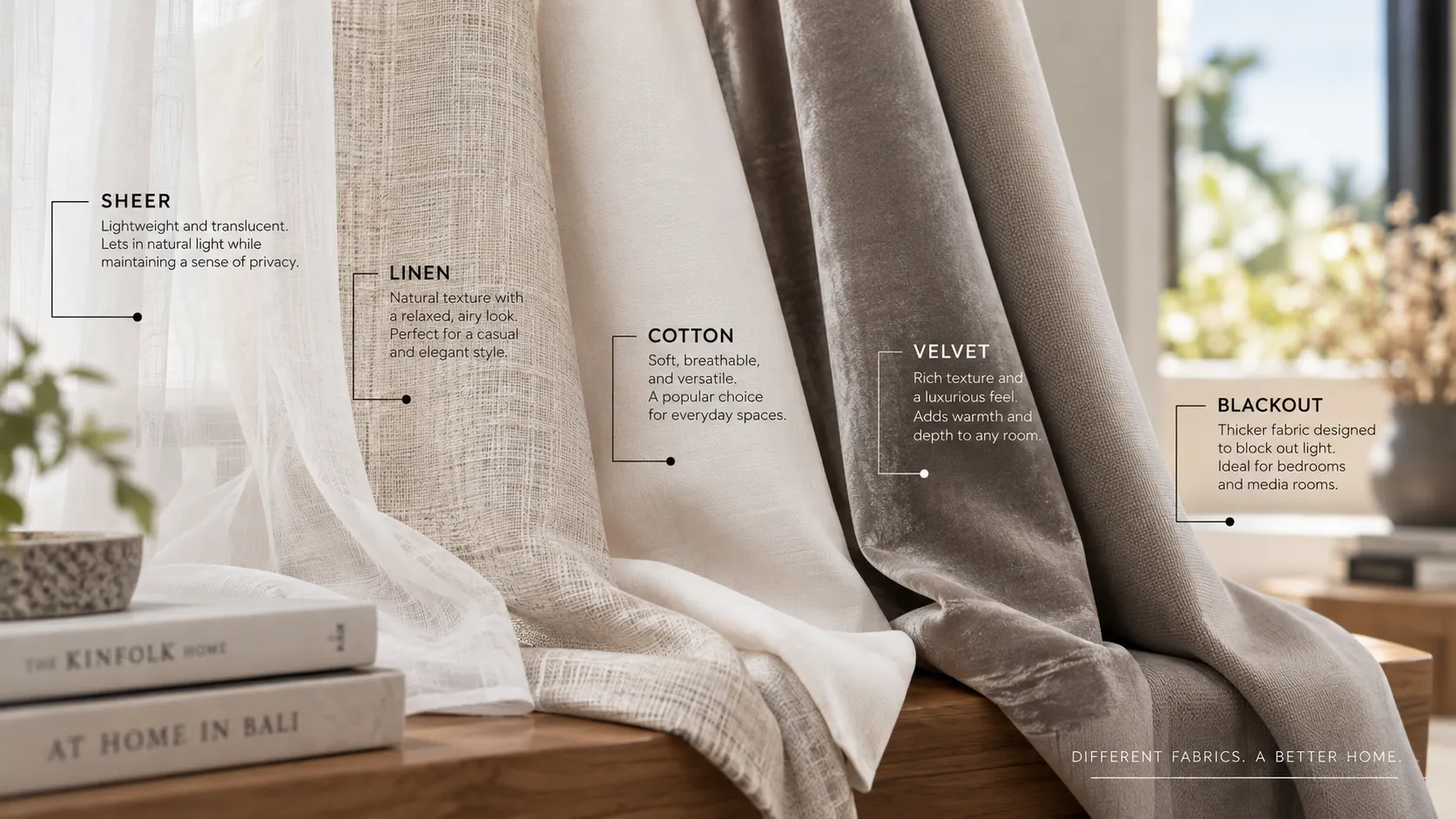
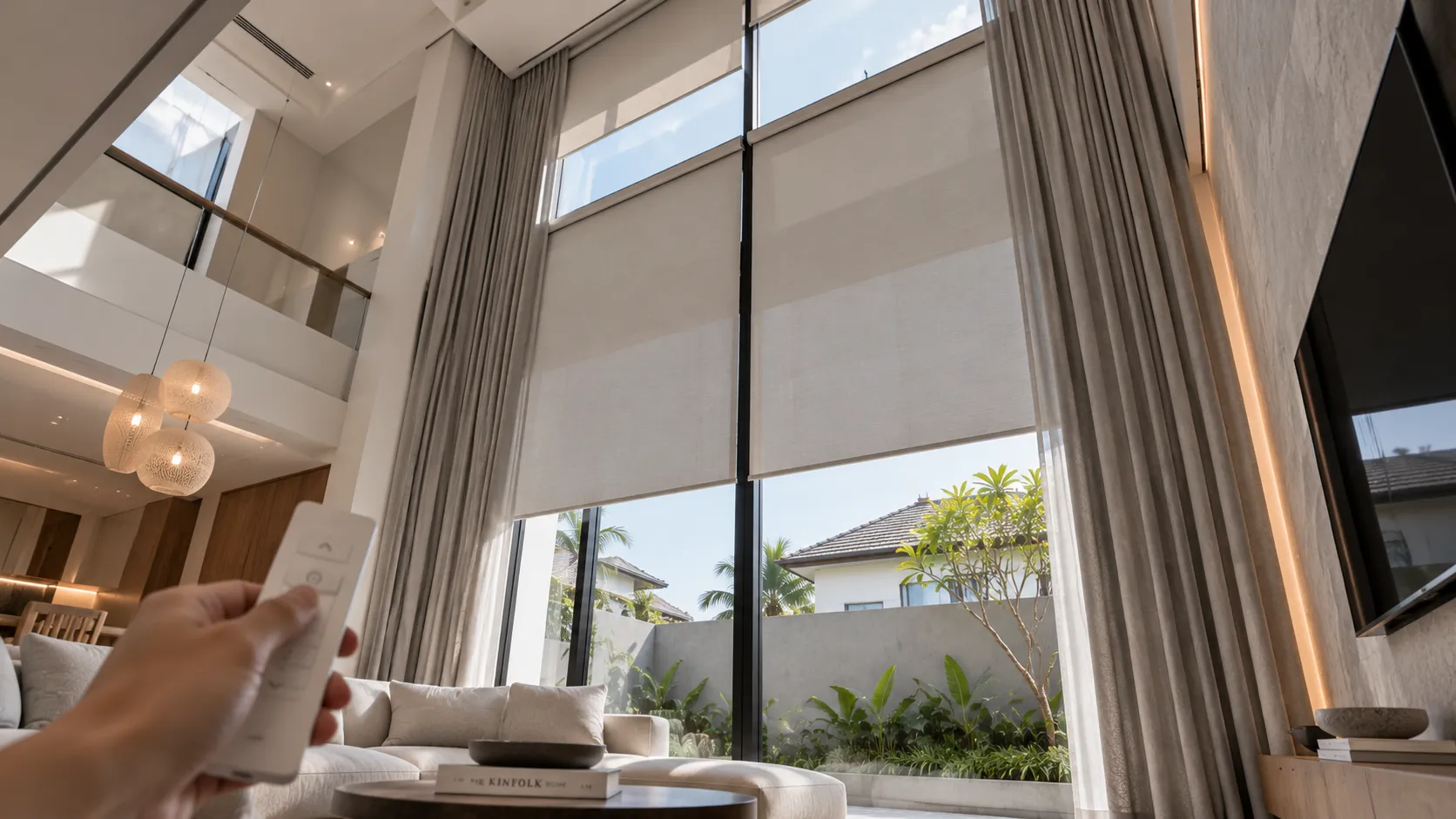
Sheer curtains filter and diffuse daylight, soften views, and create an airy architectural layer. They are especially effective across large glazing where the goal is to preserve brightness without leaving the glass completely untreated.
5. Why Layering Often Works Better
- Daytime: keep the performance layer open and use the sheer to soften sunlight.
- Bright afternoon: close the Dimout or Blackout layer as needed to reduce glare and solar exposure.
- Evening: close the opaque layer for stronger privacy and light control.
- Night: use the Blackout layer where stronger darkness is required.
6. Room-by-Room Starting Point
| Room | Starting Fabric | Reason |
|---|---|---|
| Master bedroom | Blackout or Sheer + Blackout | Darkness, privacy, and flexible daylight |
| Living room | Sheer + Dimout or Blackout | Daylight with optional stronger control |
| Dining room | Sheer or Dimout | Comfortable daylight and glare control |
| Media room | Blackout | Reduced unwanted light |
| Hotel guest room | Sheer + Blackout | Guest comfort across different times of day |
7. Tropical Performance Considerations
In Bali, humidity, sunlight exposure, ventilation, cleaning access, and fabric handling should be considered during specification. A suitable material can still perform poorly if it is installed with inadequate coverage or in a room condition that was not considered during selection.
8. Common Mistakes
- Assuming a Blackout label automatically means zero light leakage.
- Using sheer fabric alone when night privacy is required.
- Choosing opacity without considering room orientation.
- Ignoring side gaps and stacking space.
- Applying the same fabric specification to every room.
The right choice is the one that matches room function, desired light level, privacy requirement, architecture, and installation conditions. Almeers Living can help assess these factors and provide custom measurement and installation across Bali.