Blackout vs Thermal Curtain Lining: What Each One Actually Does
Blackout lining and thermal lining solve related but different problems. Blackout lining is primarily selected to reduce light passing through the curtain; thermal lining is intended to influence heat transfer and comfort. Some products combine features, but the terms are not interchangeable. Check the specifications of the actual lining rather than relying on the name alone.
What blackout lining is designed to do
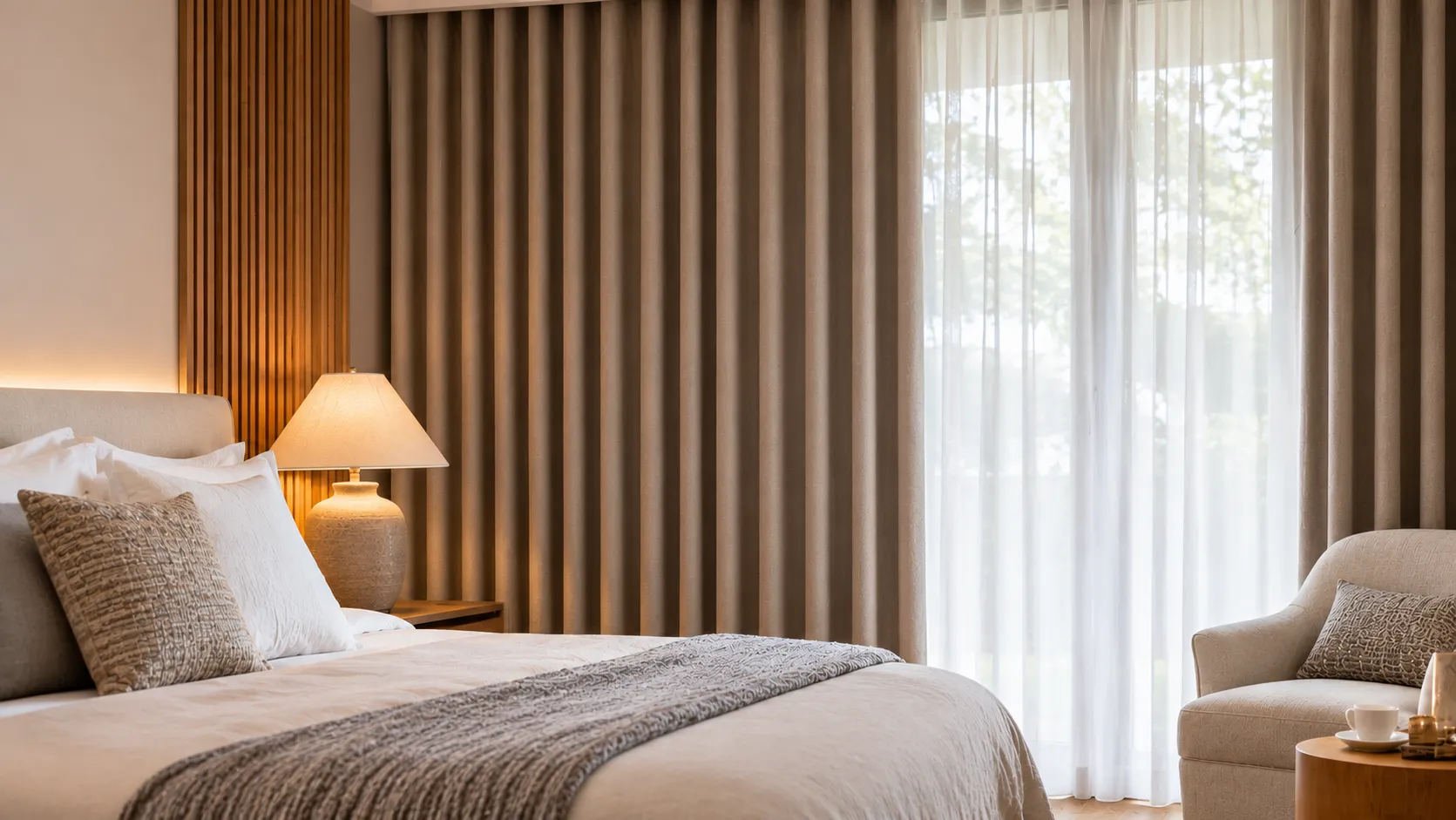
Blackout lining helps block light through the curtain fabric. It is often useful in bedrooms, nurseries, media rooms and spaces where early morning light is disruptive. The result depends on the lining construction, how the curtain is made and how much light enters around the sides, top and bottom. A blackout curtain cannot guarantee a completely dark room if there are gaps around the window.
What thermal lining is designed to do
Thermal lining is designed to help moderate heat transfer through the window treatment. Performance varies by construction, fit, glazing and the conditions outside. A lined curtain may improve comfort, but it is not a substitute for appropriate glazing, ventilation or exterior shading where those are needed. Ask for product-specific performance information if thermal performance is a major purchase criterion.
Compare the practical trade-offs
- Light control: blackout lining is the more direct choice when darkness is the main goal.
- Thermal comfort: choose a lining with clear information about its intended thermal properties and fit it closely enough to limit unwanted gaps.
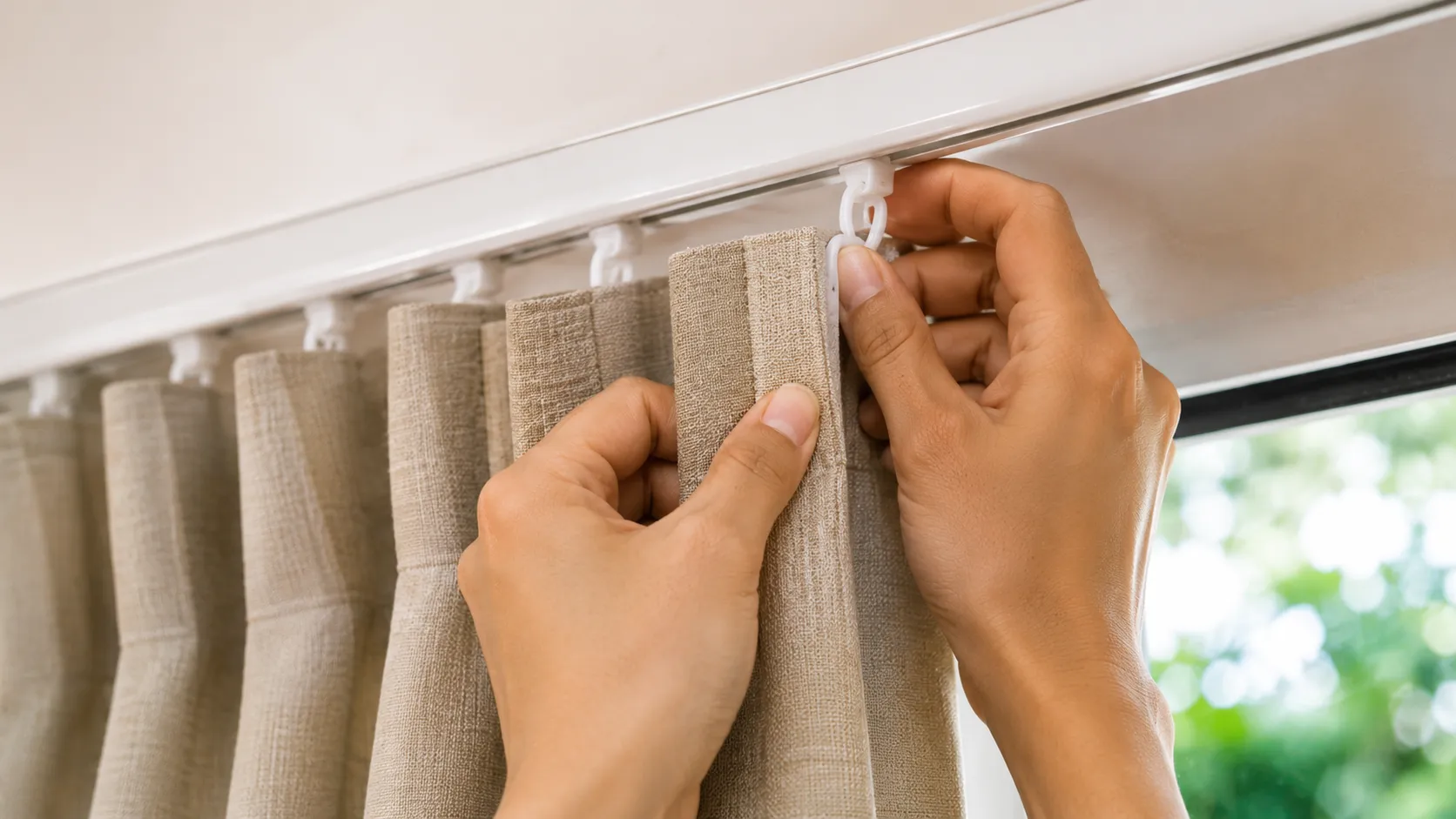
- Weight and drape: additional lining can make curtains heavier and change how folds fall, so the track and heading must support the finished curtain.
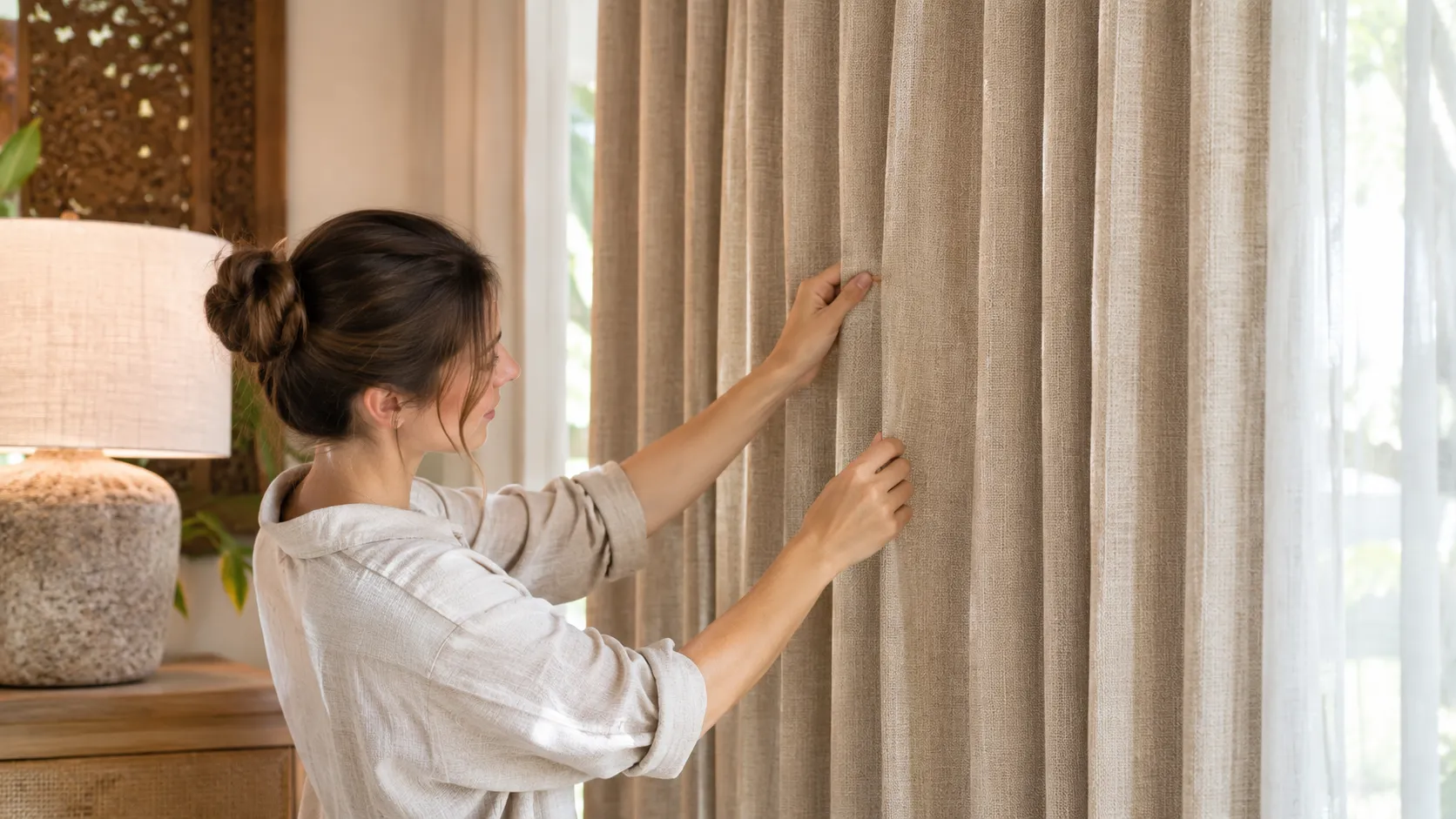
- Appearance: lining can affect the back of the curtain, edge finish and how the face fabric hangs.
- Care: confirm cleaning requirements for the face fabric and lining together, especially for custom or delicate textiles.
Which is more suitable for a tropical home?
Start with the actual problem in the room. For a bedroom where sunrise is the main concern, prioritise light control and minimise gaps. For a west-facing living room that receives strong afternoon sun, assess glare, fabric colour, glazing and shading as well as the lining. In humid areas, consider airflow, condensation, fabric care and whether the curtains will dry properly after cleaning.
Light-coloured curtains may reflect more visible light than darker fabrics, but colour alone does not tell you the full thermal performance of a window treatment. Fabric construction, lining, installation and solar exposure all matter.
Questions to ask before ordering
- Is the lining blackout, thermal or a combination, and what does the product specification say?
- How much will it add to the curtain's weight and stack when open?
- Will the existing track or pole support the finished curtains?
- How will the curtain reduce light gaps at the sides and top?
- What are the cleaning and care instructions?
- Can you see the face fabric and lining together before approving the order?
Common mistakes
Do not assume that “thermal” means blackout or that blackout automatically means a room will stay cool. Do not select a lining without considering track capacity, curtain fullness and the amount of space available when the curtains are open. For large windows, confirm the stack-back so the fabric does not unnecessarily cover the glass.
Frequently asked questions
Can blackout lining also help with heat?
It may influence heat transfer depending on its construction, but blackout describes light control, not a guaranteed thermal rating.
Does thermal lining make a room completely dark?
Not necessarily. Check its light-blocking properties and consider gaps around the curtain.
Can I add lining to existing curtains?
Sometimes, if the fabric, heading and track can support the extra weight. A curtain maker should assess the construction first.
For more on light control, compare our blackout, sheer and dimout fabric guide and blackout versus sunscreen roller blinds. Almeers Living can help match the lining to your room's light-control needs and window conditions.