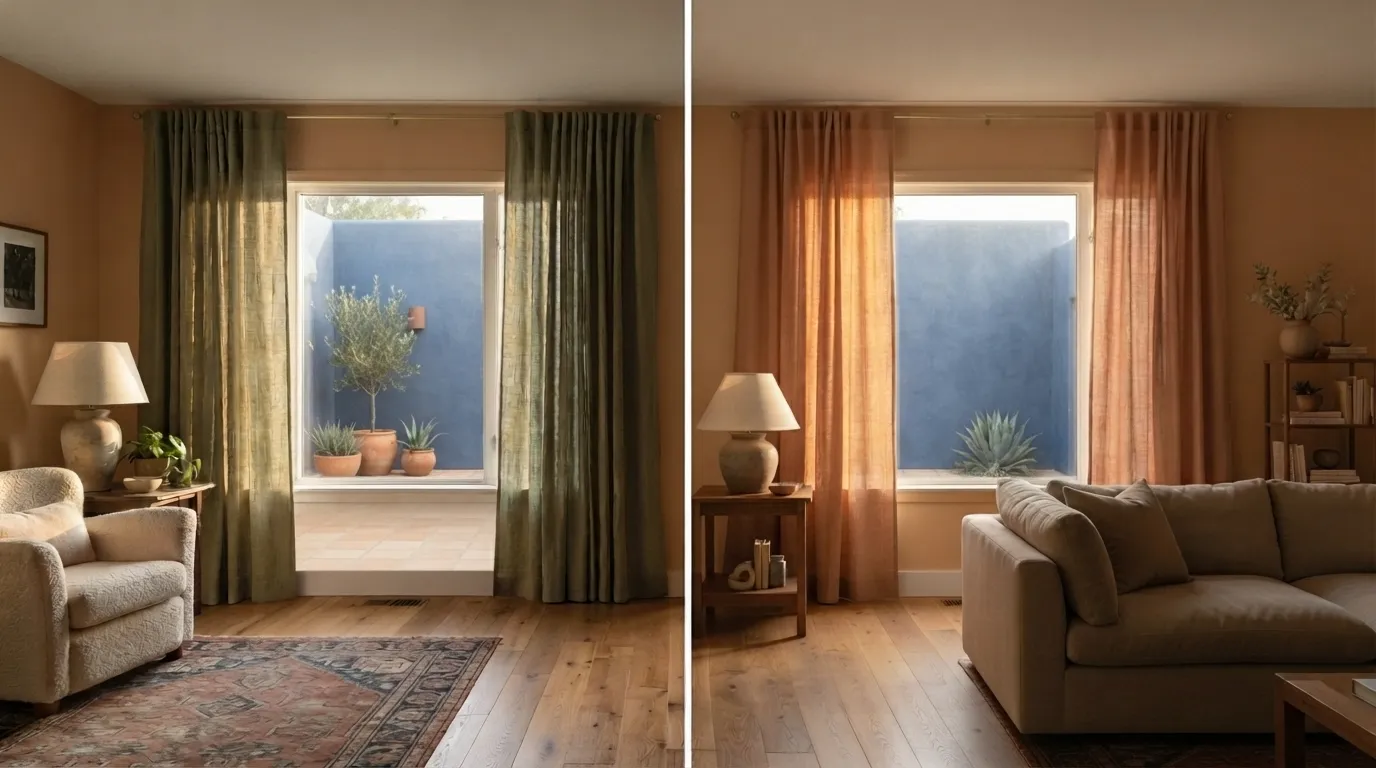
Curtain Colours for East- and West-Facing Rooms: How Daylight Changes Them
A curtain colour can look noticeably different in morning, midday and late-afternoon light. Before choosing fabric, consider which direction the window faces, how direct the sun enters and what other surfaces reflect light into the room. This guide focuses on daylight exposure—not simply matching curtains to wall paint.
East-facing rooms: test in the morning
East-facing windows often receive direct morning sun, with softer or more indirect light later in the day. A warm ivory, sand or oatmeal fabric may appear especially golden when the sun is low. Cooler greys can look more neutral at other times and slightly blue in shade. If the room is used mainly in the morning, assess samples during those hours rather than selecting only at night.
West-facing rooms: test in late afternoon
West-facing windows can receive strong late-afternoon sunlight, which may intensify warm undertones and make some colours appear richer or more saturated. A beige that looks balanced in the morning may seem more yellow or orange near sunset. In these rooms, view samples during the period when glare and heat are most noticeable, and decide whether you want the curtain to blend in or create a calmer visual counterpoint.
North- and south-facing rooms still need testing
Window orientation does not determine colour on its own. Nearby buildings, roof overhangs, trees, glazing tint, room depth and reflected light can change the effect. A shaded room may make a fabric look cooler or darker, while a bright room can wash out subtle differences between close neutrals.
Test a full fabric sample in the actual room
- Place the sample vertically near the window, at roughly the position the curtain will hang.
- View it in the morning, around midday and during late-afternoon light.
- Check it again under the room's evening lights.
- Compare it with the wall, flooring, timber, stone and large upholstery pieces.
- For layered curtains, hold the sheer and main fabric together.
A small swatch held flat in a showroom may not show the shadows and texture of a full curtain. If possible, request a larger sample and view it from the usual seating position as well as close up.
Choose colour based on the room's exposure and purpose
For a calm, tonal scheme, select a fabric whose undertone remains compatible with the room through the day. If the light changes dramatically, a textured neutral can be more forgiving than a very flat colour. For a stronger accent, test whether the colour remains appealing at the time the room is most often used. In a bedroom, also consider opacity and how the fabric looks when daylight shines through it.
Separate colour decisions from performance decisions
A colour sample helps you judge appearance, but it does not tell you how much glare or heat a curtain will manage. For a west-facing room with intense sun, assess lining, fabric construction, curtain coverage and the possibility of exterior shading separately. Choose the colour you like after confirming that the product meets the room's practical needs.
Common mistakes
- Choosing a fabric from a phone screen or catalogue photo alone.
- Testing only at night under artificial lighting.
- Assuming two fabrics with the same colour name have the same undertone.
- Ignoring how the sheer layer changes the look of the main curtain.
- Expecting colour alone to solve glare or heat problems.
Frequently asked questions
Should east- and west-facing rooms use different curtain colours?
They can, but they do not have to. Test the actual fabric in each room because daylight and surrounding finishes may differ.
Why does beige look yellow at sunset?
Warm sunlight can emphasise yellow, red or orange undertones. Compare the sample at different times before deciding whether the effect suits the room.
Can a sheer curtain change the colour of the main curtain?
Yes. Layers overlap visually and alter the amount and quality of light passing through, so always test them together.
For a broader palette overview, read our window-treatment colour inspiration and curtain colour and pattern checklist. Almeers Living can arrange fabric samples so you can compare them in the room's real daylight.