Curtains for Sustainable Luxury Hotels: What to Expect Next
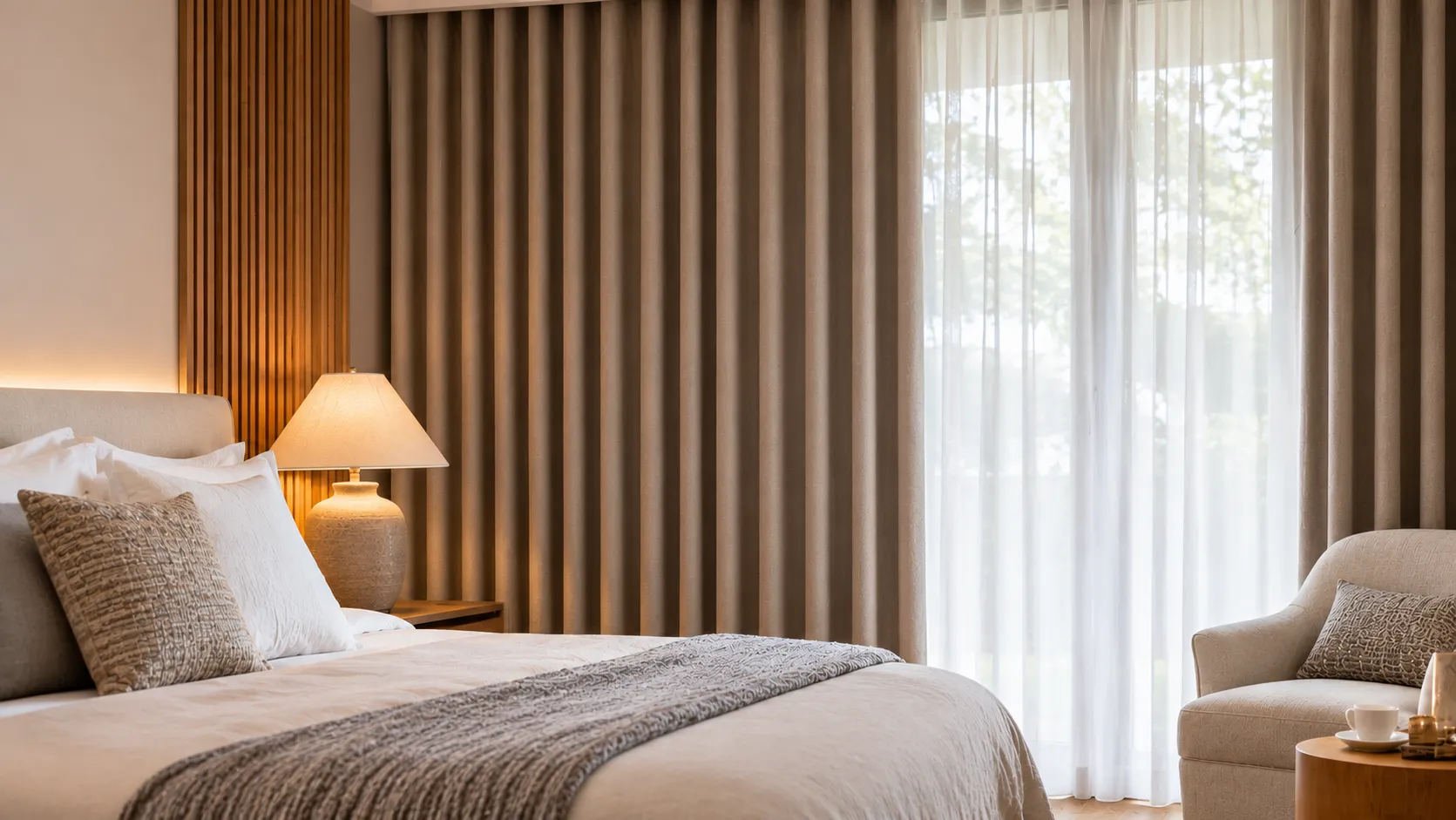
Sustainable luxury hotel curtains should do several jobs at once: support the design concept, help guests sleep comfortably, stand up to repeated cleaning and remain serviceable over the property’s operating life. A fabric described as natural or eco-friendly is not automatically the best option. The useful decision is the one that considers material, performance, maintenance, replacement cycles and the supplier’s ability to provide consistent specifications.
Start with the Hotel’s Operating Needs
Before selecting a fabric, define the room type, window size, exposure to sunlight, privacy needs, cleaning frequency and expected occupancy. Guest rooms may require blackout performance, while restaurants and lounges may benefit more from filtered daylight and a softer visual finish. Public areas also need a realistic plan for dust, stains and access for maintenance.
Assess Materials Beyond the Label
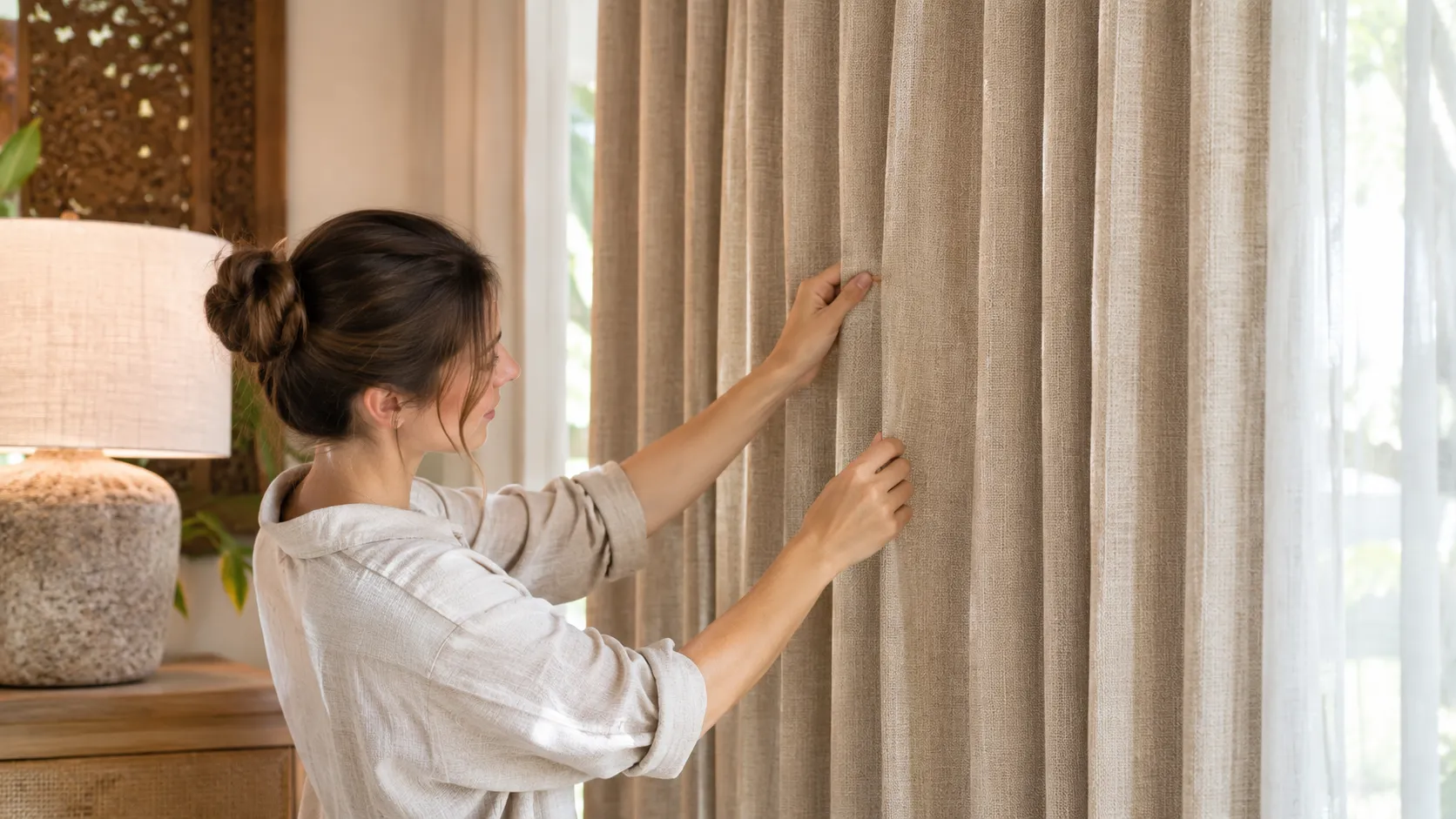
Linen, cotton, recycled fibres and performance blends can all have a place in a considered specification. Compare fibre content, durability, colourfastness, cleaning instructions and availability of replacement fabric. Ask suppliers for documentation behind environmental claims instead of treating a broad label as proof of lower impact.
Natural fibres can provide an appealing tactile quality, but they may wrinkle, shrink or respond differently to moisture and cleaning. Blends and engineered fabrics may offer more consistent performance in high-use spaces. The correct choice depends on the hotel’s design goals and operating conditions.
Specify Light Control by Room Type
For guest bedrooms, a blackout curtain or a well-designed layered treatment can support darkness and privacy. A separate sheer layer gives guests more control during the day. In lobbies and dining spaces, a sheer or dimout solution may be enough if strong sunlight and glare are managed appropriately.
See our guide to blackout, dimout and sheer fabrics and the layered window treatment guide for practical comparisons.
Durability Is Part of Sustainability
A curtain that needs frequent replacement can create more cost and material waste than a well-chosen, maintainable product. Check abrasion performance where relevant, seam quality, lining compatibility, track capacity and whether components can be repaired or replaced separately. Keep a record of fabric codes, dye lots, measurements and installation details for future maintenance.
Plan for Cleaning and Humidity
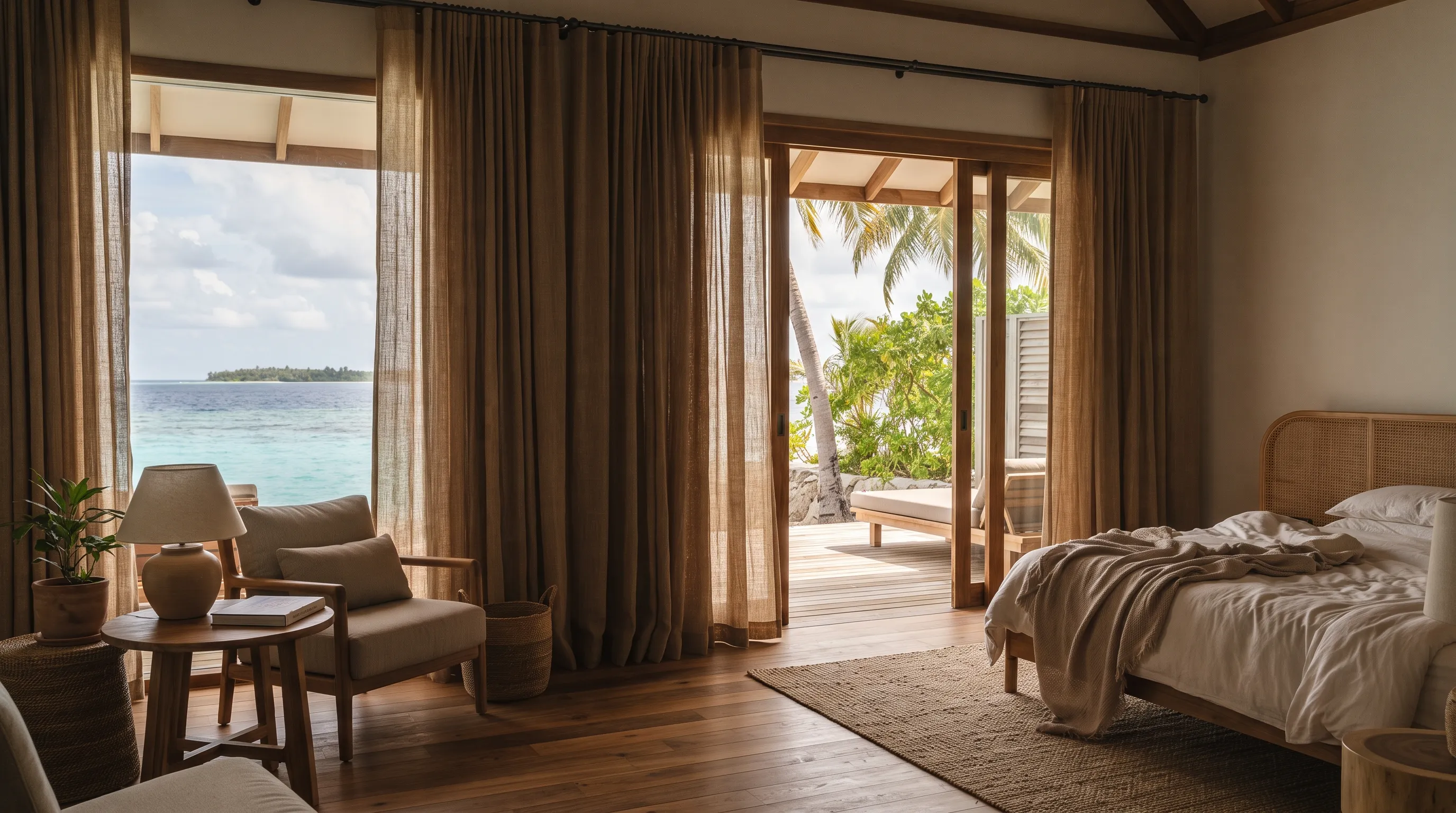
In tropical locations such as Bali, specify a realistic cleaning schedule and make sure the selected fabric can tolerate the intended care method. Good ventilation, prompt attention to moisture and routine inspection help protect both fabric and hardware. Avoid promising that a fabric alone will prevent mould or eliminate allergens.
Consider the Full Window Treatment
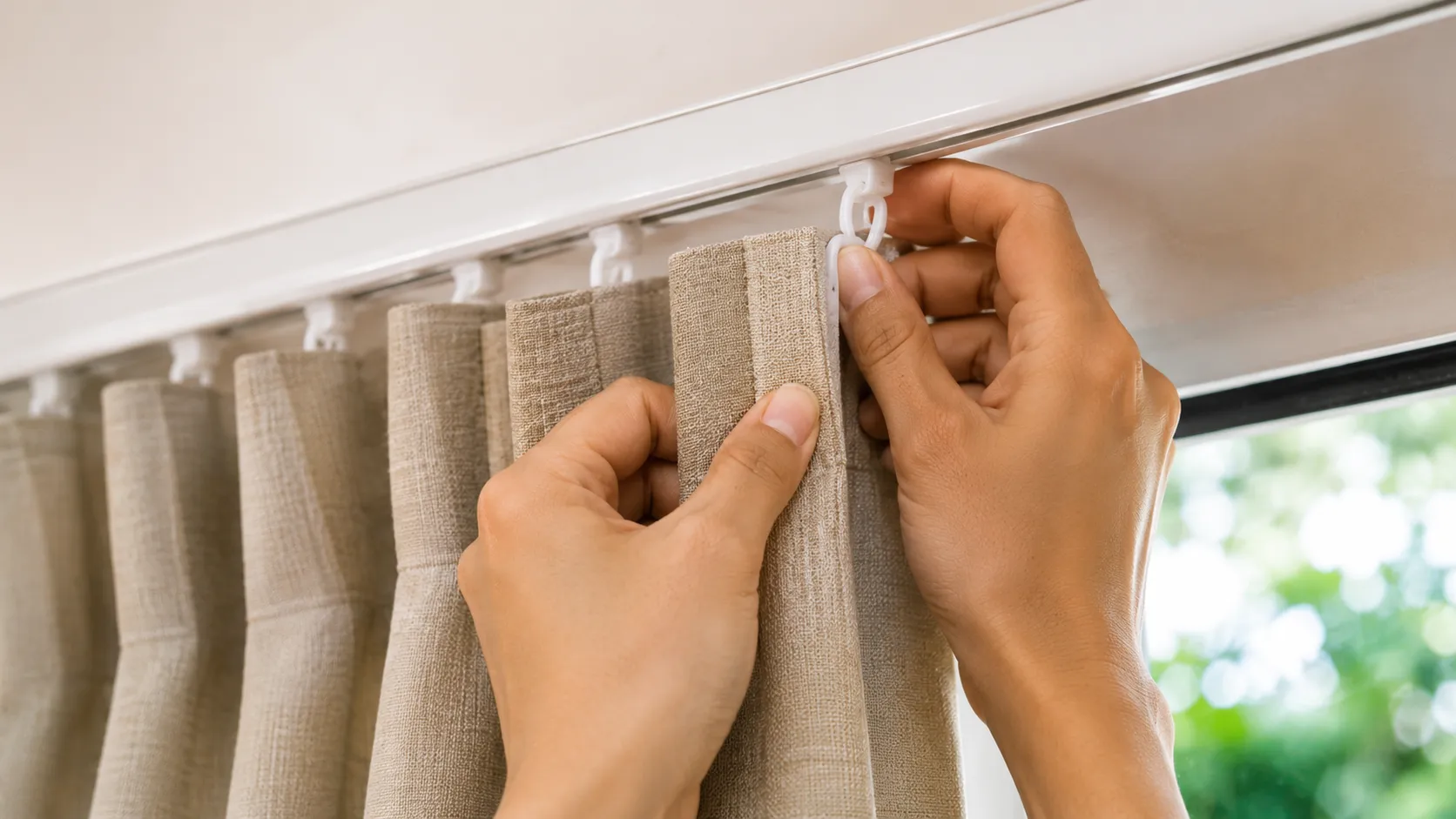
Fabric is only one part of the specification. Tracks, brackets, linings, headings, fullness and installation quality affect service life and ease of use. For large or high windows, consider access for cleaning and future repairs before choosing a heavy treatment or a complicated motorized system.
Questions to Ask a Supplier
- What is the exact fibre composition and what documentation supports any sustainability claims?
- What cleaning method is approved, and how could cleaning affect colour or dimensions?
- Can matching fabric and hardware be reordered later?
- Are linings, tracks and other components replaceable independently?
- How will blackout, privacy and daylight requirements be checked after installation?
Build a Specification That Can Be Maintained
For a hotel or villa project, begin with a room schedule, sample approval, measured openings and a clear performance brief. Confirm the final fabric, lining, heading, track and installation method before production. This reduces costly variation between rooms and makes future replacement easier.
Explore our guide to window treatments for luxury tropical properties for broader planning considerations. For a hospitality project, Almeers Living can discuss fabric samples, measurement and a tailored quotation based on the property’s requirements.