Mastering Luxury Window Treatments: The Crucial Difference Between Roman Shades and Roman Bars
In the highly specialized world of luxury interior design and architectural planning, precision in terminology is not just a matter of semantics—it is the foundation of a flawless execution. When discussing sophisticated window treatments, clients, contractors, and even some designers often use terms interchangeably. This lack of clarity can lead to costly manufacturing errors and mismatched aesthetic expectations. Today, we are breaking down the critical technical distinction between Roman Shades and Roman Bars, ensuring your next project in Bali achieves absolute perfection.
Defining the Roman Shade: The Aesthetic Surface
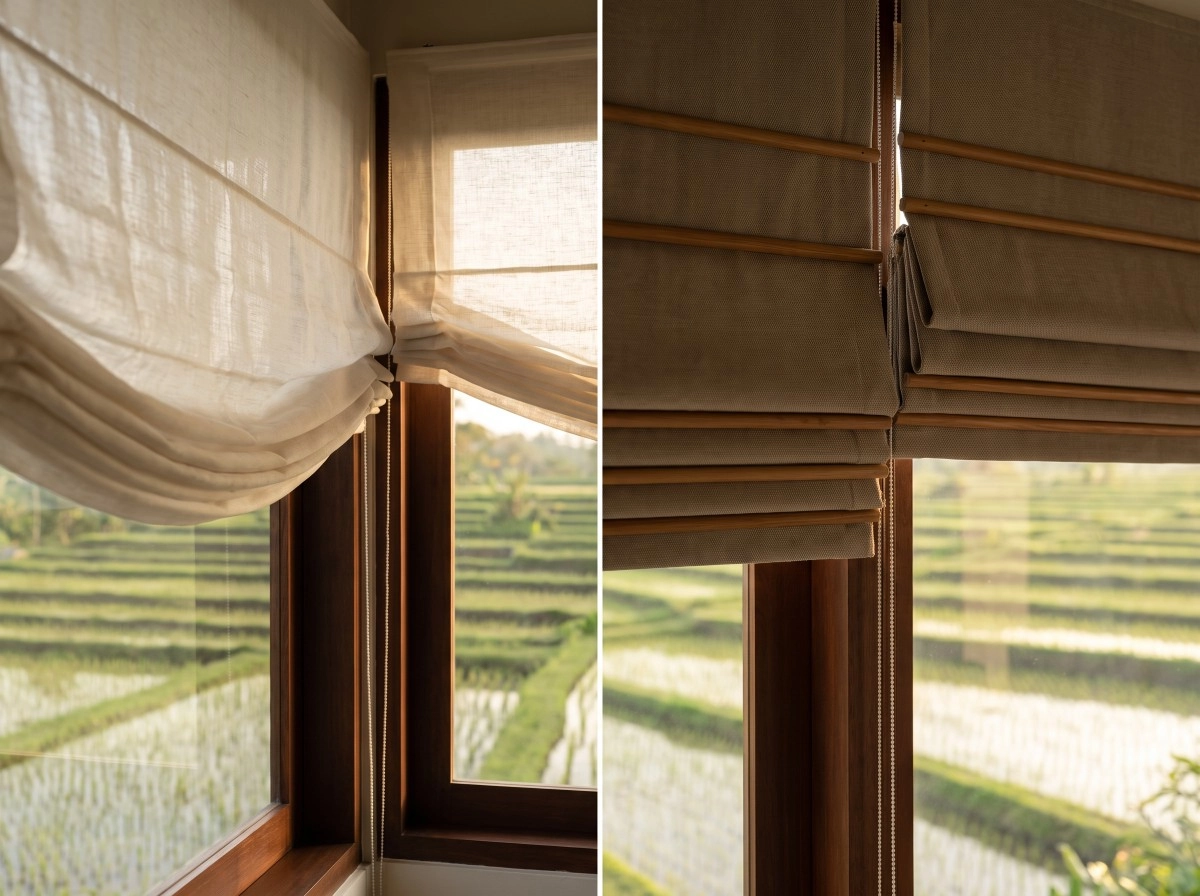
When we use the term Roman Shades, we are referring to the broad category of the window covering itself. This encompasses the entire finished product that you see hanging in a room. The defining characteristic of a Roman Shade is a continuous panel of fabric that, when raised, stacks evenly into elegant, horizontal folds, rather than rolling up around a tube like a standard roller blind.
The conversation around Roman Shades is inherently focused on the soft furnishings aspect of the treatment. This involves:
- Fabric Selection: Whether choosing a relaxed, organic linen that gently diffuses light, or a tightly woven, heavy textile designed for maximum privacy.
- The Drape and Texture: How the fabric behaves visually. Does it have a natural slub? Does it cascade softly, or does it hold a rigid shape?
- Lining and Finishing: The application of secondary backing fabrics, such as thermal linings or true blackout layers (where zero light penetrates the material), to enhance the shade's functionality.
Defining the Roman Bar: The Structural Backbone
Conversely, Roman Bars (also known as battens or ribs) refer to the specific, internal structural hardware that dictates how the fabric behaves. You cannot have a crisp, modern Roman Shade without the precise engineering of Roman Bars.
These bars are horizontal rods—typically crafted from lightweight aluminum, fiberglass, or specialized polymers—that are inserted into sewn pockets across the back (or sometimes the front) of the shade fabric. The Roman Bar system is the mechanical skeleton of the window treatment. Its primary functions include:
- Forcing a Perfect Crease: The bars dictate exactly where the fabric will fold when the operating chain or motorized system is engaged. This ensures a rigidly straight, uniform stack every single time the blind is raised.
- Providing Structural Integrity: For wide windows commonly found in modern villas, fabric alone will sag in the middle. Roman Bars provide the necessary horizontal tension to keep the fabric taut and perfectly aligned with the window frame.
- Smooth Mechanical Operation: The rings or cord guides used to pull the blind up are directly attached to or aligned with these bars, ensuring the lifting force is distributed evenly across the width of the treatment.
Why This Technical Distinction Matters
Understanding the difference between the shade and the bar is crucial when specifying products for high-end developments. If a client desires a soft, romantic, "relaxed" look with a slight curve at the bottom, the manufacturer will omit rigid Roman Bars in the lower sections. However, if the architectural brief calls for a sharp, contemporary "flat-fold" or "hard-fold" aesthetic, a precise Roman Bar system is non-negotiable.
Furthermore, from an installation perspective, the depth of the window recess must accommodate the specific thickness of the chosen Roman Bar system to ensure the shade sits perfectly flush with the wall.
Styling Your Roman Systems: The Minimalist Approach
To truly highlight the sophisticated engineering of Roman Bars and the luxurious texture of your Roman Shades, the surrounding interior styling must be deliberate. The current standard in high-end design favors ultra-minimalism.
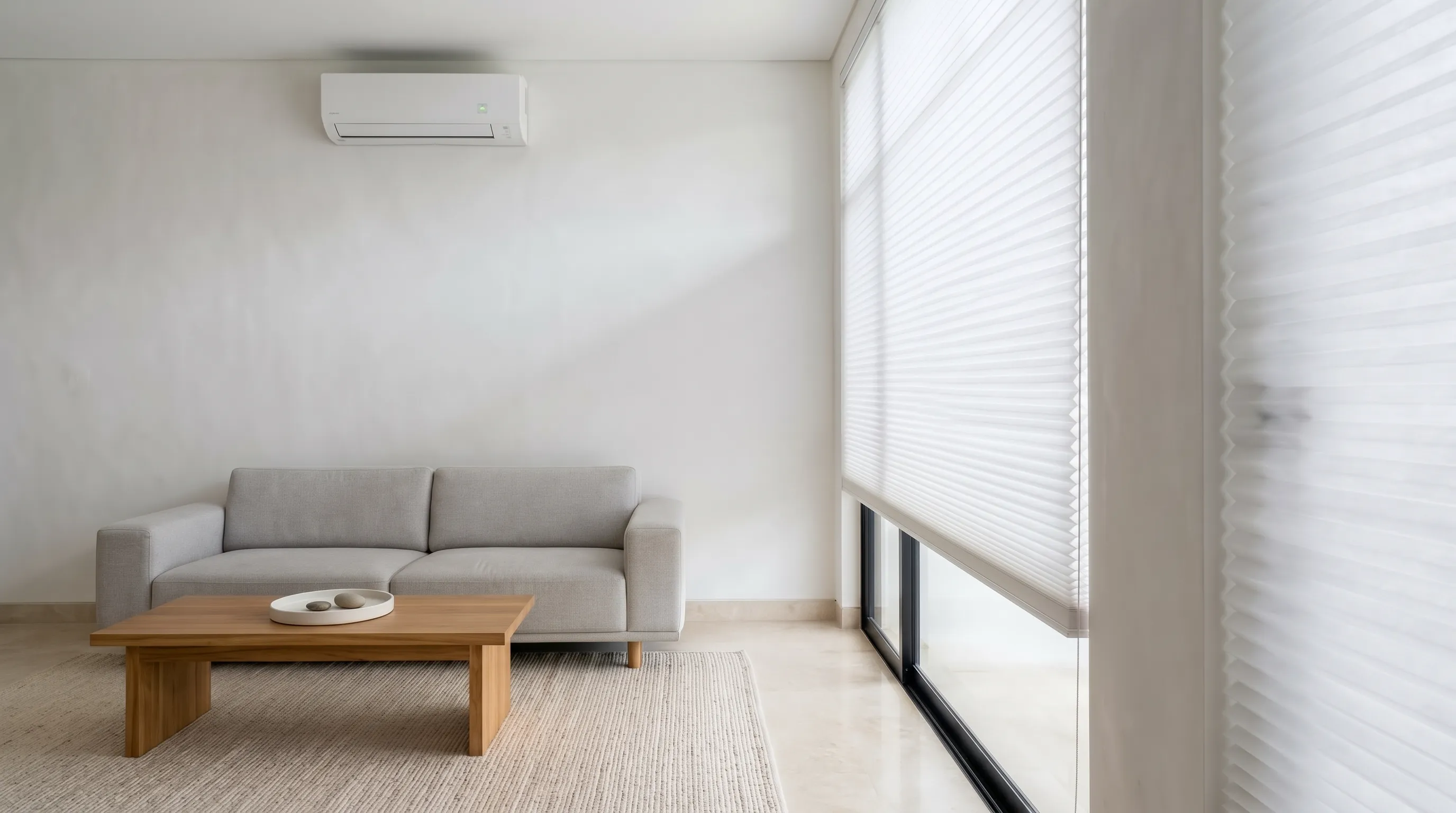
When planning your space, allow the window treatment to be the undisputed hero of that architectural plane. We strongly recommend removing distracting decorative elements from the immediate vicinity of the window. Taking away standing lamps, accent chairs, or excessive ornamental objects ensures that the visual focus remains strictly on the crisp lines and flawless operation of the blinds. This product-first aesthetic creates a sense of elevated calm and expansive space.
Expert Engineering with Almeers Living
Achieving the perfect balance between the soft aesthetic of a shade and the rigorous engineering of a bar system requires master craftsmanship. At Almeers Living, we meticulously design both the visible textiles and the hidden structural mechanics to ensure a lifetime of flawless operation.
Whether you are designing a contemporary commercial space or a luxury villa in Denpasar, contact Almeers Living today to specify the exact window treatment systems your architecture demands.