
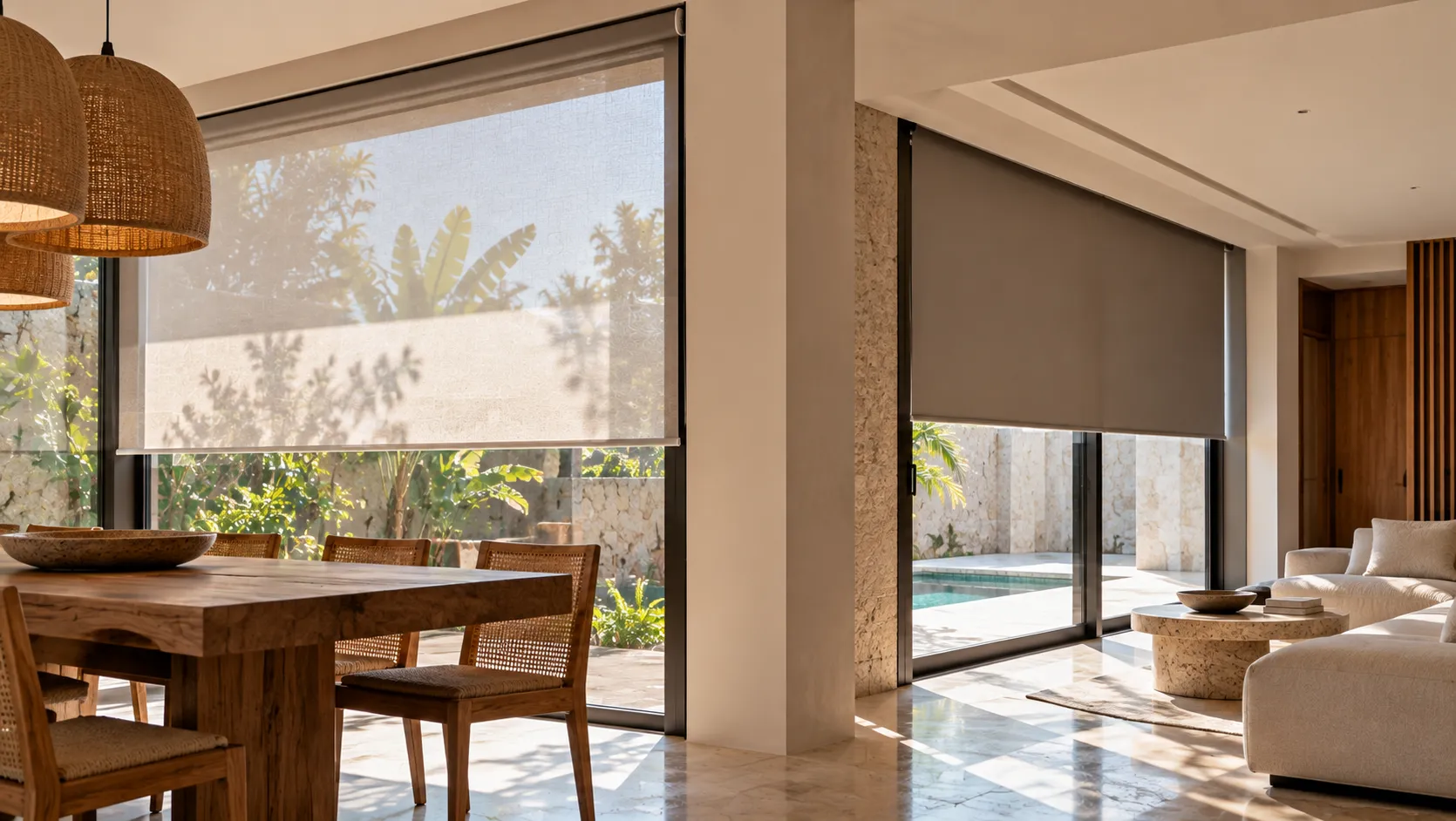
Dual-layered Blinds for Versatility: What Designers Are Choosing Now
Dual-layered blinds are designed to provide two levels of control within one coordinated window treatment. This can be useful when a room needs soft daylight at one time and stronger privacy or glare control at another.
How Do Dual-Layered Blinds Work?
The exact construction varies, but the principle is simple: two blind layers provide different performance levels. One may filter daylight while the second provides stronger screening or light reduction.
Why Use Two Layers?
- Better control of daytime glare.
- Flexible privacy throughout the day.
- Less need to choose between openness and coverage.
- A coordinated appearance from the same window system.
Where Are They Most Useful?
Bedrooms can benefit from a combination that allows soft morning light while providing stronger privacy later. Living rooms with large glazing can use the layers to manage changing sunlight without making the room permanently dark.
Dual-Layered Blinds vs Curtains
Blinds can provide a cleaner and more precise window appearance, while curtains add softness, verticality and a larger textile presence. In some projects, combining blinds with curtains provides the best balance.
Our layered window treatment guide explains the broader approach.
Specify the System Around the Window
Consider recess depth, handle clearance, opening direction, window size and access for operation. A technically suitable blind can still be inconvenient if the installation interferes with handles or ventilation.
Final Takeaway
Dual-layered blinds are valuable when one level of coverage cannot meet the room's changing needs. They provide a practical middle ground between openness, privacy and light control.