Gorden untuk Pintu Geser Kaca (Vila/Hotel): What to Know Before You Choose
In modern luxury villa architecture and high-end resort design across Bali—from the chic coastal enclaves of Canggu, Seminyak, and Umalas to the lush jungle valleys of Ubud and dramatic clifftop estates in Uluwatu—expansive glass sliding doors are the defining feature of tropical open-plan living. These massive sliding spans connect air-conditioned interior lounges seamlessly with infinity pools, outdoor timber decks, and tropical gardens. However, outfitting expansive glass sliding doors with functional window coverings introduces complex architectural, mechanical, and environmental challenges. Property developers, hotel operators, and villa owners frequently search for definitive guidance on curtains for glass sliding doors in villas and hotels (gorden untuk pintu geser kaca: what to know before you choose) to strike the perfect balance between seamless access, solar heat rejection, and uncompromised aesthetic luxury.
Selecting draperies for wide glass sliders involves far more than picking fabric colors. It demands an integrated engineering approach: calculating precise fabric stack-back allowances so pulled-back panels do not block active door openings, engineering heavy-duty dual tracks that withstand coastal wind loads, specifying non-toxic anti-mold textiles, and integrating whisper-quiet smart motorization. In this comprehensive editorial guide, we break down essential pre-selection checklists, spatial tolerances, and tropical climate performance metrics to help you design a resort-grade entrance.
1. Understanding the Architectural Challenges of Glass Sliding Doors
Glass sliding doors present unique operational requirements compared to standard fixed bedroom windows. Understanding these structural dynamics prevents costly post-installation headaches:
- High-Frequency Physical Access: Sliding doors serve as primary pedestrian walkways between indoor living rooms and outdoor pool terraces. Window treatments must open smoothly without catching on door handles, floor tracks, or frame latches.
- High Thermal Heat Gain & Solar Glare: Expansive glass panes act as thermal conductors, allowing direct equatorial solar radiation to heat indoor living zones rapidly. Uninsulated glass forces split-unit air conditioning systems to operate continuously at high capacity.
- Wind Load Exposure & Fabric Movement: Opening large sliding glass panels exposes indoor draperies to sudden coastal ocean gusts. Lightweight or improperly weighted curtains can billow uncontrollably into outdoor pool areas or catch on sliding door frames.
2. Key Factor 1: Precision Fabric Stack-Back Calculations
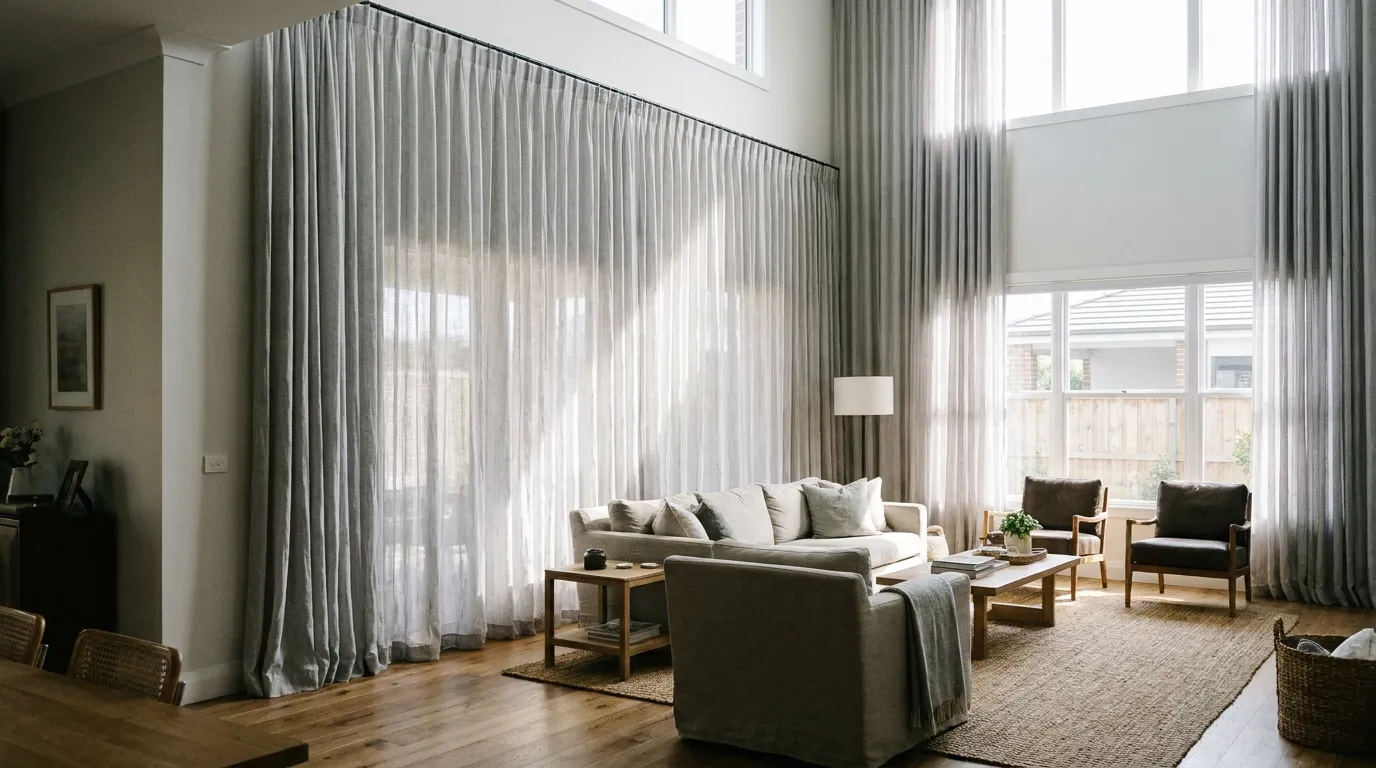
The single most critical spatial error in sliding door drapery design is underestimating fabric stack-back—the total physical width that drawn curtain panels occupy when fully opened. If track channels do not extend far enough past the glass frame onto adjacent masonry walls, stacked drapery panels will overlap active glass doors, restricting physical walkway clearance and blocking garden views.
- Calculating Stack Space (30% Rule): As a general architectural rule, S-fold (ripplefold) curtain panels require roughly 30% of the total window width in stack-back space. For example, a 4-meter wide sliding door span requires an additional 60 cm of track extension on each side (or 120 cm on one side for single-one-way draws) to park fabric completely clear of the glass opening.
- One-Way Draw vs. Center Split (Two-Way Draw): For sliding doors that open from one side only, specify a one-way draw track that parks all fabric on the fixed glass side. For multi-panel telescopic sliding doors, a center-split double draw balances symmetry while keeping walkways unobstructed. Architects and project managers can calculate exact fabric stack allowances using our digital stacking calculator.
3. Key Factor 2: Dual-Track Layering for Day-to-Night Versatility
To achieve total 24-hour environmental control across wide sliding doors, luxury villas and boutique hotels rely on double-track drapery configurations:
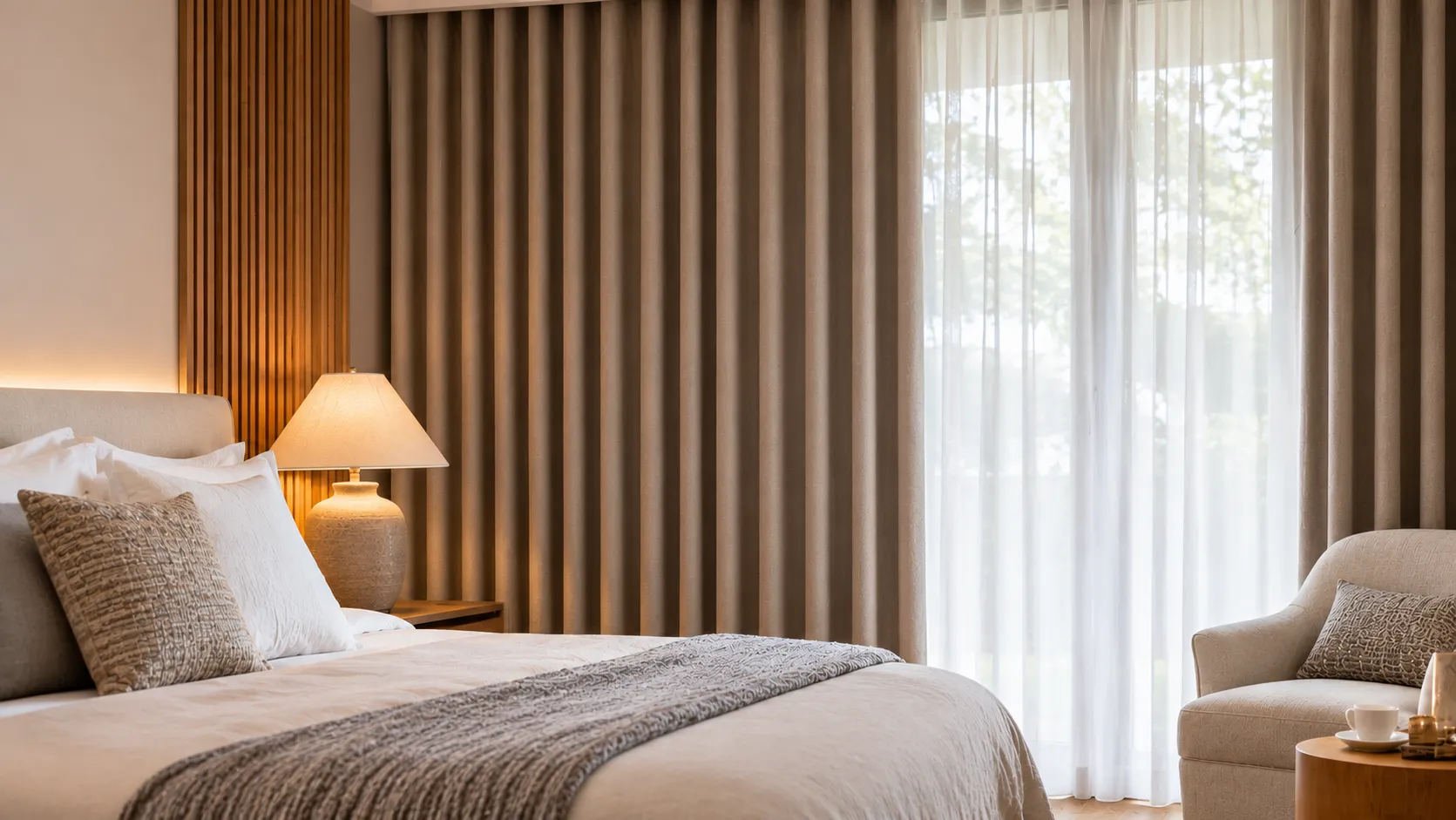
- Daytime Layer (Translucent Sheer Voiles): Positioned on the track closest to the room interior, lightweight slubbed linen sheers or synthetic voiles filter harsh sun glare into a soft ambient glow, maintain daytime privacy, and allow sea breezes to circulate while keeping insects out (explore fabric swatches starting at Rp 60.000/m on our products page).
- Nighttime & Thermal Layer (100% Coated Blackout): Positioned on the secondary track, dense multi-pass acrylic coated blackout drapes block 100% of light transmission, seal out evening pool glare, absorb room acoustic echo, and reflect radiant heat outward (starting at Rp 60.000/m to Rp 110.000/m).
4. Key Factor 3: Ceiling Recess Mounting and Pelmet Pocket Design
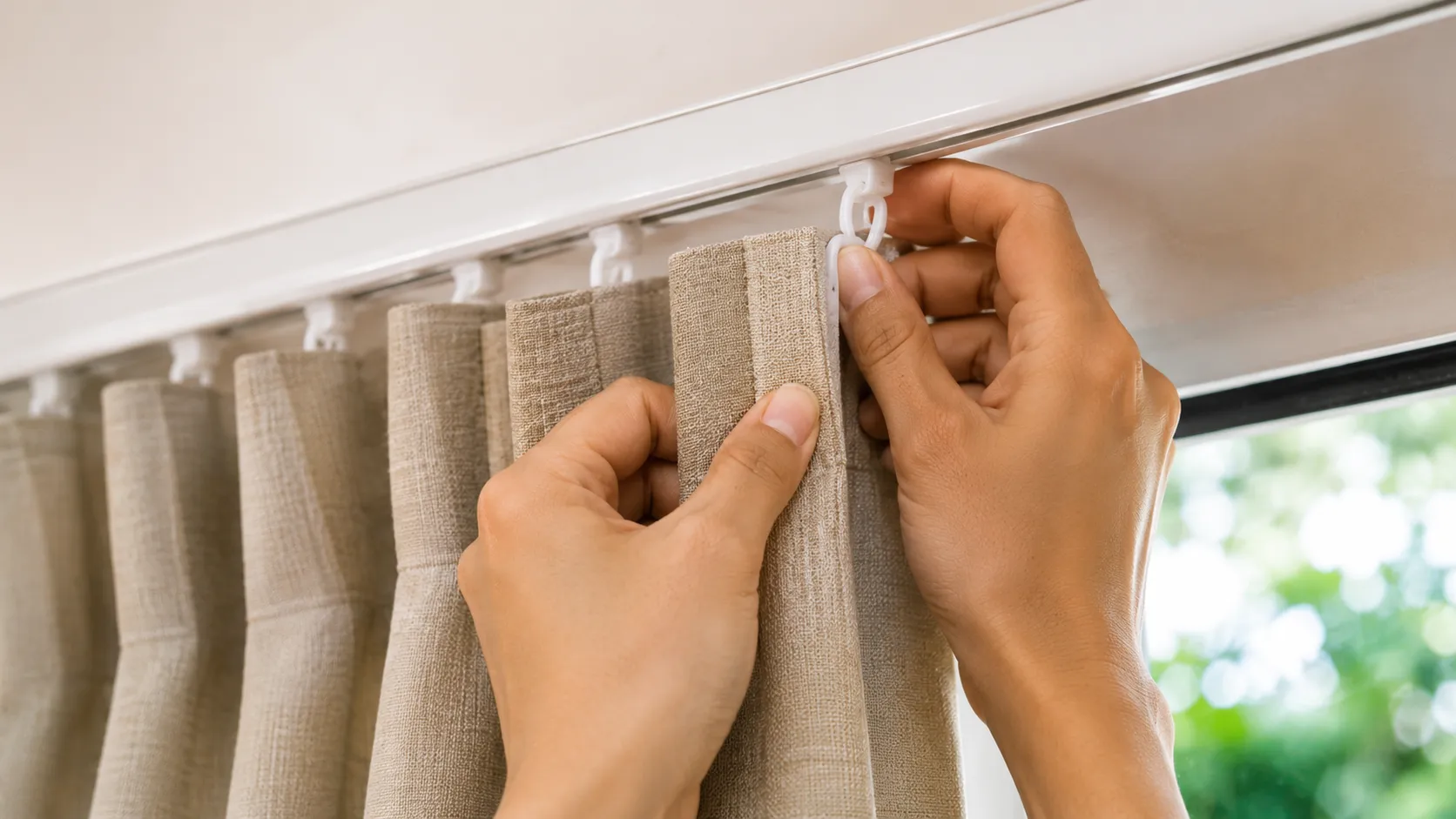
In modern minimalist, Japandi, and contemporary tropical villa architecture, visible tracks and mounting brackets disrupt clean interior lines. Interior architects insist on **ceiling recess mounting**, embedding heavy-duty aluminum tracks flush inside concealed ceiling pelmet pockets built during early framing phases:
- Pelmet Pocket Width Dimensions: A double S-fold (ripplefold) drapery system installed over wide sliding doors requires a minimum internal pelmet pocket width of **20 cm to 25 cm**. This provides sufficient lateral clearance for both 2.0x fullness wave layers to glide smoothly without rubbing against gypsum drywall boundaries.
- Pelmet Pocket Depth Dimensions: Pelmet cavities should be framed with a depth of **10 cm to 15 cm** to conceal track channels, master gliders, motor drives, and curtain heading tapes completely from eye-level view. Complete spatial tolerances can be reviewed on our valances and cornices measuring guide.
5. Key Factor 4: Floor Clearance Protocols and Heavy Lead Bottom Weights
Achieving clean, tailored drop lines across wide sliding spans requires enforcing precise floor clearance and hem weighting standards:
- The 1 cm Hover Clearance Standard: Always measure vertical drop from track glider eyelets down to finished floor surfaces at multiple points across the opening. Tailor sliding door curtains to hover exactly **1 cm above the floor**. This prevents bottom hems from dragging across floor tracks, collecting dirt, or absorbing water during routine terrace cleaning. Step-by-step measurement protocols can be verified on our curtain measuring guide and dedicated shade measuring guide.
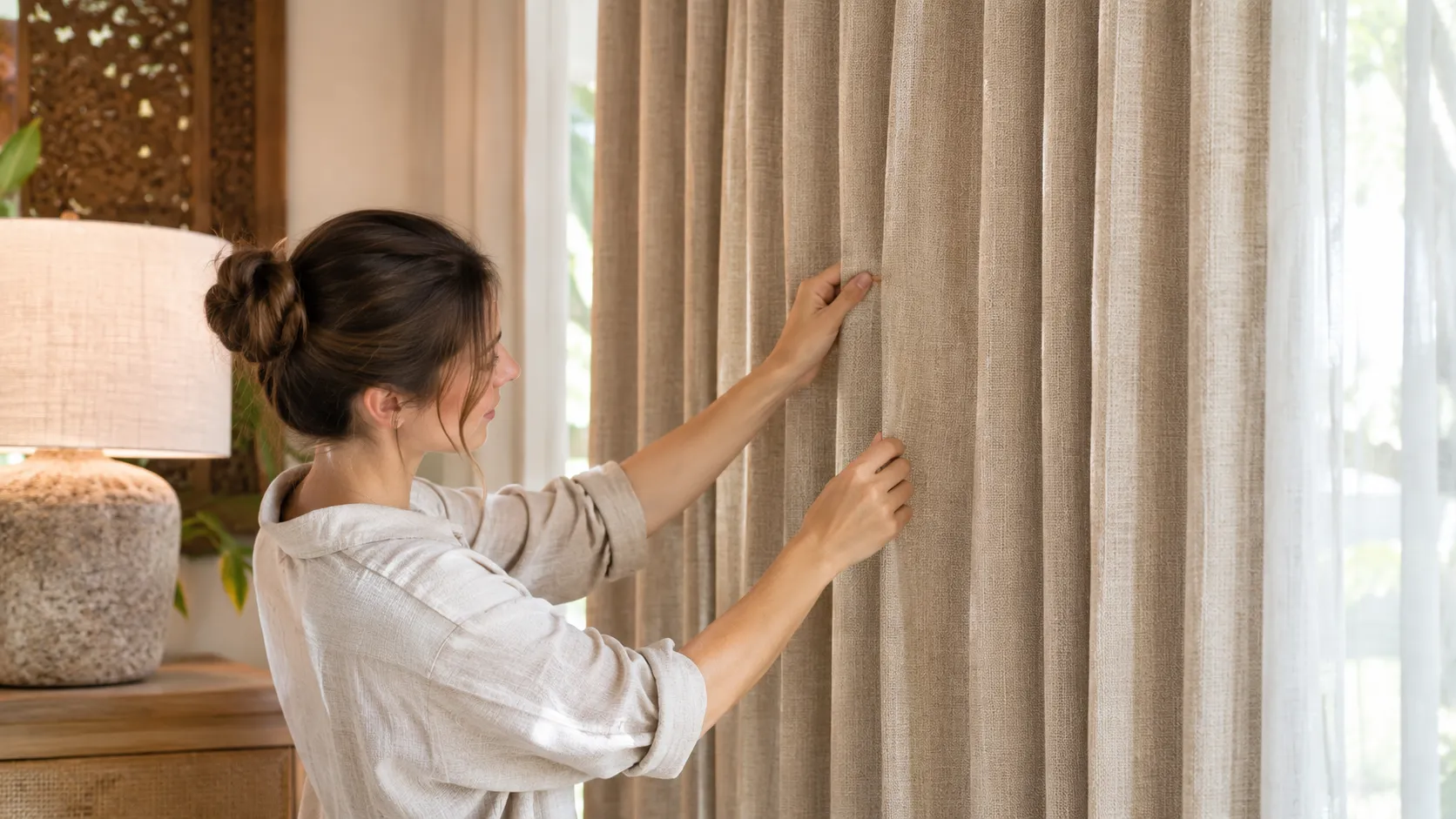
- Heavy Continuous Lead Tape Hems: To prevent light ocean winds from blowing sheer drapes outward into sliding door mechanisms, high-performance draperies utilize heavy continuous lead weight tapes encased inside bottom hems, maintaining straight, vertical S-waves at all times.
6. Key Factor 5: Tropical Climate Resilience and Anti-Mold Defense
In Bali humid tropical environment, open sliding doors allow humid outdoor air to enter air-conditioned interior lounges. This temperature contrast creates heavy condensation along sliding glass frames and lower door tracks. Untreated drapery fabrics hanging near sliding glass absorb dampness, leading to dark mildew spots, fiber rotting, and unpleasant damp odors.
To preserve long-term fabric cleanliness and indoor hygiene, high-performance draperies supplied by Almeers Living feature advanced **Anti-Mold** (anti-jamur) technology. This specialized antimicrobial treatment creates an active hydrophobic shield that repels moisture droplets, preventing fungal spore germination and keeping your villa draperies clean, allergen-free, and pristine season after season.
7. Key Factor 6: Smart Motorization for Wide Sliding Glass Doors
Manually drawing heavy, multi-layer draperies across 5-meter to 8-meter wide villa sliding spans can be cumbersome for guests and house staff. Upgrading sliding door curtains to a motorized track system powered by whisper-quiet DC actuators offers ultimate resort convenience.
Motorized tracks integrate seamlessly with touch remotes, wall keypads, smartphone apps, and smart home systems like Apple HomeKit, Google Assistant, Amazon Alexa, and Control4. Automated solar scheduling closes blackout drapes during peak afternoon heat hours (11:00 AM – 3:00 PM), maintaining cool indoor temperatures passively before guests return from beach excursions.
8. Elevate Your Villa and Hotel Projects with Almeers Living
Outfitting glass sliding doors in luxury villas and hospitality properties requires combining spatial planning, heavy-duty mechanical engineering, and climate-resilient fabric tailoring. Partnering with an experienced local specialist guarantees precise stack-back calculations, seamless ceiling recess integration, and long-term operational durability. As a recognized premier window treatment specialist in Bali, Almeers Living offers complete turnkey execution—from complimentary laser site surveys and custom fabric sampling to professional motorized installation across the island.
Transform your resort or villa property into a seamless indoor-outdoor sanctuary today. Browse our full range of custom drapery collections, dual-track hardware, and automated sliding door systems on our products page to schedule your personalized on-site consultation with Bali’s trusted window experts.