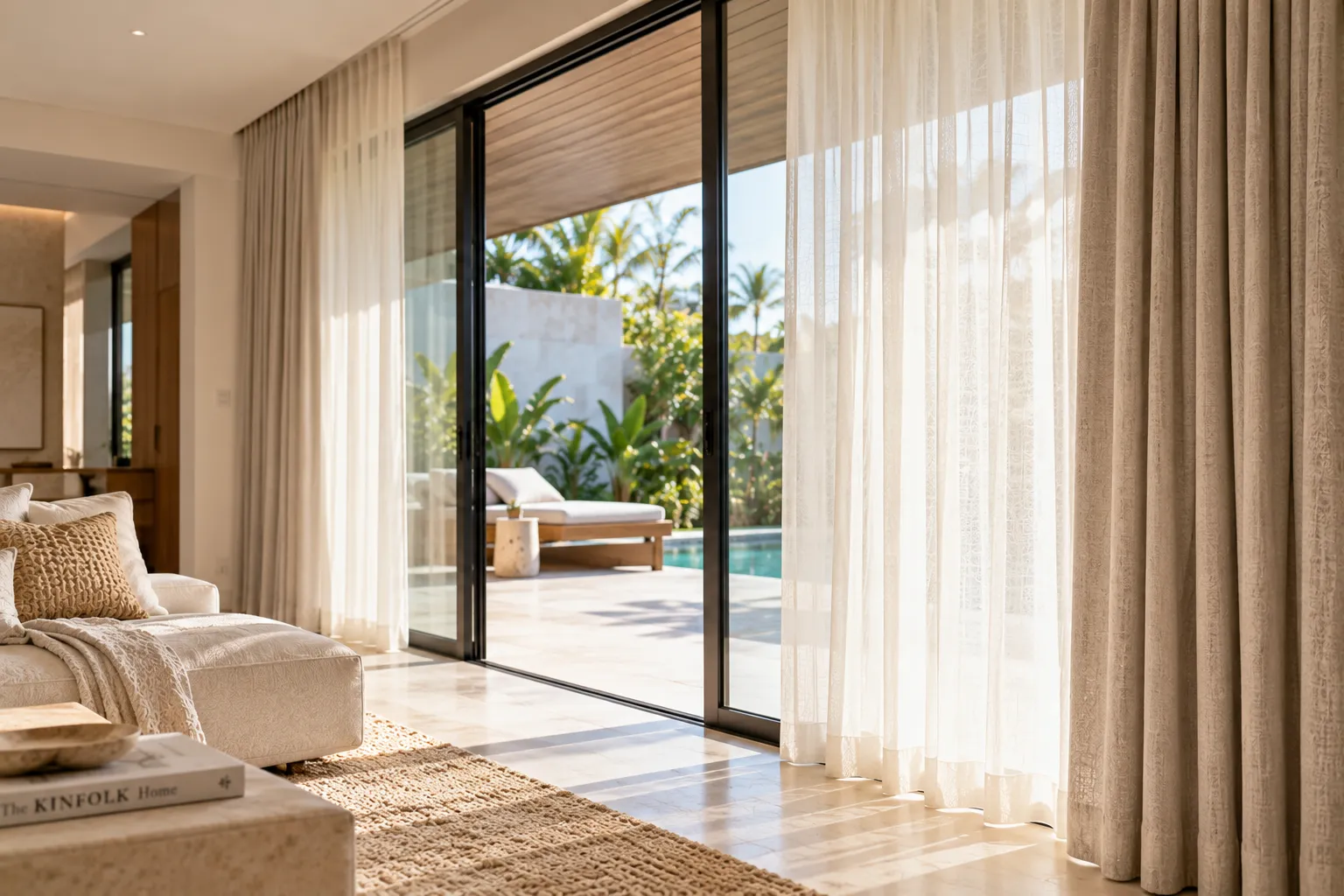

Guide to Custom Drapery: A Smarter Way to Choose
Custom drapery is not simply ready-made curtains made in a different size. It is a complete specification built around the opening, fabric, fullness, heading, lining, hardware and installation conditions of the property.
What Makes Drapery Custom?
A custom system can be developed around exact dimensions and project requirements. This may include finished width and drop, fabric, lining, fullness, heading, track or rod, panel configuration and operating method.
| Specification | Why it matters |
|---|---|
| Measurement | Determines finished proportions and coverage. |
| Fabric | Controls appearance, drape and maintenance requirements. |
| Lining | Can change light control, privacy and fabric behaviour. |
| Fullness | Controls folds, fabric quantity and finished weight. |
| Heading | Affects the visual rhythm and hardware connection. |
| Hardware | Must carry and operate the finished treatment. |
Step 1: Understand the Opening
Record the opening type, width, height, ceiling condition, wall returns, handles, furniture and access. Large glazing and sliding doors need additional attention to stacking and movement.
Step 2: Select the Face Fabric
Consider weave, weight, transparency, colour, pattern repeat and maintenance. A fabric that looks attractive in a sample may behave differently when made into a wide, full-height curtain.
Step 3: Select the Lining
Choose lining according to the required privacy, light control and fabric protection. The lining should be evaluated together with the face fabric and finished weight.
Step 4: Determine Fullness
Fullness affects the number and depth of folds. The correct level depends on fabric construction, heading, opening width and desired appearance rather than a single universal ratio.
Step 5: Select the Heading
Ripple fold, pinch pleat and other heading systems create different visual results and have different hardware requirements. The heading should be finalised with the track or rod.
Step 6: Plan Hardware
Hardware should reflect the finished curtain weight, span, opening type and operating method. Wide or motorized installations need careful planning of fixing points and track capacity.
Step 7: Plan Installation
Installation determines the final position, alignment and operation of the treatment. Check fixing substrate, ceiling condition, access, floor clearance and stack-back before production is completed.
Custom Drapery for Bali Villas
Bali villas often combine floor-to-ceiling glass, large sliding doors, high ceilings and indoor-outdoor living. Custom drapery can be planned around those architectural conditions rather than forcing the opening into a standard panel size.
When Custom Drapery Is Especially Useful
- Floor-to-ceiling windows
- Extra-wide openings
- Sliding glass doors
- High ceilings
- Layered sheer and blackout systems
- Rooms with unusual dimensions
- Projects requiring coordinated fabric and hardware
Common Mistakes
- Ordering fabric before confirming measurements.
- Choosing fullness without checking fabric weight.
- Ignoring stack-back.
- Selecting heading without hardware compatibility.
- Treating installation as an afterthought.
Bottom line: good custom drapery is the result of coordinated decisions. Measurement, fabric, lining, fullness, heading, hardware and installation should be treated as one specification from the beginning.