Guide to Motorized Blinds & Smart Homes: A Practical Guide for Villas & Hotels
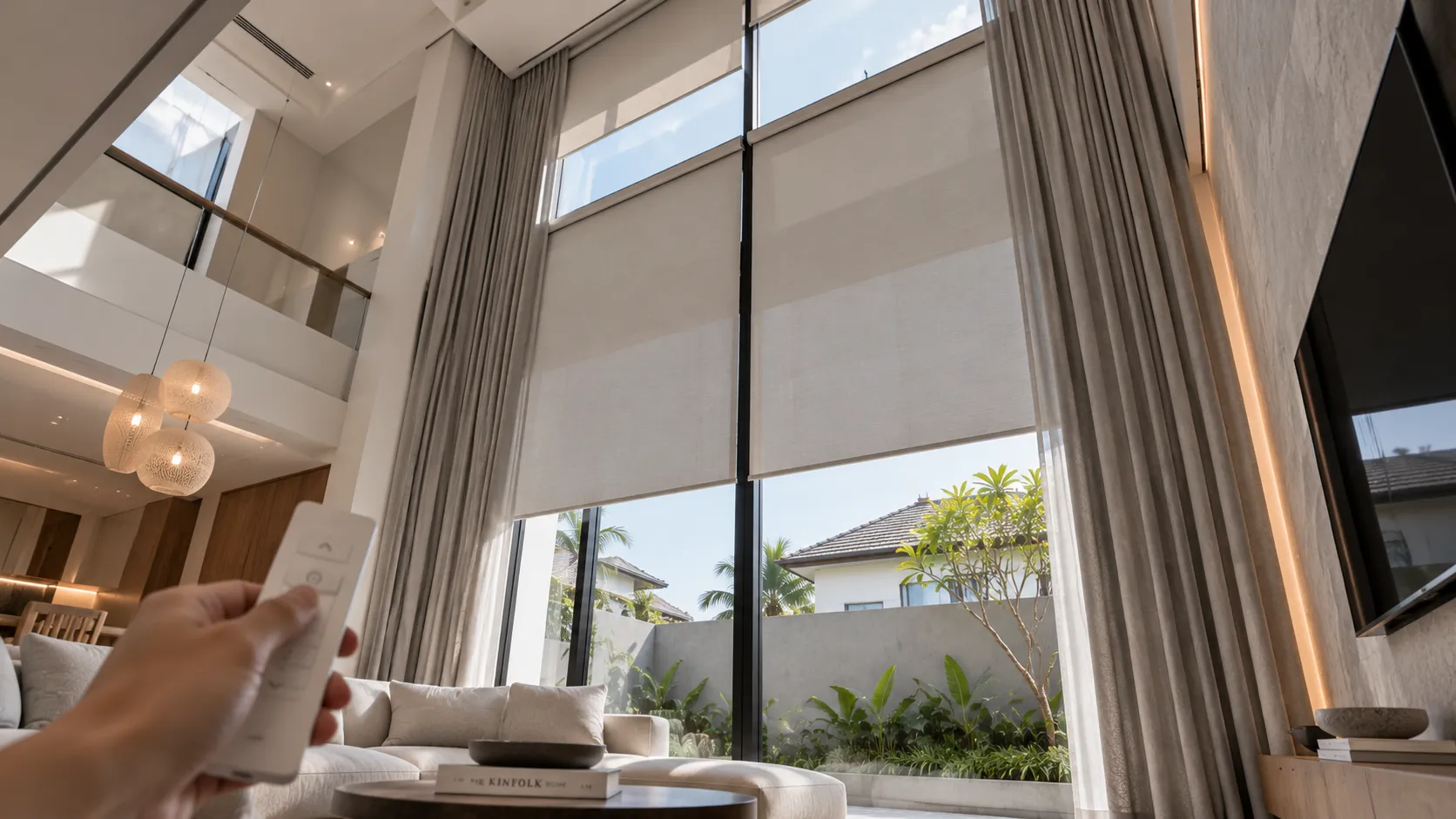
Short answer: Motorized blinds become most useful when windows are numerous, high, difficult to reach, or operated frequently. In a smart-home project, the motor is only one part of the system: the blind, power supply, controls, integration, installation access, and maintenance plan all need to work together.
1. What Makes a Blind Motorized?
A motorized blind uses an electric drive to raise, lower, tilt, or move the window covering. Depending on the system, control may be through a remote, wall control, smartphone interface, automation routine, or smart-home platform.
2. Where Motorization Adds the Most Practical Value
| Application | Why Motorization Helps | Planning Priority |
|---|---|---|
| High windows | Removes the need for ladders or manual reach | High |
| Large glazing | Makes frequent operation easier | High |
| Bedrooms | Supports consistent morning and evening routines | High |
| Living areas | Coordinates multiple blinds or scenes | Medium to High |
| Small accessible windows | Convenience may be limited compared with added system complexity | Low to Medium |
3. Smart-Home Functions Worth Considering
- Scheduled opening and closing: useful for predictable daily routines.
- Grouped control: several blinds can operate together.
- Scene control: window treatments can be assigned to routines such as Morning, Away, or Night.
- Remote control: useful for villas where the owner or operator is not always in the same room.
- Integration: where supported, the system can connect with a broader smart-home platform.
4. What Must Be Planned Before Installation?
| Item | What to Confirm |
|---|---|
| Finished dimensions | Final width, height, mounting position, and clearances |
| Blind specification | Fabric, openness, weight, cassette, and operating direction |
| Power | Power location, cable route, access, and electrical coordination |
| Control | Remote, wall control, app, automation, or integrated system |
| Network or hub | Compatibility with the selected smart-home ecosystem |
| Maintenance access | Ability to service motor and control components later |
5. Manual vs. Motorized
| Factor | Manual | Motorized |
|---|---|---|
| System complexity | Lower | Higher |
| Hard-to-reach windows | Less practical | Very practical |
| Multiple-window control | Manual operation | Strong advantage |
| Smart-home integration | Limited | Designed for integration |
| Maintenance | Usually simpler | More components to maintain |
6. Common Mistakes
- Choosing the motor before confirming blind weight and dimensions.
- Leaving electrical planning until after the ceiling or wall is finished.
- Ignoring access for future maintenance.
- Assuming every motorized system works with every smart-home platform.
- Forgetting how multiple blinds will be grouped and controlled.
Practical Takeaway
Good motorization is a coordinated window-treatment system, not simply a blind with a motor. For villas and hotels, start with the opening, operating frequency, power provision, control method, integration requirements, and maintenance access.
Almeers Living can help assess the property, coordinate the window-treatment specification, and plan professional installation across Bali.