Honeycomb Cell Size: Thermal Insulation Ratings, Sound Absorption, and Cellular Shade Energy Savings
Why Cell Size Matters
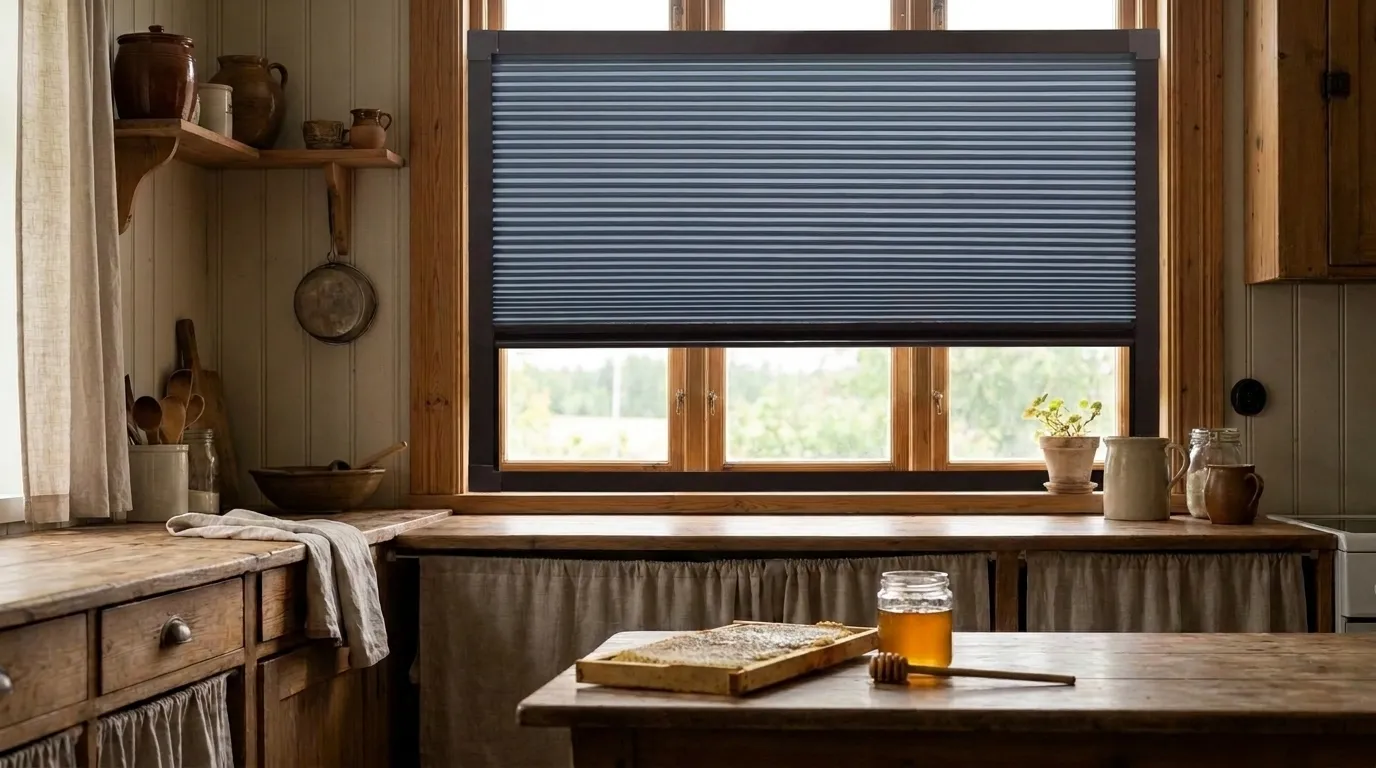
Honeycomb blinds—or cellular shades—use air pockets within the cells to slow heat transfer. Cell size determines how much air is trapped, directly affecting insulation and acoustic performance.
Common Cell Sizes
- 9 mm (3/8 inch): compact, suited to small windows and minimalist looks.
- 19 mm (3/4 inch): versatile, balancing aesthetics and performance.
- 25 mm (1 inch): better insulation, suited to hot climates.
- 38 mm+ (1.5 inch and above): maximum thermal and acoustic performance, with a thicker appearance.
Thermal Insulation
Larger cells trap more air, increasing thermal resistance (R-value). On windows with direct sun exposure, the performance gap between small and large cells can be significant. Double-cell constructions add another air layer for even better results.
Sound Absorption
The honeycomb structure helps dampen echo and mid-frequency noise. Large cells with thicker fabric are generally more effective, especially in rooms facing roads or public areas.
Energy Savings
By reducing heat gain during the day and heat loss at night, cellular shades help ease the air-conditioning load. The effect is strongest when paired with side tracks to minimize air gaps.
Practical Considerations
- Large cells take up more space when raised.
- Small cells are lighter and suited to narrow windows.
- Ensure fabric and cells suit the room's humidity conditions.
Conclusion
Choosing honeycomb cell size should align with your goals—insulation, acoustics, or aesthetics. Almeers Living can help analyse room requirements and recommend appropriate cellular shade specifications.