How to Adjust Curtain Rods: Practical Tips for Bali Homes
To adjust a curtain rod, identify whether the problem is height, width, level or support, then check the wall structure and curtain weight before loosening a bracket. A small adjustment can improve appearance and clearance, but a poorly supported rod can fall or damage the wall.
1. Identify the adjustment needed
Decide whether the rod needs to be raised, lowered, extended, levelled or moved away from an obstruction. Check how the curtains hang when closed and where panels stack when open. Make sure the proposed position will not block handles, sliding doors, vents or furniture.
2. Measure before moving brackets
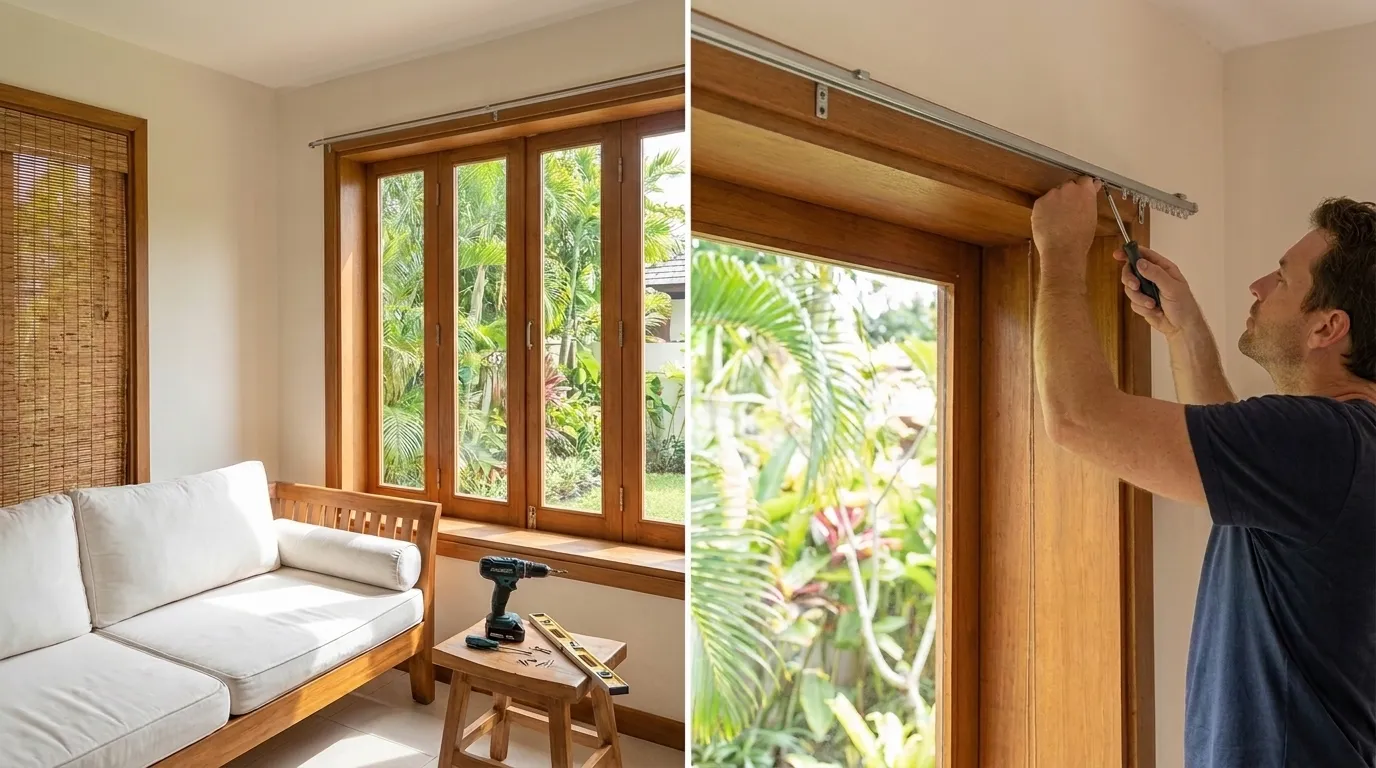
Use a tape measure and level to mark the intended position. Measure both sides from consistent reference points and confirm the rod will sit at the required height. For floor-length curtains, measure from the actual rod or ring position to the intended hem. Check the floor at several points because it may not be perfectly level.
3. Check the wall and fixing points
Before removing a bracket, understand the wall material and how the existing fixing is supported. Use fixings suitable for the substrate and load. Heavy curtains, wide spans and layered treatments may require additional support or different hardware. If the wall is cracked, the fixing is loose or construction is uncertain, ask a qualified installer to assess it.
4. Adjust height or width carefully
Support the rod and curtains before loosening a bracket. For a height change, mark matching positions on both sides and check the level before tightening. For width, confirm that the rod can extend safely and that brackets remain within the manufacturer’s supported range. Do not extend a telescopic rod beyond its safe limit.
5. Recheck curtain clearance
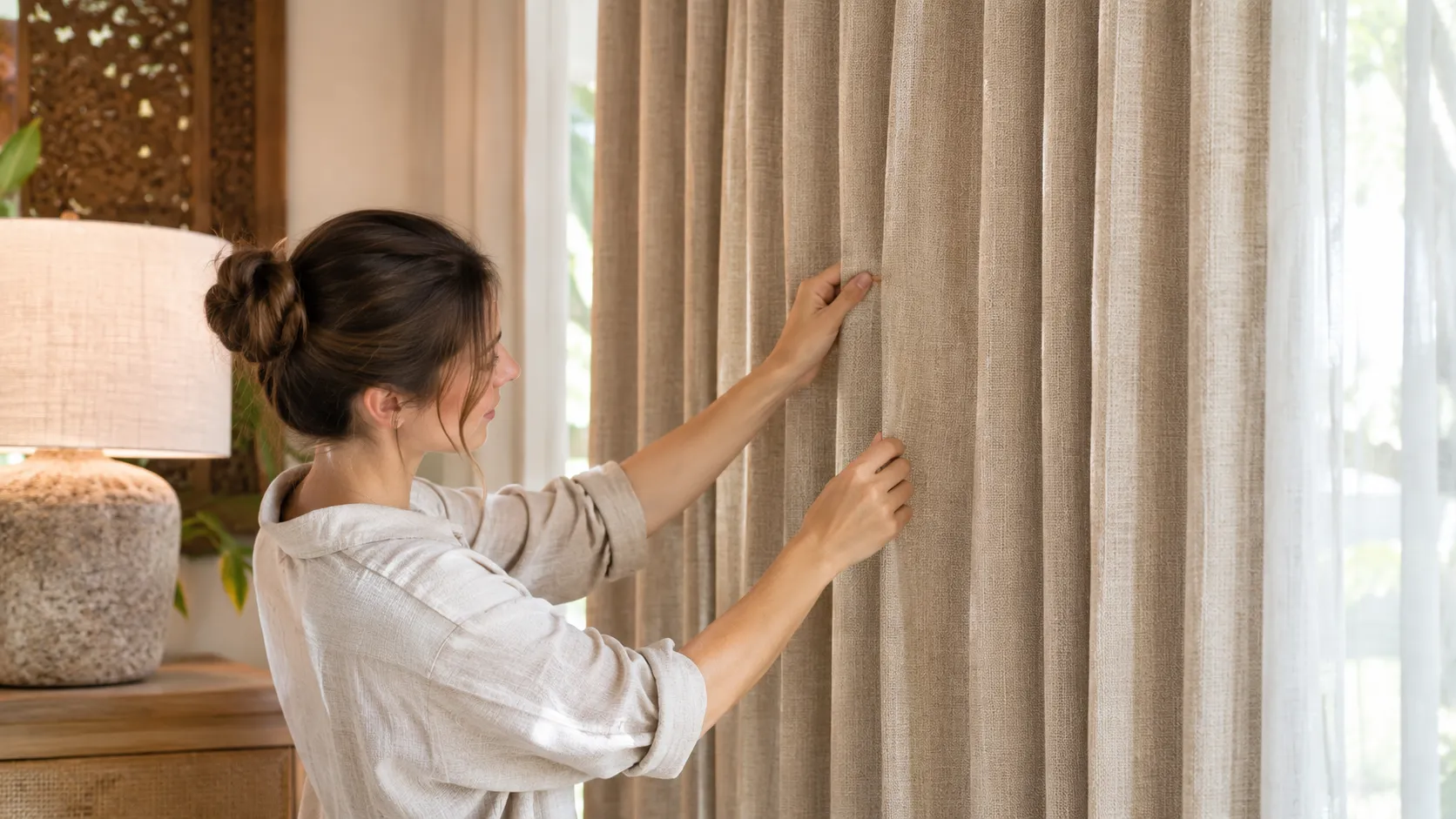
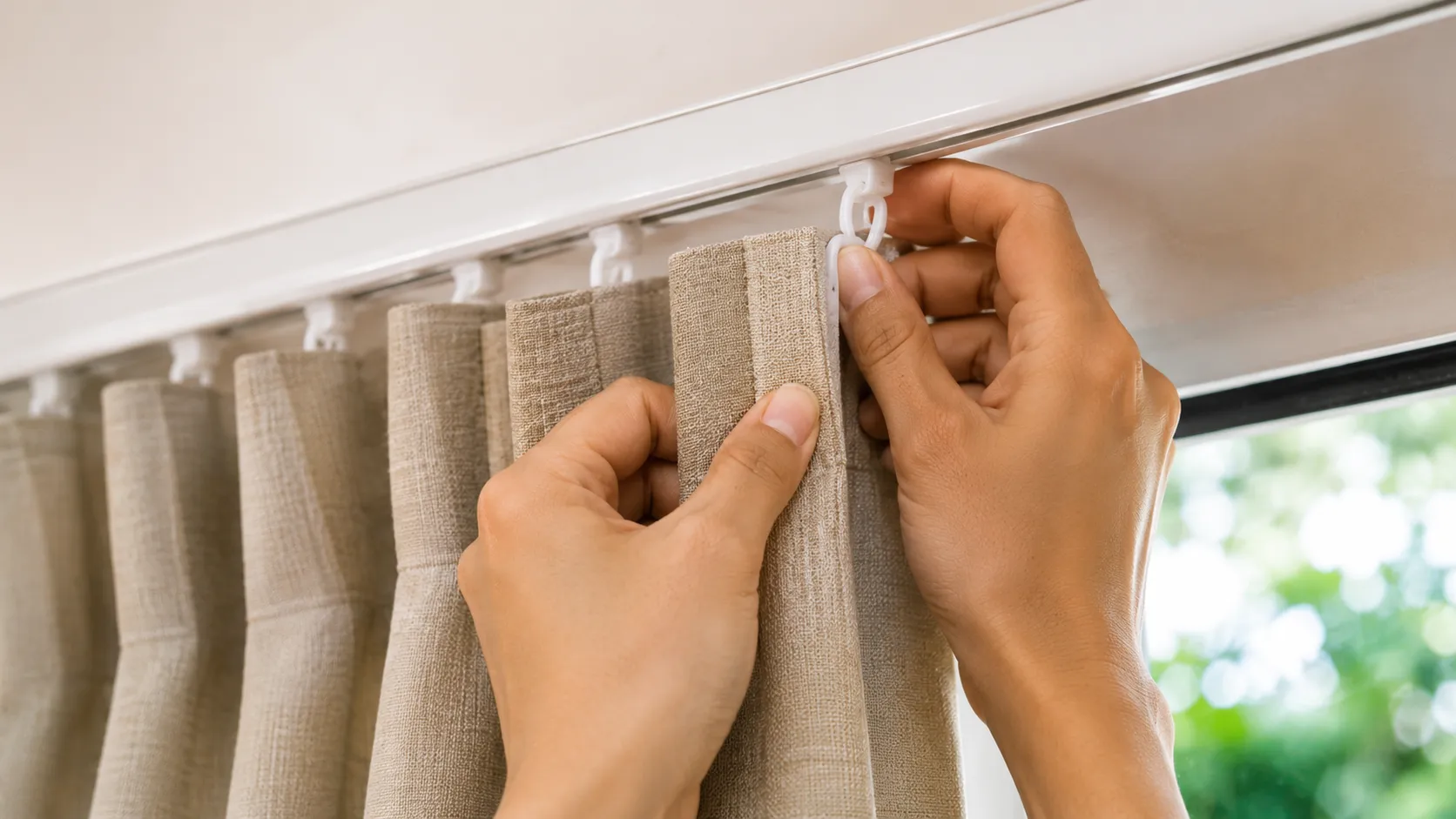
After adjustment, open and close the curtains fully. Check that fabric clears handles, panels stack neatly, and the rod does not bow or shift. If rings catch, inspect the hardware rather than pulling harder. For wide windows, consider whether a track would suit the opening better than a decorative rod.
6. Consider tropical-home conditions
In Bali, humidity, open doors and frequent cleaning can affect maintenance. Check for corrosion on metal hardware and inspect loose fixings periodically. Choose materials and finishes suitable for the room’s exposure; do not assume every finish is suitable for coastal or damp conditions without product guidance.
Safety and common mistakes
- Loosening brackets while the curtain weight is unsupported.
- Measuring from different reference points on each side.
- Using unsuitable wall anchors or damaged fixings.
- Extending a rod beyond its rated limit.
- Ignoring a bowed rod, loose bracket or cracked wall.
FAQs
How high should a curtain rod be?
It depends on ceiling height, window proportions, curtain length and the intended style. Measure the finished drop before fixing the final position.
Can I move a curtain rod without drilling new holes?
Sometimes existing hardware allows adjustment, but it depends on the design. Do not force a bracket or compromise its fixing.
When should I call an installer?
Seek help for heavy curtains, wide spans, damaged walls, loose fixings or uncertain wall construction.
Read our guide to hanging curtains properly, compare curtain tracks and rods, and review the window treatment buying guide.