How to Choose Curtains for Sliding Glass Doors: Space, Stack-Back and Access
The best curtains for sliding glass doors must clear the moving panels, stack neatly when open and provide the right balance of daylight, privacy and light control. Measure the complete opening and surrounding wall—not only the glass—before selecting a track or fabric.
1. Check how the door opens
Identify the sliding panel, access side, handle and lock. Curtains should not obstruct the door or walking route. For frequently used doors, make sure the leading edge is easy to reach and the curtain moves smoothly.
2. Plan stack-back space
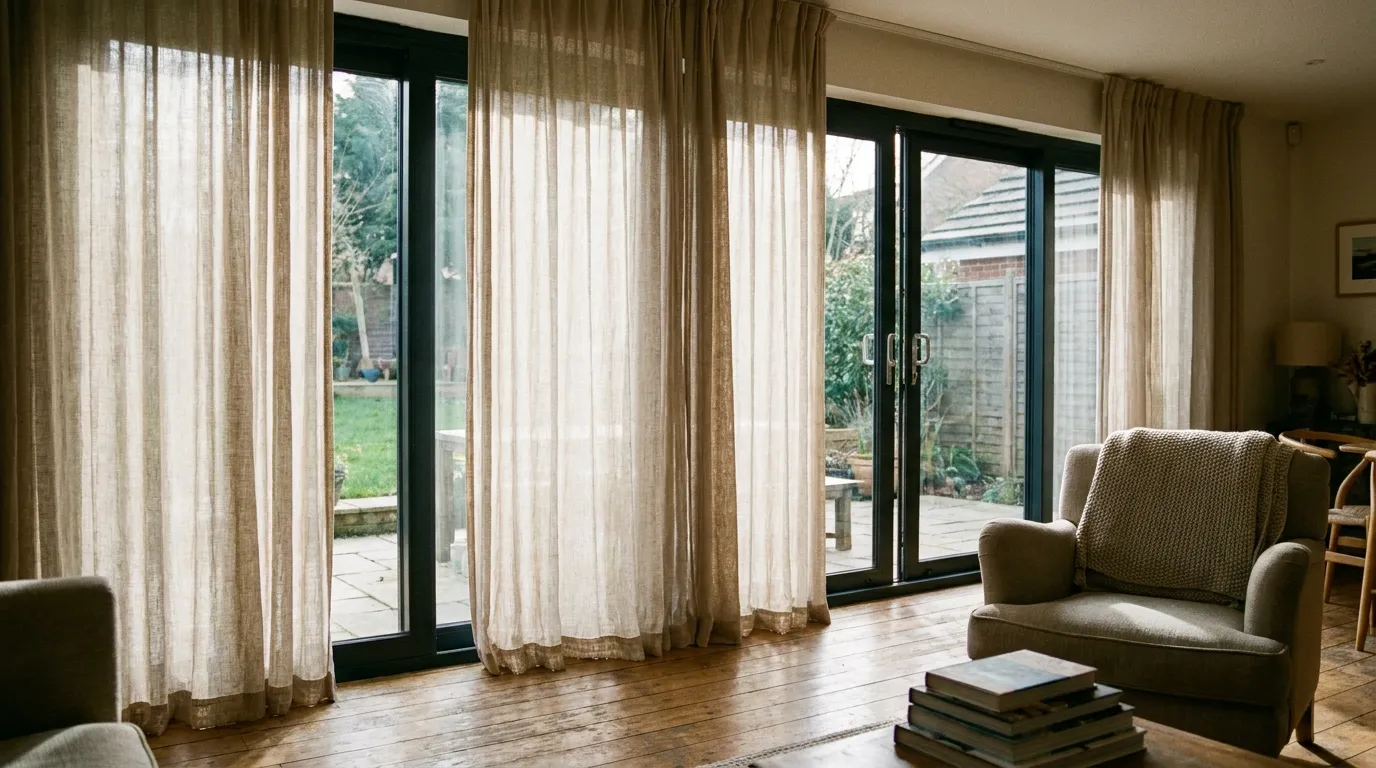
Stack-back is the space occupied by curtains when fully open. A wide or heavy panel may cover part of the glass if the track is too short. Measure the wall available on each side and discuss expected fabric stack with your supplier. A split draw, one-way draw or motorized system may suit different layouts.
3. Select the track position
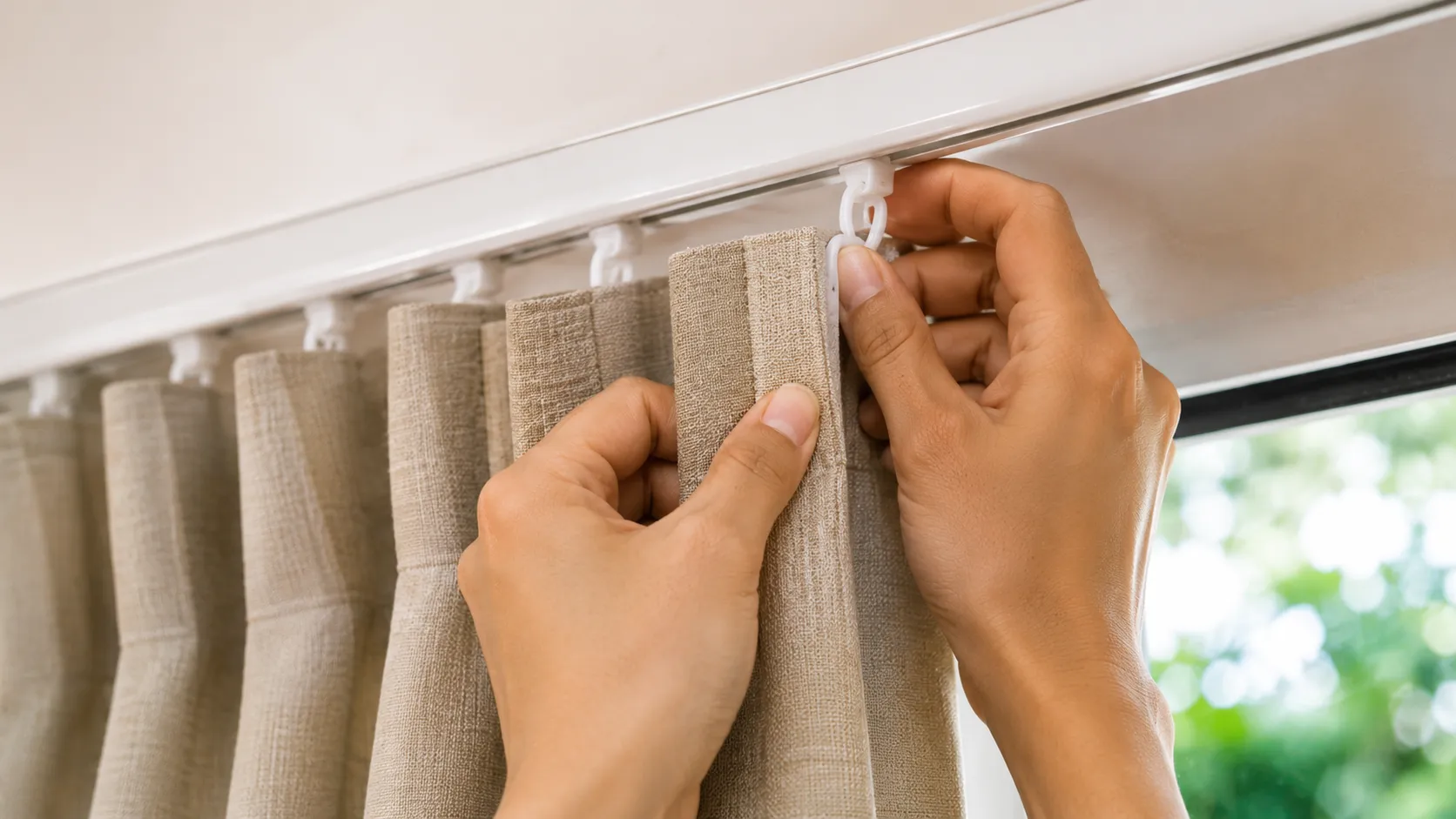
A ceiling-mounted track can create a continuous line across a tall opening. A wall-mounted track may be more practical where ceiling access is limited. Confirm fixing points, track level, end returns and clearance from cornices, air-conditioning units and door hardware.
4. Choose fabric for the room
Sheer curtains soften daylight but provide limited privacy at night when interior lights are on. Dimout reduces light to varying degrees, while blackout fabric is designed for stronger light control. Actual results depend on fabric, track returns and side gaps. Layering can add flexibility if there is enough room for both tracks and fabric stacks.
5. Consider weight and operation
Large lined panels can be heavy. Ensure the track and fixings are suitable for the selected system. For wide or frequently used openings, compare manual and motorized operation, including power, control compatibility and service access.
6. Measure width and drop accurately
Measure the span to be covered, including any intended overlap beyond the glass, and confirm the finished drop from the actual track position. Check more than one point if floors or ceilings appear uneven. Confirm the desired floor clearance and cleaning requirements before ordering.
Common mistakes
- Measuring only the glass and forgetting stack-back.
- Positioning the track where curtains obstruct handles or access.
- Choosing fabric before confirming track and heading compatibility.
- Expecting blackout fabric alone to remove every light gap.
- Using insufficient fixings for wide or heavy curtains.
What works well in Bali villas?
A sheer layer can preserve daytime brightness and views, while a lined layer can provide more privacy and darkness when needed. Rooms exposed to strong sun may benefit from a considered combination of fabric, lining and other solar-control measures. The best setup depends on glazing, orientation and room use.
Frequently asked questions
Should the track be wider than the opening?
Usually, where wall space allows, so curtains can stack away from the glass.
Are eyelet curtains suitable?
They may suit some layouts, but the heading must work with the selected rod or track and allow convenient access.
Are motorized curtains worth considering?
They can make wide or tall curtains easier to operate. Confirm power, control compatibility and track support before ordering.