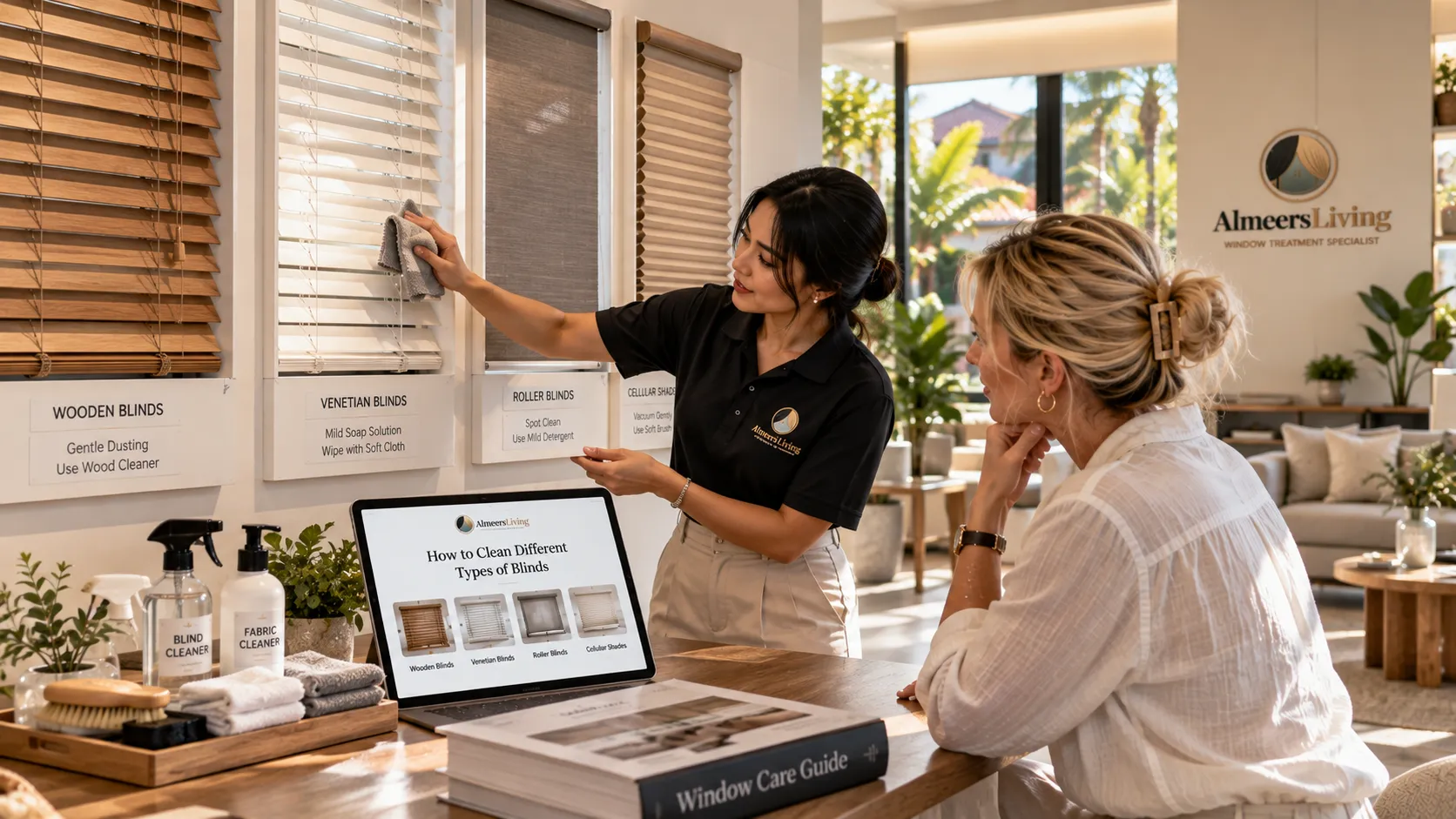

How to Clean Different Types of Blinds: The Expert Checklist
The safest way to clean blinds is to match the cleaning method to the material. A fabric roller blind should not be treated like a PVC Venetian blind, and a wooden blind should not be saturated with water.
Routine dust removal, controlled spot cleaning and correct drying are usually more important than aggressive cleaning. In tropical homes, regular maintenance can also help prevent dust and moisture from becoming harder-to-remove deposits.
How to Clean Different Blind Types
| Blind Type | Routine Method | Important Caution |
|---|---|---|
| Roller blinds | Gentle dusting or vacuum with a soft attachment | Avoid excessive moisture and scrubbing |
| Venetian blinds | Dust slats, then wipe according to material | Do not bend slats or soak unsuitable finishes |
| Wooden blinds | Dry dusting and controlled wiping | Limit water exposure |
| PVC / faux wood | Soft cloth with suitable mild cleaning solution | Dry thoroughly after wiping |
| Roman shades | Gentle dusting and fabric-specific care | Follow fabric care instructions |
Step 1: Remove Loose Dust First
Start with a soft duster, microfiber cloth or suitable vacuum attachment. Work from the upper section downward so loose dust does not settle repeatedly on areas already cleaned.
Step 2: Identify the Material
Before using any liquid cleaner, identify whether the blind is fabric, aluminium, PVC, faux wood, natural wood or another material. If the manufacturer provides care instructions, those instructions should take priority.
Step 3: Spot Clean Carefully
For suitable surfaces, use a lightly damp cloth rather than applying large amounts of liquid directly to the blind. Test an inconspicuous area first when the finish or fabric response is uncertain.
Step 4: Keep the Mechanism Dry
Chains, motors, headrails, control mechanisms and other operating components should not be exposed unnecessarily to water. Cleaning the visible treatment does not require soaking the operating system.
How Often Should Blinds Be Cleaned?
| Environment | Practical Routine |
|---|---|
| Low-dust bedroom | Regular light dusting with deeper cleaning as needed |
| Living area | Dust more frequently around open windows |
| Tropical villa | Monitor dust and moisture together |
| Rental or hospitality property | Use a documented cleaning routine between stays or service cycles |
Common Cleaning Mistakes
- Using too much water on fabric or natural wood.
- Scrubbing a coated surface aggressively.
- Using a household chemical without checking material compatibility.
- Ignoring the headrail and operating components.
- Leaving damp blinds closed without adequate drying.
- Pulling or bending slats while cleaning.
Tropical Home Maintenance
In Bali and other humid environments, ventilation and drying matter. Cleaning should remove dust without creating a moisture problem. If a blind repeatedly develops staining, odour or visible mould, investigate surrounding humidity, condensation, ventilation and moisture sources rather than relying only on stronger cleaning products.
Final Checklist
- Identify the blind material.
- Follow manufacturer care instructions when available.
- Remove dry dust before wet cleaning.
- Use minimal moisture where appropriate.
- Protect mechanisms and motors.
- Allow cleaned surfaces to dry properly.
- Replace damaged or unsuitable treatments when cleaning can no longer restore performance.
Final Takeaway
Good blind maintenance is controlled, material-specific and consistent. The goal is not to use the strongest cleaner; it is to remove dust and marks while preserving the fabric, finish and operating mechanism.
Almeers Living can advise on suitable blind and window-treatment specifications for villas, hotels and residences, including practical maintenance considerations.