How to Conceal Curtain Tracks Neatly: What to Check Before You Start — Pelmet Box Construction, Ceiling Recess Mounting, and Architectural Track Hiding
In modern architectural design, contemporary villa construction, and luxury hospitality developments across Bali—from the chic coastal hubs of Canggu, Seminyak, and Umalas to the serene rainforest sanctuaries of Ubud and dramatic clifftop estates in Uluwatu—the defining signature of high-end interior minimalism is clean, uninterrupted lines. Expansive floor-to-ceiling glass sliding doors, polished micro-cement floors, and minimalist ceiling planes create soaring, uncluttered spatial volumes. However, nothing disrupts a pristine architectural ceiling plane faster than exposed aluminum curtain tracks, visible mounting brackets, hanging pulleys, and plastic runner gliders bolted awkwardly to walls or surface ceilings. Property owners, interior architects, and general contractors frequently search for professional guidance on how to conceal curtain tracks neatly: what to check before you start (mastering pelmet box construction, ceiling recess mounting, and architectural track hiding) to achieve five-star resort sophistication and uncompromised aesthetic purity.
Achieving a seamless, hotel-grade concealed drapery installation requires far more than hanging a decorative wooden valence over an exposed rod. It demands rigorous pre-construction planning, precise structural cavity dimensions, heavy-duty track engineering, non-toxic anti-mold protection, and smart motorization coordination. In this comprehensive editorial masterclass, we break down the engineering principles, architectural framing standards, and technical installation checklists required to hide curtain tracks flawlessly in luxury properties.
1. The Architectural Rationale Behind Concealed Curtain Tracks
Why do interior architects and elite hospitality designers insist on hiding curtain tracks? The reasons extend far beyond superficial aesthetics:
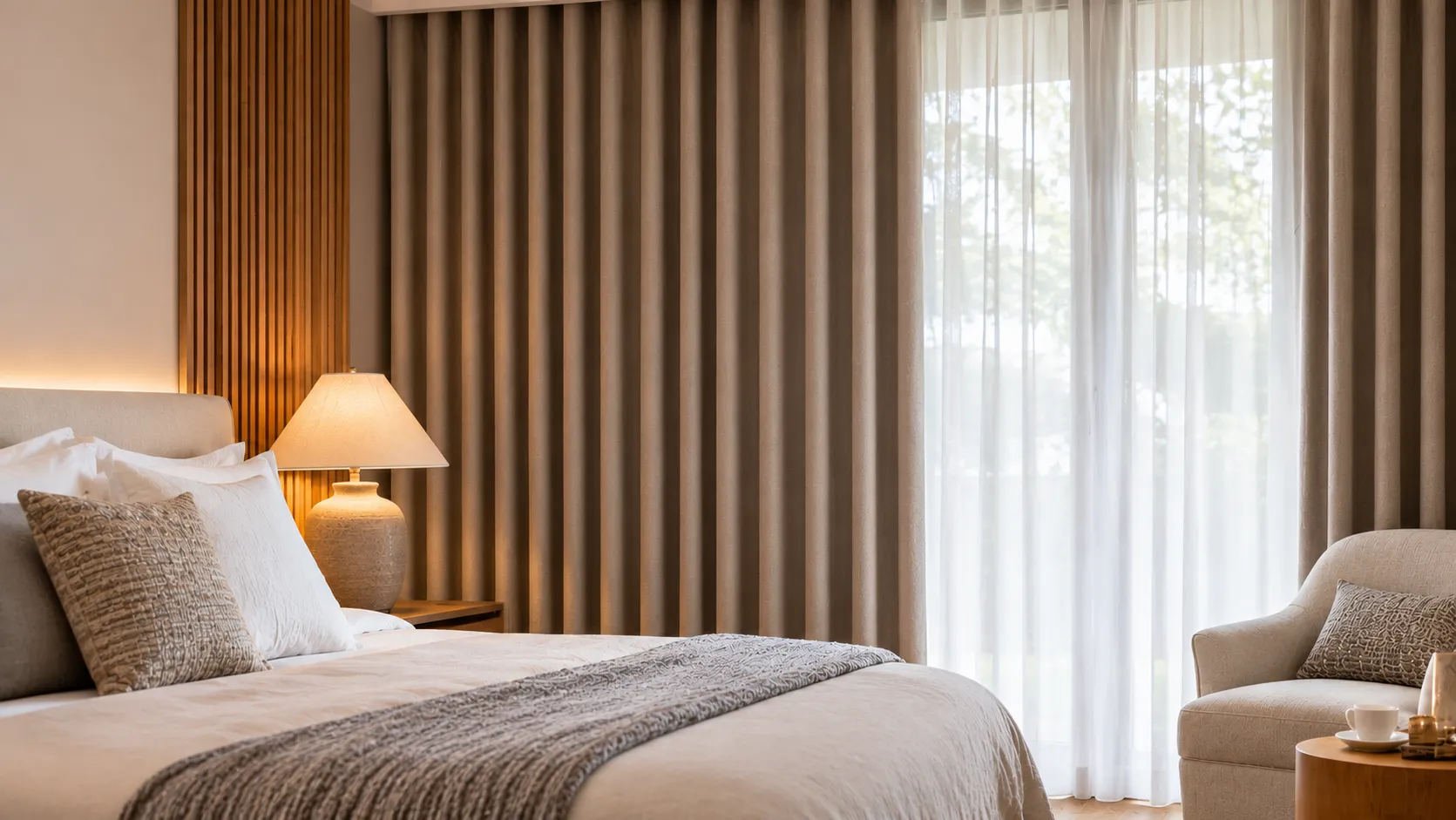
- Eliminating Visual Clutter and Enhancing Vertical Scale: Hiding track hardware allows drapery panels to appear as though they emerge organically and effortlessly directly out of the ceiling plane, elongating perceived wall height and amplifying room grandeur.
- Concealing Complex Multi-Layer Hardware: Modern high-end window treatments frequently require dual-track systems—combining translucent sheer voiles with heavy 100% thermal blackout drapes and motorized belt drives. Concealing these bulky mechanical assemblies inside built-in architectural pockets maintains visual harmony.
- Improving Top Acoustic and Thermal Seals: Exposed curtain tracks leave a gap between the top fabric heading and the ceiling, allowing warm air and light to spill over the top. Fully recessed pelmet boxes create an airtight top thermal baffle that enhances energy efficiency and room darkening.
2. Pre-Installation Checklist: What to Verify Before Construction Begins
Attempting to conceal curtain tracks after concrete ceiling slabs have been poured or gypsum ceilings fully closed results in expensive demolition work and structural compromises. Contractors and project managers must verify four vital parameters before framing starts:
- Structural Slab and Ceiling Void Depth: Verify that the vertical drop between the structural concrete slab and the finished gypsum ceiling drywall provides sufficient clearance (at least 12 cm to 15 cm) to house track channels and motor drives without hitting conduits or air-conditioning ductwork.
- Window Frame Projections and Obstructions: Measure the exact outward projection of window frames, sliding door handles, and exterior security shutters. Recessed pelmet boxes must be positioned far enough forward from the glass to allow S-fold wave pleats to hang straight down without rubbing against window latches.
- Electrical Power Sourcing for Motorization: If specifying motorized tracks, ensure a dedicated 220V power supply or low-voltage control conduit is roughed-in inside the ceiling pocket during early wiring phases.
- Curtain Stack-Back Projections: Calculate the exact physical width stacked fabric will occupy when drapes are fully opened, ensuring pelmet pocket lengths extend far enough beyond window frames to keep glass openings completely unobstructed. You can calculate exact fabric requirements using our digital stacking calculator.
3. Method 1: Ceiling Recess Mounting (Flush Architectural Pockets)
Ceiling recess mounting is the gold standard of luxury hotel architecture, embedding curtain tracks flush inside the ceiling drywall so no hardware is visible from any room angle:
- Pocket Width Dimensions (Single vs. Dual Tracks): For a standard single S-fold sheer or blackout track, frame an internal recess width of **12 cm to 15 cm**. For a professional dual-track system (combining sheers and blackout drapes side by side), the internal recess width must measure at least **20 cm to 25 cm** to prevent fabric friction.
- Pocket Depth Dimensions: Frame the vertical drop depth of the recess cavity to **10 cm to 15 cm**. This depth completely hides track channels, master carriers, motor heads, and heading tapes from eye-level view. Complete spatial tolerances can be reviewed on our valances and cornices measuring guide.
- Structural Anchorage Backing: Gypsum drywall alone cannot support heavy drapery loads. Install continuous 18 mm marine plywood backboards or heavy-duty galvanized steel framing studs directly into the concrete slab above the recess channel to anchor ceiling brackets securely.
4. Method 2: Pelmet Box Construction (Surface-Mounted Architectural Valances)
When concrete ceiling slabs cannot be recessed (such as in retrofit projects or exposed timber ceiling villas), building a custom surface-mounted pelmet box provides an elegant architectural solution:
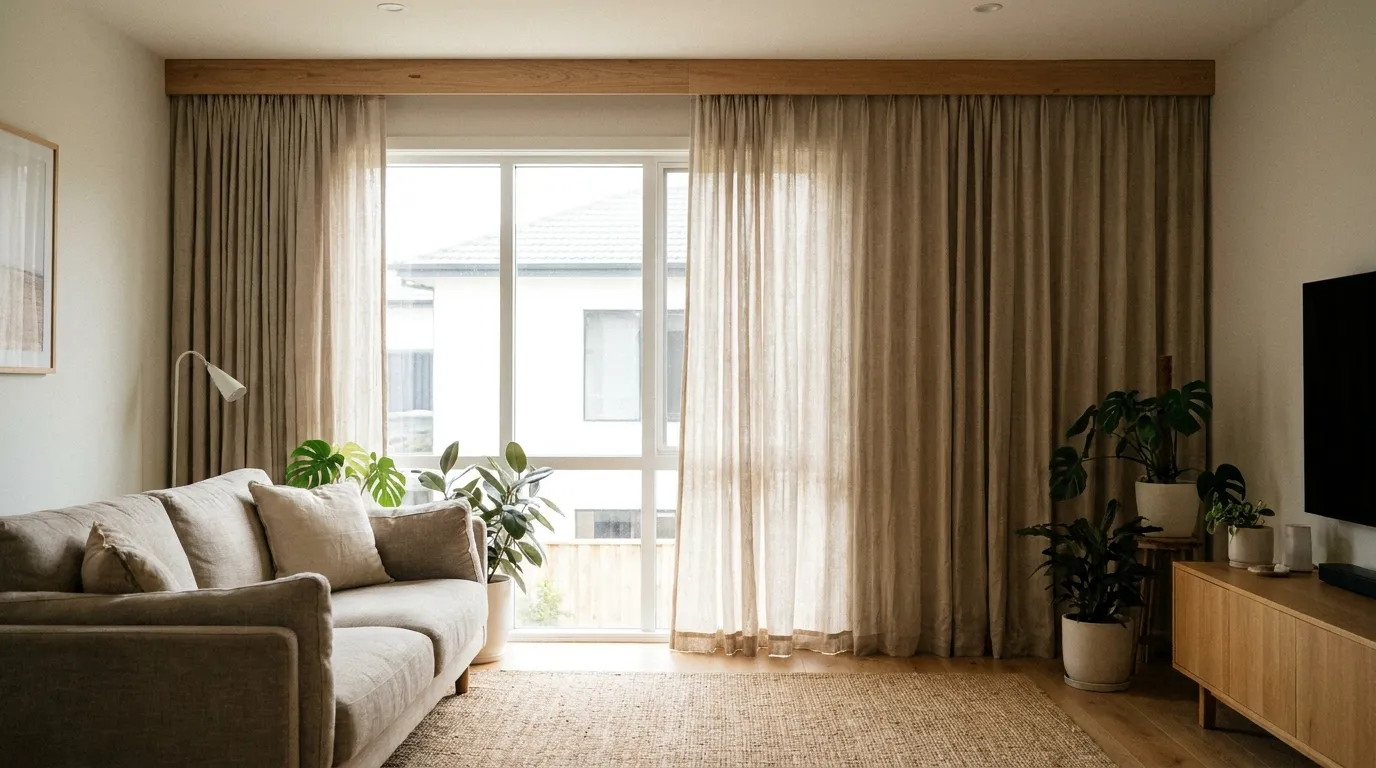
- Proportion and Scale Engineering: A custom-built pelmet box (valance board) drops down from the ceiling line to hide tracks mounted directly onto the ceiling or wall. Pelmet face boards should be proportioned to roughly 1/10th of the room total ceiling height (typically 15 cm to 25 cm drop).
- Material Selection and Interior Finishes: Construct pelmet boxes using moisture-resistant marine plywood finished with smooth plaster, micro-cement, or matching timber veneer to harmonize with interior millwork and ceiling beams.
- Access Hatch Integration: For motorized systems or heavy commercial hotel installations, incorporate a discreet bottom or front access panel into the pelmet box design to allow maintenance technicians to inspect motors and drive belts without dismantling the entire structure.
5. Tailoring and Drop Precision: S-Fold Waves and Floor Clearances
Concealing tracks successfully draws the human eye toward the vertical flow of the fabric. Flawless tailoring execution is mandatory to maintain resort-grade elegance:
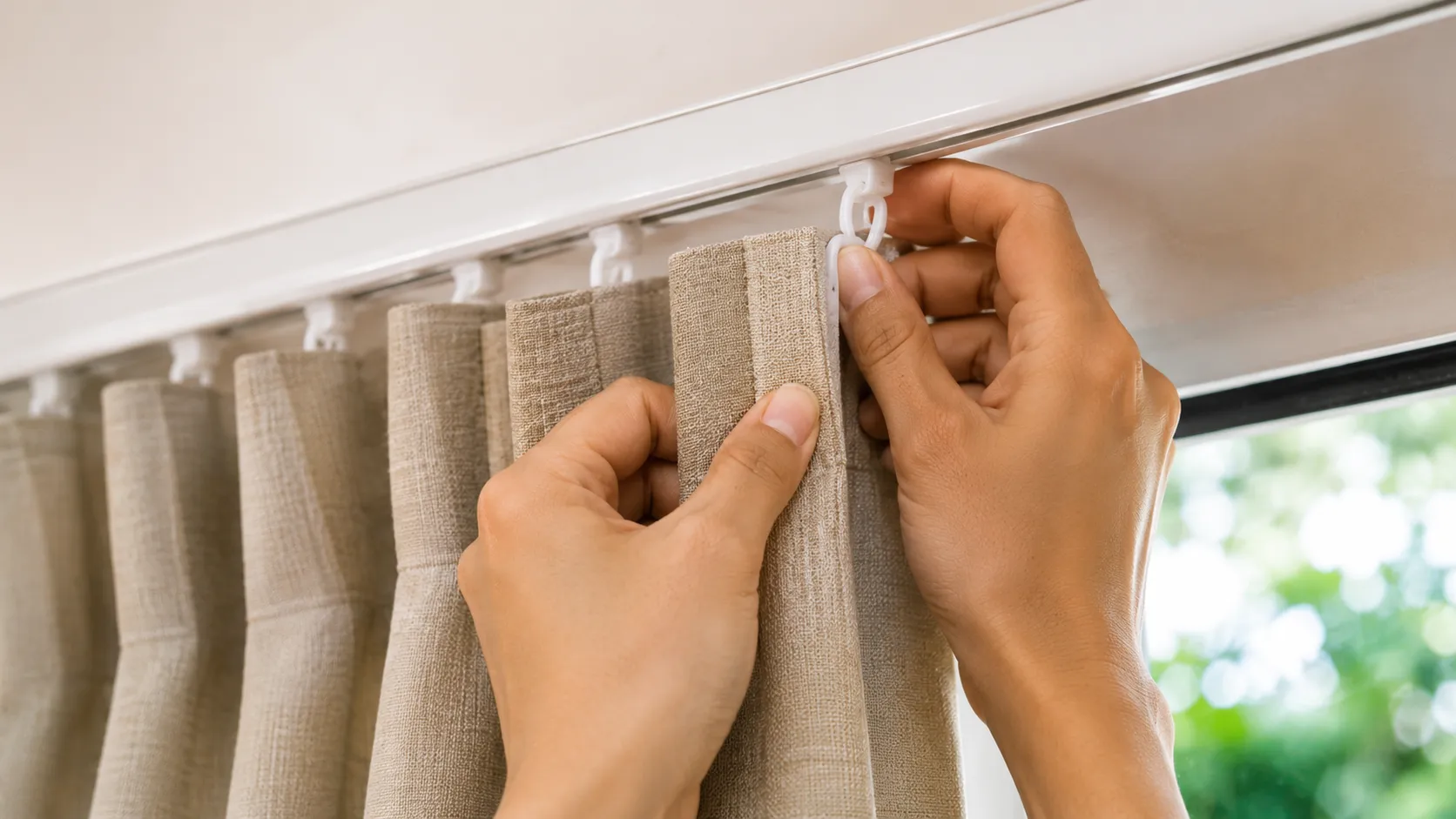
- The S-Fold (Ripplefold) Wave Pleat Standard: Concealed tracks should always be paired with S-fold wave pleating systems. Suspended from specialized runner tapes, S-fold curtains form continuous, uniform vertical waves from inside the hidden recess down to the floor.
- Fullness Multiplier Standards (2.0x to 2.2x): Specify double the track width in flat fabric volume (a 2.0x to 2.2x fullness ratio) to ensure rich wave depth that conceals inner track mechanisms completely.
- The 1 cm Floor Hover Clearance Rule: Measure vertical drop distances from track runner eyelets down to finished floor surfaces at multiple points. Tailor concealed drapes to hover precisely **1 cm above finished floor level**. Review step-by-step measurement rules on our curtain measuring guide and dedicated shade measuring guide.
6. Tropical Climate Resilience: Non-Toxic Anti-Mold Protection
In humid tropical environments like Bali, enclosed ceiling pelmet boxes and recessed wall pockets can trap stagnant air and condensation humidity generated by air-conditioned interiors near cold glass sliding doors. Untreated drapery fabrics hanging inside confined ceiling cavities absorb trapped moisture, leading to dark fungal mildew spots and musty odors.
To preserve pristine fabric hygiene and indoor air quality, high-performance draperies supplied by Almeers Living incorporate advanced **Anti-Mold** (anti-jamur) technology. This specialized hydrophobic antimicrobial finish repels moisture droplets and inhibits fungal spore germination inside enclosed architectural pockets, keeping your concealed draperies clean, fresh, and allergen-free season after season.
7. Smart Motorization for Concealed Tracks
Operating heavy draperies hidden inside deep ceiling recesses or enclosed pelmet boxes is effortless when upgraded to whisper-quiet motorized automation. Motorized belt-driven tracks powered by DC tubular actuators integrate seamlessly with handheld remotes, wall keypads, smartphone apps, and smart home platforms such as Apple HomeKit, Google Assistant, Amazon Alexa, and Control4. Program automated solar schedules to close blackout panels during peak afternoon heat hours (11:00 AM – 3:00 PM), protecting interior furnishings and maintaining cool indoor temperatures passively.
8. Elevate Your Interior Architecture with Almeers Living
Concealing curtain tracks neatly requires an expert synthesis of pre-construction architectural planning, pelmet recess framing, heavy-duty track engineering, and climate-resilient textile tailoring. Partnering with an experienced local specialist guarantees precise cavity dimensions, flawless track installation, and long-term operational durability. As a recognized premier window treatment specialist in Bali, Almeers Living offers end-to-end turnkey execution—from complimentary architectural site surveys and custom framing consultations to professional motorized installation across the island.
Transform your residence, rental villa, or resort project into an immaculate architectural sanctuary today. Browse our full range of custom drapery fabrics, concealed track systems, and automated window solutions on our products page to schedule your personalized on-site consultation with Bali’s trusted window experts.