How to Make Small Windows Look Larger: A Step-by-Step Guide — Optical Illusion Hanging Tricks, High-Ceiling Rod Placement, and Light Diffusion Techniques
In modern architectural design and luxury real estate across Bali—from the vibrant coastal enclaves of Canggu, Seminyak, and Umalas to the lush hillside retreats of Ubud and dramatic clifftop sanctuaries in Uluwatu—spatial proportion is the cornerstone of interior elegance. While grand living pavilions and ocean-facing suites often feature sweeping floor-to-ceiling glass sliding doors, guest bedrooms, powder rooms, side alcoves, and private study nooks frequently contain smaller, compact, or awkwardly proportioned window frames. Left unmanaged, small or narrow windows can make high-end rooms feel visually constricted, cave-like, and dark. Fortunately, master class guidance on how to make small windows look larger: a step-by-step guide (covering optical illusion hanging tricks, high-ceiling rod placement, and light diffusion techniques) provides interior designers, architects, and homeowners with proven spatial strategies to dramatically enhance room scale without expensive structural modifications.
Transforming window scale relies on architectural geometry and visual perception mechanics. By altering physical mounting heights, extending track side margins beyond actual frame boundaries, selecting tailored S-fold wave pleats, and utilizing light-diffusing translucent textiles, you can trick the human eye into perceiving modest openings as expansive architectural statements. In this comprehensive step-by-step guide, we explore the science of optical drapery illusions, spatial measurement rules, anti-mold tropical protection, and smart motorization to help you maximize room light and visual elegance.
Step 1: The Optical Science of Visual Scale and Perceptual Depth
The human brain perceives spatial dimensions based on vertical lines, light distribution, and frame boundaries. When observing a window, eye movement naturally traces the outer edges of surrounding drapery rather than stopping at the raw timber or aluminum frame. Interior architects exploit this cognitive pattern using three fundamental optical principles:
- Vertical Axis Elongation: Mounting curtain tracks far above the top window casing draws the human gaze upward toward the ceiling line. This creates the visual impression of soaring ceiling height and continuous vertical glass drop.
- Horizontal Span Expansion: Extending drapery tracks beyond the left and right window frame edges allows fully opened curtain panels to rest entirely on adjacent wall surfaces. This exposes 100% of the glass for maximum daylight entry while making the window aperture appear twice as wide.
- Luminous Light Diffusion: Diffusing solar rays across broad sheer panels softens harsh contrast borders between dark interior walls and bright outdoor views, expanding the perceived perimeter of the window opening.
Step 2: High-Ceiling Rod & Track Placement Mechanics
The most common design mistake when outfitting small windows is mounting hardware directly on or just a few centimeters above the window frame trim. This accentuates short proportions and restricts light entry. To achieve grand architectural scale, strictly follow these precise placement rules:
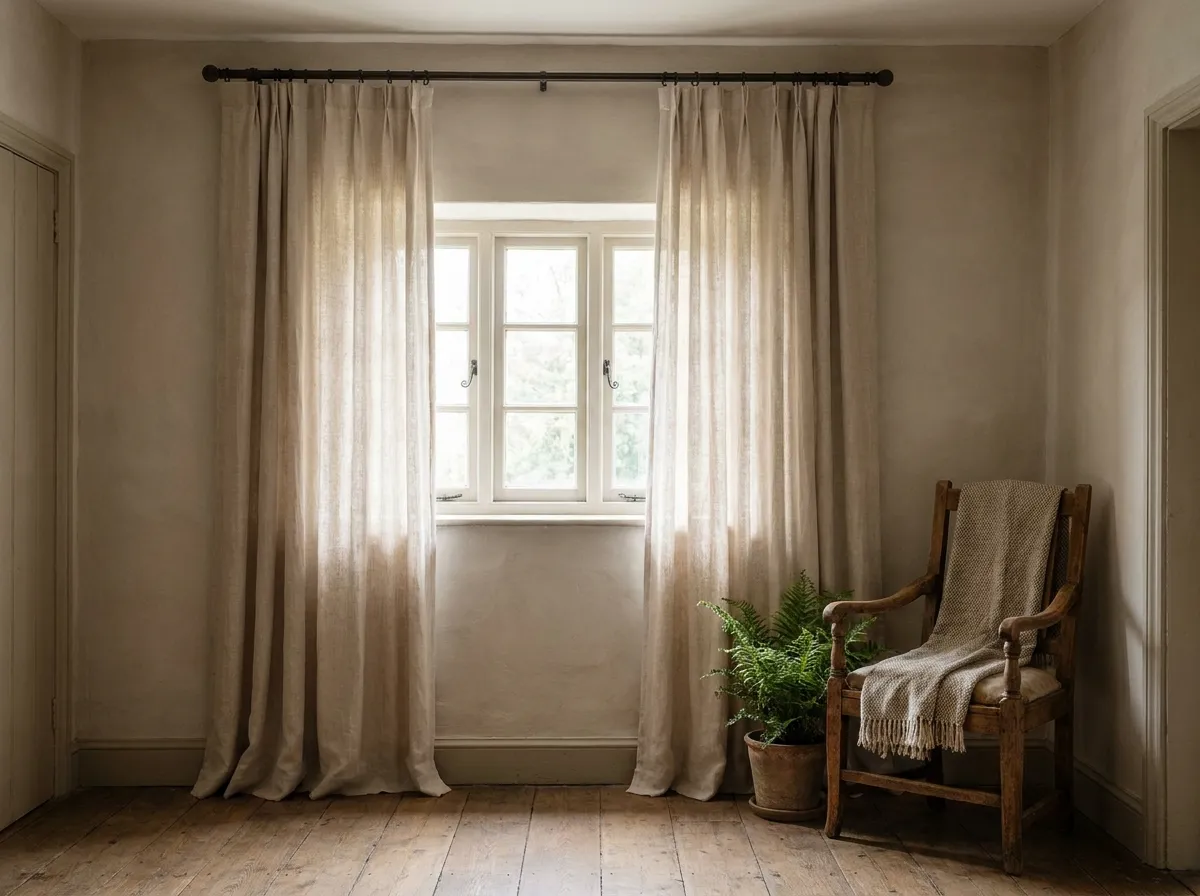
- Mount High (The "High-and-Wide" Principle): Position curtain tracks or decorative mounting rods as close to the ceiling line as possible—ideally **10 cm below the ceiling soffit** or crown molding, or at least **20 cm to 30 cm above the top window frame**. This fills dead wall space with luxurious fabric verticality.
- Mount Wide (Stack-Back Wall Clearance): Extend hardware **25 cm to 40 cm beyond the window frame** on each side. When drapes are drawn open during the day, the inner edges of the fabric should just barely brush the glass frame, exposing the entire window while deceiving observers into thinking the glass extends behind the drapery folds.
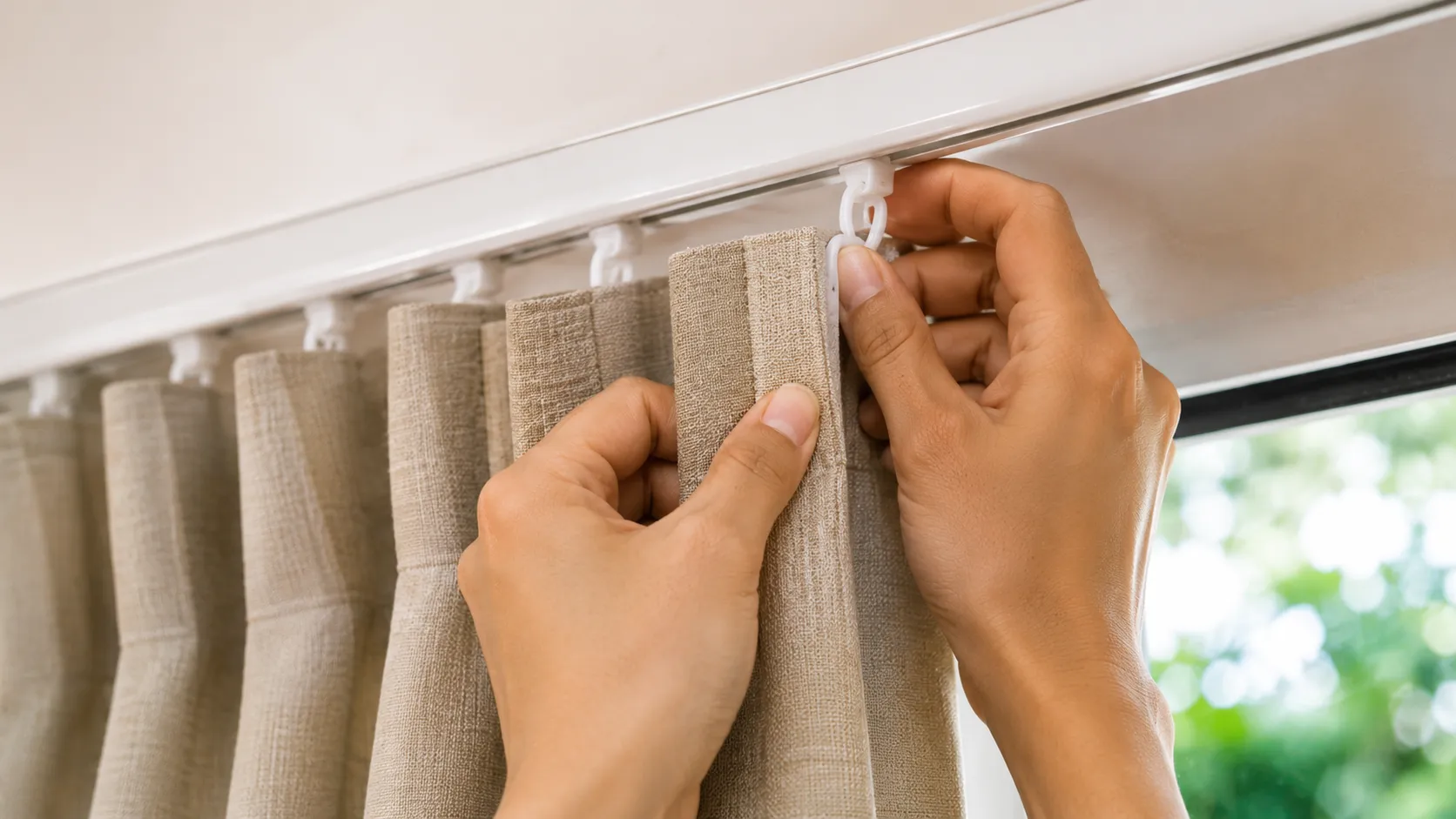
- Ceiling Recessed Pelmet Pockets: In modern minimalist and Japandi villa design, embed tracks flush inside concealed ceiling pelmet pockets built during framing phases. Recessing hardware completely hides brackets and runner tapes, making drapes appear to emerge organically out of the ceiling line. Architects can review exact pelmet spatial tolerances on our valances and cornices measuring guide.
Step 3: Fabric Selection and Light Diffusion Techniques
Heavy, dense, dark fabrics installed on small windows can absorb natural light and weigh down small rooms. Maximizing spatial expansive feeling requires strategic textile selection:
- Translucent Light-Filtering Sheer Voiles: Specify lightweight slubbed linen-look sheers or fine synthetic voiles in off-white, warm ivory, soft alabaster, or subtle cream tones. Sheer fabrics break up harsh equatorial solar glare into a glowing, ambient light distribution that eliminates dark room corners. Explore sheer fabric swatches starting at Rp 60.000/m on our products page.
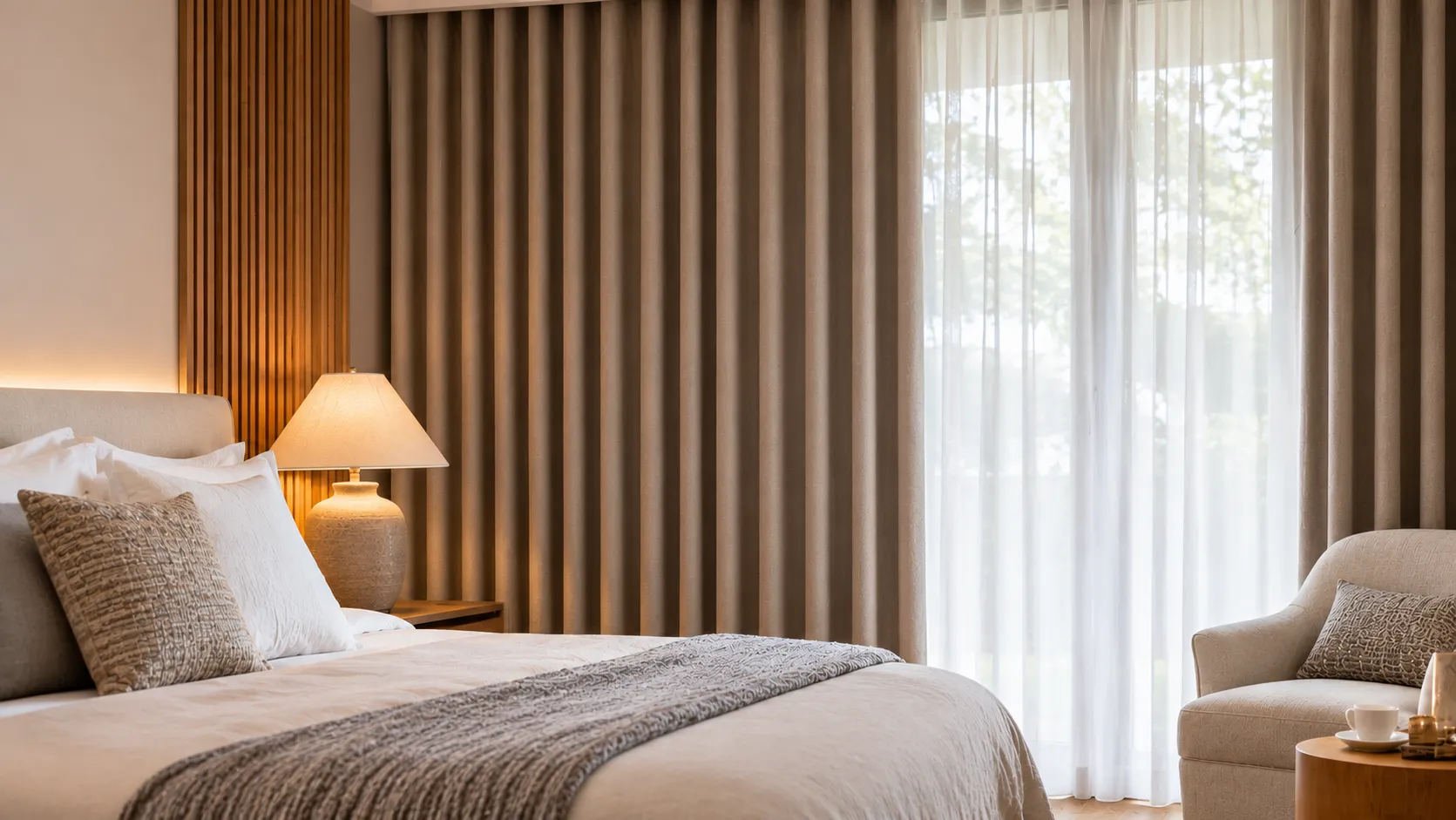
- Dual-Track Layering for Day-to-Night Functionality: Pair outer translucent sheer voiles with inner 100% coated blackout drapes on a dual-track system. During daytime hours, opening the blackout panels fully onto extended side walls floods the room with daylight through the sheers. At night, drawing the blackout layer provides total privacy and thermal insulation (starting at Rp 60.000/m to Rp 110.000/m).
- Vertical Striping and Subtle Textures: Fabrics featuring delicate vertical weave lines or slubbed textures reinforce upward visual motion, further enhancing vertical ceiling height.
Step 4: Tailoring Metrics, S-Fold Waves, and Precision Drop Clearances
Tailoring execution determines whether optical illusions succeed or feel sloppy. Skimpy fabric cuts or incorrect drop lengths break spatial illusions immediately:
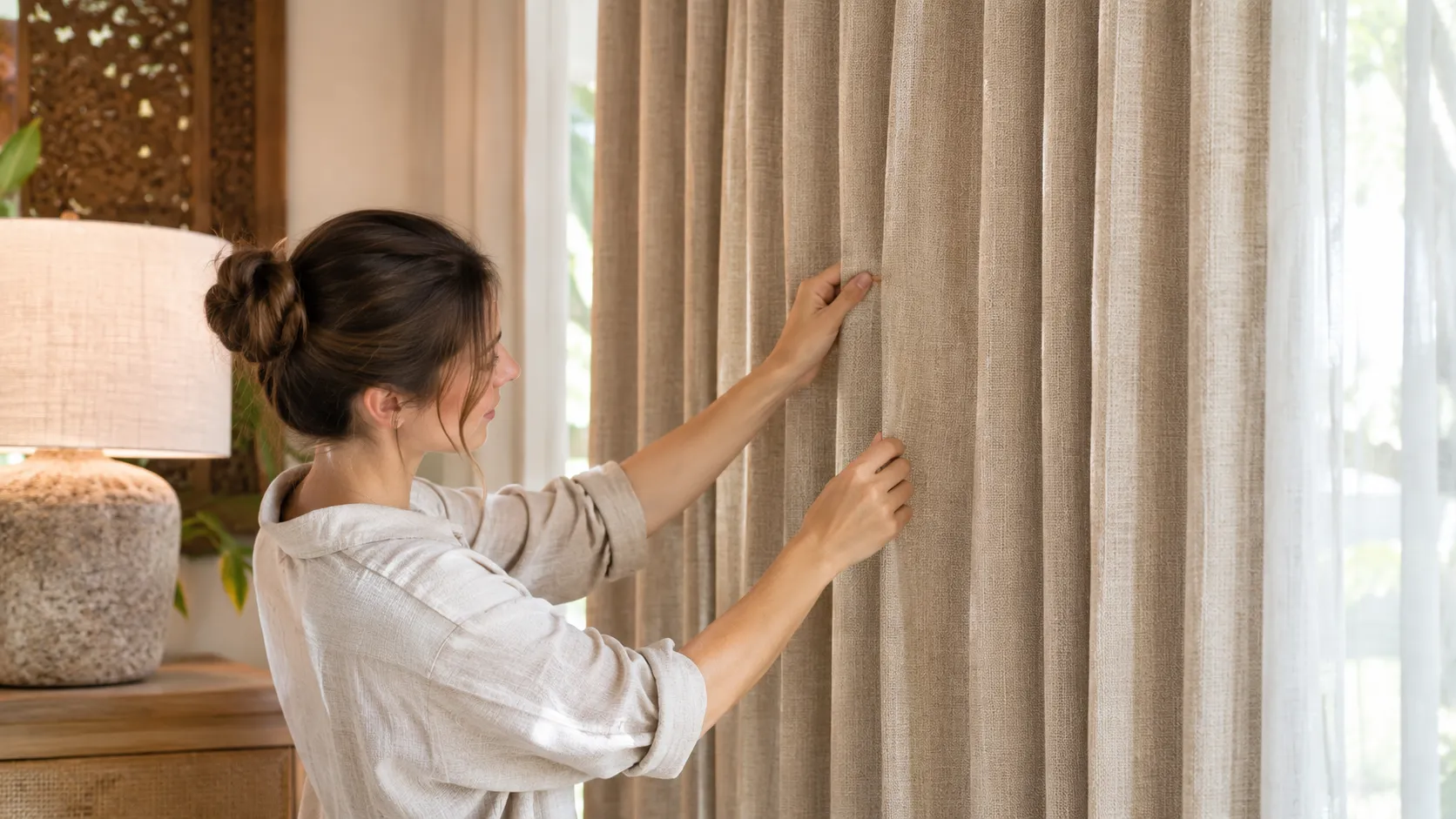
- 2.0x to 2.2x S-Fold (Ripplefold) Fullness: Always specify double the track width in flat fabric volume (a 2.0x to 2.2x fullness ratio). S-fold wave pleats maintain perfectly uniform vertical S-curves from top heading to bottom hem, creating smooth vertical architectural rhythm. Calculate exact fabric volume and stack-back allowances using our digital stacking calculator.
- The 1 cm Floor Hover Clearance Standard: Measure vertical drop distances from track runner eyelets down to finished floor levels at multiple points. Tailor curtains to hover exactly **1 cm above the floor** (or touch the floor lightly). Short, "floating" drapes ending at the window sill visually sever the wall height, making small windows look even smaller. Review measurement rules on our curtain measuring guide and dedicated shade measuring guide.
Step 5: Tropical Climate Resilience: Non-Toxic Anti-Mold Protection
In humid island climates like Bali, high atmospheric moisture combined with continuous indoor air conditioning creates condensation micro-climates near window glass where fungal mold spores thrive. Untreated drapery fabrics hanging near cold window glass absorb ambient dampness, leading to dark mildew spots along side hems and unpleasant musty odors.
To preserve long-term fabric hygiene and pristine visual cleanliness, high-performance draperies supplied by Almeers Living incorporate advanced **Anti-Mold** (anti-jamur) technology. This specialized antimicrobial finish repels water droplets and prevents fungal spore germination, keeping your custom draperies fresh, clean, and allergen-free season after season.
Step 6: Smart Motorization for High-Mounted Drapery Tracks
Mounting curtain tracks high near ceiling soffits across wide side margins makes manual daily operation inconvenient, especially when pulling drapes around furniture or tight bedroom corners. Upgrading high-mounted tracks to a motorized system powered by whisper-quiet DC actuators offers ultimate modern convenience.
Motorized tracks integrate seamlessly with handheld remotes, wall keypads, smartphone apps, and smart home automation platforms (Apple HomeKit, Google Assistant, Amazon Alexa, Control4). Program automated solar schedules to draw sheer panels open at sunrise, filling small rooms with bright natural light automatically every morning.
Step 7: Elevate Your Home Architecture with Almeers Living
Making small windows look larger requires an expert synthesis of optical geometry, high-ceiling hardware placement, light diffusion tailoring, and climate-resilient textile engineering. Partnering with an experienced local specialist guarantees precise laser measurements, master fabrication, and flawless installation. As a recognized premier window treatment specialist in Bali, Almeers Living offers end-to-end turnkey execution—from complimentary on-site laser surveys and custom fabric sampling to professional motorized installation across the island.
Transform your small windows into expansive architectural features today. Browse our full range of custom drapery fabrics, sheer voiles, and automated window systems on our products page to schedule your personalized on-site consultation with Bali’s trusted window experts.