How To Mix And Match Window Treatments: A Practical Step-by-Step Guide
Mixing window treatments does not mean every room needs the same curtain or blind. A well-planned property can use different treatments while still feeling visually connected. The key is to keep the design language, performance priorities and hardware logic consistent.
Start With the Window, Not the Product
Before choosing a treatment, record the opening type, size, orientation, privacy requirement, desired daylight and operating condition. A bedroom, bathroom and large living-room opening may need completely different solutions.
| Room / opening | Possible treatment | Main priority |
|---|---|---|
| Master bedroom | Sheer + blackout curtains | Privacy and sleep comfort |
| Living room | Linen or sheer curtains | Soft daylight and architecture |
| Home office | Roller blind + curtain | Glare and screen comfort |
| Bathroom | Suitable blind system | Privacy and moisture practicality |
| Large sliding door | Full-height curtain system | Coverage and smooth operation |
1. Keep One Visual Language
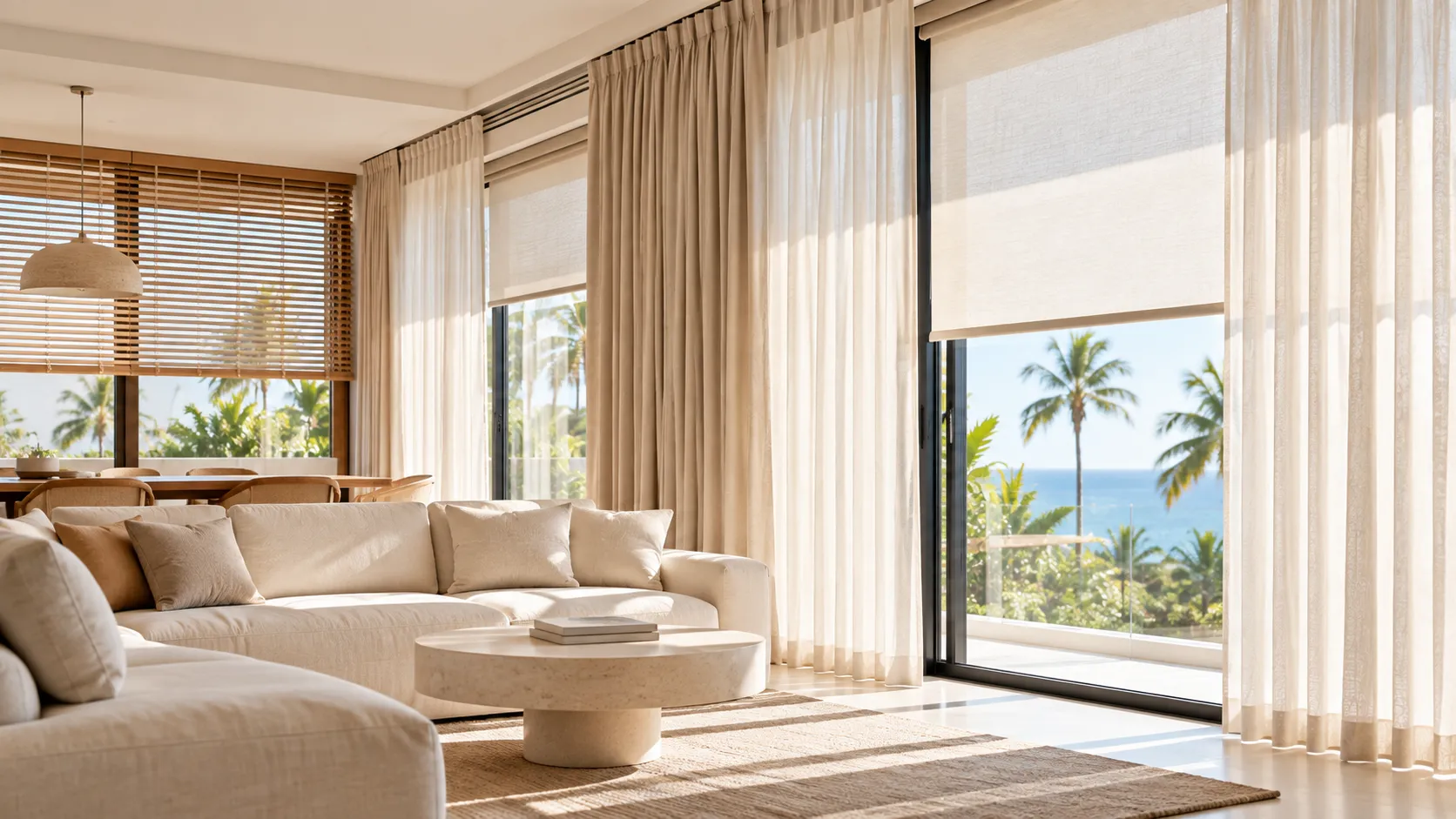
Different products can still share a common colour family, fabric texture, hardware finish or architectural proportion. For example, natural linen curtains can coexist with neutral roller blinds without making the rooms feel unrelated.
2. Match Treatments by Function
Do not mix products simply because they look attractive together. A treatment should solve the actual problem of the opening: glare, privacy, darkness, heat, view preservation or ease of operation.
3. Coordinate Heights and Proportions
Where possible, align curtain tracks, blind headrails and finished heights with the architecture. Inconsistent mounting heights can make otherwise good products feel visually disconnected.
4. Use Layering Where It Adds Real Value
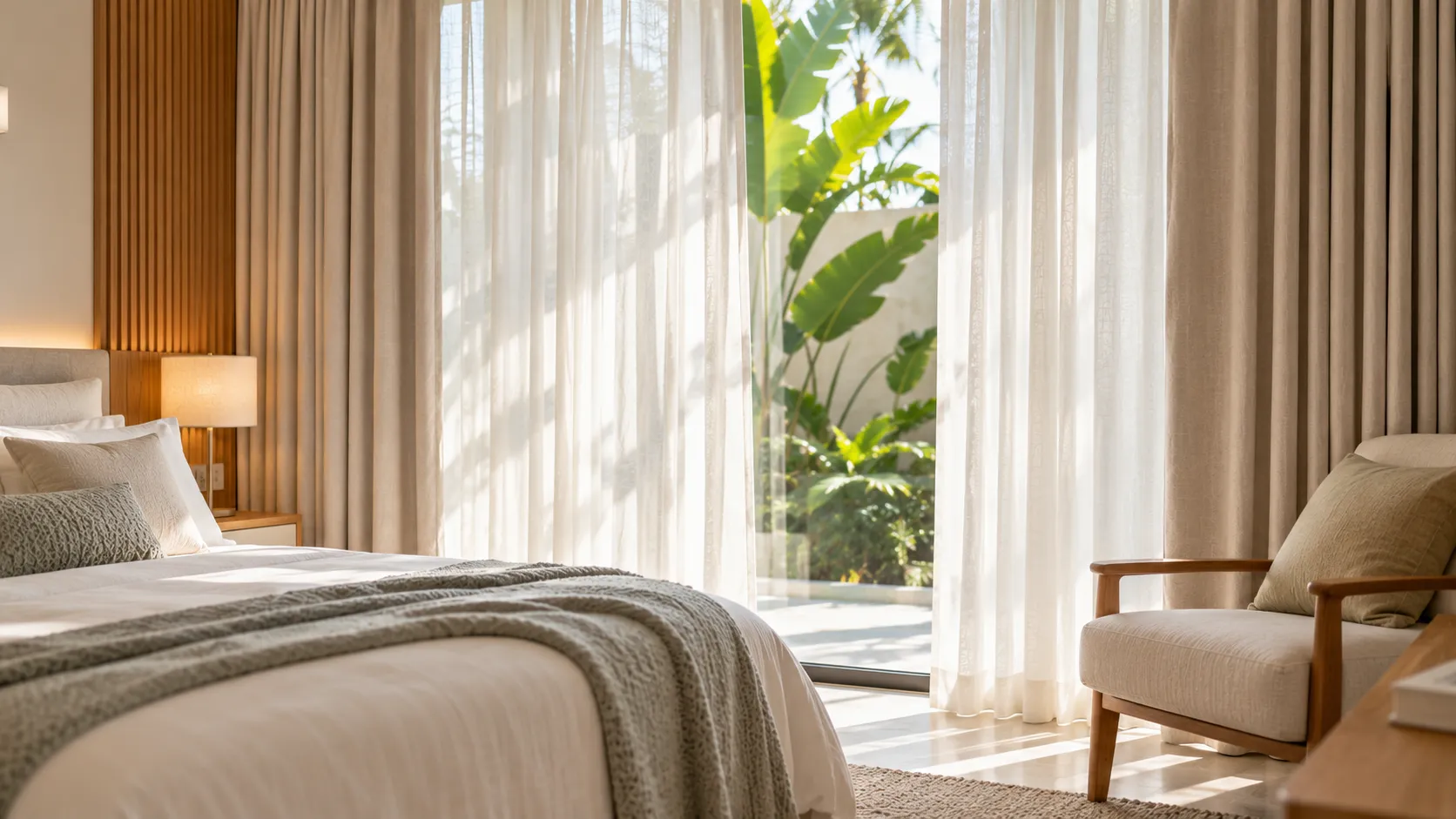
Sheer plus blackout is useful when daytime softness and night-time darkness are both required. A roller blind behind a decorative curtain can also separate precise light control from the softer decorative layer.
5. Think About Operation
Manual curtains may be appropriate for accessible windows, while motorization can make sense for high, wide or frequently adjusted openings. Mixing manual and motorized systems is acceptable when the operating logic is intentional.
Common Mistakes
- Choosing every window treatment independently.
- Matching colours but ignoring different fabric textures.
- Using a decorative curtain where glare control is actually needed.
- Ignoring stack-back and furniture clearance.
- Mixing hardware finishes without a design reason.
- Adding motorization without planning power and control requirements.
Professional Checklist
- List every opening by room.
- Define the primary function of each opening.
- Choose a consistent colour and material language.
- Coordinate finished heights where practical.
- Check hardware and mounting conditions.
- Plan layering and stack-back before fabrication.
- Decide manual versus motorized operation.
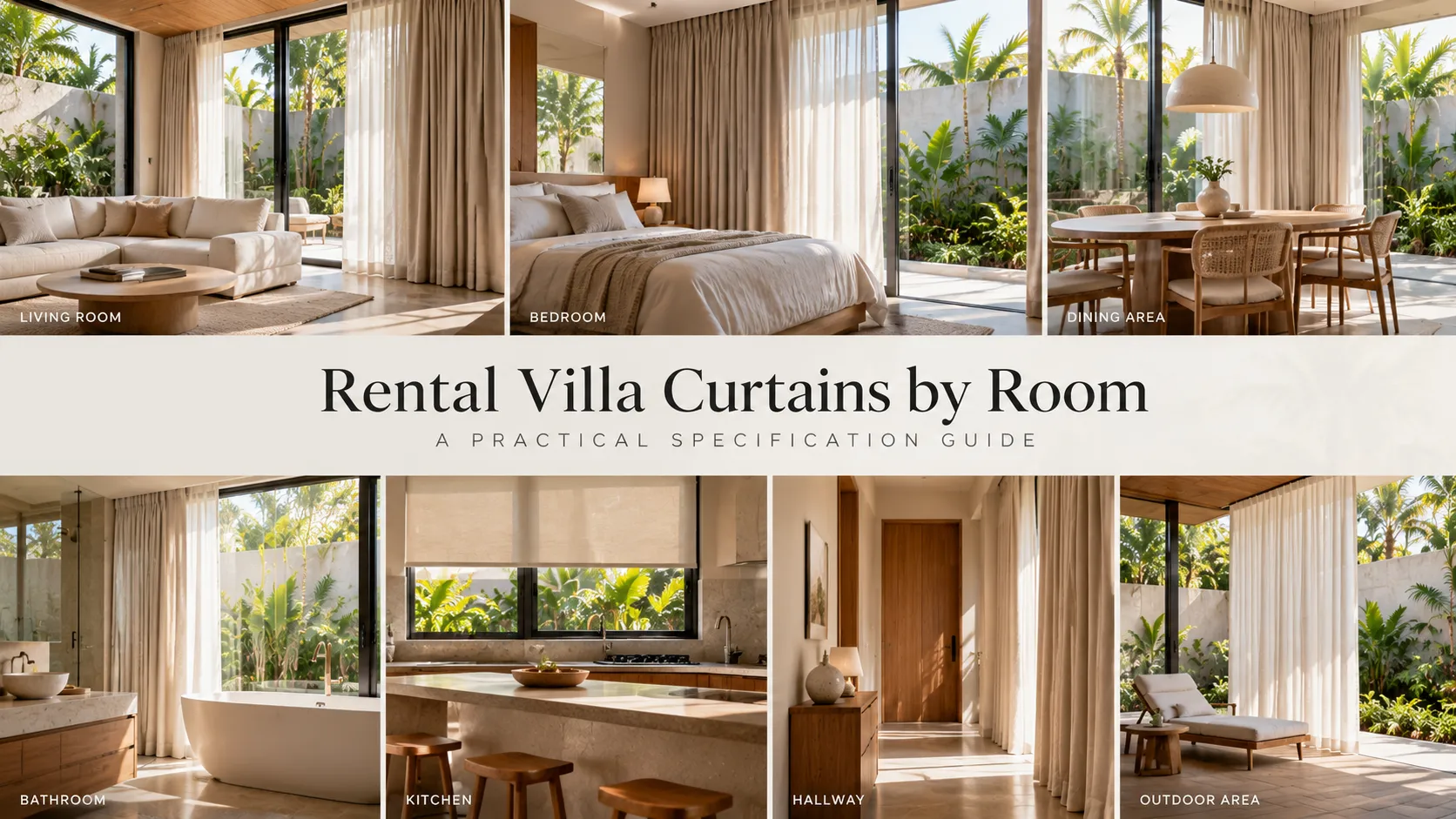
For villas and hotels, a room-by-room window schedule is one of the simplest ways to combine different treatments without losing consistency across the property.