
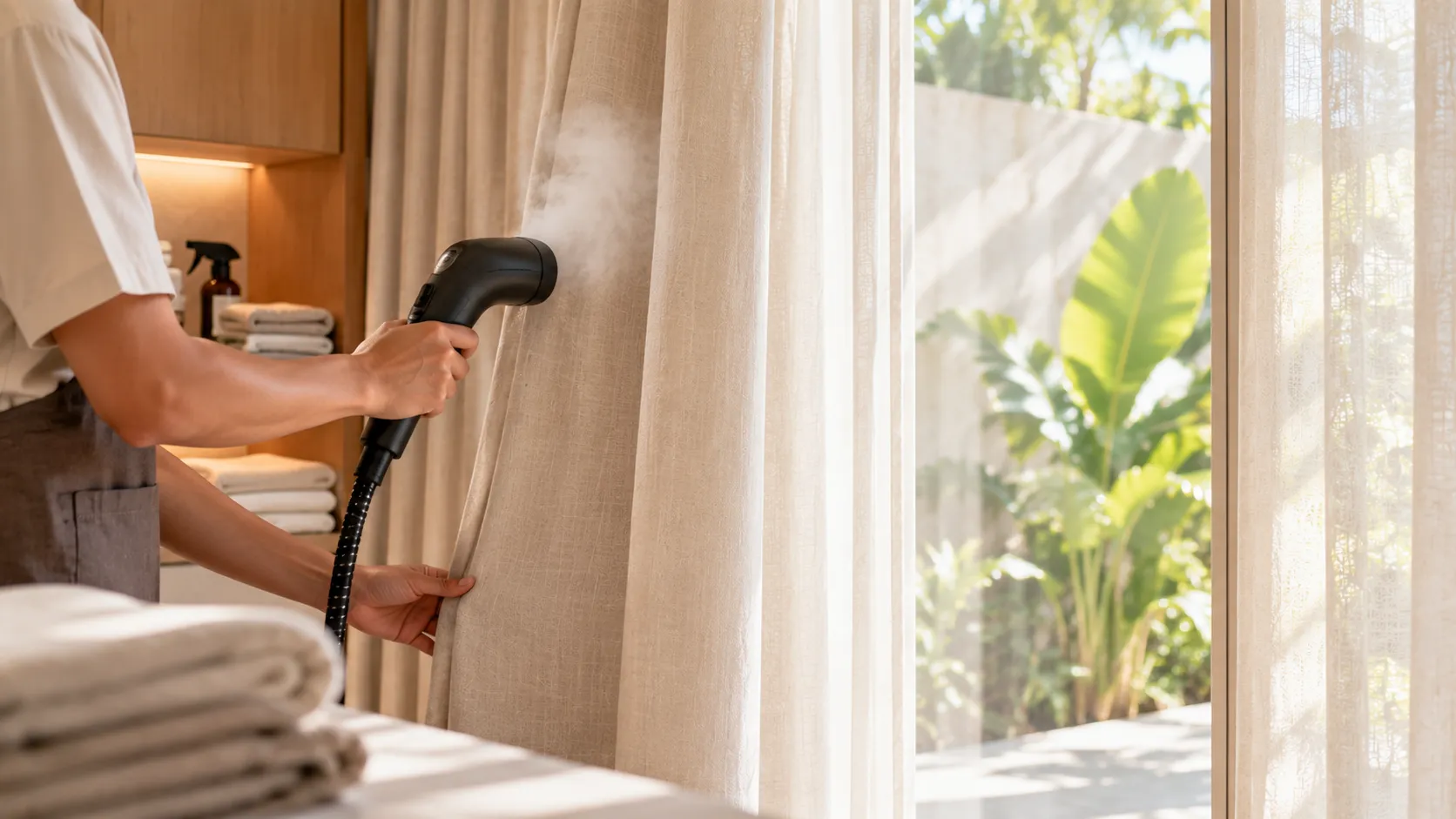
How To Properly Steam And Iron Curtains: A Practical Step-by-Step Guide
Steaming or ironing can refresh a curtain after production, transport or installation, but the safest method depends on the fabric, lining, construction and care instructions. High heat is not automatically better.
Steam vs Iron: Which Should You Use?
| Method | Useful for | Main caution |
|---|---|---|
| Steaming | Removing hanging wrinkles and refreshing drape | Keep the steamer appropriate to the fabric and avoid saturating the material. |
| Ironing | Sharper finishing on suitable fabrics | Heat and pressure can damage delicate surfaces or change texture. |
| Professional finishing | Large, lined or high-value curtains | Requires knowledge of fabric construction and care requirements. |
Step 1: Read the Care Instructions
Before applying heat or steam, check the manufacturer's care guidance. Fabric composition and finishing can change how the material reacts to heat and moisture.
Step 2: Test a Hidden Area
Test the method on an inconspicuous area first. Check whether the colour, texture, sheen or backing changes.
Step 3: Steam From the Correct Distance
Work gradually and allow the fabric to relax. Do not press a hot steamer aggressively against a delicate face fabric or lining.
Step 4: Pay Attention to Seams and Hems
Seams, hems and pleats can hold wrinkles differently from the main fabric. Work carefully so the finished curtain remains straight rather than creating new creases.
Step 5: Protect the Fabric When Ironing
If ironing is permitted, use the appropriate temperature and, where recommended, a protective cloth between the iron and the curtain. Avoid ironing directly over sensitive coatings or blackout backings unless the care instructions explicitly allow it.
Step 6: Check the Finished Drape
After steaming or ironing, hang the curtain and allow it to settle. Look at the full drop, pleats, hems and overall alignment rather than judging only one small section.
Common Mistakes
- Using maximum heat on every fabric.
- Ignoring the care label.
- Ironing directly over blackout or coated backing.
- Pulling the fabric aggressively while steaming.
- Trying to fix installation-related wrinkles only with heat.
- Forgetting that some natural fabrics intentionally retain subtle texture.
For Linen Curtains
Linen and linen-blend curtains can have a naturally relaxed texture. The objective is often to achieve a clean, controlled drape rather than eliminate every natural variation in the fabric.
When to Call a Professional
For very tall curtains, expensive fabrics, complex linings or unusual finishes, professional finishing can reduce the risk of heat, moisture or handling damage.
A well-finished curtain should look natural when hanging. The goal is not simply to make the fabric perfectly flat, but to achieve the intended drape, pleat and proportion.