How to Save Energy with Thermal Curtains: Practical Tips for Bali Homes — Solar Heat Gain Reduction, Room Air Conditioning Efficiency, and Energy-Saving Window Insulation
Designing modern energy-efficient residences, luxury holiday villas, and boutique hospitality sanctuaries across Bali—from the vibrant coastal enclaves of Canggu, Seminyak, and Umalas to the tranquil forest retreats of Ubud and dramatic clifftop estates in Uluwatu—demands an intuitive understanding of tropical building physics. Modern resort architecture frequently prioritizes expansive floor-to-ceiling glass sliding doors, panoramic window walls, and double-height ceiling voids to seamlessly connect indoor living areas with lush outdoor gardens and ocean vistas. However, glass is inherently the thermally weakest component of any building envelope. Uninsulated glass facades act as giant solar heat collectors, allowing intense equatorial infrared radiation to flood interior living zones. Property owners, interior architects, and hospitality developers frequently seek authoritative advice on how to save energy with thermal curtains: practical tips for Bali homes (mastering solar heat gain reduction, room air conditioning efficiency, and energy-saving window insulation) to dramatically reduce HVAC power consumption, lower monthly electricity costs, and elevate indoor residential comfort.
Executing an energy-saving thermal window treatment strategy in high-temperature, high-humidity island environments involves far more than simply selecting thick fabric panels. It requires an integrated thermodynamic approach: calculating fabric thermal resistance (R-values), specifying solar-reflective multi-pass acrylic backings, engineering sealed pelmet cavities, choosing non-toxic anti-mold textiles, and integrating smart automated solar scheduling. In this comprehensive editorial masterclass, we explore the science of window thermal insulation, HVAC load reduction, and practical tailoring standards to help you turn your tropical home into a sustainable, thermally balanced sanctuary.
1. The Thermodynamics of Solar Heat Gain in Tropical Glass Facades
To reduce energy consumption effectively, one must first understand how ambient solar thermal energy penetrates a tropical building envelope. Equatorial sunlight delivers intense radiant heat through three primary thermodynamic pathways:
- Direct Radiant Infrared Absorption: Unfiltered solar rays streaming through clear glass directly heat interior timber floors, stone tiles, and furniture surfaces. These warm interior masses absorb the thermal energy and re-radiate it into the room air, creating a severe greenhouse heating effect.
- Conductive Thermal Transfer through Glass: High outdoor ambient air temperatures heat the exterior surface of glass panes continuous throughout the day. Thermal energy conducts through the glass pane, constantly raising indoor air temperatures during afternoon peak solar hours.
- Convective Thermal Loops (Air Current Dynamics): As solar radiation heats the air layer immediately adjacent to the interior face of the glass, this hot air rises toward the ceiling and circulates across the room. This convective airflow forces split-system air conditioning units to run continuously at peak compressor output.
2. Key Metrics: Solar Heat Gain Coefficient (SHGC) and R-Value Insulation
When evaluating high-performance insulating window treatments, architectural professionals evaluate textiles and linings using standardized thermodynamic metrics:
- R-Value (Thermal Resistance): R-value measures a material’s resistance to conductive heat flow. Standard single-pane glass carries a low R-value of roughly 0.9 to 1.0. Installing multi-layer thermal draperies with dense acrylic foam backings elevates total window assembly resistance up to **R-3.5 or R-4.0**, significantly delaying heat penetration into living zones.
- Solar Heat Gain Coefficient (SHGC): SHGC measures the fraction of incident solar radiation admitted through a window opening. Specifying energy-efficient thermal blackout curtains lowers total SHGC ratings by up to **45% to 50%**, bouncing solar radiation outward before it warms interior living spaces.
- Air Conditioning Compressor Load Reduction: Reflecting solar heat at the window boundary reduces the mechanical workload of HVAC air conditioning systems, extending equipment lifespan and cutting cooling energy bills by up to **30% annually**.
3. Material Engineering: Multi-Pass Acrylic Coatings and Interlinings
Achieving five-star energy efficiency relies on composite textile engineering designed specifically for high-intensity tropical climate performance:
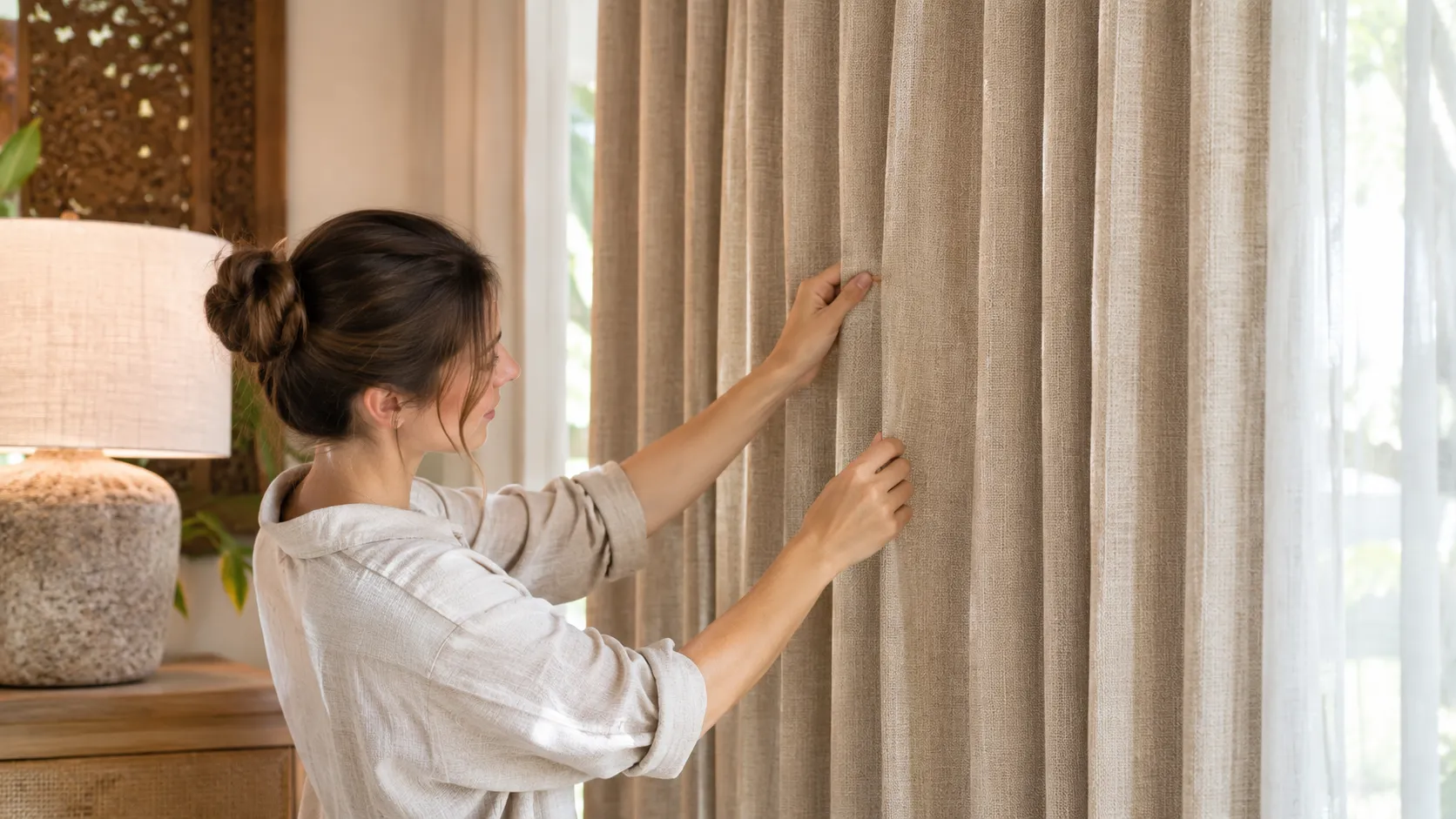
- 3-Pass & 4-Pass Acrylic Foam Backings: Energy-saving thermal blackout fabrics feature microscopic layers of acrylic foam applied directly to the rear side of woven textiles. These opaque layers seal microscopic fabric pores completely, forming a zero-porosity cold air barrier that stops heat transfer and blocks 100% of solar light. Explore technical thermal textiles starting at Rp 60.000/m to Rp 110.000/m on our products page.
- Metallized Solar-Reflective Linings: Advanced technical linings coated with microscopic aluminum particles reflect infrared solar rays outward, reducing thermal absorption directly at the glass surface.
- Thermal Felt Interlining (Bump Cloth): Sandwiching a dense cotton-wool felt interlining between decorative face fabrics and rear linings adds substantial thermal mass, absorbs acoustic room echo, and forms rich, fluid drape folds.
4. Dual-Track Layering for 24-Hour Passive Thermal Management
Achieving total day-to-night functional energy efficiency in tropical homes relies on strategic multi-layer drapery configurations on dual-track channels:
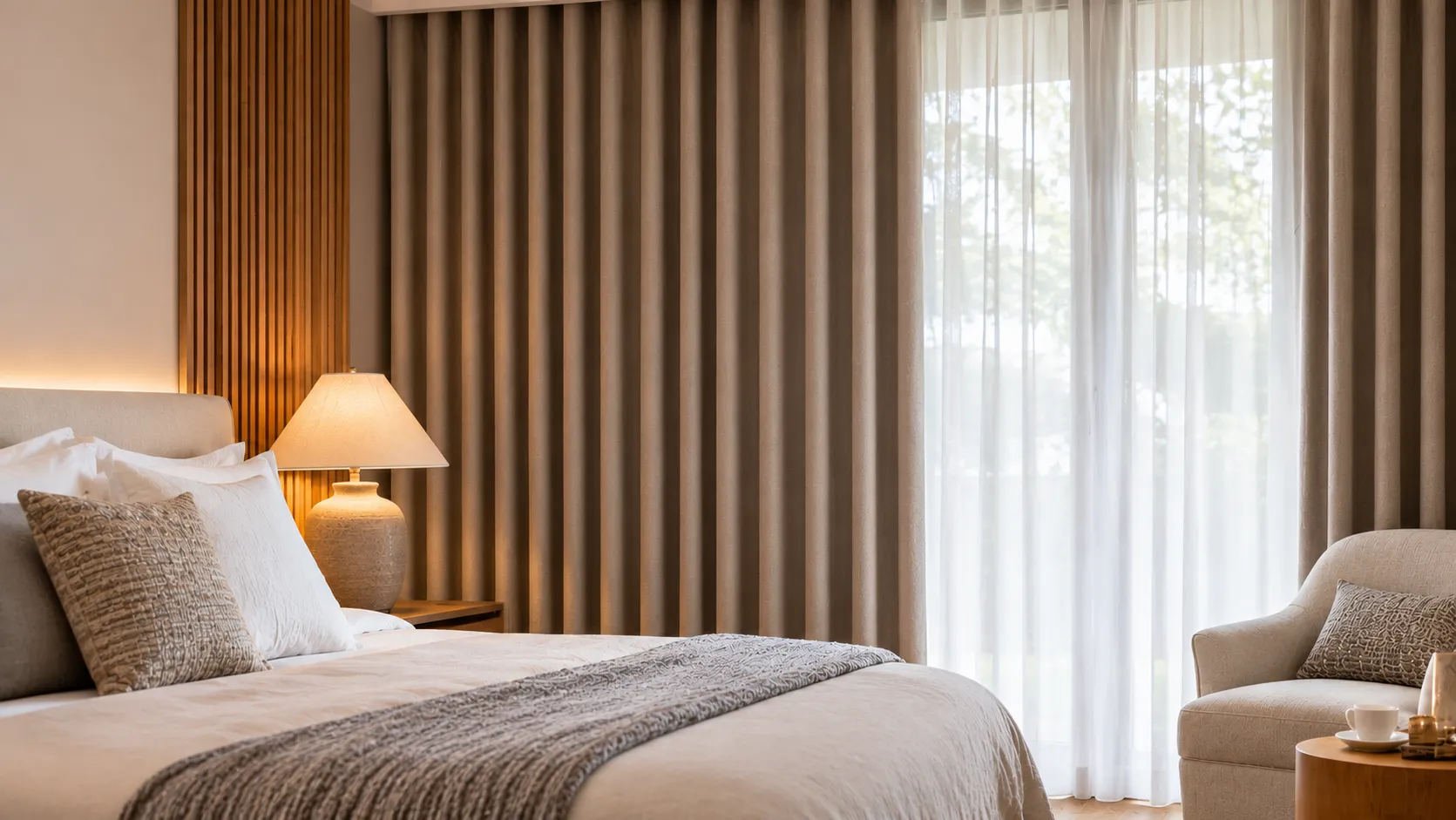
- Daytime Layer (Translucent Solar Sheer Voiles): Positioned on the track closest to the glass, lightweight slubbed linen sheers filter blinding tropical solar glare into a soft ambient glow without darkening interior spaces, preserving poolside views while reflecting daylight radiation (starting at Rp 60.000/m on our products page).
- Nighttime & Peak Solar Isolation Layer (100% Thermal Blackout): Drawing heavy thermal blackout drapes during peak afternoon heat hours (11:00 AM – 3:00 PM) seals out radiant heat, keeping room interiors naturally cooler by 3°C to 5°C and reducing evening air conditioning cooling requirements.
5. Sealing Thermal Air Loops: Ceiling Recess Pelmets & Drop Precision
Even the highest-grade thermal curtain will fail to insulate if hot air circulates freely around the top or sides of the installation. Eliminating convective heat loops requires precise hardware mounting standards:
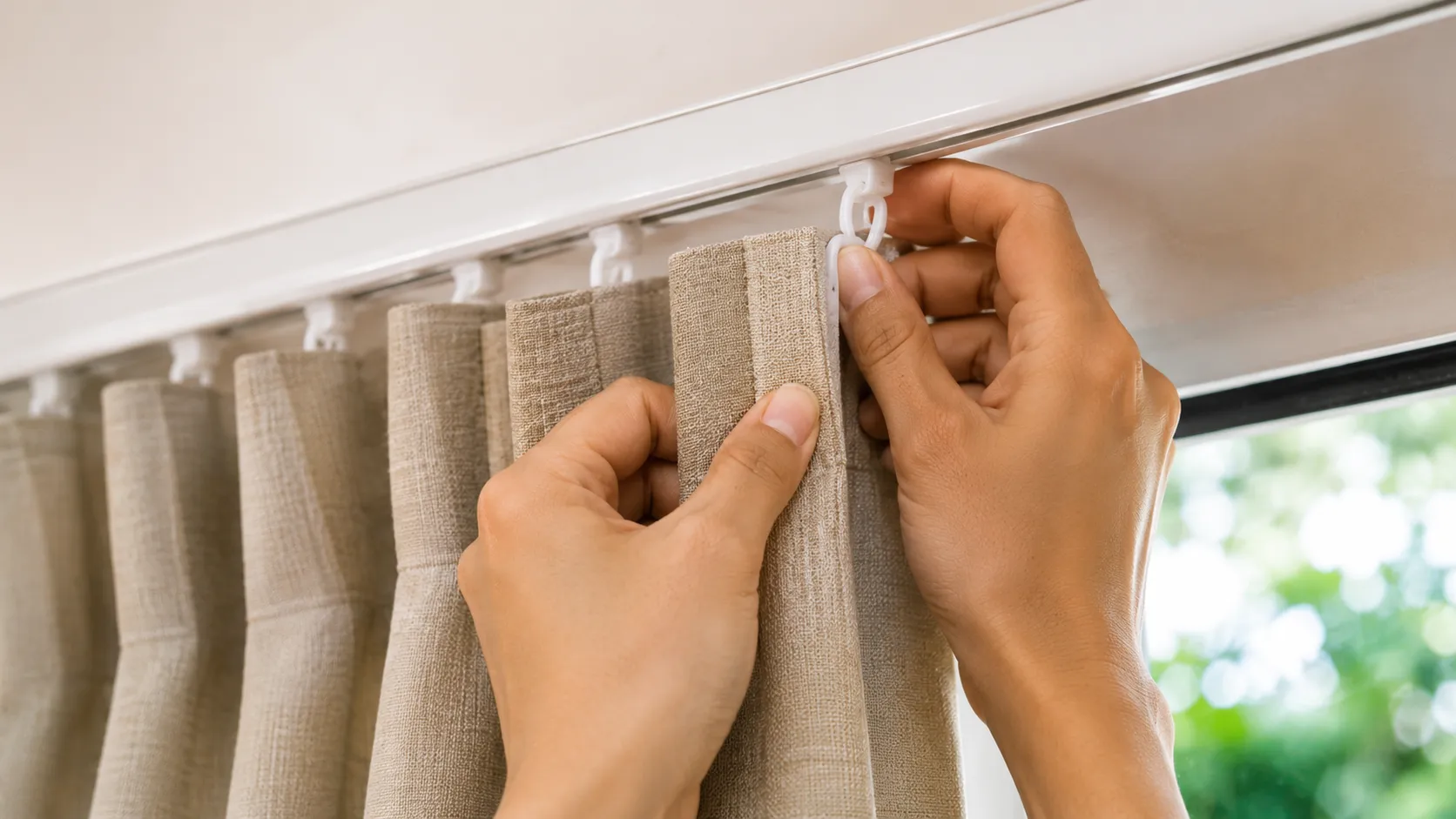
- Ceiling-Recessed Pelmet Cavities (Top Thermal Seals): Mounting heavy-duty aluminum tracks inside hidden ceiling pelmet pockets creates a physical top baffle that prevents hot air from floating over the top of the curtain track into the living room. Pelmet cavities should measure at least **20 cm to 25 cm wide** for dual-track systems and **10 cm to 15 cm deep**. Spatial tolerances can be cross-referenced on our valances and cornices measuring guide.
- The 1 cm Floor Hover Clearance Rule: Tailor thermal drapes to hover exactly **1 cm above finished floor surfaces**. This prevents bottom hems from collecting floor dust or absorbing floor washing moisture while maintaining a continuous vertical seal. Review drop measurement rules on our curtain measuring guide and dedicated shade measuring guide.
- S-Fold (Ripplefold) Wave Pleating Fullness: Tailoring curtains using a **2.0x to 2.2x fullness ratio** (double the track width in flat fabric volume) forms deep vertical air pockets that trap insulating air buffers between the glass and room interior. Calculate fabric requirements using our digital stacking calculator.
6. Tropical Climate Resilience: Non-Toxic Anti-Mold Protection
In humid coastal environments like Bali, continuous indoor air conditioning combined with external atmospheric humidity creates heavy condensation zones near window glass where fungal mold spores thrive. Untreated heavy thermal drapes absorb damp air, leading to dark mildew spots along side hems and unpleasant musty odors.
To preserve indoor air hygiene and long-term fabric integrity, high-performance draperies supplied by Almeers Living incorporate advanced **Anti-Mold** (anti-jamur) technology. This specialized antimicrobial finish creates an active hydrophobic shield that repels moisture droplets and prevents fungal spore germination, keeping your energy-efficient drapes clean, allergen-free, and pristine season after season.
7. Smart Motorization and Automated Solar Scheduling
Automating thermal energy management elevates luxury tropical living. Motorized curtain tracks powered by whisper-quiet DC actuators allow property owners to program automated solar schedules via handheld remotes, wall keypads, smartphone apps, or smart home platforms such as Apple HomeKit, Google Assistant, Amazon Alexa, and Control4. Program drapes to close automatically during peak afternoon solar radiation hours, locking in cool interior temperatures passively before family members or villa guests return home.
8. Elevate Your Tropical Residence with Almeers Living
Investing in energy-saving thermal curtains for tropical homes is a commitment to architectural comfort, environmental sustainability, and long-term utility overhead reduction. Partnering with an experienced local specialist guarantees precise thermal fabric selection, custom pelmet coordination, and long-term climate endurance. As a recognized premier window treatment specialist in Bali, Almeers Living offers end-to-end turnkey execution—from complimentary laser site surveys and custom thermal fabric sampling to professional motorized installation across the island.
Transform your property into an energy-efficient, thermally insulated sanctuary today. Browse our full range of custom thermal drapery systems, sheer voiles, and automated shading solutions on our products page to schedule your personalized on-site consultation with Bali’s trusted window experts.