How to Store Curtains Correctly: A Step-by-Step Guide — Moisture Protection Storage, Fabric Crease Prevention, and Seasonal Drapery Care
In high-end residential estates, luxury holiday villas, and boutique hospitality properties across Bali—from the vibrant coastal enclaves of Canggu, Seminyak, and Umalas to the serene forest sanctuaries of Ubud and dramatic clifftop retreats in Uluwatu—curtains represent a significant investment in architectural design, solar protection, and acoustic comfort. However, managing luxury properties often involves seasonal rotations, room renovations, or temporary vacancy periods where draperies must be safely removed, stored, and preserved. In humid island microclimates, improper storage methods lead to catastrophic textile damage within weeks: stubborn mold infestation, permanent fabric creasing, fiber dry rot, and yellowing from trapped atmospheric moisture. Property managers, villa owners, and interior caretakers frequently seek authoritative advice on how to store curtains correctly: a step-by-step guide (covering moisture protection storage, fabric crease prevention, and seasonal drapery care) to ensure stored window treatments retain their pristine resort-grade condition.
Preserving fine draperies during seasonal storage requires a systematic, preservation-grade approach. By combining thorough pre-storage cleaning, acid-free breathable wrapping materials, controlled rolling mechanics, non-toxic anti-mold protection, and precision storage climate control, you safeguard expensive face fabrics, sheer voiles, and multi-pass blackout linings from degradation. In this comprehensive step-by-step masterclass, we present the definitive engineering roadmap for storing luxury custom curtains in tropical environments.
Step 1: The Environmental Risks of Tropical Drapery Storage
Before packing away fine curtains, it is essential to understand the specific environmental factors in tropical island climates that cause rapid textile deterioration during storage:
- High Relative Humidity and Mold Spore Activation: Uncontrolled humidity levels exceeding 65% create ideal conditions for fungal spores to germinate on stored textiles. Moisture trapped inside sealed plastic bags fosters dense black mildew colonies that permanently stain and weaken fabric fibers.
- Permanent Creasing and Fiber Strain: Storing heavy lined drapes tightly folded under heavy weight causes deep mechanical creasing that breaks structural fibers in acrylic foam blackout backings and natural linen weaves.
- Insect and Dust Contamination: Organic debris, skin oils, and airborne dust lingering on unwashed curtains attract fabric pests and cause irreversible fiber yellowing over extended storage periods.
Step 2: Pre-Storage Inspection, Cleaning, and Decontamination
Storing dirty or damp curtains guarantees fabric damage. Always execute a rigorous pre-storage cleaning protocol before taking down drapery panels:
- Vacuuming Ambient Dust: Use a soft brush vacuum attachment to gently remove surface dust, pollen, and cobwebs from both the front face fabric and rear lining while the drapes are still hanging.
- Professional Dry Cleaning for Coated Blackouts: Multi-pass acrylic blackout linings and heavy acoustic velvets must be professionally dry-cleaned according to textile care labels. Water washing coated linings causes acrylic foam layers to peel or stick together during storage. Explore fabric care details on our products page.
- Complete Moisture Extraction: Ensure drapery panels are 100% dry before storage. Even microscopic dampness absorbed from humid island air will trigger mildew growth once packed.
Step 3: Fabric Crease Prevention: Folding vs. Rolling Mechanics
How you fold or roll curtains determines whether they unpack with smooth vertical grace or unsightly permanent wrinkles:
- The Rolling Method (Preferred for Delicate & Coated Fabrics): Rolling is the gold standard for long-term drapery storage. Lay the clean curtain panel flat on a clean surface face-down. Roll the panel loosely around a sturdy, acid-free cardboard storage tube or plastic core. Rolling eliminates sharp crease points, preventing acrylic blackout coatings from cracking.
- The Loose Accordion Fold Method (For Linen & Sheer Voiles): If rolling is impractical due to extreme curtain width, fold the panel loosely using accordion folds along its natural S-fold wave pleats. Never compress folded curtains under heavy boxes or furniture.
- Acid-Free Tissue Interleaving: Place sheets of acid-free tissue paper between fabric folds, particularly over coated linings or metal eyelets, to prevent layers from sticking or color transferring during warm weather.
Step 4: Moisture Protection Storage and Breathable Containment
Choosing the correct storage container is critical for surviving high-humidity tropical climates. Impermeable plastic bags trap ambient moisture inside, creating a destructive greenhouse micro-climate:
- Avoid Airtight Plastic Bins and PVC Bags: Never store curtains in non-breathable plastic bags, vacuum-sealed bags, or sealed plastic storage bins. Trapped humidity condenses on plastic interior walls, encouraging rapid mold outbreaks.
- Use Breathable 100% Cotton Garment Bags: Wrap rolled or folded drapes in unbleached, 100% cotton canvas storage bags or acid-free cotton sheets. Breathable cotton permits continuous air exchange while shielding textiles from dust, light, and insects.
- Integrate Silica Gel and Moisture Absorbers: Place non-contact silica gel packets or active moisture-absorbing canisters inside the storage room (away from direct contact with fabric) to maintain relative humidity below 50%.
Step 5: Climate-Controlled Storage Room Environment
Where you store wrapped draperies is just as important as how you wrap them. Select a controlled storage location that minimizes temperature and humidity fluctuations:
- Elevate Off Concrete Floors: Never place stored curtain bags directly on bare concrete floors or against exterior masonry walls, as concrete transfers moisture continuously. Store bags elevated on slatted wooden shelves or plastic pallets.
- Maintain Continuous Air Circulation: Store drapes in a cool, dark, well-ventilated room equipped with a dehumidifier or continuous low-speed ceiling fan. Avoid hot, unventilated attics, damp basements, or outdoor storage sheds.
- Keep Away from Direct Sunlight: Store curtains in dark closets or opaque storage chests to protect textiles from direct solar UV yellowing and fading.
Step 6: Tropical Climate Resilience: Non-Toxic Anti-Mold Protection
In humid island climates like Bali, continuous atmospheric humidity creates ideal conditions for fungal spore germination. Untreated organic drapery textiles sitting in storage cabinets absorb ambient dampness, leading to dark mildew spots and musty odors.
To preserve pristine textile hygiene during seasonal storage, custom drapery systems supplied by Almeers Living incorporate advanced **Anti-Mold** (anti-jamur) technology. This specialized hydrophobic finish repels moisture droplets and inhibits fungal spore germination, ensuring your stored curtains remain clean, fresh, and allergen-free season after season.
Step 7: Unpacking, Re-Hanging, and Drop Calibration
When seasonal storage ends, follow these professional re-hanging protocols to restore drapery panels to their original five-star elegance:
- Air Out Before Hanging: Remove curtains from breathable cotton storage bags 24 hours prior to installation. Hang them in a clean, shaded indoor area to allow fibers to relax naturally.
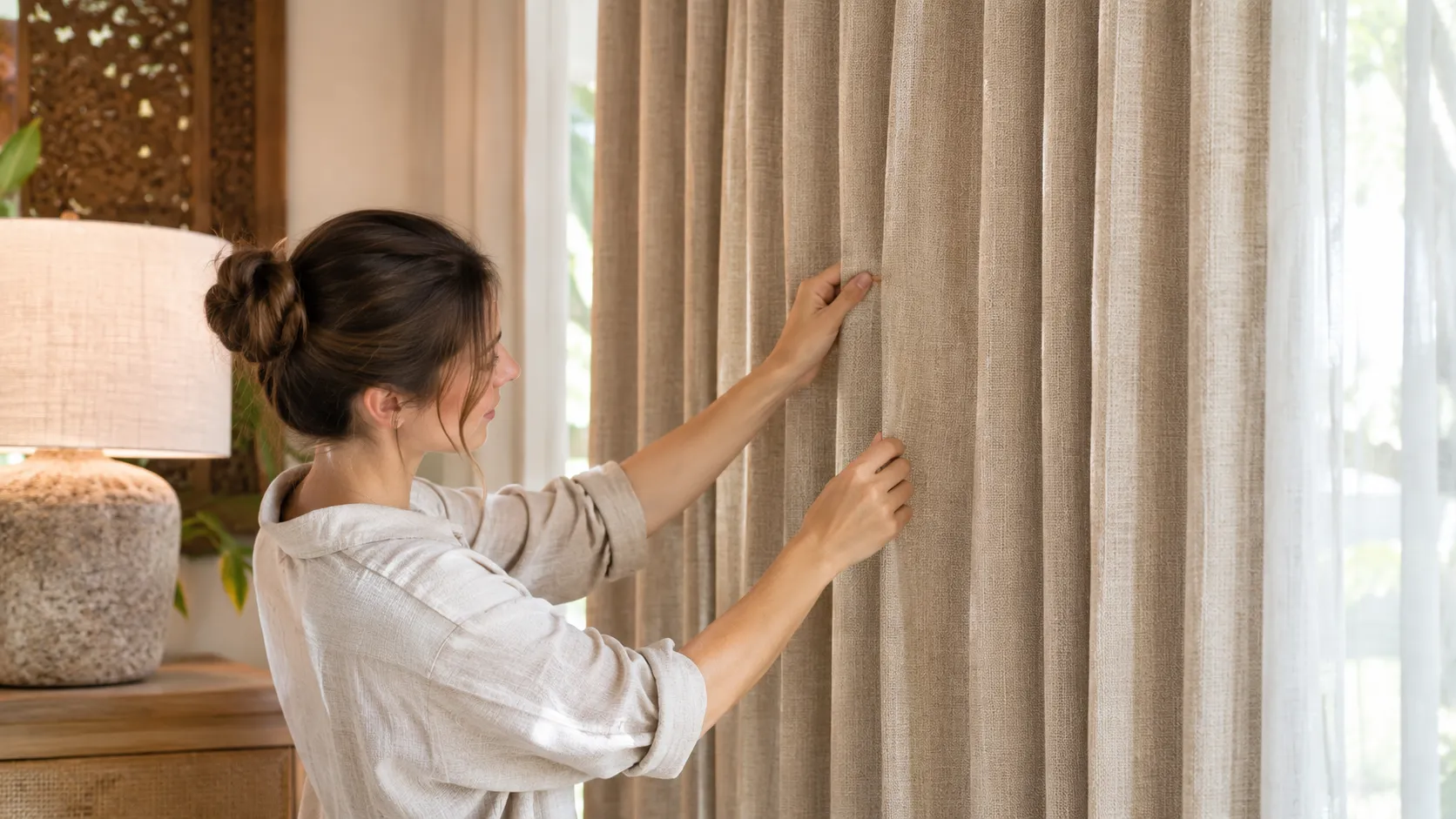
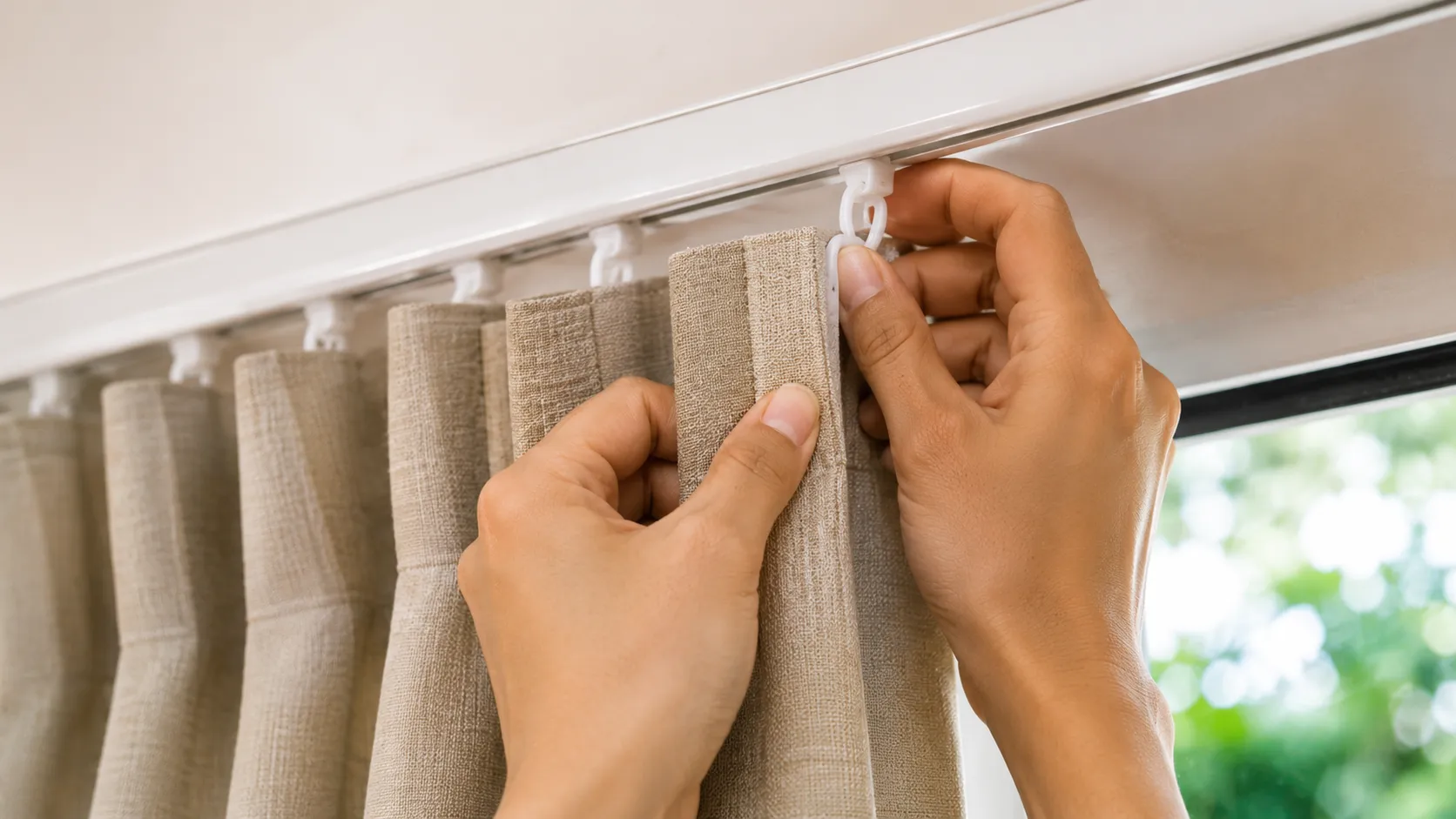
- Gentle Vertical Steaming: Re-hang drapes on their track gliders. Use a professional garment steamer to smooth out minor transport wrinkles, working from the ceiling heading down to the bottom hem. Never apply direct hot iron surfaces to acrylic coated blackout backings.
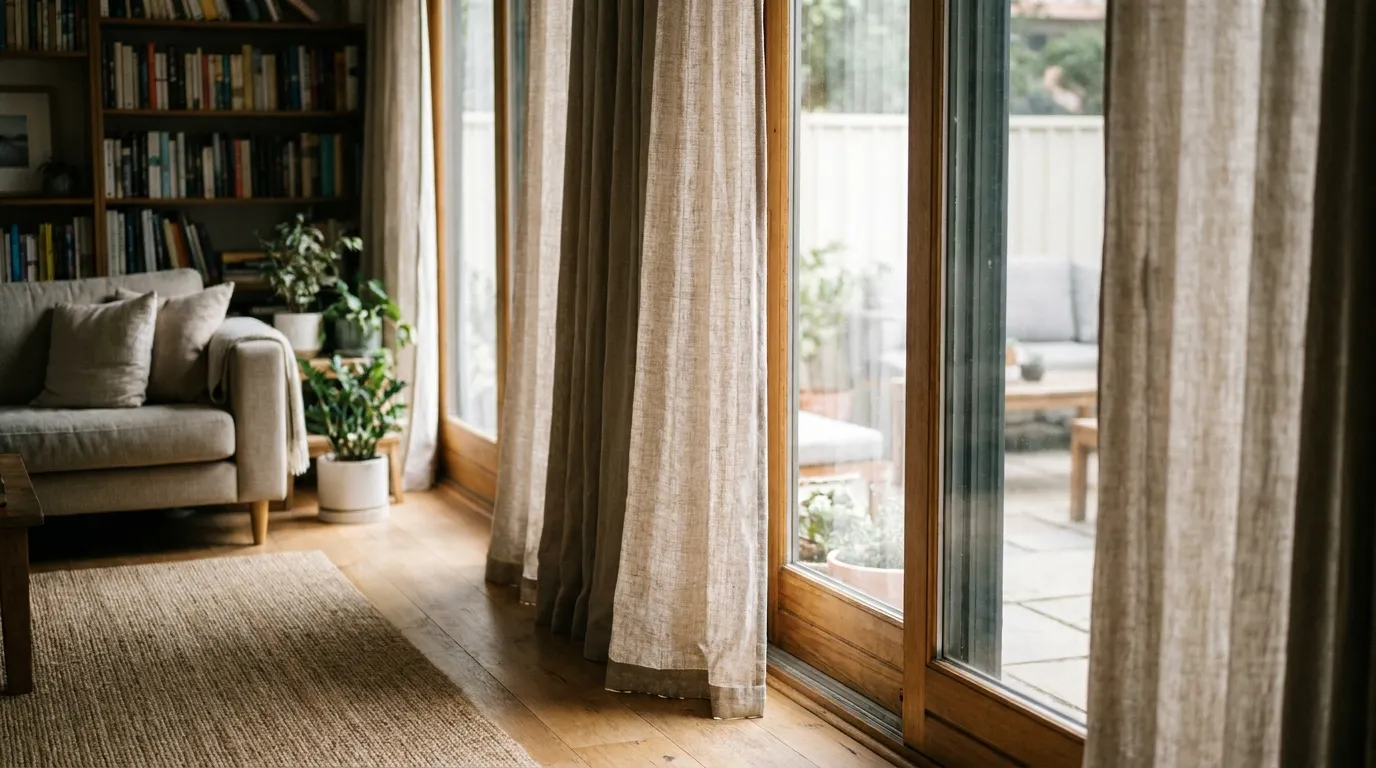
- Verify Floor Hover Clearance (1 cm Rule): Re-calibrate curtain gliders so bottom hems hover precisely **1 cm above finished floor level**. Review step-by-step drop rules on our curtain measuring guide and dedicated shade measuring guide. Calculate stack allowances using our digital stacking calculator, and cross-reference ceiling pelmet dimensions on our valances and cornices measuring guide.
Step 8: Elevate Your Seasonal Property Care with Almeers Living
Storing custom draperies correctly requires an expert synthesis of textile preservation science, breathable moisture control, fabric crease prevention, and tropical climate endurance. Partnering with an experienced local specialist guarantees professional cleaning guidance, master storage preparation, and long-term operational durability. As a recognized premier window treatment specialist in Bali, Almeers Living offers complete turnkey execution—from complimentary on-site drapery assessments and custom fabric sampling to professional motorized installation and seasonal maintenance services across the island.
Protect your luxury villa or resort drapery investment today. Browse our full range of custom drapery fabrics, dual-track hardware, and automated window solutions on our products page to schedule your personalized on-site consultation with Bali’s trusted window experts.